Categories
Awareness and insight Concentration Meditation techniques Presence and being present

The Importance of Your Memory as an Object of Meditation

Hi Everyone,

We all know the old saying “You can’t change what has happened in the past”. On an obvious level this carries definite truth, but if we look a little deeper we find that in reality we change the past every time we think about it. To see how this is the case, let us consider a simple example:

Let’s say at work yesterday I made a simple mistake. Today I happen to be feeling generally happy and confident, and so when I remember the mistake I made at work yesterday I find it east to laugh off. When others make fun of me for it, I laugh with them. Life is good, and so my memory of a past mistake and its significance is generally benign and has no power to cause me upset.

Fast forward to tomorrow, I wake up feeling generally out of balance; I sense old fears and agitations in my mind as I go to work. Mid- way through the morning someone mentions the past mistake I made two days ago. Because the general climate of my mind is negative and turbulent, as soon as I remember my mistake mentally I start attacking myself for being so stupid, I feel embarrassed by the mistake. The gravity of my error seems significant enough to knock me further off balance.

In this example we have two different days, two different REMEMBRANCES of the SAME event. Each time we experience the past event in a new way according to our present state of mind. From this we can see that we do indeed have very real power to change the past each time we remember it.

To take our memory as our object of meditation means to be mindful of the power that our mind has to re-invent the past, and to ensure that we are mentally framing past events in a way that is constructive and serving us, rather than a way that is causing us to be trapped in a cycle of misery, pain, discontent and so forth.

Your life is your meditation, and meditating on positive use of memory is an important meditation practice to develop!

Thanks for reading,

Yours in the spirit of the journey, 

Toby

PS: All are invited to the new two part meditation class, Tuesday evenings February 22nd and March 1st: Landscapes Of The Mind: Finding Inner Power and Balance In Your Life Through Meditation on Wild Nature And Landscape” .

If you are not in Singapore, the classes will be available for purchase as recordings.

© Toby Ouvry 2011. You are welcome to use this article, but you must seek Toby’s permission first. Contact info@tobyouvry.com


Categories
Awareness and insight Meditation techniques Primal Spirituality

Meditations for Spring Time and the Beginning of the Chinese New Year of the Rabbit

Hi Everyone,

I’m off to Thailand for a week, so this will be my last post for ten days or so. Whilst in Thailand I intend amongst other things, to spend a healthy amount of time simply sitting and attuning to the energies of nature, of the landscape and of the sea.

The turn to February sees the energy of spring starting to manifest in the northern hemisphere. Here are two simple meditations with images that you can work with at this time in the year to attune to the energies of spring and of new beginnings.

The first draws upon traditional Chinese associations of the wood element. The second draws upon traditional images of the Goddess/divine feminine and the child self.

 1. Working with the wood element to heal and energize of physical and energy body, mind and emotions:

In Taoist and Qi gong philosophy the season of spring corresponds to the wood element. Spring sees a re-awakening of the green world and an exponential expansion in the growth of trees and plants. Here are some of the qualities and correspondences of the wood element energy:

Wood element healing colour: Green

Direction: Energy rising upward from the Earth

Direction: East

Actions: Countenance or good posture

Bodily organ: Yin organ – Liver, Yang organ – Gall bladder

Emotions: Positive – Kindness, negative – anger/resentment

Mental Quality: Sensitivity (Integrate vision of Child and goddess into this section)

Senses: Vision/sight

Brief meditation on the wood element:

  • Sit facing east, imagine a fresh spring breeze blowing from the east, refreshing your mind and body.
  • Feel down into the earth beneath you. Sense a vast reservoir of light and energy in the centre of the earth. Sense the colour of this light as gold, white and green. Now see it rising up and filling your body through your feet. Sense this green and gold energy surrounding and infusing your liver and gall bladder. Feel any trapped anger and resentment being stored in these organs being released. Feel the organs being cleansed by the light, and being filled with the energy of kindness and sensitivity.
  • Now feel the energy of kindness and sensitivity spreading out into your whole body. In particular feel it going into your eyes and eye sockets, refreshing the power of your inner and outer vision
  • Feel the green and gold earth energy in your whole body, breathe it in and out of your physical cells for a few breaths, and then just relax in stillness for a while.

 2. Two further images of spring: The Virgin Goddess and the child

The Goddess or divine feminine in her youthful or virgin aspect is a traditional image symbolizing new birth and spring.

The child, or new human life is another image strongly associated with spring, as childhood is when we are in the “spring” of our life.

 Meditation images for the Virgin Goddess and the child within

  • See yourself in your inner vision sitting in spring landscape (or sit in one physically if you can!). Quietly and intuitively feel yourself attuning to the energy of the season
  • A beautiful young maiden approaches you, she is the virgin goddess, the goddess of spring. As she stands before you, three rays of light radiate from her
  • Light radiates from her brow to filling your mind, brain and head with the energy and light of clarity
  • Light radiates from hear throat to your throat, filling your speech with kindness
  • Light radiates from her heart to your heart, filling it with the light of positive empathy, gladness and joy
  • You notice that the Goddess is holding a newborn baby in her arms. She offers you the baby. Take it your arms, as you hold it, meditate on the seeds of new life, ideas and projects that you can feel beginning to germinate and grow within your being.
  • A young child comes to join you and the Goddess. It is your own inner child. See how s/he appears to you. How easily are you able to relate to her? Try and feel the natural joy and playfulness of your child self as you connect to the child appearing to your imagination.

 3. Meditating on the rabbit as a power animal

Because it is the lunar new year of the rabbit, February/March 2011 is also a good time to meditate with the Rabbit as a power animal. Here is a simple way to integrate it into the second Goddess and child meditation above:

  • Within your spring landscape see the rabbit (could be one or many) appearing. For a while s/he sits and hops gently around the feet of the Goddess, examining you curiously. After a while (in its time not yours) the rabbit approaches you, allowing you to stroke it, perhaps hold it. Feel your mind and energy connecting to the rabbit and commune for a while in silence. What happens or what you see and experience at this time arises from your communion with the spirit of the rabbit.

Thanks for reading!

 Yours in the spirit of Spring,

 Toby

PS: On February 22nd and March first I will be leading two classes entitled Landscapes Of The Mind: Finding Inner Power and Balance In Your Life Through Meditation on Wild Nature And Landscape” all are welcome, if you are not in Singapore the classes are available for purchase as recordings.

 Article © Toby Ouvry 2011. You are welcome to use it, but you must seek Toby’s permission first. Contact info@tobyouvry.com

Categories
Awareness and insight Meditation techniques Primal Spirituality

Meditating on the Five Chinese Elements as a Method Achieving Harmony and Balance Through Dependent Relationship

Hi Everyone!

In general meditations on dependent-relationship are very good for developing insight into the way that everything in our life is inter-related. It shows you that if one area of your life is out of balance, then that will affect other parts of your life detrimentally. Similarly, if you focus on getting one imbalanced area of your life back into balance and harmony, then that will affect pretty much all other areas of your life in a positive way too.

One cycle of dependent relationship that I have been enjoying working with recently, both by myself and with students is the Chinese five element cycle, specifically as it relates to our mental and emotional qualities. Here is a brief summary of the five elements, together with their mental and emotional characteristics (emotional section includes emotion when balanced, and the emotions when imbalanced:

EARTH ELEMENT/SEASONS: Balanced mental quality: Clarity, Emotions:  Empathy/Anxiety

WOOD ELEMENT /SPRING: Balanced mental quality: Sensitivity, Emotions: Kindness/Anger

FIRE ELEMENT /SUMMER: Balanced mental quality: Willpower/Creativity, Emotions: Hate/Joy

METAL ELEMENT/AULTUMN: Balanced mental quality: Intuition, Emotions: Courage/Grief

WATER ELEMENT/WINTER: Balanced mental quality: Spontaneity, Emotions: Calmness/Fear

So, the point about these five sets of elements and their qualities is that they are all in relationship. For example if you are able to generate mental clarity and appropriate empathy (earth element), then you with then be able to generate appropriate and balanced kindness to yourself and others (wood element emotion), which in turn leads to the experience of joy (fire element emotion). If you read through the list in a contemplative state of mind you will start to develop your own insights into how you can make emotional and mental adjustments in your own life to bring your own “elemental cycle” of emotional and mental dependent relationship into greater harmony and balance.

An example of a five element meditation on dependent-relationship:

Here is an example of one meditation on dependent relationship that I led in class last week

Stage 1: Sitting comfortably, generate an appropriate feeling of empathy (wood element emotion) toward your body and mind. Appropriate empathy means being in touch with the authentic feelings and emotions of your body-mind, without allowing your self-sense to get overwhelmed by them.

If you generate authentic empathy, this will give you a mental sense of clarity (earth element mind) regarding how your body-mind really feels.

Stage 2: If you have mental clarity, you will then be able to extend appropriate and balanced kindness (wood element emotion) toward your body-mind, which in turn will enable them (your body-mind) and you to feel joy (fire element emotion).

Stage 3: With the feeling of joy in your body-mind, and a sense of them both co-operating with you, rather than working against you, it will be quite easy to develop balanced willpower and creativity (fire element mind).

Stage 4: With your willpower working well and in an harmonious way, courage (metal element emotion) will be relatively easy to find within yourself. You will feel in control of your body-mind, and so it will be relatively easy to find that still centre within you where your intuition (metal element mind) resides.

Stage 5: With your intuition and courage working well it will be easy to find a sense of calm within (water element emotion), as well as to be natural and spontaneous (water mind).

Stage 6: Being calm and spontaneous further enhances our earth element qualities of appropriate empathy and clarity, and we find ourself back to the beginning the cycle once more! 

So, this is one example of meditating with the mental and emotional qualities of the five elements, as I said above, if you read thought the list of elemental qualities in a contemplative way, personal insights into how these emotional and mental qualities are playing out on your own life will start to flow… 

Thanks for reading!

Yours in the spirit of the harmonious five elements, 

Toby 

PS: New meditation classes for February:

February 8: Charity Meditation: Welcoming in the Spring and Lunar New Year of the Rabbit at Sanctuary on the Hill

February 22nd, March 1st: Landscapes Of The Mind: Finding Inner Power and Balance In Your Life Through Meditation on Wild Nature And Landscape

© Toby Ouvry 2011. You are welcome to use this article, but you must seek Toby’s permission first. Contact info@tobyouvry.com
Categories
Enlightened love and loving Enlightened service Meditation techniques Motivation and scope Presence and being present

The Two Principle Lessons of Love

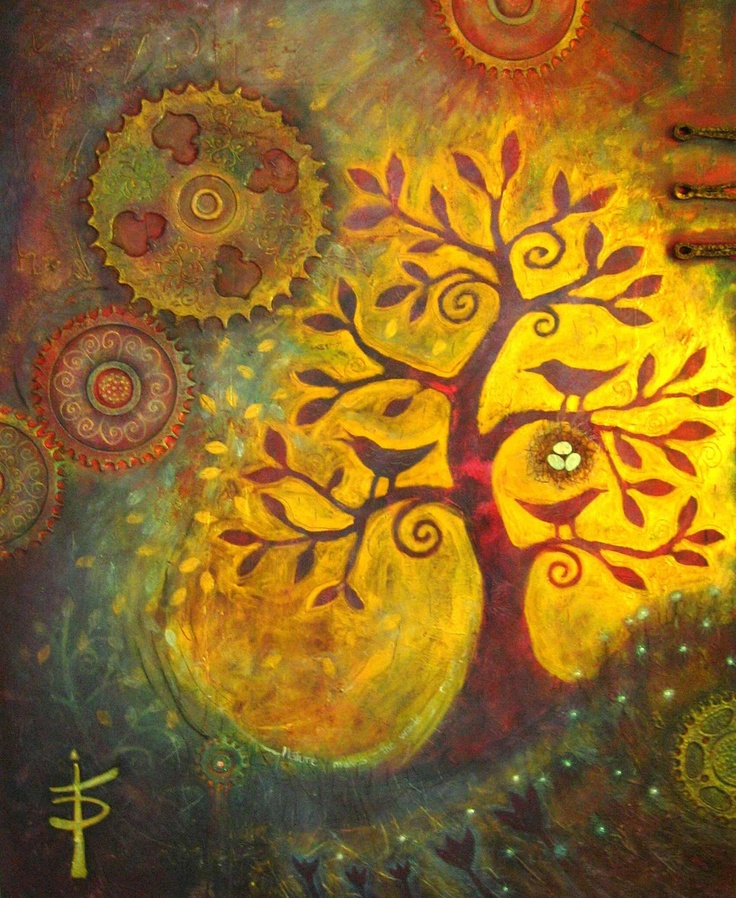
Golden TreeI was thinking the other day that there are two main lessons that we need to learn about love. I think if we get these right, then other aspects of our relationship to love and loving will tend to be good.

  • The first is that we are loved
  • The second is that we are love

We Are Loved

Knowing that we are loved comes from two levels.

  • On a conventional, everyday level remembering that we have friends, family, pets, colleagues and so on who love us, and allowing ourselves to open to and receive that love, rather than unconsciously blocking it out or forgetting about it.
  • On a more spiritual level it means remembering (and trying to experience in meditation everyday) that as a child of the Universe, a child of the Planetary Being, a child of God, or whatever way in which you conceive the forces of the Cosmos, we are loved. If you sit still in meditation and allow your mind to open to it, you will feel the conscious spiritual love of the Universe flowing into you. Its free, and its unlimited, unlike oil and other material commodities!
  • So, on a conventional and spiritual level we are loved

We Are Love

This second understanding takes it a step further to the realization that our very nature is love and to love. Again you can look at this on two levels.

  • On a conventional level the impulse to create, to form relationships, to nurture, to bond are a part of everyone. These are all characteristics of love, and we all have them. Therefore we are all love. Sometimes these impulses get misguided or expressed in inappropriate ways, but fundamentally love is at their core.
  • On a deeper level, if you sit in meditation each day and practice receiving the love of the Universe, there will come a time when the distinction of you as the receiver of love and the Universe as giver starts to drop away. The subject object duality will gradually dissolve and you will simple become the love of the Universe, full stop. At this point you become a gateway through which the creative and loving power of the Universe can flow forth into creation, you have become love.

Simple Breathing Meditation on receiving and being love.

  1. Sitting quietly in meditation, as you breathe in know that you are loved and breathe in that love, RECIEVING it deeply into your being. Follow this pattern for a few breaths.
  2. Then as you breathe out, practice BEING love. As you breathe out feel love and joy radiating out from your heart and touching others. If you like you can visualize particular people or beings such as your friends, family or pets. Alternatively you can simply practice being and giving love to all beings, with no one specific in mind.
  3. Once you are used to both forms of breathing described in sections 1&2, you can practice combining them together. As you breathe in feel yourself receiving love. As you breathe our practice being love, and giving it to all beings.
  4. End with a short period of just simply sitting in silence and being love.

Thanks for reading and all the very best for your inner growth 2011!

Toby


© Toby Ouvry 2010. You are welcome to use this article, but you must seek Toby’s permission first. Contact info@tobyouvry.com
Categories
Concentration Meditation techniques Motivation and scope Presence and being present

Two things that you need to do before you sit down and start to meditate

Firstly, before you do the two things, you need to actually set aside the time to meditate, and, when the appointed time comes you need to sit yourself down and get on with it!

There seems to be a never ending stream of excuses that our distracted mind uses to avoid the things that will make us most happy, like meditation, so take a NO EXCUSES APPROACH!

Having done this and sat down, here is what you need to do:

1)      Create a safe space – Decide that for the next 5, 10, 15 minutes, or however long you have set aside, you are in a safe space where you can relax. Draw the boundary around your meditation time. After you arise from meditation, the world may indeed come to an end, or your worst fears may be realized. Alternatively, when you get up from meditation you may win the lottery, or get asked for a date by George Cluny, Yelena Isinbeyeva (or insert God/Goddess of choice). The point is that for the time you have allocated for your meditation is down time, relaxation time, YOUR time, time to be present with yourself and not worry about the past or future.

2)      Make a strong decision to focus! – Beyond relaxation, meditation is also about building the strength and focus of your mind. It is like inner weight training or fitness training where your mind is building muscle and stamina. If you start your meditation wishy-washy, then you are probably going to continue that way, so it is really important to get focused and stay focused during the short period of time you have set aside for your meditation practice.

Two life skills that you will develop from this:

If you practice like this at the beginning of your meditations you will learn

1)      That it is possible to create a “safe space” at many times in your day, not just when you are meditating

2)      How to FOCUS. Now, there are many more things that could be said about focus, but for now let’s just reflect on the fact that ALL SUCCESSFUL PEOPLE, IN WHATEVER DISCIPLINE KNOW HOW TO FOCUS!

That last sentence is a good object of meditation in itself…

Yours in the spirit of relaxed focus,

Toby

PS: For those of you in Singapore, this coming Tuesday 21st December there will be a special Winter Solstice meditation at Sanctuary on the Hill with myself. All proceeds will be going to the River Kids Project. See you there!

Categories
Enlightened love and loving Meditation techniques

Devotion to relationship; What happens to romantic love after the peak of attraction and desire has been passed?

In my last article I write about the validity of including the experiences of attraction and desire in our experience of love and in particular our romantic relationships. In these articles I am breaking romantic love goes up into four stages:

  1. The first stage is attraction and desire
  2. The second stage is relationship
  3. The third stage is union
  4. The fourth stage is creativity

Each of these four stages can happen in five types of romantic relationship:

  1. The inner romance between the soul and personality
  2. The romance between ourself and the divine
  3. The romance between two humans (or two evolved life forms, I guess you could include some animals and some nature devas in this bracket too)
  4. The romance we can experience between ourself and landscape, or sense of place
  5. The romance between ourself and our “art” or the work that we love.

So, after the initial intensity of attraction and desire (which is a natural and enjoyable phase of romantic love) has started to fade, what happens then? The answer is we move to the next stage, which I have termed “relationship”. This starts to emerge when:

With a lover:

  • You no longer see the person that you are engaged in a romance with through an idealized projection. It starts to become obvious that the person you are with is not perfect. He or she has faults and eccentricities that you were previously prepared to gloss over and “not see”, but now there they are in plain sight.
  • It is an effort to control your ego in your interaction with your partner. When filled with attraction and desire for him/her, the ego was prepared to take a back seat, but now the novelty of the romance has worn off, your ego come back, and starts to act as crankily and grumpily as ever
  • The first obvious arguments and disagreements occur
  • You start thinking “Is this person as right for me as I thought s/he was?”
  • Issues cannot be resolved simply by having sex or schmoozing

With our soul and the divine: (I will place the two of these together here in the context of, let’s say a daily meditation practice)

  • Our initial awakening or expansion of consciousness becomes the norm, the novelty wears off
  • We start to wonder if the sense of connection and oneness that we previously felt was real. Maybe it was an illusion
  • All that is not oneness, not love, not peace starts to re-emerge in our mind
  • We become intensely aware of all the parts of our mind that our broken, hurt or otherwise suffering or in pain
  • Meditation becomes “work” no longer effortless play
  • The complexity, cruelty, difficulty, negativity of our world comes back into focus with a jolt

With landscape or sense of place:

  • The novelty of the new place becomes ordinary, we start to see the dirt on the sidewalk rather than the beauty of the overall ambiance
  • Our daily routine in the new place becomes effortful
  • We realize the damage that may have been done to the place or environment, and the amount of work that we will have to do to heal or restore the landscape

With our art or work:

  • When the initial enthusiasm for the discipline that we have been attracted to dies
  • We have our first few technical setbacks, it is going to be more complicated that we thought!
  • We have to face our work or art being critiqued (positively or negatively) by others
  • As Michelangelo said: “If people knew how much work it took to make my art, they would not think it so beautiful!”

So, what to do when this starts to happen?

Here are a few suggestions:

  • Recognize what is happening in your romance is a natural part of its unfolding. If it is going to flower into the stages of union and creativity, then it has to go through this testing phase of relationship
  • Know that the tools that will help you at this stage are things like tenderness, honesty, love and compassion (for self and others equally), integrity, a wiling-ness to see the unpleasant without blinking.
  • Don’t mourn the loss of the initial bliss of desire and attraction! If you persevere with the relationship stage desire and attraction will re-emerge in your relationship in the deeper, creative forms of passion and ecstasy (another good word for ecstasy might be rapture)
  • Recognize that the emphasis in your romance has shifted from a temporarily pleasurable phase to a phase of deeper healing, confrontation and self-enquiry (mutual self enquiry if with a person)
  • Understand this is a phase that will require effort, mindfulness, consistency and devotion
  • Don’t be attached to quick results, the challenges in this phase can last years, even decades
  • Don’t be afraid of dark times; true, non-idealized love is a treasure hard won!
  • This phase of the romance will test you to see whether the person, work, place or spiritual practice really is right for you. Whilst recognizing that work will be involved to make the relationship succeed, sometimes the work reveals that the relationship is not in fact right for you. If so, be prepared to let go. The best one liner I ever heard for this is from the Zen Roshi DT Suzuki “In relationships is it not a matter of letting go of what is there, but rather recognizing what has already gone”. You know if a relationship is over because it has already gone.

Contemplation on developing a devotion to your romantic relationships:

Consider any of your romantic relationships with any of the five types of object above. Think about the difficulties that you face, the things about it that you fear, hate, find tiresome etc…Allow yourself to feel the reality of the challenges, and the emotions that you feel.

When you have done this, then focus on developing a mind of devotion to the relationship. Devotion is a mind that has the patience, endurance and love to see the difficulties in your relationship through to their successful resolution.

Simply sit and breathe with your devotion for a while, allow it to strengthen your resolve to build a romantic relationship based around deep love, not just changeable pleasure. Know that if you follow this devotion it will lead you on the long term path to bliss and romantic fulfillment.

© Toby Ouvry 2010, you are welcome to use this article, but you must seek Toby’s permission first! Contact info@tobyoury.com

Categories
Awareness and insight Enlightened love and loving Meditation techniques Presence and being present

Can attraction and desire be part of a genuinely spiritual love?

In my previous article on the five types of romantic love I placed the dynamic of romantic love in a larger context, to include our relationship not just with other people, but also ourself, the world/the Universe, landscape and our “art” or work.

What I want to do in this next few articles is have a look at four basic stages that any romantic relationship needs to go through in order to connect us to deep levels of authentic passion and creativity.

When I talk of passion and creativity here I am not referring just to a temporary increase in our creative energy, but a connection to deeper life forces that is continuously sustained over a long period of time.

The four stages of romantic love as I have named them are:

  1. Attraction and desire
  2. Relationship
  3. Union
  4. Creativity

In the article below we will begin by looking at stage 1, attraction and desire. I will focus mainly on the relationship between two people, but bear in mind that it can apply to the other four types of romantic experience as well.

 Stage 1: Attraction and desire

Romantic attraction and desire are often seen as the antithesis of the pure, spiritual experience of love. However, if you look at the state of mind that you enter into when you first “fall in love” with a person, a place or a type of work or art, you will be able to see that it has many magical and spiritual qualities. For example

  • The whole world seems more alive and vivid
  • You seem to be in a kind of telepathic communication with the person you are romantically involved with
  • Daily problems and anxieties fall away
  • You have more energy
  • There is a natural sense of timelessness which is in fact connected to the timeless world of spirit

Attraction and desire are the starting point for ANY romantic relationship, whether the couple are on a high level of consciousness or a low one. Attraction and desire are as natural as breathing and eating for us!

(those last two lines are my answer to the question posed by the title of this article by the way!)

One of the keys to successfully negotiating and enjoying this period of intense attraction and desire is to look closely at the motivations behind your attraction and desire.

  • If you feel attracted to a person because you feel a glaring LACK or POVERTY within yourself, then it is likely that the attachment and desire is going to lead to experiences of pain and suffering in the next stage of the romance.
  •  If you fall into an attraction and desire for someone even though you feel a comfortable sense of FULLNESS and ABUNDANCE within yourself, then it is likely that you will be able to transition to the next stage of the romance where “reality sets back in” without too much problem.

Exercise for appreciating and enjoying desire and attraction

Recall a time when you were in love with someone for the first time (or if you are at that stage in your relationship now, look at what you are experiencing now). Spend a while re-creating the feelings and experiences associated with that time. Creatively imagine your way back into the feeling and texture of your mind, body and emotions at that time. Breathe with it and enjoy it for a while.

Now let go of the specifics of the romance. Forget about the person you were with, the time, the place and so on. Just focus on the essence or essential feeling that is left inside. Breathe with this for a while.

What you will find if you do this is that experiences of desire and attraction lead us quite naturally into a mystical, enraptured, timeless state of consciousness. Most of the time we fail to capitalize on this because we mistake the object of our desire for the STATE OF MIND that he/she evokes. However, if you can let go of the object of your desire and focus on the state of BEING that has been evoked in you, you will find yourself connecting to something timeless, universal and full of life-force…

© Toby Ouvry 2010. You are welcome to use this article, but you MUST seek Toby’s permission first! Contact info@tobyouvry.com

Categories
Inner vision Meditation techniques Presence and being present Primal Spirituality

Walking meditation with the primal ancestors

This is a simple meditation form that can be done as a walking meditation or a sitting form. I am going to explain it here as a walking meditation. It is a creative meditation where the imagination plays a large role in the experience. However by engaging our imagination we connect ourselves to the spiritual energies of the Planetary Being and of our own common and individual ancestral heritage, and this can be a powerful experience.

One of the things that I think we have forgotten in our contemporary day and age is a feeling of connection and participation in some of the fundamental processes of life. By this I mean simple things like:

  • When you walk you are walking on the surface of a planet that is awe inspiring and in many senses alive and responsive to us
  • Above us is a beautiful and wondrous sky with stars
  • Time moves in cycles, daily, monthly, yearly. We can experience this living process just by lifting our head and looking around
  • We are a part of something much bigger than ourselves

To our ancestors living in earlier ages, these simple and awe inspiring things would have been obvious, as they tended to live in immediate proximity to nature and were more obviously vulnerable to it and reliant upon it. In reality we are no less so I think, but this is in many ways hidden from our view these days.

In this meditation we imagine ourselves to be one of the first ancestors of our human family, and imagine what it is like to walk as they did and experience the Earth as they did. The purpose is to re-awaken a sense of wonder, connection and participation to the earth and the universe as a living thing, something naturally divine.

Walking with and as the primal ancestors

–          Find a pleasant natural environment to walk in. In time you can learnt to do this in the midst of a city, but initially it is helpful to find a peaceful place with plenty of greenery and relative quiet. If you can walk barefoot this is preferable

–          Spend a little while simply breathing and centring yourself in the present moment, attune yourself to your environment.

–          In your mind allow yourself to go back in time as far as you can to the times of your oldest, most primal relatives in distant earlier ages of the Earth. Intuitively see one of these ancestors in front of you or beside you. Get a sense of their clothing (or lack of it) their aspect, their manner, their energy. Feel your minds and hearts establishing an energetic link.

–          Walking with your primal ancestor: Walk through your environment with them walking next to you (perhaps you are holding hands). As you walk try and enter into their experience of walking on the earth, their natural awareness and reverence for nature and the Planetary being. Try and feel into their natural sense of timelessness, their understanding of the seasons, of the elements.

–           Walking as your primal ancestor: Once you have done this a few times you can try walking AS your primal ancestor, that is to say you see yourself in their body, see the world through their eyes, and think with their thoughts as you walk.

–          You may find that each time you do the meditation you meet the same ancestor, or you may find that they change periodically. Trust your intuitive imagination here!

Click here to find out about upcoming classes by Toby on the Six stages of Love.

© Toby Ouvry 2010, you are welcome to use this article, but you must seek Toby’s permission first! Contact info@tobyouvry.com

Categories
Concentration Meditation techniques Presence and being present Uncategorized

Minister Mentor Lee Kuan Yew comments on his own daily meditation practice

(This is extracted from an interview that Lee Kuan Yew recently did with the New York Times, I am not going to add or subtract anything from it, just present it as it is – Toby)

Q: “Tell me about meditation?” (Seth Mydans, New York Times/International Herald Tribune)

Singapore’s former Prime Minister Lee Kuan Yew: “Well, I started it about two, three years ago when Ng Kok Song, the Chief Investment Officer of the Government of Singapore Investment Corporation, I knew he was doing meditation. His wife had died but he was completely serene. So, I said, how do you achieve this? He said I meditate everyday and so did my wife and when she was dying of cancer, she was totally serene because she meditated everyday and he gave me a video of her in her last few weeks completely composed completely relaxed and she and him had been meditating for years. Well, I said to him, you teach me. He is a devout Christian. He was taught by a man called Laurence Freeman, a Catholic. His guru was John Main a devout Catholic. When I was in London, Ng Kok Song introduced me to Laurence Freeman. In fact, he is coming on Saturday to visit Singapore, and we will do a meditation session. The problem is to keep the monkey mind from running off into all kinds of thoughts. It is most difficult to stay focused on the mantra. The discipline is to have a mantra which you keep repeating in your innermost heart, no need to voice it over and over again throughout the whole period of meditation. The mantra they recommended was a religious one. Ma Ra Na Ta, four syllables. Come To Me Oh Lord Jesus. So I said Okay, I am not a Catholic but I will try. He said you can take any other mantra, Buddhist Om Mi Tuo Fo, and keep repeating it. To me Ma Ran Na Ta is more soothing. So I used Ma Ra Na Ta.

You must be disciplined. I find it helps me go to sleep after that. A certain tranquility settles over you. The day’s pressures and worries are pushed out. Then there’s less problem sleeping. I miss it sometimes when I am tired, or have gone out to a dinner and had wine. Then I cannot concentrate. Otherwise I stick to it… a good meditator will do it for half-an-hour. I do it for 20 minutes.”

Q: “So, would you say like your friend who taught you, would you say you are serene?”

Mr Lee: “Well, not as serene as he is. He has done it for many years and he is a devout Catholic. That makes a difference. He believes in Jesus. He believes in the teachings of the Bible. He has lost his wife, a great calamity. But the wife was serene. He gave me this video to show how meditation helped her in her last few months. I do not think I can achieve his level of serenity. But I do achieve some composure.”

Read full transcript here 

Upcoming October workshop with Toby: “An introduction to meditation as a way of overcoming stress, anxiety and mental busyness.”

Categories
Awareness and insight Concentration Inner vision Meditation techniques Presence and being present spiritual intelligence

The three stages of meditation practice as an art-form

The first stage is using meditation as an art-form to learn to calm the mind, overcome distractions and develop inner peace.

The second stage is using the inner peace and focus you get from the first stage in order to deepen your experience of concentration, awareness and insight.

The third stage is accessing and stabilizing the subtle inner abilities/gifts that you become aware of through stages one and two; understanding what they and learning how to apply them practically/creatively as a way of being of service to the world.

The first stage you could call the art of peace, the second stage you could call the art of concentration and insight, the third stage you could call the art of creative or spiritual service.

Let’s say you start meditating tomorrow, for twenty minutes a day for the next fifteen years. By the end of the first five years you will have probably become competent at stage one. By the end of ten years you will probably have become competent at stage two. By the end of fifteen years you will have a working knowledge of stage three. This will give you a foundation. 

Fifteen years may seem like a long time, but if you are persistent for the first two or three years, it may well be that you will have ceased being all that goal oriented and learned to simply enjoy the journey that the art of meditation offers to the human traveller.

As the practitioner of any genuine art form will tell you, there are no short cuts to genuine mastery! 

PS: Brief plug for the new series of meditation classes on “How to develop our spiritual intelligence and inner wisdom” starting this Tuesday 24th August, I guarantee it will be of interest to any meditator or aspiring meditator. For those not in Singapore it is available as a series of three recordings. 

© Toby Ouvry 2010, you are welcome to use this article, but you must seek Toby’s permission first.

Related article: Is your meditation a form of therapy, and art-form or a spiritual practice?