Here is a free meditation recording on passion from the classes on Romantic Love that I recently did, enjoy!
With metta,
Toby
© Text and audio Toby Ouvry 2010, please do not use without permission
Here is a free meditation recording on passion from the classes on Romantic Love that I recently did, enjoy!
With metta,
Toby
© Text and audio Toby Ouvry 2010, please do not use without permission
For the purposes of this conversation, lets say there are here are two types of religion that can be distinguished, exoteric and esoteric
Exoteric religion is DIVERGENT. That is to say that generally each of its stories are different. Externally for example Buddhism, Paganism, Taoism and Buddhism all look different. Almost inevitably people who are only familiar with exoteric religion will see their religion as different from and better than other religions. Exoteric religion when misunderstood can be deeply divisive and result in war, hostility and agression as we all know.
Esoteric religion is CONVERGENT. This means to say that when you study esoteric religion, what you tend to find is common or universal patterns amongst all the different faiths and religions of the world. Esoteric religion, meaning inner spiritual experiences resulting from engaged spiritual practices reveals common, universal patterns that unite and bring together the diverse religions of the world.
Esoteric religion has become known as the “Perenneal Philosophy” or “Perenneal Religion”, meaning the common religion and spirituality that we all share.
What are the basic patterns and insights of the Perinneal Philosophy? Here is a brief summary by Ken Wilber, from his book “Grace and Grit”chapter 11:
“Let me start with a short and simple list. This is not the last word on the topic, but the first word, a simple list of suggestions to get the conversation going. Most of the great wisdom traditions agree that:
1. Spirit, by whatever name, exists.
2. Spirit, although existing “out there,” is found “in here,” or revealed within to the open heart and mind.
3. Most of us don’t realize this Spirit within, however, because we are living in a world of sin, separation, or duality — that is, we are living in a fallen, illusory, or fragmented state.
4. There is a way out of this fallen state (of sin or illusion or disharmony), there is a Path to our liberation.
5. If we follow this Path to its conclusion, the result is a Rebirth or Enlightenment, a direct experience of Spirit within and without, a Supreme Liberation, which
6. marks the end of sin and suffering, and
7. manifests in social action of mercy and compassion on behalf of all sentient beings.
Does a list or something like it make sense to you? Because if there are these general spiritual patterns in the cosmos, at least wherever human beings appear, then this changes everything. You can be a practicing Christian and still agree with that list; you can be a practicing Neopagan and still agree with that list.”
So, which religion and spirituality are you practising? Exoteric or esoteric?
© Toby Ouvry 2010, you are welcome to use this article, but you must seek Toby’s permission first!
PS: A brief reminder of this coming Saturday December 11th’s workshop “Three simple steps to managing stress through meditation” Follow the link for full details.
How long does it take to expereince the benefits of meditation? Oftentimes it can be shorter than you think. Just taking a minute at strategic intervals in your day can really make a difference!
Now and again I intend to post some “One minute meditations” on the blog. Here is the first on concentration, which was the meditation topic that recieved the most votes last week when I asked on the Facebook page. Enjoy!
Have a great day filled with relaxed concentration!
Toby
[audio:https://tobyouvry.com/wp-content/uploads/2010/12/One-minute-concentration-meditation2.mp3|titles=One minute concentration meditation]PS: Please note the upcoming 90 minute mini workshop entitled “THREE SIMPLE STEPS TO MANAGE STRESS THROUGH MEDITATION” on the 11th December. Very suitable for beginniers, and he proce includes both a recording of the workshop and three short “five miute meditations” in MP3 format.
One of the things that was emphasized in my Buddhist meditation training (and this holds true for most contemplative spiritualities) was that there is really nothing useful about anger, it was entirely destructive. This is further backed up by statements such as “one moment of anger is enough to destroy the merit (good karma) that you can create over aeons” and “a moment of anger can cause you to have a hundred negative rebirths in the future”.
My present take on anger is that it is a powerful emotion that is basically neutral in nature, and that can be used in positive or negative ways.
Anger is NOT the same thing as raw aggression, cruelty, bullying, hatred, acting to deliberately harm. It can just as easily be expressed as personal power, positive assertiveness, the powerful/wrathful expression of compassion and so on…
With this in mind, here are three useful analogies* for what positive anger can be like:
Dealing with anger is not easy, but that does not give us an excuse to shy away from the responsibility that we have for harnessing it to our compassionate impulses and using it for the best and highest purposes of ourself and the World.
*These analogies if first heard from the work of Ken Wilber and Robert Masters
Related article:
In order to find real happiness, first you have to get mad as hell!
© Toby Ouvry 2010, you are welcome to use this article, but you must seek Toby’s permission first

Tomorrow I will be doing a class entitled “The transformative power of bliss and ecstasy – Connecting to the experience of enlightened love” . So, I gave myself 20 minutes to write down some conditions that I felt were important for developing bliss and ecstasy in our life in general, and romantic relationships (as in all 5 types of romantic relationship). Here is what I came up with:
© Toby Ouvry 2010, you are welcome to use this article, but you must seek Toby’s permission first. Contact info@tobyouvry.com
In my last article I write about the validity of including the experiences of attraction and desire in our experience of love and in particular our romantic relationships. In these articles I am breaking romantic love goes up into four stages:
Each of these four stages can happen in five types of romantic relationship:
So, after the initial intensity of attraction and desire (which is a natural and enjoyable phase of romantic love) has started to fade, what happens then? The answer is we move to the next stage, which I have termed “relationship”. This starts to emerge when:
With a lover:
With our soul and the divine: (I will place the two of these together here in the context of, let’s say a daily meditation practice)
With landscape or sense of place:
With our art or work:
So, what to do when this starts to happen?
Here are a few suggestions:
Contemplation on developing a devotion to your romantic relationships:
Consider any of your romantic relationships with any of the five types of object above. Think about the difficulties that you face, the things about it that you fear, hate, find tiresome etc…Allow yourself to feel the reality of the challenges, and the emotions that you feel.
When you have done this, then focus on developing a mind of devotion to the relationship. Devotion is a mind that has the patience, endurance and love to see the difficulties in your relationship through to their successful resolution.
Simply sit and breathe with your devotion for a while, allow it to strengthen your resolve to build a romantic relationship based around deep love, not just changeable pleasure. Know that if you follow this devotion it will lead you on the long term path to bliss and romantic fulfillment.
© Toby Ouvry 2010, you are welcome to use this article, but you must seek Toby’s permission first! Contact info@tobyoury.com
In my previous article on the five types of romantic love I placed the dynamic of romantic love in a larger context, to include our relationship not just with other people, but also ourself, the world/the Universe, landscape and our “art” or work.
What I want to do in this next few articles is have a look at four basic stages that any romantic relationship needs to go through in order to connect us to deep levels of authentic passion and creativity.
When I talk of passion and creativity here I am not referring just to a temporary increase in our creative energy, but a connection to deeper life forces that is continuously sustained over a long period of time.
The four stages of romantic love as I have named them are:
In the article below we will begin by looking at stage 1, attraction and desire. I will focus mainly on the relationship between two people, but bear in mind that it can apply to the other four types of romantic experience as well.
Stage 1: Attraction and desire
Romantic attraction and desire are often seen as the antithesis of the pure, spiritual experience of love. However, if you look at the state of mind that you enter into when you first “fall in love” with a person, a place or a type of work or art, you will be able to see that it has many magical and spiritual qualities. For example
Attraction and desire are the starting point for ANY romantic relationship, whether the couple are on a high level of consciousness or a low one. Attraction and desire are as natural as breathing and eating for us!
(those last two lines are my answer to the question posed by the title of this article by the way!)
One of the keys to successfully negotiating and enjoying this period of intense attraction and desire is to look closely at the motivations behind your attraction and desire.
Exercise for appreciating and enjoying desire and attraction
Recall a time when you were in love with someone for the first time (or if you are at that stage in your relationship now, look at what you are experiencing now). Spend a while re-creating the feelings and experiences associated with that time. Creatively imagine your way back into the feeling and texture of your mind, body and emotions at that time. Breathe with it and enjoy it for a while.
Now let go of the specifics of the romance. Forget about the person you were with, the time, the place and so on. Just focus on the essence or essential feeling that is left inside. Breathe with this for a while.
What you will find if you do this is that experiences of desire and attraction lead us quite naturally into a mystical, enraptured, timeless state of consciousness. Most of the time we fail to capitalize on this because we mistake the object of our desire for the STATE OF MIND that he/she evokes. However, if you can let go of the object of your desire and focus on the state of BEING that has been evoked in you, you will find yourself connecting to something timeless, universal and full of life-force…
© Toby Ouvry 2010. You are welcome to use this article, but you MUST seek Toby’s permission first! Contact info@tobyouvry.com
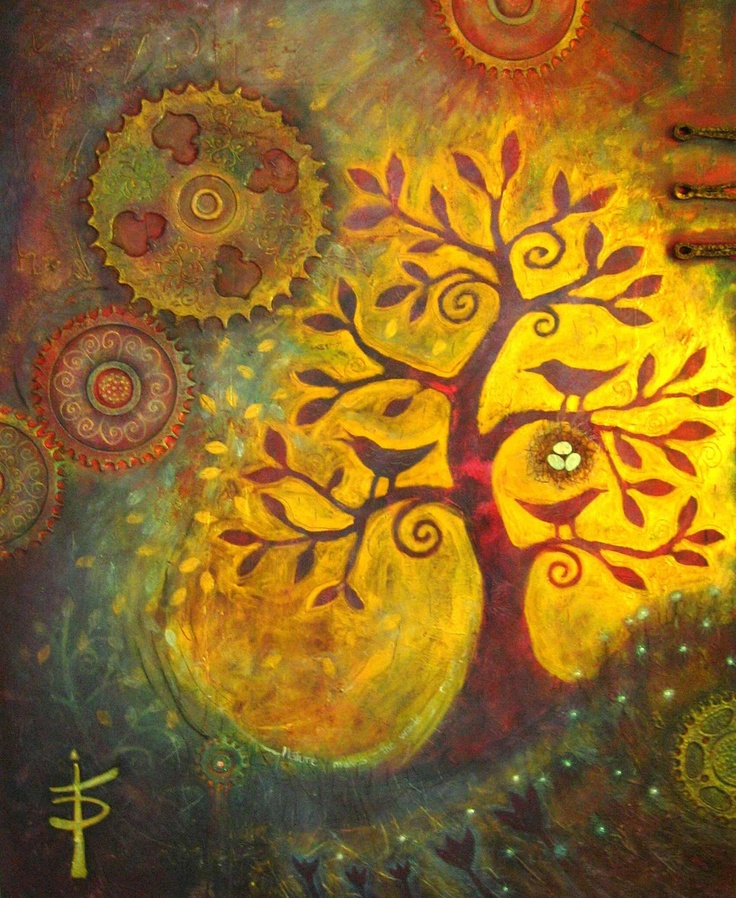
When you think of romantic love, what type of love do you think of? Chances are that most people will think of love between two individuals who fall in love with each other. What I want to do in this article is broaden the idea of what romantic love could be to include five ways of experiencing romantic relationships:

Before I go into detail with each of these, I want to give a working definition of what romantic love is, for the purposes of this article:
“Romantic love is a type of love that has 4 stages. Firstly there is an attraction toward or a desire for the object (person or otherwise). Secondly we move into relationship with the object of attraction or desire. Thirdly we experience a union with the object, fourthly that union gives rise to a creative result.”
So, in a subsequent article I will be going into these four stages in more detail, but for now within the context of this short definition let’s have a look at the five types of romantic love:
Suggested reflection:
When you have a quiet moment, work your way thoughtfully through each of these five ways in which romantic love can be experienced. See what types of free associations and feelings come up with regard to the way in which you currently relate to your relationship to yourself, the Divine, your lover, your work/art and the place where you live (or other landscape/place that you love). What new ways of experiencing your life arise when you place these different parts of your life in a “romantic” context?
Final note: Still haven’t found your soul mate yet? Never mind, as you can see there are four other types of romantic relationship you can be pursuing in the mean time 😉
© Toby Ouvry 2010, you are welcome to use this article, but you MUST seek Toby’s permission first! Contact info@tobyouvry.com
Here are five reasons why people are motivated to make a change in their life:
1) Self-hate – “I’ve got to change because I hate myself so much”. At this level you have to change because the level of dislike that you feel when you look in the mirror or contemplate your behaviour is just no longer tolerable. Think many of the contestants on “the biggest looser” or a junkie who has been told he will die unless he quits his habit. Unfortunately, for many of us it has to get this bad before we can really make genuine change.
2) Self-improvement – Here you can like who you presently are, but you have become hungry enough in evolutionary terms to want to continue to change and transform into something even better. High achievers in any discipline; meditation, sport, sport business or whatever, all have to get to at least this level to be where they are.
3) I want to benefit my circle of influence – Sometimes we can’t bring ourself to change our behaviours just for ourself (maybe we don’t feel we are worth it?), and it takes a sense of responsibility to others to make us change. I saw five minutes of an interview with Pamela Anderson last night. In it she explained how she tolerated violence from her ex-husband until she had kids, when he demonstrated violence to her in their company she left him. Classic example.
4) I want to benefit the world – Here our concern extends beyond our ego and our circle of friends and family to include the whole world as our object of compassionate care. This compassionate care for the Whole has become strong enough for us to actually change ourself and our behaviours.
5) The universe wants to benefit others through me – Here there is to a greater and greater degree a sense in which our actions are a spontaneous expression of something greater than ourself. Rather than us willing the action, the action flows though us from some deeper source. The transformative action feels spontaneous, effortless, choiceless.
In this arrangement, level five is the highest motivation, level one is the lowest. However the key to mastering them all is to understand that level 5 transcends and includes all the others. You can be operating largely from level five whilst at the same time:
One minute mindfulness of motivation:
For two or three of your actions each day, sit down before hand and think to yourself “Why am I doing this?” Mentally bring to mind the five levels of motivation above (or print off the above summary and have a look at them as you ask yourself the question). How many of these motivations are you currently exercising in your life in an appropriate way? How many of them can you start introducing into your daily actions to deepen and enhance them?
© Toby Ouvry 2010, you are welcome to use this article but you must seek Toby’s permission first. Contact info@tobyouvry.com
The series of meditation classes that I am teaching at the moment has got me thinking about different ways in which you can express enlightenment in your daily life. Here is a profile of five enlightened powers that, if consciously practised together will make your own attempts to embody enlightenment in the market place more powerful:
The five types of power are:
The power of embodiment – The basic practice here is remembering that you are, in essence a spark of Universal spirit experiencing (temporarily) a physically embodied life on Earth as a human. Whatever situation you find yourself in, grounding your awareness in your true identity and not getting caught up in your small or egoic identity is the power of embodiment. Wherever you are, remember WHO you are!
The power of devotion – This power is the power of invoking prayers to forces greater than oneself regarding any situation that you may be in. The power of devotional prayer connects higher and deeper energies into the situation, and enables them to participate in the event more directly, thus increasing the chances of a more enlightened outcome (See my article on “Why worry when you can pray?” ).
Another aspect of this power could be said to be your devotion to your highest ideal and highest outcomes, not settling for second best so to speak.
The power of affirmation – This power is really a mental training. It involves paying attention to the thoughts and images that you are having, and ensuring that as far as possible they are affirming the highest and best outcome for any given situation. Our thoughts and imagination have tremendous unseen power to influence events one way or another.
The power of energy – This power entails being aware of the subtle energy present in your body and in the environment, and learning to develop and maintain as harmonious, positively powerful and stable subtle body energy as you can at all times. Simply being a point of stable, expansive enlightened energy in any situation will be of help, even if we do or say nothing.
The power of karmic action – This is choosing to physically act and speak in a way that is congruent with the above four enlightened powers, so that the actual daily actions that you engage in are a reflection of the higher intentions that you have been developing.
A five minute meditation for engaging the five enlightened powers in your daily life:
If you do this exercise once a day over the next 7 days, it will give you a feel for how to engage the five powers in any given action.
– Minute 1 – Embodiment: Select the life situation that you want to engage the five enlightened powers with. Visualize yourself in that situation. Breathe deeply into the core of your being and body, find the formless, timeless space of pure awareness in your heart that is your True or Universal Self. Ground yourself in the awareness that this is your true identity.
– Minute 2- Devotion: Offer a prayer in whatever manner feels appropriate for the highest good of the situation. Invoke any higher or greater universal powers into the situation and request their help. Give them permission to participate fully in working toward the best outcome.
– Minute 3 – Affirmation: Offer your highest and most encouraging thoughts regarding the situation. For this time see, think and visualize the highest good and the best outcome
– Minute 4 – Energy: Feel the subtle energy and light vibration in your body as strong, balanced, harmonious and stable. See this energy spreading out into the situation and the energies of all the people involved. Feel and experience this strong balanced subtle force flowing in the dynamic of the whole scene.
– Minute 5 – Karmic Action: For the last minute think about practical things that you may be able to do or say to take the situation forward. Make a metal note of when and where you are going to try and engage in these practical actions.
Conclude with a dedication that the energy of all the five forces that you have generated in your meditation should be a cause for the most enlightened outcome possible!
Finnish.
© Toby Ouvry 2010 you are welcome to use this article, but you must seek Toby’s permission first! Contact info@tobyouvry.com