Categories
Insight Meditation Integral Awareness Life-fullness Meditating on the Self Meditation and Psychology Meditation techniques mind body connection Mindful Confidence Mindful Resilience Mindful Self-Leadership Presence and being present Uncategorized

Mindfully talking, & not talking to yourself

“The most important conversations you are having are the inner ones that you are having with yourself. Has what you have been saying today inwardly helped or hindered you?”

Dear Toby, 

This week’s article looks at the inner conversation that we all have with ourselves, and how to start working with it mindfully…

A couple of free seasonal meditations coming up, the Winter solstice & new year online sessions, you are all invited!
 
In the spirit of self-talk,

Toby


Article: Mindfully talking, & not talking to yourself
 
Most of the time you are talking to yourself
 
For almost all people, there is an internal conversation we are having with ourself all the time. It is probably the most important conversation you are having because:

  • As mentioned, it is going on almost all the time, whether someone else is around or not
  • If it is working for you, it can be an almost constant source of support, encouragement, and resilience
  • If it is working against you, it is an almost constant source of discouragement, conflict, and weakness
  • You can’t escape it by running away. Unlike other people, the voice follows you wherever you go!

 
Noticing the conversation & making adjustments
 
Step one then could be to recognize the inner conversation and acknowledge its importance. This can then be a motivator to start working with it. To start working with it, we need to start to watch it and notice what’s going on as we talk to ourselves!
As in all mindfulness practice just becoming aware of it, and starting to study it as an object of consciousness can be profoundly transformative. Based on your observation, you can then practice making small, skilful interventions in the conversation that make it more balanced and useful for you. For example, there is a tremendous difference between
“You’ve just wasted half an hour procrastinating, you idiot, why do you always do that”
And:
“Its normal for me to take half an hour or so to settle into my work, lets see if I can make it just twenty minutes today!”
It’s not rocket science, but it can make a big impact, particularly if we do it regularly, and start to get the compound effect going!
 
 
Learning to suspend the conversation
 
Part of the joy of meditation of course, is to learn that you can actually switch the conversation off, what a relief! Ways to begin the conversation suspension include:

  • Watching the spaces between the words in your inner conversation, dropping into them and gradually extending them
  • Placing short pauses between your inbreath and out breath, practising suspending the conversation just for those pauses

Exercises such as there help to build familiarity with the state of silence, even when our mind is still quite active
 
Being pro-active about the conversation
 
A final method that I can’t recommend highly enough is to activate your ‘inner life-coach’. This means you are taking charge of your inner conversation and saying things to yourself that are encouraging, supportive, balanced, and wise as you go through your day. Being pro-active about this conversation when I play sport is the single best and most consistent tool I have found to bring my best performance out. But, and more importantly, if life is the sport, and today, right now is ‘game day,’ then the time to activate this capacity within yourself is now!
Sometimes it may feel like being pro-active like this takes a lot of work. But then its a lot more work living with a miserable, oppressive inner voice. So you may as well engage in the inner work that is taking you somewhere, rather than just being miserable and running round in circles!
 
Practicum

  • Set aside time to watch your inner conversation with a degree of curious objectivity
  • Practice making small skilful interventions
  • Practice ceasing the conversation for short periods
  • Cultivate your ‘inner life-coach’!

 
Related articlesLife-fullness
From ‘life is a problem and…’ to ‘life is good and…’
Trusting your inner guru
Four ways of working with your inner voice

© Toby Ouvry 2025, you are welcome to use or share this article, but please cite Toby as the source and include reference to his website www.tobyouvry.com


Follow Toby onLinkedInYouTubeInstagram

Integral Meditation Asia

Online Courses 1:1 Coaching * Books * Live Workshops * Corporate Mindfulness Training *Life-Coaching *  Meditation Technology

Categories
A Mind of Ease creative imagery Inner vision Life-fullness meditation and creativity Meditation techniques Mindful Resilience

From ‘life is a problem and…’ to ‘life is good and…’

“Meditation is developing our capacity to generate happiness within & project it outward, rather than needing outer circumstances to align before we can be happy”

Dear Integral Meditators, 

This week’s article explains a fundamental paradigm for how meditation works that I use often in my workshops and sessions. Once you ‘get it’ its easy to stay motivated in your meditation practice!

Heads up for this Saturday’s Saturday 13th December, 9am-12.30pm – Psychic & Psychological Self-defence half day workshop, & also I have just posted the new class series’ for January: 
Tues 13th, Weds 14th January, & then weekly – Beginners mind, resilient body – a 10-week integral meditation course
Starts Saturday 17th January, 5.30-6.15pm, & then weekly – 
Beginners mind, resilient body deep-dive: An 11 -session practice series

 
In the spirit of ‘life is good and…’,

Toby


Article: From ‘life is a problem and…’ to ‘life is good and…’
 
One definition of meditation that I learned from my Tibetan Buddhist days is this one:
 
“Meditation means to focus our attention on an object (or in a state) that, when we dwell on it, causes our mind to become positive, calm and/or happy.”
 
The task of a meditator from this point of view is to discover as many ‘positive’ states, ways of thinking, ways of non-thinking, emotions, temperaments, dispositions and so on as they can. A meditator then tries to keep her attention oriented around one or other of these positive objects or states during the day. The net effect of this is that they spend most of their life in a condition of happiness, even in the face of substantial obstacles. To be a meditator is empowering in this sense, because we are developing our capacity to generate happiness within ourselves and project it outward, rather than needing outer circumstances to align before we can be happy.
 
From life is a problem to life is good
 
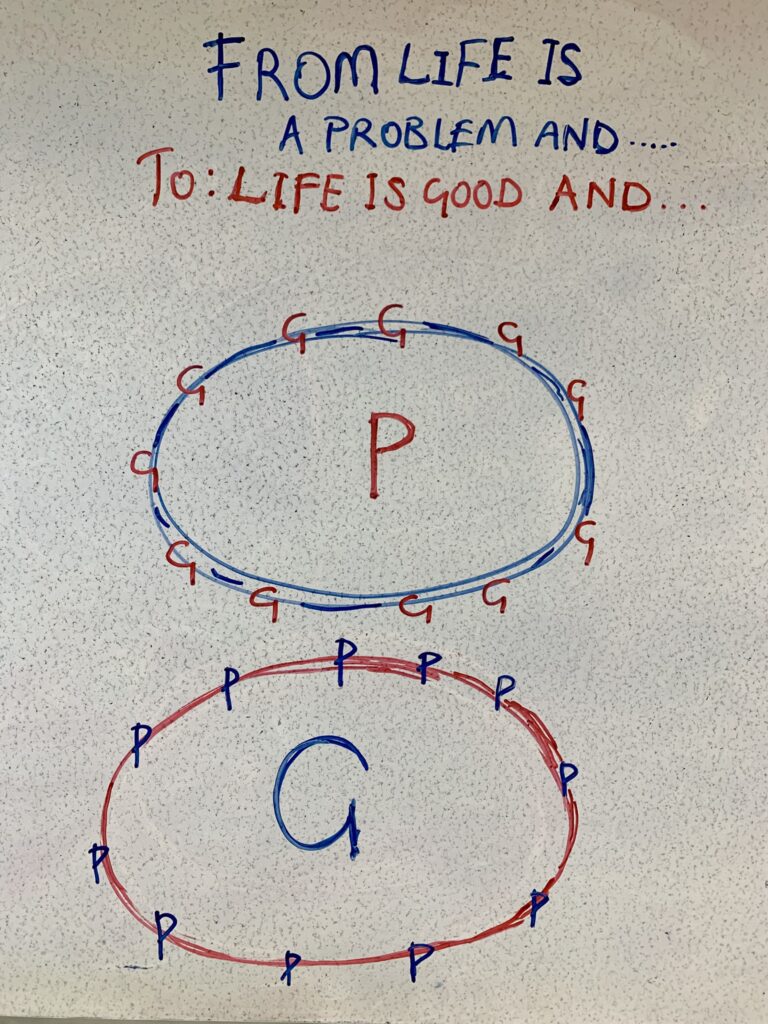
One simple paradigm I often use to illustrate the basic task and practice of a meditator is the one that you can see in the picture. Both oval shapes represent a person’s field of awareness.
 
Life is a problem and… The upper circle represents the everyday persons awareness field. In it you can see in the center there is a ‘P’ which stands for problem. On the edge of the circle, you can see several small ‘g’s, which represent the good things in our life. Unless we are careful, this is a place where we can spend a lot of our day and life; with our problems front and center of our awareness, and the good things in our life a secondary, background element of experience. With this perceptual dynamic or habit in place we literally experience our life as mostly a problem, as it is our problems that appear front and center of our awareness. This position can feel very defensive; our problems dominate, and the good things lack power due to their peripheral position.
 
What we are trying to do as meditators is ‘flip’ this so that our perceptual state goes from ‘life is a problem and…’ to:
 
Life is good and… the lower circle you can see has a ‘G’ for good things in the center, with the ‘p’ for problems pushed out to the periphery. Here you are simply keeping the good things in your life front and center of your awareness as you go through the day. You can understand ‘good things’ to represent a broad category here, that you are then making specific to your particular life experience. Because we keep the good things front and center, the power of our problems to dominate our awareness reduces as they are pushed out to the periphery.
An important thing to note here is that the change is perceptual, nothing external needs to change for us to do this. The difference between someone with the ‘P’ mostly front and center of awareness, and someone with a ‘G’ is the habit and discipline of focusing awareness in a particular way. You could have two people with almost identical life-circumstances, but a completely different experience simply due to their habit of focus. When we push the ‘p’s out to the periphery, we are not denying our problems, or the need to deal with them effectively. We are just placing them in a particular context, the ‘G’s, in a way that puts them in perspective and makes them feel much more manageable
 
A simple practicum: Set aside a fixed amount of time, say 5-10mins. Watch your awareness. Notice the ‘P’s often taking center-stage. Practice placing your ‘G’s front and center instead, pushing the ‘p’s benevolently to the periphery. Notice how your experience changes, and enjoy.
 
Related articleMeditation – Life as a positive mindfulness game 
© Toby Ouvry 2025, you are welcome to use or share this article, but please cite Toby as the source and include reference to his website www.tobyouvry.com


Upcoming classes & workshops

Ongoing on Tuesday’s & Wednesday’s (live & online), 7.30-8.30pm 
– Weekly integral meditation classes

Starts Tuesday 11th & 12th November, 7.30-8.30pm – Going beyond your limitations, tapping into your hidden strengths – Meditating with your bright shadow, a 6-week course

Starts Saturday 15th November, 5.30-6.15pm SG time – Bright shadow meditation Deep-dive – A 5 session practice series

Saturday 13th December, 9am-12.30pm – Psychic & Psychological Self-defence half day workshop

Tues 13th, Weds 14th January, & then weekly – Beginners mind, resilient body – a 10-week integral meditation course

Starts Saturday 17th January, 5.30-6.15pm, & then weekly – Beginners mind, resilient body deep-dive: An 11 -session practice series


Follow Toby onLinkedInYouTubeInstagram

Integral Meditation Asia

Online Courses 1:1 Coaching * Books * Live Workshops * Corporate Mindfulness Training *Life-Coaching *  Meditation Technology
Categories
Awareness and insight creative imagery Inner vision Integrating Ego, Soul and Spirit Life-fullness Meditation and Art meditation and creativity Mindful Self-Leadership Motivation and scope Primal Spirituality spiritual intelligence

Getting your imagination & creativity to work for you

“Your reality is a dynamic co-creation between your imagination & your environment. Learn how to use this to open doors in life for you, rather than close them”

Dear Integral Meditators, 

This week’s article focuses on the psycho-dynamic relationship between your imagination and your environment. 
If you enjoy it, then feel free to come along to the Wednesday and Saturday bright shadow meditations, which are psycho-dynamic in the way described below. 

Heads up for the last workshop of the year, Saturday 13th December, 9am-12.30pm – Psychic & Psychological Self-defence half day workshop, also very much an ‘evolutionary magical’ focus here.
 
In the spirit of the imaginal,

Toby


Your inner magician part 2 – getting your imagination & creativity to work for you
 
In my previous article on activating your inner magician I defined your inner magician as:
“The inner magician is that part of our inner self that is both creative and magical, and that if we harness it effectively has the power to change our daily life and experience for the better”


I then went onto define magic as defined magic as:
“The higher expression of our inner magician is that part of self that is able to work with the higher, evolutionary or developmental expression of magic.”  
 
This article looks at the second and third aspect of activating our inner magician:
 
“Engaging our creative imagination consciously to ‘sculpt’ our experience of any given situation for the better,” and
 
“Not being content to let good ideas remain in our head, but actively finding ways of expressing those ideas concretely in our daily life.”
 
Aspect 2: Engaging our creative imagination consciously to ‘sculpt’ our experience of any given situation for the better
 
We think that there is a concrete reality ‘out there,’ waiting to be discovered, that has some kind of fixed or intrinsic qualities. Actually this is not quite the case. What happens is that the “bare facts” our outer reality meets our mind, which then imagines or projects its own ideas onto that outer reality.
From this we can see that what we experience in life has something to do with the “facts” of our life, but equality as much it also has to do with our imaginative response to those facts. Our reality and our imagination are in a constant process of interacting together in a psycho-dynamic manner. To work with magic is to realize the power of your imagination to co-create any given situation in your life, and leverage on that imaginative power effectively. For more on this you can read my past article “Taking your creative imagination as your object of meditation”.
Our imagination is deeply and powerfully magical, it can create great art and great bliss, or it can create our own private hell.
 
Aspect 3: Not being content to let good ideas remain in our head, but actively finding ways of expressing those ideas concretely in daily life.
 
Our inner magician realizes that any good idea that we understand, create or hear about is an INJUNCTION. An injunction is somewhere between an invitation and an obligation. This means that when we have or hear a great idea, we recognize that our understanding of this idea is INVITING us to use the idea as a practical tool with which we can change our life for the better. By virtue of understanding of the idea we could also say that we have an OBLIGATION to try and integrate that idea into our life. If we just let that idea remain in our intellect that would be a great waste right? Many of us are guilty of this; having great insights and ideas about our life, but not implementing them, thus wasting them.
So, our magical self or inner magician is delighted when good idea come our way and immediately seeks ways to start expressing these ideas in a practical way to change our life for the better.
 
Practical Work
 
If you want to follow up on this article on a practical level, here are two suggestions:
 

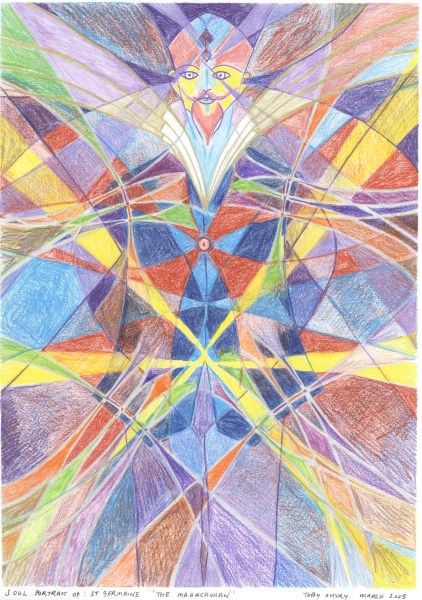
  1. Use the image above as an object of meditation in order to help you to intuitively connect to your own “Inner Magician”. Alternatively find a picture of a ‘magical person that resonates with you, and use that as a visual base for connecting to your IM.
  2. Observer the interaction between your imagination and inner conditioning with your outer environment. Notice how your reality is a dynamic co-creation between these two. Reflect on how to use this to open doors in life for you, rather than close them.
  3. As soon as you have or understand a good idea intellectually, immediately ask yourself “How can I make this idea a concrete, practical reality in my life?” Do whatever you can to act upon your answer to this question.

 
Related articleConnecting to your magical self or inner Magician part 1

 
© Toby Ouvry 2025, you are welcome to use or share this article, but please cite Toby as the source and include reference to his website www.tobyouvry.com


Upcoming classes & workshops

Ongoing on Tuesday’s & Wednesday’s (live & online), 7.30-8.30pm 
– Weekly integral meditation classes

Starts Tuesday 11th & 12th November, 7.30-8.30pm – Going beyond your limitations, tapping into your hidden strengths – Meditating with your bright shadow, a 6-week course

Starts Saturday 15th November, 5.30-6.15pm SG time – Bright shadow meditation Deep-dive – A 5 session practice series

Saturday 13th December, 9am-12.30pm – Psychic & Psychological Self-defence half day workshop


Follow Toby onLinkedInYouTubeInstagram

Integral Meditation Asia

Online Courses 1:1 Coaching * Books * Live Workshops * Corporate Mindfulness Training *Life-Coaching *  Meditation Technology