Categories
Awareness and insight Inner vision Integral Awareness Meditation and Psychology Meditation techniques Mindfulness

Getting ‘Out of Your Head’

Dear Integral Meditators,

What would happen if instead of thinking all the time you were able to ‘get out of your head’ and relax when you wanted to? The article below describes a simple mindfulness technique that you can use to start doing this.

In the spirit of getting out of our heads,

Toby
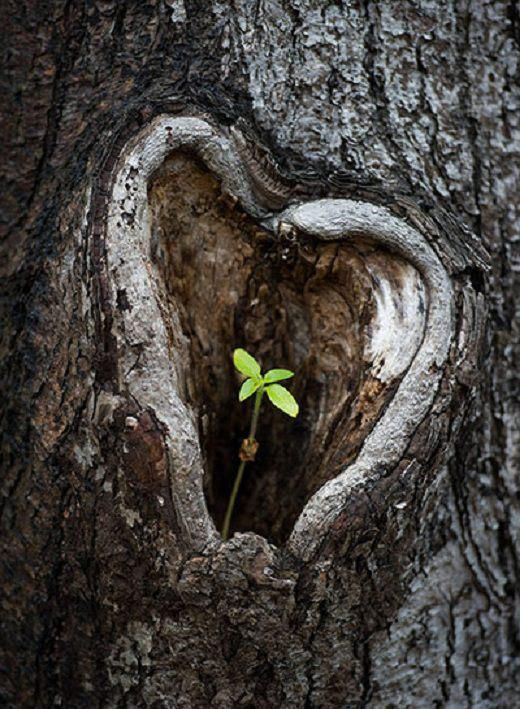


Getting Out of Your Head

Here is a simple mindfulness exercise for ‘getting out of your head’ and into your body:
Sitting down, begin by noticing that your energy and sense of who you are tends to locate itself in your head and behind your eyes. It feels like ‘you’ are in the ‘control center’ in your head. Having noticed this, now try gently to ‘sink’ your sense of gravity down from your head into your torso. Initially try and go just a little way down into the torso, perhaps to the level of the collar bone. Then after a while try going a bit further down, say into the middle of the chest. Take some time to breathe, be present and notice how your experience starts to change when you bring your center of gravity down in this way; how your head starts to empty of thoughts and relax, how your sensory awareness of what is happening in your torso starts to increase.
One of the problems that we have about our problems is that often we can’t stop thinking about them. One of the ways in which mindfulness meditation helps us to deal with our problems is, once we have thought about an issue as much as we need, to then be able to stop thinking about it further. One of the ways we can do this is by lowering the center of our awareness down from our head to our heart or chest in the way described above.

This morning I woke up after a very busy day and late night the day before. My mind was still full of residual thoughts and emotions from the previous day and I did not have time to do my usual meditation before leaving to go to work. So, in between getting up and breakfast I just took a few moments to bring my center of gravity down into my torso from my head, relaxed and breathed. I did the same thing in between breakfast and leaving the house, and also on the bus into work. As a result, although I could still feel the emotional turbulence in my mind and body, I was able to simply sit with it and allow it to settle without thinking or over analyzing it.
This week you might like to try mindfully ‘getting out of your head’ for a couple of minutes at strategic times in your day and start to enjoy the greater sense of control and relaxation that it gives you over your mental faculties!

© Toby Ouvry 2016, you are welcome to use or share this article, but please cite Toby as the source and include reference to his website www.tobyouvry.com


Upcoming Courses at Integral Meditation Asia:

Ongoing on Wednesday’s 7.30-8.30pm – Wednesday Meditation Classes at Basic Essence with Toby

Saturday  February 27th, 2.30-5.30pm – Growing Your Mindful Freedom – The Essential Meditation of the Buddha: A Three Hour Meditation Workshop


Solar Infusion – Journey of Illumination

Solar Infusion is a 40-minute psychoacoustic composition specially designed to foster the experience of moving into coherence with the essence of life-force energy, allowing you to relax deeply and attune to the highest expression of your being.

 Solar Infusion can help you:

  • Move through depression and sadness

  • Lighten your negative thoughts and perspectives

  • Set the stage for even deeper meditation and healing

  • Help release mental & emotional dross, so you can hear your intuitive wisdom voice

  • Feel a powerful pick-me-up when you are tired, drained, and lacking in inspiration

  • Stay centered and happy during the winter if you live in a cold clime

  • Journey to a place of centeredness, compassion, and higher understanding

  • Open your heart and increase feelings of joy and gratitude

Click HERE to learn more and to listen to the free sample track!


Integral Meditation Asia

Online Courses 1:1 Coaching * Live Workshops * Corporate Mindfulness Training *Life-Coaching *  Meditation Technology

Categories
Awareness and insight Insight Meditation Integral Awareness Life-fullness meditation and creativity Mindful Self-Leadership Mindfulness Presence and being present

Effortless Effort – The Cycle of Mindful Growth

Dear Integral Meditators,

The path of mindfulness when engaged in properly can offer us a relatively effortless, gradual, ergonomic and aesthetically beautiful path of personal growth. In the article below I break the process down into four essential stages that can be applied to any area of your life that you may wish to work with using mindfulness. Its simple. Not always easy, but simple!

The Integral Mindfulness On line Course starting on Feb 4th is now passed its early bird offer, but up until until 29th Jan you can still get 10 bucks off the price. And there are still 10 days before the January 20% offer on 1:1 coaching expires, so do have a look if you are interested!

In the spirit of effortless effort,

Toby


Effortless Effort – The Cycle of Mindful Growth

Mindfulness invites us upon an experiential journey of learning and self-knowledge. How does it do this? I’m going to break the process down into four stages:

Intention – To begin with we start with the intention to investigate something that we wish to understand more deeply – our emotions, our beliefs, our relationships, anything that we want to work with.
Attention – Secondly we then practice placing our attention or focus on that area of our life or experience. This is not just for a few seconds, but over an extended period of time.
Enquiry – With our attention we then dwell upon our object of observation, not trying to ‘solve it’, ‘fix it’ or ‘judge it’, but simply seeking to see it clearly and understand it.
Insight – The point of our focused enquiry is to produce insight; an essential, experiential new understanding of what is happening. This experiential insight then enables us to make positive changes in our life.

Unlike other personal growth methods, mindfulness focuses upon change and growth through experiential insight and understanding rather than through sheer willpower. Because of this the change that we facilitate through mindfulness (when done well) is gentle, natural and relatively effortless. When we see what is going on clearly, we change naturally. When we do not see what is going on clearly our efforts to change generally miss the point – It’s difficult to have an effective strategy to change something you don’t understand.

A simple example:
Let’s say I am feeling confused. Firstly I develop the intention to investigate and understand the nature of my confusion.
Secondly I sit, turn my attention inward and focus it upon how the confusion shows up in my body, emotions and mind.
Through my attentive enquiry I notice that the feeling of confusion is centered physically in my brain – It feels like a fog sitting in the frontal part of the brain and forehead.
Through my enquiry I discover the insight that simply by placing my awareness gently upon this front part of my brain I can clear the fuzzy feeling and my head feels clearer, and so I find a solution to this aspect of my confusion.
As a result of my had feeling clearer I can then start to see clearly the emotions in my heart and chest that are causing the confusion on a deeper level, and so the cycle of mindfulness continues to go from attention to enquiry to insight in a circular process helping me to deal with my experience of confusion on progressively deeper and deeper levels in different ways.

What area of your life would you like to practice the cycle of mindfulness with today, or this week?

© Toby Ouvry 2016, you are welcome to use or share this article, but please cite Toby as the source and include reference to his website www.tobyouvry.com


Upcoming Courses at Integral Meditation Asia:

JANUARY 2016

Ongoing on Wednesday’s (Jan 13th, 20th) 7.30-8.30pm – Wednesday Meditation Classes at Basic Essence with Toby

Saturday January 16th, 9.30am-12.30pm – Transforming Your Stress into Happiness – Meditation & mindfulness for cultivating a state of optimal flow in your mind, body, heart and life – A three hour workshop

Saturday, January 30th, 2.30-5.30pm  – Meditations for Transforming Negativity and Stress into Energy, Positivity and Enlightenment – A Three Hour Workshop

Starts 4th February – Transforming Stress into Happiness – An Introduction to Integral Mindfulness Meditation – A Five Week On line Course

Click the link to find out about the special 1:1 meditation and mindfulness coaching offer in January!


Integral Meditation Asia

Online Courses 1:1 Coaching * Live Workshops * Corporate Mindfulness Training *
Life-Coaching *  Meditation Technology


Categories
Awareness and insight Enlightened Flow Insight Meditation Integral Awareness Integral Meditation Meditation techniques Presence and being present

Experiencing the Mind as the Mind

Dear Toby ,

Often meditation and mindfulness work well when you use a short, significant phrase as your object of enquiry. In the article below I share one that I have been enjoying over the holiday season.

Wishing you, your families and loved ones all the very best for the Christmas season!

Toby & Integral Meditation Asia


Experiencing the Mind as the Mind

Often meditation and mindfulness work well when you use a short, significant phrase as your object of enquiry, which can then lead you relatively naturally into progressively deeper states of awareness. Over the Christmas holiday and winter solstice period the phrase I have been focusing upon is ‘Experience the mind as the mind’ (or my mind as my mind). This phrase invites me to connect to the experience of consciousness itself as directly and non-conceptually as possible.
Normally we experience our mind conceptually, dividing into different categories, for example:

  • Positive and negative thinking
  • Conscious and unconscious
  • Practical and daydreaming
  • Mundane and spiritual
  • Busy and peaceful
  • Upset or happy

With the practice of experiencing the mind as the mind I am deliberately setting aside all of these (useful in their own context) conceptual ways of experiencing my mind, and simply trying to experience the mind as a whole, directly in the present moment. At different times during the day different things will be appearing to my mind, which is fine, but I am focused simply to being conscious, and paying attention to what that experience feels like. As a result of this I have found that:

  • Many of the things that my habitual and conceptual mind normally does not see start to become visible
  • I naturally start to move back into the peaceful centre of my world and experience in the present moment
  • I am freed to then think or approach my daily life and challenges with my experiential, problem-solving intelligence operating at a higher level

If you like over the next few days you can take experiencing ‘the mind as the mind’ (or your consciousness as your consciousness) as an object of mindfulness in your own meditation practice, either formally or informally, and allow it to invite you into the space of immediacy and presence that it invites!

© Toby Ouvry 2015, you are welcome to use or share this article, but please cite Toby as the source and include reference to his website www.tobyouvry.com


Upcoming Courses at Integral Meditation Asia 

JANUARY 2016

Ongoing on Wednesday’s, (Jan 13th, 20th, 27th) 7.30-8.30pm – Wednesday Meditation Classes at Basic Essence with Toby
Saturday January 16th, 9.30am-12.30pm – Mindful Flow – Meditation & mindfulness for cultivating a state of optimal flow in your mind, body, heart and life – A three hour workshop
Saturday, January 30th, 2.30-5.30pm  – Meditations for Transforming Negativity and Stress into Energy, Positivity and Enlightenment – A Three Hour Workshop


Integral Meditation Asia

Online Courses * 1:1 Coaching * Live Workshops * Corporate Mindfulness Training *
Life-Coaching *  Meditation Technology


Categories
Awareness and insight Insight Meditation Integral Meditation Meditating on the Self Meditation and Psychology Meditation techniques

Dropping the Self

Dear Integral Meditators,

Is there one mindfulness practice that will have an immdiate effect on your sense of inner balance and wellbeing? Try the one below, it might be it!
On the theme of stilling the mind, quick reminder of the next scheduled meditation workshop on 3rd October: Going From Over-whelmed to Over-well: Meditation for Quietening the Mind .
And finally a reminder that the September special offer on Soul Portraits ends this Sunday, 27th September.

Toby


Dropping the Self

One of the most effective ways that you can temporarily solve your problems and experience a relaxed, comfortable state of mind is simply to mentally ‘drop your self’ or, put another way, make a conscious choice not to think about yourself for a while. Whenever you feel anxiety, worry, frustration, disappointment, hurt, shame and so on, there is always at the center of the experience a strong clinging at an ‘I’ or self; my problem, my fear, my disappointment, my loneliness, my busy mind. If you take away the ‘I’ at the centre of the drama, then the drama will subside, the idea and the practice of this exercise is as simple as that.

Me & mine
When I talk of dropping the self, I am also talking about dropping the things that the self considers ‘mine’ as well; quite often we spend even more time worrying or obsessing about other people close to us than ourselves; my child, my spouse, my parents, my job. So we are aiming to drop both the I and the mine!

A short exercise in dropping the self
Let’s say I’ve just finished work and I’m on my way home, or perhaps I have a half hour on my Sunday between doing one thing an another. In this space I then decide that for that period of time I’m simply not going to focus on myself, my problems, my worries. I can think about or do whatever I like, but I’m consciously diminishing the size and the significance of the ‘I’ that is thinking and I’m creating lots of room in my mind for other things; other people, awareness of the senses, and so on. I can pretty much do what I like, the only condition is that I am mindfully choosing not to think or worry about my self for that time, I’m dropping my I from the agenda, and relaxing into the inner space and comfort that arises when I do so!

Attending to the self to drop the self
As a counterweight to this practice it can also be good to consciously set aside times in your day where you are consciously deciding to think about yourself; to take care of your feelings, attend to your challenges and responsibilities, plan your approach to life and so on. Attending to the self is a healthy way of mindfully taking care of yourself and your needs. Then, once you have processed the needs and wants of yourself, you then make a mindful choice, “Ok, that is as far as I am going to get with this today, now I can drop the self again!”

Facilitating change through dropping the self
One of the things that I have noticed about this practice (and I have had it confirmed by others who have attended my classes) is that dropping the self can be a very good way of facilitating change in your life; when you stop thinking about a problem, or stop telling someone what to do, or let go of your worry about something, often things start to change without any effort on your part. There is something about the practice of leaving things alone and letting go that sometimes gives us the changes we wanted in the first place!

Dropping the self is not saying our self is not important, it is just realizing that it is only relatively important. It is also a way of discovering the inner joys, relaxation and wisdom that comes to you quite naturally when your I is not sticking its fingers into everything!

© Toby Ouvry 2015, you are welcome to use or share this article, but please cite Toby as the source and include reference to his website www.tobyouvry.com


Upcoming events at Integral Meditation Asia (Full October schedule coming soon!)

Every Wednesday, 7.30-8.30pm – Wednesday Meditation Classes at Basic Essence with Toby

Saturday 3rd October, 2.30-5.30pm – Going From Over-whelmed to Over-well: Meditation for Quietening the Mind – a three hour workshop

Saturday 17th October, 2.30-5.30pm – Meditation & Mindfulness for Creating a Mind of Ease, Relaxed Concentration and Positive Intention 3 Hour workshop


Integral Meditation Asia


Categories
Awareness and insight Insight Meditation Integral Meditation Meditating on the Self Motivation and scope Uncategorized

What is a Meditator?

Dear Integral Meditators,

What is a meditator? The article below offers 5 working definitions, each of which offer an insight into what the meditation process can offer us…

For those in Singapore, a reminder of workshops this Saturday 12th September; 9.30am-12.30 – Meditations For Creating a mind of Ease & 2.30-5.30pm – Mindful Dreaming. Wednesday 9th Sept Drop in Medi Class at 7.30pm.

In the spirit meditative hedonism ,

Toby


What is a Meditator? 

What is a meditator? Why do you meditate? Here are five definitions of what a meditator is or can be.

1. A wise hedonist – When I was a monk and people asked me ‘Why did you become a monk?’ I used to reply ‘Because I’m a hedonist; I’m making my personal happiness a priority. I have become a monk because I want to set aside time to meditate, and I meditate because I want to be happy, and I recognize that meditation is one of the best ways to do that, because happiness is primarily something that comes from within me.’ I’m no longer a monk, but I still practice meditation for the same reason!

2. Someone committed to self-healing – A meditator is someone who is committed to looking inward in order to see, taking care of and heal the parts of themselves that are injured, wounded or broken and returning them to health. I’m talking primarily about the psychological parts of self here rather than physical self, although meditation can and does have a substantial effect on physical healing.

3. A person committed to developing and consolidating their innerstrengths– If meditation is a mind that focuses on a positive object, then a meditator is a person who is committed to systematically developing their inner positivity, strengths and wellbeing by focusing on and growing these strengths daily, perhaps a little bit like an inner gym-rat!

4.Someone committed to looking deeper – A meditator is someone who is committed to looking deeply at what is going on, and really bringing their intelligence (both mental intelligence and the other types of intelligence we have) to bear upon their life. A meditator is not satisfied with the merely superficial; a meditator is committed to knowing and seeing their reality as deeply as they are capable of at any given time.

5. A walker between worlds – A meditator is someone who is developing their capacity to move consciously and easily between the solid, outer world of matter, the subtle inner world of the mind and the very subtle formless timeless world that lies beyond the mind.  Ideally a meditator should be equally at home in either of these three worlds and equally competent in the skills required to navigate each.

So, any practice that you have in your life for engaging in any of the above five activities might be considered a form of meditation, and make you a meditator of sorts.
If you were to pick one of the five areas above and investigate it a little bit further in your life this week, which one would it be?

Related Article:A Meditation Map – The Art of State Training

© Toby Ouvry 2015, you are welcome to use or share this article, but please cite Toby as the source and include reference to his website www.tobyouvry.com


Upcoming Courses at Integral Meditation Asia in 

Every Wednesday, 7.30-8.30pm – Wednesday Meditation Classes at Basic Essence with Toby

Saturday 12th September, 9.30am-12.30pm – Mindfulness and Meditation For Creating a Mind of Ease, Relaxed Concentration

Saturday 12th September, 2.30-5.30pm – Mindful Dreaming – Meditation Practices for Integrating Conscious Dreaming into Your Daily Life

Saturday 19th September, 2.30-5.30pm – Mindful Relationships: Improving Your Relationships and Social Skills Through Mindfulness


Integral Meditation Asia

Categories
Awareness and insight creative imagery Inner vision Insight Meditation Integral Awareness Life-fullness meditation and creativity Meditation and Psychology Meditation techniques

Riding the Waves of the Mind

Dear Integral Meditators,

What does it really mean to be in control of your mind and emotions? The article below explores the image of our emotions as waves, and offers mindful perspective on how we can use this image to relax into and enjoy both the highs and the lows of our inner life. Enjoy!

Last call for this Saturday’s Meditation and Mindfulness for Self-Healing  Workshop, if you are curious about what  mindful self-healing entails, then do have a read of my article Three Levels of Mindful Healing.

In the spirit of waves,

Toby


Riding the Waves of the Mind

Our emotions come from many different sources, sometimes it seems like we are in control of our emotions and feelings; they behave predictably and respond to our efforts to stay in control, but at other times they seem to be completely unpredictable and fly in the face of our efforts at control.

Often our attempt to control our mind and emotions involves trying to hold onto pleasant emotions, thoughts and feelings, and running away from or blocking negative/feelings/thoughts. One slightly more skillful way of learning to navigate the changeability of our mind and feelings is to simply learn to relax into whatever thoughts or feelings that we have, riding them like waves on an ocean. From the point of view of this image and method, our ‘negative’ thoughts/feelings and experiences are like the low troughs of the waves on the ocean. Out ‘positive’ thoughts/feelings/experiences are like the crests or high points of the waves.

We are like a rider on a small boat or surfboard bobbing up and down on the waves of our mind; sometimes we find ourself riding a crest, other times we find ourselves down in a trough. The main thing is to pay attention to the movement, keep balanced and learn to relax into the motion as we go up and down; if you are in a trough, just keep relaxed and balanced and after a while you will find yourself rising up again as the waves move. If you are on the crest of a ‘happy’ wave, ride that and enjoy it, relax into it, keeping balanced so that when it changes again and you start going down, you can do so smoothly and easily.

Our emotions, like waves are elemental and wild in their power. In the same way that a skilled sailor can harness the power of the sea by relaxing and working with it, so we can learn to harness the power of our mind and emotions and by relaxing and working with the energy we find there each day.

Mindful Exercise:
You are on a small boat in the open ocean, rising and falling with the waves. It doesn’t matter whether you are on the crest of the wave (emotional high)  or in a trough (emotional low), just keep relaxed, balanced and work with the energy of the waves rather than against it.

Related article: Breaking like a wave
Meditating on the inner weather of our mind

© Toby Ouvry 2015, you are welcome to use or share this article, but please cite Toby as the source and include reference to his website www.tobyouvry.com


Upcoming Courses at Integral Meditation Asia 

Every Wednesday, 7.30-8.30pm – Wednesday Meditation Classes at Basic Essence with Toby

Saturday 29th August, 9.30am-12.30pm – Meditation and Mindfulness for Self-Healing and Creating High Levels of Energy

SEPTEMBER

Saturday 12th September, 9.30am-12.30pm – Mindfulness and Meditation For Creating a Mind of Ease, Relaxed Concentration

Saturday 12th September, 2.30-5.30pm Mindful Dreaming – Meditation Practices for Integrating Conscious Dreaming into Your Daily Life


Integral Meditation Asia

Categories
Awareness and insight creative imagery Energy Meditation Inner vision Integral Awareness Life-fullness Meditation and Art Meditation and Psychology Mindful Self-Leadership Presence and being present Primal Spirituality

Your Emotions as Horses

Dear Integral Meditators,

Because emotions are non-linear in their behaviour, quite often images can work better than direct instructions as to how we can go about working with them in a healthy way. The article below considers our emotions as horses.

In the spirit of the ride,

Toby


Your Emotions as Horses

Your emotions are like horses; powerful, fleet, full of energy and vitality. They are also willful and sometimes volatile. The flip side of this is they also contain their own instinctive and natural wisdom. You are the rider of the horses of your emotions.

If you try and control them by whipping and abusing them then they, like real horses will either become resentful, rebellious and devious or they will become broken, sad and scared.

If you simply indulge the horses of your emotions without directing them then they will simply run wherever they want without control, with the according results in your life.

Your emotions are tremendously strong. If you are scared of the strength of your emotions then they will sense that, and like horses with a nervous rider they will react to it.

If you learn how to ride your emotions with love and care, but at the same time with discipline and direction, then you have a tremendous energy source that you can put to positive use in your life, taking you faster in the direction that you want to go – So there is a lot ‘riding’ on the way you as the rider relate to the horses of your emotions!

Imagine you are on the back of a powerful horse now. It is the horse of your emotions. Feel the raw power, energy and life-force of the horse between your legs. When the horse wants to run, let him do so, feel the elation and the freedom as you gather speed, the wind in your hair, the trees and landscape flying by. Where do you want to go? You are the rider and director of this horse, and s/he wants your benevolent guidance.

Working mindfully with the image of yourself as rider and your emotions as horses can help us experiential find out a lot about our current relationship to our emotions, and how we can learn to ride them better, with both more freedom and more control.

One of the keys to understand about emotions is that ‘positive’ and ‘negative’ emotions are like black and white horses (or brown etc…); it doesn’t matter what colour they are, what mainly matters is how you ride them. The emotions you currently think of as being the most useless in your life might just be the ones that you need to learn to ride better.

Related article: The Sea Snakes of the Mind
The Wild dogs of the Mind

© Toby Ouvry 2015, you are welcome to use or share this article, but please cite Toby as the source and include reference to his website www.tobyouvry.com


Upcoming Courses at Integral Meditation Asia:

JULY & AUGUST 

Wednesday July 29th 7.30-9pm – Integral Meditation Session @ Basic Essence – Meditation for connecting to a positive attitude

Saturday 1st August, 9.30am-12.30pm – Finding Simplicity in the Complexity: An Introduction to Meditation From the Perspective of Zen

Saturday 1st August, 2.30-5.30pm – Meditations for Developing the Language of Your Shadow Self – A Three Hour Workshop

Friday 14th August, 7.30-9pm –  Integral Meditation Session @ the Reiki Centre

Saturday 15th August, 9.30am-12.30pm – Going From Over-whelmed to Over-well: Meditation for Quietening the Mind – a three hour workshop

Saturday 15th August, 2.30-5.30pm – Mindful Self Confidence – Developing your self-confidence, self-belief & self-trust through mindfulness & meditation


Integral Meditation Asia

Online Courses 1:1 Coaching * Live Workshops * Corporate Mindfulness Training *
Life-Coaching *  Meditation Technology

Categories
A Mind of Ease Awareness and insight Integral Awareness Life-fullness Mindful Resilience Mindful Self-Leadership Mindfulness One Minute Mindfulness Stress Transformation

Five Ways of Mindfully Cultivating Your Inner Peace

Dear Integral Meditators,

The article below examines five mindful ways in which we can cultivate our inner peace. If you work with them together, then you end up with a practice of inner peace made more resilient by the diversity of its sources. If you enjoy it and are in Singapore then you might consider the Mindful Resilience workshop on the 18th July.
Quick reminder of the Mindful Benevolence online class that remains on offer until the 14th July.

In the spirit of inner peace,

Toby


Five Ways of Mindfully Cultivating Your Inner Peace

Much of our efforts in life are directed towards finding peace of mind, to be able to relax and feel at ease. Here are five mindful ways in which we can cultivate our inner peace. If you work with them together, then you end up with a practice of inner peace made more resilient by the diversity of its sources.

The peace of tranquillity – This is the peace of connecting to places and activities that are tranquil, and help us feel calm. Quiet places in our home or working environment or places in nature that we can spend time in regularly. Just by connecting to the tranquil energy of these places and being present to them we can increase our own experience of inner peace.

The peace of awareness – Rather than focusing on the contents of our busy mind, the activity of our environment or our personal challenges we can sit and focus on the experience of awareness itself, which is always open, spacious and possess and abundance of peaceful not-in-a-hurryness.

The peace of accepting what is (& the peace of having done what you can) – “Today, despite both of our best efforts I was not able to meet my friend in town. We both tired our best, and really wanted to, but for one reason or another it just did not come off.” Accepting what is: that we were not able to meet, and that we did all we could, that is we tried to fix it but it did not happen is the peace of accepting what is and that you have done what you could.
Without this type of clarity it is very easy for our peace of mind to be destroyed by the ‘what if’s’ of our life.

The peace of being enough – This is the peace of being happy with who you are, and not having to continually prove your worthiness to yourself or to other people. It does not mean that you are not trying to improve yourself, but it does mean that you are basically secure in your self-image, you are enough, and so there is room to rest at ease.

The peace of self-efficacy – “I don’t know what challenges will come in my business over the next month, but I have confidence in my ability to meet those challenges effectively, and/or learn how to solve the problems that come up.” The peace of self-efficacy ace arises from your faith in yourself and the effectiveness of your abilities. It is the peace that comes from the confidence in your ability to learn and adapt in the way you need to in order to deal with what arises.

The Peace of Playfulness – This is the peace that comes from asserting your right to be playful in life. It is the peace that comes from taking things lightly, flexibly and easily. It’s not that you don’t know how to apply seriousness; it’s just that it is continually balanced by the peace of a playful mindset.

© Toby Ouvry 2015, you are welcome to use or share this article, but please cite Toby as the source and include reference to his website www.tobyouvry.com


Upcoming Courses at Integral Meditation Asia 1st July-1st August:

Saturday 18th July, 9.30am-12.30pm – Growing Your Mindful Freedom – The Essential Meditation of the Buddha: A Three Hour Meditation Workshop

Saturday 18th July, 2.30-5.30 pm – Mindful Resilience – Sustaining effectiveness, happiness and clarity under pressure through meditation and mindfulness – A Three Hour Workshop

Wenesday July 22nd 7.30-9pm – Integral Meditation Session @ Basic Essence – Meditating with your inner strength of heart & mind

Wednesday July 29th 7.30-9pm – Integral Meditation Session @ Basic Essence – Meditation for connecting to a positive attitude

Saturday 1st August, 9.30am-12.30pm – Finding Simplicity in the Complexity: An Introduction to Meditation From the Perspective of Zen

Saturday 1st August, 2.30-5.30pm – Meditations for Developing the Language of Your Shadow Self – A Three Hour Workshop

Friday 14th August, 7.30-9pm –  Integral Meditation Session @ the Reiki Centre


Integral Meditation Asia


Categories
Awareness and insight Biographical Energy Meditation Inner vision Integral Awareness Integral Meditation Meditation and Art Presence and being present Primal Spirituality Shadow meditation

Wolf Therapy – The Subtle Dimensions of Meditation and the Mind

Dear Integral Meditators,

What if there were an endlessly creative and imaginative aspect of your mind that you could learn to tap into at will? The article below explores how you can discover this domain by developing the the subtle dimension of your meditation practice.

In the spirit of the imaginal world,

Toby


Wolf Therapy – The Subtle Dimensions of Meditation and the Mind

Normally we think about our mind as being in our body. For many people this is further reduced to our mind being our brain. Whilst it is true that our brain acts as the interface between our mind and our physical body, a meditators perspective is that it is really the body that is in the mind. The mind is not limited by the physical body and can extend itself naturally and easily beyond the physical body.

Three levels of meditation
In meditation we practice three levels of awareness:

  • Outer world awareness – Awareness of the physical-sensory experience we have of our outer world, and the everyday discursive thoughts and human emotions that come with it
  • Inner world awareness – Awareness of the inner worlds of our imagination, and dreams together with the subtle bodies, energies, thoughts and feelings we may experience there
  • Formless awareness – Awareness of the dimension of consciousness that lies beyond form, or time or space; the formless timeless dimension of the mind

The subtle, inner world or imaginal dimension
The second dimension of meditative awareness attunes us to the level of our experience where we dream and imagine. The subtle or dream world it turns out is a series of inner worlds, somewhat like our outer world, where we can explore landscapes, meet other people and creatures, make discoveries, learn and do research and generally enjoy our inner life in a healthy way. To live there and enjoy its riches is something that a child is quite naturally able to do, but adults end to get it whipped out of them by the time they leave school, or have it warped out of shape, which is a shame. Creative forms of meditation enable us to get back in touch with our inner world and begin travelling again.

An example: Wolf Therapy
As a seasoned integral meditator, every day I have numerous experiences in the inner world. Actually, you do to, but you may not be aware of them, or be unable to distinguish them from the ‘everyday noise’ in your head. Some are when I am fully conscious in daily life, others are in dreams, and others are in meditation. Here is one example from my journal:
‘I am lying down in meditation. I detect an imbalanced energy in my sacral area that starts to throb with pain as I become aware of it. I request help, specifically from my inner world animal guides. I almost immediately sense a she-wolf lying on top of me with a male wolf to my right side by my head.
The she wolf has her genital area above my belly button, I feel her healing energy flowing into my sacral area as a gentle warmth. The male wolf next to me is ‘talking’ to me about how to deal with my current challenges, how to be ‘happy foraging and seeking’ as he puts it. It seems he is working with me on my mindset! I arise from the experience feeling energetically balanced in my sacral area, and with a new mental approach to my circumstances.’

Becoming a conscious daydreamer
There are many ways to get back in touch with the inner world again and start to enjoy it, but one simple way to start is just by becoming more aware of the ideas, images, landscapes and characters that drift in and out of your awareness during the day and pay attention to them; being alert to the significance that they may have. Become a conscious or mindful daydreamer.

Related articles: Three Dimensions of Mindful Daydreaming
From Distraction to Intuitive Imagination (Meditation secrets for running a business)

© Toby Ouvry 2015, you are welcome to use or share this article, but please cite Toby as the source and include reference to his website www.tobyouvry.com


Upcoming Courses at Integral Meditation Asia in May:

JUNE 2015

Wednesday, June 24th 7.30-9pm  – Integral Meditation Session @ Basic Essence – Meditating on benevolence & inner wealth

Saturday 27th June 9.30am-12.30pm – Mindful Self Confidence – Developing your self-confidence, self-belief & self-trust through mindfulness & meditation

Saturday 27th June, 2.30-5.30pm – The Call of the Wild–Meditations for Deepening Your Inner Connection to the Animal Kingdom and the Green-world

July schedule coming soon!


Integral Meditation Asia

Online Courses 1:1 Coaching * Live Workshops * Corporate Mindfulness Training *
Life-Coaching *  Meditation Technology
Categories
Awareness and insight Inner vision Integral Meditation Integrating Ego, Soul and Spirit Meditation and Psychology spiritual intelligence

A Meditation Map – The Art of State Training

Dear Integral Meditators,

With so many different types of meditation how can we know what it is all about? In the article below I offer one map that contains the territory of all meditation types. I hope you find it useful!

The Tuesday 9th I will be giving a whole evening seminar and practicum giving a big-picture overview of integral meditation, including these five states. If you are in Singapore do feel free to join us!

In the spirit inner maps,

Toby


A Meditation Map – The Art of State Training

There are so many different types of meditation, what are the common themes that tie them all together? One way of doing this is to understand that all meditations of whatever tradition are basically a type of state training. This basically means that when you are meditating you are training to capture and hold a particular state of mind, consciously and over an extended period of time.

There are five basic states that meditation helps us to become more conscious of and to learn to utilize in a practical and useful manner. Here they are in summarized form:

1. The Waking State – This is the state of our everyday, waking consciousness, with its attending concrete mental functions and emotions. In brain wave terms this is primarily the beta state with some alpha. The function if meditating in the waking state is to learn to use our concrete mind and attention mindfully, in such a way as to produce happiness and wellbeing rather than stress and negativity.

2. The Dreaming State – Once we get beyond the beginner level of meditation we start to work more and more consciously with the dream state, both when asleep and when day-dreaming. This is a subtle state of mind which contains many different levels. It can be very creative and when we are in this state our brain is mainly functioning in alpha and theta waves. The function of meditating in dream states is to learn to access these higher, deeper states of mind in order to enjoy them for creative, useful and positive purposes.

3. The Deep Sleep State – This is the very subtle state of consciousness and reality that is beyond the mind, it is a state of pure consciousness or being-ness. We all access it unconsciously at night during deep sleep. It is a formless, timeless ‘eternal’ dimension of consciousness. When we are in this state, our brain functions mainly in the delta wave state (though if we do so in meditation it tends to be a combination of alpha and delta). The function of meditation in the deep sleep state is to accomplish a ‘liberation’ from being solely identified with our personal body-mind, and to connect to a deeper more universal sense of identity. It is also extremely relaxing and regenerative.

4. The Witnessing State – The witnessing state is a state that accompanies all of the previous three states; waking, dreaming and sleeping.  It is an objective state of mind where we are observing as a witness the state of consciousness that is appearing to us at that time. Quite a few meditation traditions emphasize this witnessing practice as the centre of their meditation technique.

5. The Non-Dual State – This is a more advanced state of meditation where the subject-object divide between ourself and what we are observing disappears and we enter into a state of ‘oneness’ or ‘non-duality’. For example if we are meditating on a mountain we go from ‘I am meditating on a mountain’ to simply ‘mountain’. Or, if we are meditating on the formless timeless state of deep sleep, we go from ‘I am observing a formless timeless emptiness’ to a state of just formless timeless emptiness, where the self has essentially disappeared. These non-dual states are made stable by advanced meditators and make up the bulk of what you would call their ‘enlightenment experience’.

So, these five basic states are the five basic dimensions of our reality. As a meditator we learn to move consciously and deliberately between these five states, using each appropriately in order to bring about healing, personal growth and eventually ‘enlightenment’. I realize that I have covered a lot of ground in a short space of time, but it can be very useful to know about these five basic meditation states, because if you know about them, you can pretty much see where all the different meditation types fit into the model. For example shamanic meditation emphasizes mastery of the dream state; while Zen meditation emphasizes mastery of the 3rd, 4th and 5th states. It is a map you can use as your meditation practice grows and matures.

Related articles: The Five Stages of Meditation Practice from Beginners to Advanced
Five Inner Skills we develop Through Meditation

© Toby Ouvry 2015, you are welcome to use or share this article, but please cite Toby as the source and include reference to his website www.tobyouvry.com


Upcoming Courses at Integral Meditation Asia in May:

JUNE 2015

Tuesday 9th June, 7.30-9pm – An Evening of Integral Meditation – Cultivating the Awakened Mind Within Ourselves, Our Work & Our Relationships

Saturday 13th June 2.30-5.30pm – Meditations for Transforming Negativity and Stress into Energy, Positivity and Enlightenment – A Three Hour Workshop

Sunday 14th June 9.30am-12.30pm – Qi Gong for Improving your Health and Energy Levels and for Self-Healing

Saturday 27th June 9.30am-12.30pm – Mindful Self-Confidence – Developing your self-confidence, self-belief & self-trust through meditation & mindfulness

Saturday 27th June, 2.30-5.30pm – The Call of the Wild–Meditations for Deepening Your Inner Connection to the Animal Kingdom and the Green-world


Integral Meditation Asia