Categories
Biographical creative imagery Energy Meditation Enlightened love and loving Enlightened service Inner vision Meditation and Psychology Meditation techniques Mindful Resilience Stress Transformation

How did I get through tough times as a Monk?

“Resilient endurance in the face of the ongoing difficulties is more a matter of imaginative compassion than simply ‘getting tougher’”

Dear Toby, 

This week’s article explores how I used a particular meditation technique to work with difficulties when I was a monk. If you enjoy it, we will be focusing upon it as a part of this weeks Tuesday & Wednesday meditation class


In the spirit of compassionate imagination,

Toby


How did I get through tough times as a Monk?
 
During my time as a Buddhist monk, there were plenty of times when I felt I had my back against the wall.

  • Lack of financial & material resources was always a threat
  • Being an unknown element in a mainstream society mean that not all attention was good attention by any means
  • The organization that I worked for was often understaffed in terms of manpower, and so there was often a sense of having to do several different (unpaid) jobs at the same time
  • The path of meditation itself threw up many things to be processed as I moved from one level to the next.

There was a particular set of meditation instructions called ‘Lojong’, or ‘instructions for training the mind’ which was particularly useful at such times. I would even go as far as to say it was my main practice, in the sense of the one that I derived the most value from. I’ll describe below a simple process that I would follow in meditation that really captures the essence of it. For the sake of an example, let’s imagine that the suffering I am contemplating is the heat and discomfort of being a monk in Singapore, where it is very hot and humid, and I was often living in placed without air-conditioning.
 
A visual tool
These meditations were often done with a jewel of enlightenment visualized at my heart. The jewel would be made of light and have the essence of my enlightened nature.
 
“May all my future sufferings ripen upon me now”
This first position involved contemplating the suffering or confusion that I was going through, and then, in the spirit of compassion say something like:
 
“May all my future suffering of this kind ripen upon me right now
 
I would then imagine all the future suffering, to use the example all the discomfort and dizziness of living with too much heat, gathering around me as dark light and smoke. It them ‘ripened upon me now’ by dissolving into the ‘jewel of enlightenment’ at my heart, eventually disappearing. I would then strongly think that all my future suffering regarding heat had already been endured, and that I was free from it, relaxing into the joy of that recognition.
So, of course I was still sitting in the heat of Singapore, and would continue to do so. But the effect of the meditation, at least for a while is that my mental and emotional pain around the heat would reduce dramatically, and I could continue on in a state of relative peace and calm.
 
“May the sufferings of others ripen upon me now”
A further development of this was reflecting upon the fact that my suffering was only one persons’, and that there were many other living beings experiencing the same and worse regarding discomfort and pain around heat/temperature. So then reflecting upon this compassionately I would contemplate “May the sufferings of heat of all living beings ripen upon me now!”
I would then imagine this pain & suffering gathering around me like a cloud of dark, hot(!) smoke, and see it then dissolving into the jewel of enlightenment at my heart, eventually disappearing.  I would then meditate strongly on the thought that all those suffering from heat in different ways had been liberated, and were now free and happy. I took this joyful recognition as an object of meditation for a few minutes.
 
The purpose of doing this meditation was not to be masochistic, rather it was, and is to:

  • Develop resilient endurance in the face of the ongoing difficulties
  • Strengthen compassion and reduce unhealthy self-obsession
  • Find joy in the process of releasing ourself and others from pain and sufferings

Reading the sequence through initially may leave you thinking “Eeeuw, no way!” but doing the practice a few times, we start to see how effective it is at reducing our pain and suffering in the moment, and finding ways to get through challenging times relatively unscathed. It certainly was and is a method I’ve found most useful in my own path.
 
Article & content © Toby Ouvry 2024, you are welcome to use or share this article, but please cite Toby as the source and include reference to his website www.tobyouvry.com


Follow Toby on
LinkedInYouTubeInstagram

Integral Meditation Asia

Online Courses 1:1 Coaching * Books * Live Workshops * Corporate Mindfulness Training *Life-Coaching *  Meditation Technology

Categories
creative imagery Energy Meditation Essential Spirituality Gods and Goddesses Meditation techniques mind body connection spiritual intelligence

Spiritual aspects of healing – The medicine Buddha

Spiritual healing is the art of bringing a higher, more whole and inclusive dimension of reality to bear upon a lower dimension, in order to bring that greater wholeness, healing and inclusivity to bear upon the lower dimension, thus effecting healing.

(Link to image source)

Dear Integral Meditators, 

The article below looks at principles of spiritual healing practice in general, and also specifically in terms of Medicine Buddha practice, which is something I picked up in my days as a Buddhist monk, and continue to engage with today. If you enjoy the article & are curious, do join me live or online for the Medicine Buddha Healing meditation this Saturday 11am-12.15pm.

Also, if you know anyone looking to get their meditation practice started, or if you want to get your own practice rebooted, then I recommend this Saturday’s session:Get Your Meditation Practice Started Now – The Shortest and Most Time Effective Meditation Workshop Ever

 
In the spirit of healing,

Toby


Spiritual aspects of healing – The medicine Buddha

What is spiritual healing? You might think about spiritual healing in terms of this definition:
Spiritual healing is the art of bringing a higher, more whole and inclusive dimension of reality to bear upon a lower dimension, in order to bring that greater wholeness, healing and inclusivity into the lower dimension, thus effecting healing.
To practice spiritual healing is then basically learning to meditate (Yes, mediate, or channel) higher, deeper dimensions of energy to people or places where healing is needed. It can be done in different ways:

  • To effect physical or psychological healing for ourself
  • To effect physical or psychological healing for others
  • To direct healing energy to groups of people or places on the planet

What/who is the Medicine Buddha
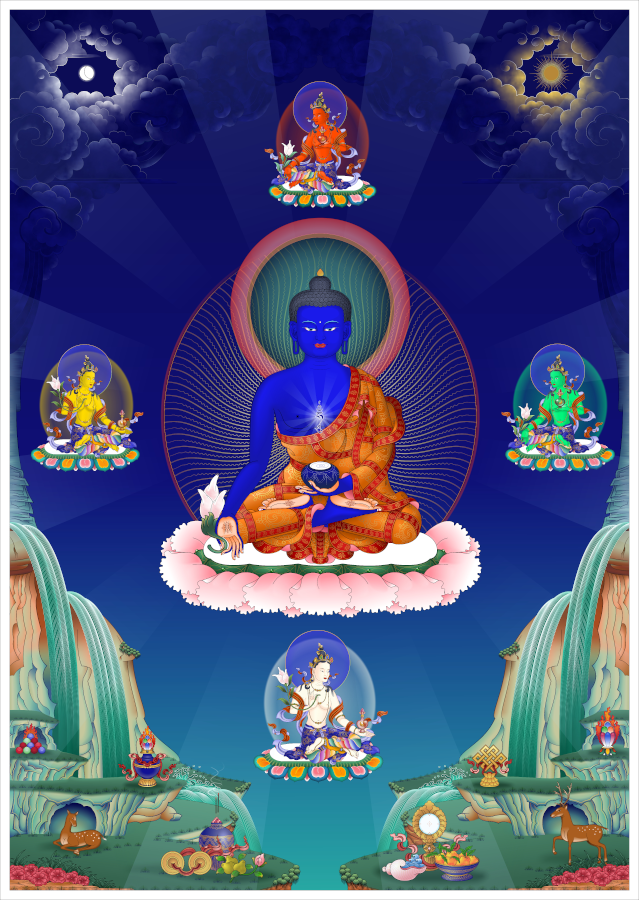
The Medicine buddha practice is an example of a spiritual healing practice. Sometimes Buddha’s are linked to actual people, but more often these are mythic rather than factual stories, and the Buddha in question is more of an embodiment of a particular enlightened quality, a primal archetype rather than a ‘person’. In the case of the Medicine Buddha, he may be thought of as the healing power of all the Buddhas (and our own enlightened Buddha nature) embodied in a human form, albeit with a blue body (!)
Having been related to in this way for over two thousand years, visualizing the Medicine Buddha and reciting his healing mantra provides a ready-made pathway in the human group consciousness that we can use to access this particular spiritual healing energy from the higher dimensions of reality to bring healing to ourself and others.

Paradigms for understanding disease
In the traditional Medicine Buddha teachings, there are four types of disease/illness:

  1. Illness that we can recover from without medicine (physical or spiritual)
  2. Illnesses that we need medicines to recover properly from
  3. Illnesses that have a ‘soul’ level or karmic cause, and that cannot be healed by physical medicine alone, but can be healed through spiritual healing practice
  4. Illness that is essentially untreatable, spiritually or with traditional medicine, and that we cannot recover from once they manifest.

From this we can see that spiritual healing practices like the Medicine Buddha are primarily helpful for the third class of disease, and as a preventative for helping to avoid the fourth class of disease coming into manifestation. In my own practice of the Medicine Buddha, I primarily focus on:

  1. Daily practice as a future disease prevention. This is a bit like taking supplements to increase immunity(!)
  2. Working to build strength and wholeness in the ‘weak’ spots in my body, again making illness and injury less likely
  3. In relation to symptoms of diseases I get, for example reducing pain and activating healing around a recent gastric flu I had. This was in conjunction with regular TCM type medication.
  4. For others I know who are sick and in need of healing, or who are vulnerable to illness

Healing meditation with the medicine Buddha, 3 ways
The methodology used to do spiritual healing is often deceptively simple, in the case of the Medicine Buddha it can be done in a very simple way by:

  • Generating a compassionate motivation
  • Visualizing him in the space in front of you, setting your specific intention for requesting healing
  • Reciting his mantra
  • Imagining healing light and nectar flowing down from his heart (where the mantra sits), into the person, area of the body or part of the world where you want the healing energy to flow
  • Finishing with a brief period of stillness

The mantra itself is Sanskrit:

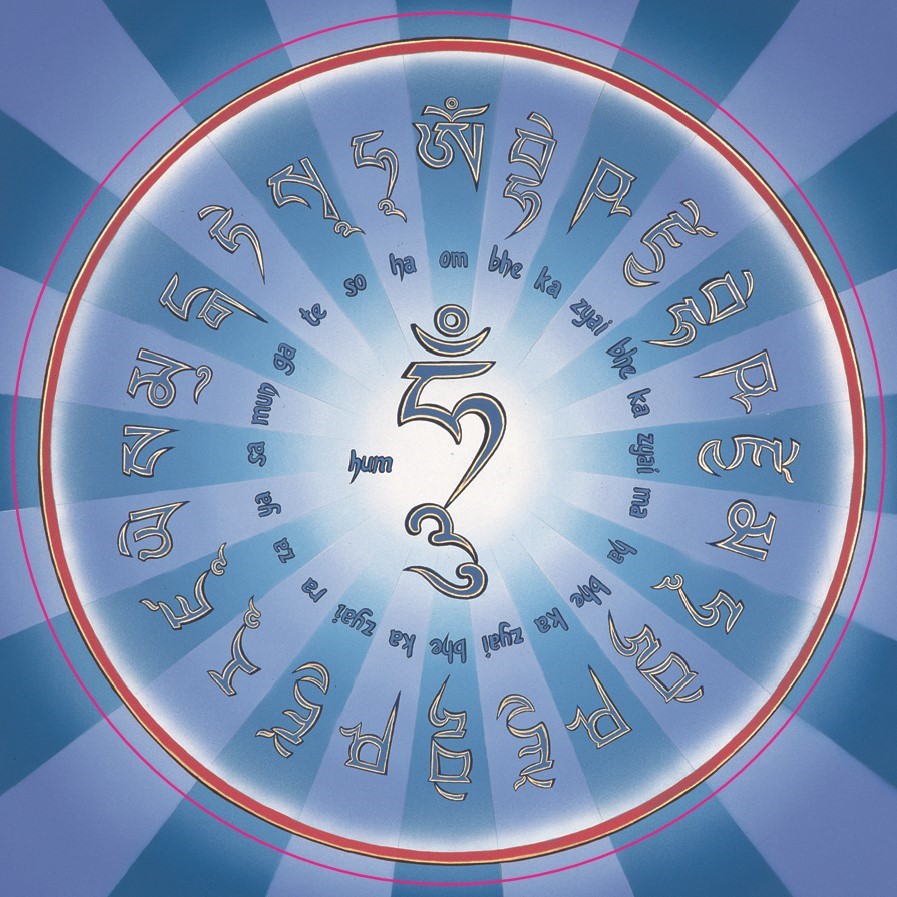
“Tayata Om Bekandze Bekandze Maha Bekandze Randze Samu Gate Soha”

(Link to image source)

This means quite literally ‘Oh doctor (Gate), doctor, great doctor, doctor of doctors, please grant us the healing attainments!’
The practice may look simple, childish even, but combined with good quality intention and focus, the effects can be felt quite rapidly and easily. It’s a practice I have had for years, if your looking for another dimension to your own healing methodologies, this is one I highly recommend.

Article & content © Toby Ouvry 2024, you are welcome to use or share this article, but please cite Toby as the source and include reference to his website www.tobyouvry.com


Follow Toby onLinkedInYouTubeInstagram

Integral Meditation Asia

Online Courses 1:1 Coaching * Books * Live Workshops * Corporate Mindfulness Training *Life-Coaching *  Meditation Technology

Categories
Awareness and insight creative imagery Inner vision Integral Meditation Life-fullness meditation and creativity Meditation techniques mindful dreaming Mindful Resilience Mindful Self-Leadership

Mindful imagination – From superstition to manifestation

“Mature imagination combined with consistent action can make you an “unstoppable force for the good” in your life, opening up possibilities that surprise & delight you & those around you”

Dear Integral Meditators, 

Imagination is the power of your mind to create mental images & ideas. About yourself, your life, & what is possible. Its potentially a superpower, but used in the wrong way it can create all sorts of problems. In the article below I talk you through how to start to harness its potential mindfully.
If you enjoy the article, it will be the subject of this week’s Tuesday & Wednesday class. You are welcome, live or online!

Quick heads up, I have just put up the Integral meditation deep-dive mini-retreat for the morning of May 25th
 
In the spirit of mindful images,
 
Toby


Mindful imagination – From superstition to manifestation


Our imagination is one of our superpowers, but it can also be a crippling limitation for some people and a debilitating distraction for others. In this article I’ll tease apart these different types of imagination, and offer a way of ensuring that your imagination is more of a superpower for you than a liability!
 
How and where does our imagination start in life?
Our capacity for imagination (image-creation within our mind) starts around 18 months. At this stage we are only able to think from our own perspective, and our sense of the world is that it revolves entirely around ourselves (!) It consists of, instant gratification & magical/fantasy thinking.

  • I want milk, an image of milk appears in my mind & I cry so that it appears, which it does, because a parent brings it
  • I believe if I think of something it will come true

Of course we grow beyond this type of imagination, but it continues to show up for many adults in different ways, for example:

  • Fantasies of ourself being incredibly special & unique, famous stars, with the world at our feet
  • Superstitions thinking: If I think something it will come true, if I see a black cat I will have bad luck, if I stick a pin in a doll of someone they will be harmed by it (‘vodoo’ type beliefs)
  • Excessive indulgence in things like online shopping, I click it and it comes it me. Other types of easy, instant gratification activities

 
What happens if it stays that way?
Then our image making capacity as adults remains severely limited, and cannot be released for mature acts of creativity, problem solving, goal setting, leadership envisioning and so forth. It makes it very difficult to forge a meaningful path and achieve significant things if our image-making capacity is continually distracted by child-like fantasy. 
 
How we can develop dysfunctional imagination as adults
As adults we can also develop ‘imagination-malfunction’ when we think from excessive fear, limitation, or dystopia.

  • We create images of ourself in our mind as a person who ‘could never do that’
  • We out picture the ‘worst-case’ scenario in our mind, with no ‘best-case’ counterbalance
  • We allow the images we have received whilst growing up to entirely determine our sense of what is possible, and never imagine beyond that

If our imagination is trapped in these patterns then it becomes the thing that is limiting our potential, rather than releasing us into our potential.
 
How can we release the power of our mindful imagination?
If our imagination is released from the infantile ego-fantasy and self-imposed limitation of the above, then we can use it to grow. We can use it for:

  • Mature acts of creativity, and the creation of harmony and beauty
  • For problem solving and goal setting, combining this with steady activity towards those goals imagined
  • Leadership envisioning: leading ourself and others toward heretofore unimagined possibilities

 
A mindful imagination exercise

  • Sitting in meditation, become aware of the current imaginative activity in your mind. Be curious (and non-judgmental) about how much of it is mature powerful imagination, and how much of it is of the infantile & self-limiting type.
  • Try doing the same thing around specific areas of your life, notice the role that your imagination plays.
  • Practice acknowledging and witnessing your dysfunctional imagination, with the eventual aim of letting it go and dis-identifying with it
  • Practice deliberately articulating your mature imagination in the service of your goals, inner creativity and self-leadership.

Notice how realistic imagination combined with consistent action can make you an “unstoppable force for the good” in your life, opening up possibilities that surprise and delight both you and those around you… 
 
 Article & content © Toby Ouvry 2024, you are welcome to use or share this article, but please cite Toby as the source and include reference to his website www.tobyouvry.com


Follow Toby onLinkedInYouTubeInstagram

Integral Meditation Asia

Online Courses 1:1 Coaching * Books * Live Workshops * Corporate Mindfulness Training *Life-Coaching *  Meditation Technology

Categories
A Mind of Ease creative imagery Enlightened Flow Inner vision Insight Meditation Meditation and Psychology Meditation techniques Mindful Self-Leadership Presence and being present Zen Meditation

Resting under the tree of non-doing & unbeing

“Trees are not trying to be anyone or anything else. They rest within their own natural dignity, their sense of inner sufficiency and completeness. What if you could be like that too?

Dear Integral Meditators, 

This week’s article looks at the practice of non-doing as a way of moving into being, & then deeper into non-being. It’s a key to effortless effort in meditation & in life! If you enjoy it, then it will form a central part of this week’s Tuesday & Weds meditation class. So do feel free to pop in, either live or online!

A couple of new events up for February: Saturday 17th, 9am-12pm – Integral love & compassion meditation workshop, &  24th, 9-11.30am – Integral meditation deep dive mini-retreat.

Last but not least, I’ve posted an integral meditation training page for my Simple, positive, creative & aware practice. Click on the link to watch the video, listen to the guided meditations & read the related article! 
In the spirit of non-doing,
 
Toby


Resting under the tree of non-doing & unbeing
 
This is a simple meditation form to take you from doing, to non-doing/being, to unbeing. The image it uses is that of a tree. Beneath the guided meditation are three stories/quotes from which the meditation is partly inspired. Dropping into a space of non-doing and unbeing is a particular type of silence practice. If you practice it regularly you will find it an invaluable resource to relax, regenerate and come back to your life with new eyes and new inner strength.
 
Meditation: Resting under the tree of non-doing
 
1. Imagine yourself sitting under a tree. It’s a useless tree in the sense that its wood is so knotted it cannot be made into anything by a carpenter. The only thing it is ‘good for’ is sitting under and doing no-thing. When you sit underneath it, it provides shade, calm and peace. It is a wonderful place to be and non-do.
 
2. You can also sense that the tree is entirely happy to be itself. It is not trying to be anyone or anything else. It rests within it’s own natural dignity, it’s sense of inner sufficiency and completeness. As you sit under it, you can feel yourself getting in touch with your inner wholeness and natural dignity. You are just fine as you are. You are a complete being.
 
3. Resting whole and complete like the useless tree, when a thought arises, ask yourself the question ‘Who is it that is thinking the thought?’ Turn your attention inward toward the consciousness that produced the thought. Let your attention return to simply being aware rather than thinking, like a person returning to the shade of a tree after being in the hot sun. Go deeper into being, non-doing and non-thinking.
 
4. From being, now reach into the deeper stillness of Un-being, the Void out of which all Being comes.
 
Return to your outer awareness and close the meditation.
 
Reference 1: The Useless Tree by Chuang Tzu
 
Hui Tzu said to Chuang: I have a big tree, The kind they call a “stinktree.”
The trunk is so distorted, so full of knots,
No one can get a straight plank out of it. The branches are so crooked
You cannot cut them up in any way that makes sense.
There it stands beside the road. No carpenter will even look at it.
Such is your teaching– big and useless.
 
Chuang Tzu repliedSo, for your big tree. No use? Then plant it in the wasteland
In emptiness. Walk idly around, rest under the shadow; No axe or bill prepares its end.
No one will ever cut it down. Useless? You should worry!
(Here is the full Thomas Merton version)
 
The Cedar Tree by Thich Nhat Hanh

“A cedar tree doesn’t have any desire to be a pine or a cypress or even a bird. It’s a wonderful manifestation of the Cosmos just as it is. You are a manifestation of the Cosmos. You are wonderful just like that.”
 
Resting under the tree of non-thinking – Quote from Ramana Maharshi ‘Who Am I?’

“The mind moves without rest, alternately going out of the Self and returning to it. Under the tree the shade is pleasant; out in the open the heat is scorching. A person who has been out in the sun feels cool when he reaches the shade. Someone who keeps on going from the shade into the sun and then back into the shade is a fool. Similarly, the mind of one who knows the truth does not leave Brahman (Self-as-consciousness)
 
Related articleWhat Does it Mean to Meditate on Non-Doing? (And why We should be interested in doing It)

Article content © Toby Ouvry & Integral Meditation Asia 2024. you are welcome to share, but please cite the source, thanks! Contact info@tobyouvry.com 


Follow Toby onLinkedInYouTubeInstagram

Integral Meditation Asia

Online Courses 1:1 Coaching * Books * Live Workshops * Corporate Mindfulness Training *Life-Coaching *  Meditation Technology
Categories
creative imagery Energy Meditation Gods and Goddesses Inner vision Integral Meditation mindful dreaming Presence and being present Primal Spirituality spiritual intelligence Uncategorized

Shamanic meditation – Psychopomping & other non-ordinary adventures

“Shamanic meditation, often described as ‘Shamanic journeying’ occurs mainly in the dream state, which is to say the psychic and subtle levels of mind. You might think of shamanic meditation as a type of ‘conscious dreaming’ done whilst meditating”

Dear Integral Meditators, 

This week’s article focuses upon Shamanic meditation. The first section is a ‘learning piece’, with the second part being a personal reflection of my experience in the field. If you are interested in this form of meditation then do consider coming along on the weekend of the 25th/26th for the Shamanic meditation workshop retreat

Finally, a reminder of the seasonal class this coming Tuesday & Wednesday, Deepavali -connecting to your inner light.

In the spirit of journeying,
 
Toby


Shamanic meditation – Psychopomping & other non-ordinary adventures
 
Three levels of reality, three levels of meditation
 
The great wisdom traditions often divide reality into three basic domains, or levels of consciousness:
The waking state, characterised by the senses and our gross (as in dense) physical environment.
The dream state, characterised by images thoughts and subtle worlds on the level of mind. The lower level of the dream state might be described as the ‘psychic’ realm, the higher and more refined level as the ‘subtle’ realm. The dream world and the world of mind of course also occur in the waking state, but the waking state is characterised by the occurrence of sensory awareness, and the dreamworld is characterised by the temporary cessation of sensory awareness, in the dream-world we inhabit exclusively the worlds of mind.
The dreamless, deep sleep state, characterised by the cessation of both mental and physical forms, and the appearance of a very subtle, almost infinite formless state of consciousness.
Each of these three levels of reality is has its own world and worlds.
 
Shamanic meditation: Working in the ‘dream-world’
Shamanic meditation, often described as ‘Shamanic journeying’ occurs mainly in the dream state, which is to say the psychic and subtle levels of mind. You might think of shamanic meditation as a type of ‘conscious dreaming’ done whilst meditating.
Initially we can practice shamanic meditation to acclimatise to the domain of reality reality that it focuses on. However, part of the point of practising is that we then start to be able to access these states of ‘non-ordinary/dreaming’ reality consciously and at will, even when not in formal meditation. This basically means that we integrate shamanic practice informally into our daily waking life.
 
Foundational elements of shamanic journeying, its purpose and function
Traditionally, Shamanic meditation has five main elements
1. The Underworld Journey – Connecting with Ancestral and Underworld guides
2. The Overworld Journey – Connecting with Spiritual and Overworld guides
3. Soul Retrieval – Recovery from soul loss
4. Meeting and connecting with one’s guardian spirit, or performing guardian spirit retrieval.
5. Non-benevolent spirit extraction or removal
6. To act as a Psychopomp, or guide for the dead and/or lost souls.
 
To practice Shamanic meditation would then mean that each of the above capabilities gradually becomes a part of what you ‘do’ in everyday reality, informally, in the same way that you would go to work, do the shopping, put the kids to bed and so forth…
 
Everyday Psycho-pomping – The Spanish soldier
This story is a simple example of what I mean. As mentioned above, one of the activities of a Shaman traditionally is acting as a Psychopomp, or guide for the dead and/or lost souls. I had some awareness of this before I started doing shamanic meditation, as I had already been a meditator for a while. But once I started Shamanic meditation as a discipline I noticed that increasingly often I would be contacted by deceased or lost souls who needed a bit of a hand transitioning to the next world, they were ‘stuck’ so to speak. Generally, before bed they will let me know that they are around and seeking assistance, and then when I go to bed, I will then expect them to come to me sometime in the night, and we can do what needs to be done. This happens quite regularly, and it is just a part of my daily life activity.
One time when on holiday a village in the mountains of Asturias, Spain, my family and I walked down from our Air B&B to a quiet restaurant with some older villagers inside. We sat outside on a bench that clearly was not used very much, and where there was an old cat to keep us company. After a pleasant meal we walked back to our accommodation, and went to bed fairly soon after.
I couldn’t sleep in the bed I was in with my partner, so I went into a spare bedroom at the top of the stairs. Lying down there I then went into a light reverie, where I saw what looked like an old soldier walking up the street to our house. Understanding what was about to follow, I prepared myself to meet him, and he duly came in the house and walked up the stairs. It was a little comedic, because I didn’t speak Spanish, and he didn’t speak English! But suffice to say he had been killed in the Spanish civil war, and had been in the village since (his favorite bench being the one we had sat on for dinner), and having seen me he saw (and felt ready) for the opportunity to move on. I then helped guide him ‘into the light’ so to speak, and then went to sleep.
That is an example of one of many, it was interesting because it was one that my partner and daughter also ‘felt’ something around, and so for me it was a little bit of a shared experience that we could talk about, rather than one I just do and keep to myself.
 
Related articleMindfulness, Meditation & Non-Ordinary Reality
 
Article content © Toby Ouvry & Integral Meditation Asia 2023. you are welcome to share, but please cite the source, thanks! Contact info@tobyouvry.com 


Integral Meditation Asia

Online Courses 1:1 Coaching * Books * Live Workshops * Corporate Mindfulness Training *Life-Coaching *  Meditation Technology

Follow Toby onLinkedInYouTubeInstagram

Categories
Awareness and insight Concentration creative imagery Energy Meditation Inner vision Integral Awareness Integrating Ego, Soul and Spirit Life-fullness Meditating on the Self Meditation techniques mind body connection Mindful Confidence Mindful Resilience Mindful Self-Leadership Mindfulness

The conscious-self – Your inner CEO

“Your Conscious-self is: The captain of your inner ship directing the crew, The CEO of your consciousness, setting the direction of your inner organization, & the conductor of your inner orchestra, co-ordinating all the different sub-elements of the self into a coherent unity”

Dear Integral Meditators, 

This week’s article explores the theme of the Conscious-self, and it’s importance in the health and wellbeing of our self-sense and personality. If you enjoy it, then do consider coming along to the Mindful Presence Masterclass & group coaching: The Inquisitive Sumo Wrestler – Turning up to life calm & curious , where we will be looking at mindfulness practices to create a high-functioning Conscious self. 

If you like you can combine the Masterclass with the Qi gong class as an  Integral Life Practice Session. It’s a morning you will come out of feeling at the top of your game!

In the spirit of your inner CEO,
 
Toby


The Conscious-self – Captain of your ship & CEO of your body-mind
 
The Conscious-self is that part of you that is aware in the present, and of what it finds in the present moment. This includes:

  • Sensory orientation in your environment
  • Co-ordinating what is going in within the body
  • Content of mind; thoughts, emotions, patterns of mental activity
  • The activity of your subconscious mind
  • Awareness of awareness itself, and where we are directing it through attention in any given moment

 
The Conscious-self is responsible for the wellbeing of our body, mind, and emotions. It oversees our choices and decision-making process. It is in charge of how we deploy our energy and resources. It is in charge of our life-plan and self-discipline. All the different sub-personalities that exist within ourself should be marshalled by and taken care of by the conscious-self. Think of your Conscious-self as being like:

  • The Captain of your Ship directing the crew
  • The CEO of your consciousness, setting the direction of your inner organization
  • The conductor of your orchestra, co-ordinating all the different sub-elements of the self into a coherent unity

 
The Conscious-self (C-S) is supported by your higher mind (your soul-level or philosophical/principled self), and your Overmind, or spiritual being. These appear mainly as aspects of our values, imagination & intuition that the C-S can access and refer to for guidance. The C-S is in charge of co-ordinating our ego and personality in everyday life, directing it towards a sense of effectiveness in the face of challenges, and happiness in its various forms. The Higher and Over-mind’s are like a wise inner ‘Board of directors’ that the C-S can refer to for advice and wisdom.
 
Leading yourself through life
The Conscious-self is, in essence the leader of your consciousness. As the leader, its main functions are:

  • Creating a compelling vision for the rest of the personality to follow, that can take us boldly and enthusiastically into our future from where we stand in the present
  • Getting the ‘buy in’ from the rest of the personality. For example, if a part of us is feeling doubtful about the vision, the C-S needs to listen and help the doubter to come along for the ride.

This leadership function is very much like the CEO of a company; The main job is envisioning the future creatively, getting the buy-in from the team, and then delegating tasks to the team members. The C-S delegates to the other parts of self, tells them what to do and why they are doing it!
 
Contemplation
 
Being present as your conscious mind – In meditation, get used to sitting and centring yourself in your conscious-self. Practice being present to the content of your consciousness, observing the movement of the different elements. Get used to distinguishing the C-S as the Captain and CEO in charge, and the other activities of your consciousness, which are what your C-S oversees.
 
Observing your relationship to choices – Notice how comfortable your C-S is with making choices and taking responsibility. Notice when you want to ‘duck’ choices, feel anxious and confused, want to give away responsibility for what you need to decide on. Work on getting more comfortable, confident, and responsible in this space.
 
Inspiring and supporting – From your position as the C-S, the CEO of consciousness, the captain of your ship, set an inspiring direction:

  • For the next 3-5 years,
  • For the next year, 6 months, 3 months
  • The next month, week, day,
  • For the next activity today!

Create a vision for your life that the rest of your body, mind and personality can follow. Then delegate tasks, and support your sub-selves, getting them on board and up for the program.
 
In conclusion, a high-functioning Conscious-self is the key to effective self-leadership, and to organizing your life effectively. The proposition would also be that the better at self-leadership you become, the better you will tend to be at outer leadership…
 
Article content © Toby Ouvry & Integral Meditation Asia 2023. you are welcome to share, but please cite the source, thanks! Contact info@tobyouvry.com 


Integral Meditation Asia

Online Courses 1:1 Coaching * Books * Live Workshops * Corporate Mindfulness Training *Life-Coaching *  Meditation Technology

Follow Toby onLinkedInYouTubeInstagram

Categories
creative imagery Integral Awareness Integral Meditation Life-fullness Meditation techniques Presence and being present Zen Meditation

The body is in you – How to go into deep meditation quickly

Dear Integral Meditators,

This mid-week article explores a simple way of dropping into deep meditation states more quickly than you would using most conventional meditation methodologies.
If you enjoy it, then it is one of the meditation techniques we shall be using a the Integral Meditation Two Day Retreat on October 28th & 29th. You are invited to join!

Latest 45 second mindfulness video: Going beyond your self-concept

In the spirit of depth,

Toby


The body is in you – How to go into deep meditation quickly
 
The deepest level of meditation is what is known as Non-Dual meditation. It is the state of meditation where, essentially the subject-object divide within consciousness collapses into ‘One Taste’ or the simple, essential unity of being.
One way to achieve this is what you might call ‘progressive witnessing’, where you realize that you are not any of the objects in your consciousness, rather you are the witness of them. You do this until you realize the Essential I, the I-I, the pure consciousness that is the witness. It would go something like this:
I experience my body, but I am not my body
I experience my feelings and emotions, but I am not my feelings and emotions
I experience my thoughts, but I realize I am the watched of the thoughts, rather than the thoughts themselves.
I am the formless consciousness that witnesses the mind, body and emotions.
 
This then gives you the essential realization of your Self-as-Pure-Consciousness. If you then let go of the Witness-Self, and let Consciousness (the witness), merge with the objects of consciousness (in this case the mind, feelings, and body), then you are left with ‘just this’, the experience of each moment as itself, which is Non-Duality, or One Taste. As the Zen poem goes:
 
We sit together, the mountain & me, until only the mountain remains
 
So then, normally this takes years and years of meditation to get to. What I am going to explain now is a meditation you can do to start getting a feeling for the above, using a perceptual ‘flipping’ technique. It goes like this:
Sit comfortably, notice how it naturally feels as if you are sitting ‘inside’ your body.
Then recognize the Witness-Self, observing the body.
Then think to yourself:
I am not in my body, my body is in me.
Expand your witnessing consciousness to surround the body, so that your You (you as Witness Consciousness) surrounds and encloses the body. Stay with this feeling a while.
Then do the same thing in a progressively larger and larger manner in this order:
“I am not sitting in this room; the room is sitting in me.” (As the formless witness-consciousness)
“I am not sitting in this building (house/apartment etc….); this building is sitting within me.”
 
Let your awareness move out to the horizon enclosing the landscape around you:
“I am not sitting within the landscape; the landscape is sitting within me.”
 
Expand your awareness to include the sky and stars above, and the Earth beneath you:
“I am not sitting upon the Earth under the sky & stars, they are sitting within me”
 
You can play with this technique to get a sense of the radical way in which it starts to alter your perception of self, noticing how it gives you an expanded sense of self-as consciousness, within which the whole world sits!
Once you have a sense of this, you can then practice dropping the Witness, and dropping into the experience of the union of observer and observed into a non-dual state:
Observe the body, then drop the observer until “Only the body remains.”
Observe the room, then drop the observer until “Only the room remains.”
Observe the house, then drop the observer until “Only the house remains.”
Observe the landscape, then drop the observer until “Only the landscape remains.”
Observe the earth, sky and stars, then drop the observer until “Only the earth, sky and stars remain.”
 
The above are some simple pointing-out instructions to start playing with in meditation, they are designed to help you drop into a deeper witnessing, and then a non-dual state quickly and rapidly. More quickly, perhaps much more quickly than you would be able to do with a more conventional meditation methodology.  
 
Related articlesWatching & then dropping the watcher
 
Related videoSubjects to objects – How meditation helps you grow to greater degrees of freedom

Categories
creative imagery Inner vision Insight Meditation Integrating Ego, Soul and Spirit Life-fullness Meditating on the Self meditation and creativity Meditation and Psychology Meditation techniques Mindful Confidence Mindful Resilience Mindful Self-Leadership Stress Transformation

Re-working your ego by expanding your self-concept (AKA: Van Halen therapy)

In a situation where your self-concept doesn’t believe you can meet & solve a challenge, you can do one of two things. You can give up, or you can change your idea of yourself, making it one that can work with what is presenting

Dear Integral Meditators, 

This weeks article explores how to work mindfully with your ego & self concept in a creative, empowered way. If you enjoy it, then you are invited to come along to the Tuesday or Wednesday meditation class, where we will be focusing on this subject. 

A couple of dates for your diary, in addition to the Two day meditation retreat on Oct 28-29th:

In the spirit of turning subjects into objects,

Toby 


Re-working your ego by expanding your self-concept (AKA: Van Halen therapy)
 
The Ego is
One of the definitions that I like for the ego is simply ‘the unifying centre of awareness’ of a person. It is the self-sense that sits in the middle of you as you navigate your daily experiences. Ego is not a positive or negative term, but a neutral one. However, we can say that a person has a strong or functional ego, which is a good thing, or a weak, dysfunctional ego which is not a good thing. Our ego also operates according to ethical values, or a lack of ethical values, and this distinction also makes an ego a relatively ‘positive’ or ‘negative’ thing. These values can be held consciously or unconsciously by the ego in question.
 
Your self-concept is
Your idea of who you are. It is the mental template that you have built up over your life about:

  • The ‘type’ of person you are
  • What is possible & not possible for you
  • The story of how you became who you are

…and so on. Your self-concept generally creates a sense of what you can and can’t do in life, what you like and don’t like. When you are faced with a challenge, your ability to deal with that problem is intimately related to your self-concept. Your self-concept projects onto the situation what it thinks and believes. In a situation where your self-concept doesn’t believe you can meet and solve a challenge, you can do one of two things:

  • You can give up, or
  • You can change your idea of yourself, making it one that can work with what is presenting

 
Relating imaginatively to a new idea of yourself
I remember one time when I was feeling particularly overwhelmed by always having to ‘put myself out there’ as a creative and as a small business owner. I really felt out of my comfort zone. It felt alien to my idea of myself, it felt uncomfortable and exhausting. I had a dream one night of being with Daid Lee Roth (ex-lead singer of Van Halen). I was hanging out with him on the void-deck of an HDB block of flats in Singapore. Preparations were underway for a concert, and after chatting enthusiastically to me for a short while, DL-R just got up on stage with his band and did the concert, singing and dancing around half-naked, and just letting go and enjoying himself with the small group of people that was there.
I woke up feeling light, energised, and encouraged. In the subsequent days, week’s, and still to this day (the dream was years ago) I often think of this dream, and imagine myself being like David L-R, just dancing though my life, meeting what is there with enthusiasm, spontaneity, and not being afraid of a bit of exhibitionism.
This idea, and working with it imaginatively really changed my self-concept, and consequently my sense of what is possible, what can energise me not drain me, and so on. In short, I re-worked my ego using a new image-template.
 
Using this expanded self for inner healing & growth
So, the basic idea is that if you have a psychological block that is holding you back, or you don’t think you care ‘capable’ of achieving something, you create an image or idea of yourself that can, and then start relating to that image.
 
Paths beyond the ego
If you are connected to the Soul level of things, quite often you will find that ideas, images, and happenings occur in your life that you can readily use for this type of work, so pay attention!
The ego is the mental/psychological level of self, so there are a number levels of self beyond ego on the soul and spiritual level of things. However, the ego and self-concept are really ‘lynch-pins’ between the upper and lower levels of self, so we really need to work on making our self-concept a healthy, resilient, wise and fun-loving one!
 
Related readingYour bright shadow – The one who can do what you can’t

Article content © Toby Ouvry & Integral Meditation Asia 2023. you are welcome to share, but please cite the source, thanks! Contact info@tobyouvry.com  


In case you missed last week’s video: ‘Subjects to objects – How meditation helps you grow to greater degrees of freedom’

Summary: This video discusses two main subjects related to meditation. The first part explores why and how a meditation practice helps individuals grow as individuals. Meditation is described as a process that transforms subjects of consciousness (e.g., body, emotions, ego) into objects of consciousness, leading to reduced identification with these aspects and increased inner freedom…watch full video


Integral Meditation Asia

Online Courses 1:1 Coaching * Books * Live Workshops * Corporate Mindfulness Training *Life-Coaching *  Meditation Technology
Follow Toby onLinkedInYouTubeInstagram

Categories
creative imagery Gods and Goddesses Greenworld Meditation Inner vision Life-fullness meditation and creativity Meditation and Psychology Meditation techniques spiritual intelligence Tree of Life Tree of Yoga

Tree of Life – The union of ego, soul & spirit

Dear Integral Meditators, 

The article below explains a ‘six-pointed star’ meditation that comes from the Tree of life tradition. Its a sample of one of the meditations that we will be doing in the Meditations for connecting to the Tree of Life, and growing your own personal Life Tree workshop this weekend.
And last call for the Therapeutic mindfulness course  starting today!
 
In the spirit of harmony,

Toby 


Tree of Life – The union of ego, soul & spirit
 
The Tree of Life is essentially a visual meditation key that offers us ways of relating to ourself and the Universe in a holistic, balanced, and dynamic manner. An example of one such meditation is the meditation on the six-pointed star. You can refer to the diagram for a visual.

In this meditation the ‘Soul’ is conceived as a harmonized union of the qualities of ourself as a personality/ego, and ourself as Spirit.

  • On the ego level we can think of ourselves as consisting of a trinity of mind, body, and emotions, see the lower three points of the star on the diagram
  • On the spiritual level we can think of ourselves as partaking of the trinity of justice/will, compassion/mercy and Unitive Spirit/Higher intuition, see the top three points of the star.

In our life, we ‘sit’ in the centre of these six converging forces, and our challenge is to master each well enough to create harmony between all of them. Each of the six forces are big areas of mastery by themselves, so we can see that true mastery on the Soul level is no mean feat! Meditation on the six-pointed star is designed to facilitate this. Here are some basic pointing out instructions for doing it:
 

  • Begin by centring using the body & breathing
  • Visualize a golden, six-pointed star in front of you, about a metre away at eye level. Refer to the diagram to get a sense of the energy spheres at the tip of each point, with their colours and corresponding qualities, with the golden sphere of the soul in the middle. One you can visualize it with some stability, you will feel it affecting the subtle energies of your body as you sit and meditate
  • When you are ready, visualize the star and corresponding spheres around you, with yourself sitting in the middle of the central soul-sphere. Feel the energies of the six spheres around you flowing into the central sphere. As they do so feel the energies of your mind, emotions and body merging and harmonizing with the energies of spirit, willpower, and compassion.
  • Sit in the centre of the six-pointed star in a state of harmonious presence for a period, acclimatizing to this state, and the energy flow.

 
This meditation sets up currents of energy in your body, mind and heart that help to facilitate the real-time mastery of these six energies as you go through your daily life. It aids greatly your capacity to make real progress in this process. It also gives you a simple mental model for understanding what you are aiming for on your path of spiritual and temporal growth. It is a fairly complete meditation in and of itself.
 
 If you enjoyed this article, you are invited to come along to this Saturday/Sunday mornings workshop on Meditations for connecting to the Tree of Life, and growing your own personal Life Tree. We will be covering this and a number of other practical meditations on the Tree.

Related articleMeditating on the Tree of Life

Article © Toby Ouvry 2023, you are welcome to use or share this article, but please cite Toby as the source and include reference to his website www.tobyouvry.com 


In case you missed it, newsletter article this week: Suppression & repression – the difference, & it’s importance
 
Why is it important to know the importance between these two?
Its important to know the difference between these two because one can be used positively and strategically to enhance our effectiveness and wellbeing in life, whereas the other almost always results in longer term inner turbulence and interference in our ability so see and work with our present life as it is.
 What does it mean to suppress? Speaking in emotional terms, to suppress means to be aware that you have that emotion, and to exert self-control in order not to express it in the moment, for example…read full article


Special Coaching Offer for the Month of September – Free 20minute coaching session with Toby

For the remaining two weeks of September Integral Meditation Asia is offering free 20minute coaching sessions with Toby!
If you have been interested in the idea of getting some personal coaching on a particular issue or challenge, and/or want to explore what 1:1 meditation coaching can do for you in terms of both your quality of and direction in life, this is a great opportunity to find out what it is like with Toby. These 20minute sessions can be done on Zoom or via Whatsapp.
You can find read the general write up of Toby’s Life-fullness Coaching here, & his other forms of coaching here.
You can read feedback and reviews from Toby’s coaching sessions here

To arrange your 20minute session or for further enquiries: Email info@tobyouvry.com, or W-App65-96750279


Integral Meditation Asia

Online Courses 1:1 Coaching * Books * Live Workshops * Corporate Mindfulness Training *Life-Coaching *  Meditation Technology
Follow Toby onLinkedInYouTubeInstagram

Categories
Biographical creative imagery Energy Meditation Inner vision Integral Awareness Life-fullness Meditating on the Self meditation and creativity Meditation and Psychology mind body connection Presence and being present

Progressively recovering your joie de vivre (Meditating with your inner child)

If you are prepared to do the work, it seems there truly are no edges to your level of inner joy

Dear Integral Meditators, 

The photo of the child with this article is me when I was around 8 or 9. I keep it on the fridge. I noticed last week that the fridge magnet marked ‘l’excitacion’, or excitement in French had been placed on my forehead, which inspired me to write about my own ongoing journey in the domain of Therapeutic mindfulness. 
If you enjoy the article, then do consider participating in the upcoming Therapeutic mindfulness course, which is full of practices to help you re-connect to the joy of living, and move beyond long-held fears.  

And final heads up for this Wednesday’s Autumn Equinox meditation, either live or online!
 
In the spirit of exitacion,

Toby 


Progressively recovering your joie de vivre (Meditating with your inner child)
 
When I left my life as a Buddhist monk, aged 31, I had been practising eastern meditation forms in a very disciplined manner for a decade. I had experienced many wonderful and amazing meditation states, and had a solid working experience of the awakened state/enlightenment experience. Despite this I noticed that there were still parts of my everyday consciousness that seemed to have been untouched by all this work. I found that certain types of anxiety, irritability and fear had not gone away, and sometimes seemed even worse. This was partly why I left my life as a monk, because I felt I needed to broaden my search for answers to these unresolved areas. The answer was not just ‘do more meditation’, I had to do something differently.

One of the things that I focused on that year was exercises specifically based on the psychological level of my being, based around western theories of trauma and around working with emotional states. I began regular work with my ‘inner child’, exercises including visualization, dialoguing, breathing and body-work. I was very surprised how much work there was to be done! I considered myself pretty well-adjusted as a person, which I think I was, but even so, there was so much to re-connect to, so much to work with, so much to discover. During this period, I really felt I recovered much of my joie de vivre, and got a badly needed ‘second-wind’ for my inner growth that powered me into the next decade of my life.
But the amazing thing about this is that even though I felt that I now had a very good relationship to my inner child (and other sub personalities), it is a process that does not seem to end. Fast forward to the beginning of this year. At the beginning of the year, I often check in with my ‘inner family’ in meditation. When meeting my inner child, I had this experience:

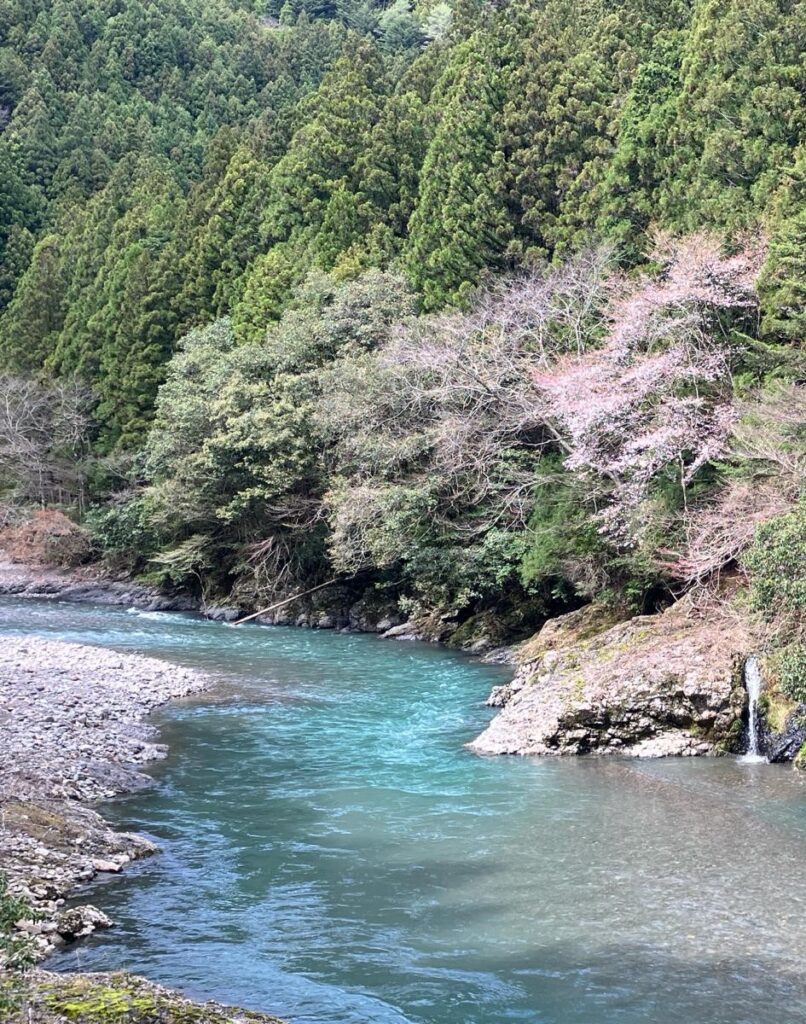
I am walking along the middle of a shallow river that I used to play in as a child. I come to a bridge from which I used to look down at the big fish swimming in and out of the dark water underneath. On the sand to one side of the bridge I see my inner child. I wade over to him, and we squat for a while looking under the bridge. Then he smiles to me and we begin to walk into the water and under the bridge (I never went under the bridge as a child). We stand in silence looking and feeling the fish around our feet, in gentle awe and excitement. After while we walk on and out from the other side of the bridge. We walk on to a meadow next to the river. My child-self utters a cry, and starts to run around the meadow, whooping, and laughing out of pure joy, I watch on, quite amazed, and aware of a new level of joy in myself that I have never experienced before.

After the meditation, this new level of joy within myself has persisted, and it seems clear to me that some level of inhibition or fear in my child has been resolved. This is a full fifteen years after starting my active relationship with him. So even now my life and experience are expanding and growing from my inner work with my child self and other related therapeutic mindfulness practices aimed at building a strong inner-self psychologically. If you do the work, it seems there truly are no edges to your level of inner joy.
   
 
Related articleMeditating with your child self
Creating a therapeutic mindfulness space
Wake, up, Grow up, Clean up, Flow – The Art of Enlightened Flow


Special Coaching Offer for the Month of September – Free 20minute coaching session with Toby

For the remaining two weeks of September Integral Meditation Asia is offering free 20minute coaching sessions with Toby!
If you have been interested in the idea of getting some personal coaching on a particular issue or challenge, and/or want to explore what 1:1 meditation coaching can do for you in terms of both your quality of and direction in life, this is a great opportunity to find out what it is like with Toby. These 20minute sessions can be done on Zoom or via Whatsapp.
You can find read the general write up of Toby’s Life-fullness Coaching here, & his other forms of coaching here.
You can read feedback and reviews from Toby’s coaching sessions here

To arrange your 20minute session or for further enquiries: Email info@tobyouvry.com, or W-App65-96750279


Integral Meditation Asia

Online Courses 1:1 Coaching * Books * Live Workshops * Corporate Mindfulness Training *Life-Coaching *  Meditation Technology
Follow Toby onLinkedInYouTubeInstagram