Categories
Insight Meditation Integral Awareness Life-fullness meditation and creativity Meditation and Psychology Mindful Confidence Mindful Resilience Motivation and scope Presence and being present

Your inner voice & tone of presence

“We often talk to ourself too much, sometimes unskilfully, but it is also possible to talk to little, when we could really do with a voice of support from within”

Dear Integral Meditators, 

This week’s article is a complementary to my one from a few weeks ago on Mindfully talking, & not talking to yourself. Both articles point to some psycho-dynamic mindfulness practices that can have a dramatic empowering effect on your experience!

Before the article are details of the main courses and workshops for January, your welcome to come on the journey of any or all of them!

In the spirit of mindful inner chatter, 

Toby


Starts Tues 13th, Weds 14th January, & then weekly – Beginners mind, resilient body – a 10-week integral meditation course

Starts Saturday 17th January, 5.30-6.15pm, & then weekly – Beginners mind, resilient body deep-dive: An 11 -session practice series

In a sentence: Combine the mental agility, flexibility & wisdom of a beginner’s mind with resilient energy levels with these ‘integral cross-training’ meditation course!


Saturday 24th January, 9.00am-12.30pm – Meditation and Mindfulness for Self-Healing and Creating High Levels of Energy

Learn how you can use meditation and mindfulness order to accelerate the healing of a physical health condition, create higher levels of energy in your body and/or break through difficult energy patterns in your physical body that are affecting your mental and emotional wellbeing…read full details


Article: Your inner voice & tone of presence, overactive or not active enough?
 
This is a complementary article to my one from a few weeks ago on Mindfully talking, & not talking to yourself.
Our inner voice accompanies much of our experience, narrating, judging and commenting on our experience, creating and adding to our perception of what we think we are going through…
As well as our tone of voice, there is also what I would call our ‘tone of presence’. This is the mood, atmosphere, and way of being present to ourself as we go through the day. It is distinct from our inner voice in the sense that it is not a voice, but a presence, an energy.
 
Our inner voice and tone of presence play off each other. A harsh judgment from our inner voice can lead to a sense of energetic or emotional presence that feels oppressive and stifling. Contrastingly, a gentle mood and energy of presence can lead to the expression of an accepting, loving inner voice.
 
If you reflect on how these two have been interacting within you today, what do you notice or observe?
 
Ideally, we want a tone of presence and inner voice that are mutually aware and re-enforce each other in ways that are constructive and balanced, promoting a sense of inner wholeness and integrity. However, it is all too easy for them to becoming mutually antagonistic, dividing us against ourselves, and setting up spirals of imbalance and conflict.
Here are some overactive and under active expressions of our voice and tone of presence, as well as their higher and lower expressions.
 
Overactive inner voice, oppressive tone of presence
 
In this scenario, we are taking and narrating to ourselves a lot, in a neurotic manner. It’s like sitting next to someone on an aeroplane who just won’t shut up. The underlying tone of presence is accordingly anxious, and characterised by emotions such as fear, anger, blame, regret and so on. This almost always makes what we are going through more difficult. I’m sure you can think of examples from your own experience of this.
When we notice ourself becoming triggered in this way, the direction we want to emphasise is:

  • A slower, gentler, more compassionate inner voice
  • A warmer, more inwardly supportive tone of presence

 
Under active inner voice, absence rather than presence
 
An under active inner voice is when we could be, should be talking ourself through something in a pro-active, supportive manner. But instead we just ‘go silent’ or ‘freeze’ like a rabbit in the headlights. Our inner voice is absent where it should be talking pro-activelly!
In terms of our tone of presence, this can manifest as a kind of absence, or non-presence. We are trying to escape the discomfort of where we are by being absent energetically, rather than present! Again, you will find it quite easy to find examples from your own experience of this.
Corrections for under activity include:

  • Waking up and being pro-active with our inner voice, encouraging ourself skilfully and appropriately
  • Bringing supportive, attentive presence to the situation, being alert to possibilities

 
Practice points for growing à balanced inner voice, harmonised
presence include:

  • Get used to watching and being aware of your inner voice and tone of presence
  • Reducing/recalibrating their impulsiveness, speed and energy where appropriate
  • Increasing presence and supportive inner chatter where it is needed

 
What situation in your life can you start practicing around this today?
 
Related articleMindfully talking, & not talking to yourself

© Toby Ouvry 2026, you are welcome to use or share this article, but please cite Toby as the source and include reference to his website www.tobyouvry.com


Upcoming classes & workshops

Ongoing on Tuesday’s & Wednesday’s (live & online), 7.30-8.30pm 
– Weekly integral meditation classes

Ongoing on Saturdays, 5.30-6.45pm SG time – Saturday Integral meditation deep-dive sessions with Toby

Tues 13th, Weds 14th January, & then weekly – Beginners mind, resilient body – a 10-week integral meditation course

Starts Saturday 17th January, 5.30-6.15pm, & then weekly – Beginners mind, resilient body deep-dive: An 11 -session practice series

Saturday 24th January, 9.00am-12.30pm – Meditation and Mindfulness for Self-Healing and Creating High Levels of Energy


Follow Toby onLinkedInYouTubeInstagram

Integral Meditation Asia

Online Courses 1:1 Coaching * Books * Live Workshops * Corporate Mindfulness Training *Life-Coaching *  Meditation Technology

Categories
A Mind of Ease creative imagery Inner vision Life-fullness meditation and creativity Meditation techniques Mindful Resilience

From ‘life is a problem and…’ to ‘life is good and…’

“Meditation is developing our capacity to generate happiness within & project it outward, rather than needing outer circumstances to align before we can be happy”

Dear Integral Meditators, 

This week’s article explains a fundamental paradigm for how meditation works that I use often in my workshops and sessions. Once you ‘get it’ its easy to stay motivated in your meditation practice!

Heads up for this Saturday’s Saturday 13th December, 9am-12.30pm – Psychic & Psychological Self-defence half day workshop, & also I have just posted the new class series’ for January: 
Tues 13th, Weds 14th January, & then weekly – Beginners mind, resilient body – a 10-week integral meditation course
Starts Saturday 17th January, 5.30-6.15pm, & then weekly – 
Beginners mind, resilient body deep-dive: An 11 -session practice series

 
In the spirit of ‘life is good and…’,

Toby


Article: From ‘life is a problem and…’ to ‘life is good and…’
 
One definition of meditation that I learned from my Tibetan Buddhist days is this one:
 
“Meditation means to focus our attention on an object (or in a state) that, when we dwell on it, causes our mind to become positive, calm and/or happy.”
 
The task of a meditator from this point of view is to discover as many ‘positive’ states, ways of thinking, ways of non-thinking, emotions, temperaments, dispositions and so on as they can. A meditator then tries to keep her attention oriented around one or other of these positive objects or states during the day. The net effect of this is that they spend most of their life in a condition of happiness, even in the face of substantial obstacles. To be a meditator is empowering in this sense, because we are developing our capacity to generate happiness within ourselves and project it outward, rather than needing outer circumstances to align before we can be happy.
 
From life is a problem to life is good
 
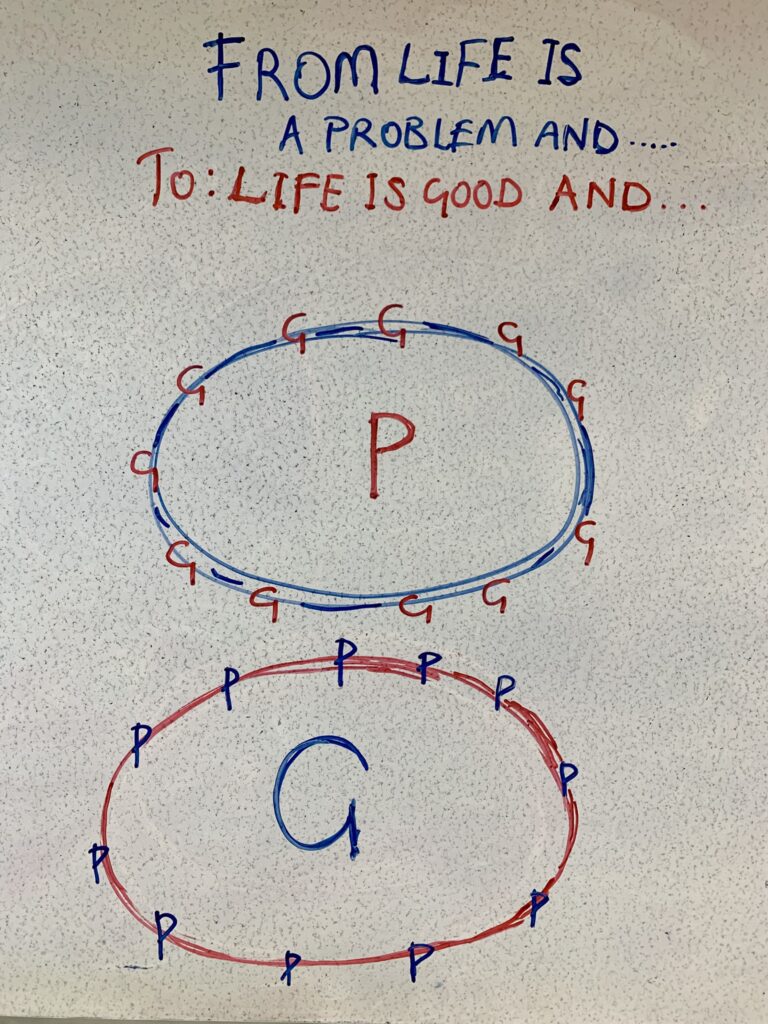
One simple paradigm I often use to illustrate the basic task and practice of a meditator is the one that you can see in the picture. Both oval shapes represent a person’s field of awareness.
 
Life is a problem and… The upper circle represents the everyday persons awareness field. In it you can see in the center there is a ‘P’ which stands for problem. On the edge of the circle, you can see several small ‘g’s, which represent the good things in our life. Unless we are careful, this is a place where we can spend a lot of our day and life; with our problems front and center of our awareness, and the good things in our life a secondary, background element of experience. With this perceptual dynamic or habit in place we literally experience our life as mostly a problem, as it is our problems that appear front and center of our awareness. This position can feel very defensive; our problems dominate, and the good things lack power due to their peripheral position.
 
What we are trying to do as meditators is ‘flip’ this so that our perceptual state goes from ‘life is a problem and…’ to:
 
Life is good and… the lower circle you can see has a ‘G’ for good things in the center, with the ‘p’ for problems pushed out to the periphery. Here you are simply keeping the good things in your life front and center of your awareness as you go through the day. You can understand ‘good things’ to represent a broad category here, that you are then making specific to your particular life experience. Because we keep the good things front and center, the power of our problems to dominate our awareness reduces as they are pushed out to the periphery.
An important thing to note here is that the change is perceptual, nothing external needs to change for us to do this. The difference between someone with the ‘P’ mostly front and center of awareness, and someone with a ‘G’ is the habit and discipline of focusing awareness in a particular way. You could have two people with almost identical life-circumstances, but a completely different experience simply due to their habit of focus. When we push the ‘p’s out to the periphery, we are not denying our problems, or the need to deal with them effectively. We are just placing them in a particular context, the ‘G’s, in a way that puts them in perspective and makes them feel much more manageable
 
A simple practicum: Set aside a fixed amount of time, say 5-10mins. Watch your awareness. Notice the ‘P’s often taking center-stage. Practice placing your ‘G’s front and center instead, pushing the ‘p’s benevolently to the periphery. Notice how your experience changes, and enjoy.
 
Related articleMeditation – Life as a positive mindfulness game 
© Toby Ouvry 2025, you are welcome to use or share this article, but please cite Toby as the source and include reference to his website www.tobyouvry.com


Upcoming classes & workshops

Ongoing on Tuesday’s & Wednesday’s (live & online), 7.30-8.30pm 
– Weekly integral meditation classes

Starts Tuesday 11th & 12th November, 7.30-8.30pm – Going beyond your limitations, tapping into your hidden strengths – Meditating with your bright shadow, a 6-week course

Starts Saturday 15th November, 5.30-6.15pm SG time – Bright shadow meditation Deep-dive – A 5 session practice series

Saturday 13th December, 9am-12.30pm – Psychic & Psychological Self-defence half day workshop

Tues 13th, Weds 14th January, & then weekly – Beginners mind, resilient body – a 10-week integral meditation course

Starts Saturday 17th January, 5.30-6.15pm, & then weekly – Beginners mind, resilient body deep-dive: An 11 -session practice series


Follow Toby onLinkedInYouTubeInstagram

Integral Meditation Asia

Online Courses 1:1 Coaching * Books * Live Workshops * Corporate Mindfulness Training *Life-Coaching *  Meditation Technology

Categories
Awareness and insight creative imagery Inner vision Integrating Ego, Soul and Spirit Life-fullness Meditation and Art meditation and creativity Mindful Self-Leadership Motivation and scope Primal Spirituality spiritual intelligence

Getting your imagination & creativity to work for you

“Your reality is a dynamic co-creation between your imagination & your environment. Learn how to use this to open doors in life for you, rather than close them”

Dear Integral Meditators, 

This week’s article focuses on the psycho-dynamic relationship between your imagination and your environment. 
If you enjoy it, then feel free to come along to the Wednesday and Saturday bright shadow meditations, which are psycho-dynamic in the way described below. 

Heads up for the last workshop of the year, Saturday 13th December, 9am-12.30pm – Psychic & Psychological Self-defence half day workshop, also very much an ‘evolutionary magical’ focus here.
 
In the spirit of the imaginal,

Toby


Your inner magician part 2 – getting your imagination & creativity to work for you
 
In my previous article on activating your inner magician I defined your inner magician as:
“The inner magician is that part of our inner self that is both creative and magical, and that if we harness it effectively has the power to change our daily life and experience for the better”


I then went onto define magic as defined magic as:
“The higher expression of our inner magician is that part of self that is able to work with the higher, evolutionary or developmental expression of magic.”  
 
This article looks at the second and third aspect of activating our inner magician:
 
“Engaging our creative imagination consciously to ‘sculpt’ our experience of any given situation for the better,” and
 
“Not being content to let good ideas remain in our head, but actively finding ways of expressing those ideas concretely in our daily life.”
 
Aspect 2: Engaging our creative imagination consciously to ‘sculpt’ our experience of any given situation for the better
 
We think that there is a concrete reality ‘out there,’ waiting to be discovered, that has some kind of fixed or intrinsic qualities. Actually this is not quite the case. What happens is that the “bare facts” our outer reality meets our mind, which then imagines or projects its own ideas onto that outer reality.
From this we can see that what we experience in life has something to do with the “facts” of our life, but equality as much it also has to do with our imaginative response to those facts. Our reality and our imagination are in a constant process of interacting together in a psycho-dynamic manner. To work with magic is to realize the power of your imagination to co-create any given situation in your life, and leverage on that imaginative power effectively. For more on this you can read my past article “Taking your creative imagination as your object of meditation”.
Our imagination is deeply and powerfully magical, it can create great art and great bliss, or it can create our own private hell.
 
Aspect 3: Not being content to let good ideas remain in our head, but actively finding ways of expressing those ideas concretely in daily life.
 
Our inner magician realizes that any good idea that we understand, create or hear about is an INJUNCTION. An injunction is somewhere between an invitation and an obligation. This means that when we have or hear a great idea, we recognize that our understanding of this idea is INVITING us to use the idea as a practical tool with which we can change our life for the better. By virtue of understanding of the idea we could also say that we have an OBLIGATION to try and integrate that idea into our life. If we just let that idea remain in our intellect that would be a great waste right? Many of us are guilty of this; having great insights and ideas about our life, but not implementing them, thus wasting them.
So, our magical self or inner magician is delighted when good idea come our way and immediately seeks ways to start expressing these ideas in a practical way to change our life for the better.
 
Practical Work
 
If you want to follow up on this article on a practical level, here are two suggestions:
 

  1. Use the image above as an object of meditation in order to help you to intuitively connect to your own “Inner Magician”. Alternatively find a picture of a ‘magical person that resonates with you, and use that as a visual base for connecting to your IM.
  2. Observer the interaction between your imagination and inner conditioning with your outer environment. Notice how your reality is a dynamic co-creation between these two. Reflect on how to use this to open doors in life for you, rather than close them.
  3. As soon as you have or understand a good idea intellectually, immediately ask yourself “How can I make this idea a concrete, practical reality in my life?” Do whatever you can to act upon your answer to this question.

 
Related articleConnecting to your magical self or inner Magician part 1

 
© Toby Ouvry 2025, you are welcome to use or share this article, but please cite Toby as the source and include reference to his website www.tobyouvry.com


Upcoming classes & workshops

Ongoing on Tuesday’s & Wednesday’s (live & online), 7.30-8.30pm 
– Weekly integral meditation classes

Starts Tuesday 11th & 12th November, 7.30-8.30pm – Going beyond your limitations, tapping into your hidden strengths – Meditating with your bright shadow, a 6-week course

Starts Saturday 15th November, 5.30-6.15pm SG time – Bright shadow meditation Deep-dive – A 5 session practice series

Saturday 13th December, 9am-12.30pm – Psychic & Psychological Self-defence half day workshop


Follow Toby onLinkedInYouTubeInstagram

Integral Meditation Asia

Online Courses 1:1 Coaching * Books * Live Workshops * Corporate Mindfulness Training *Life-Coaching *  Meditation Technology

Categories
Energy Meditation Inner vision Insight Meditation Integrating Ego, Soul and Spirit Life-fullness Meditation and Art meditation and creativity Meditation and Psychology Meditation techniques Mindful Resilience Mindful Self-Leadership

Connecting to your magical self or inner Magician

“Magic means being able to change one level of our reality by working on it from the level, or plane above it”

Dear Integral Meditators, 

This week’s article is the first part of a re-work  of an old article of mine on your ‘inner magician’, with part 2 next week. 
If you enjoy it, then you might enjoy coming along to the Wednesday and Saturday bright shadow meditations, which are magical in the way described below. 

Heads up for the last workshop of the year, Saturday 13th December, 9am-12.30pm – Psychic & Psychological Self-defence half day workshop, also very much an ‘evolutionary magical’ focus here.
 
In the spirit of your inner magician,

Toby


Connecting to your magical self or inner Magician

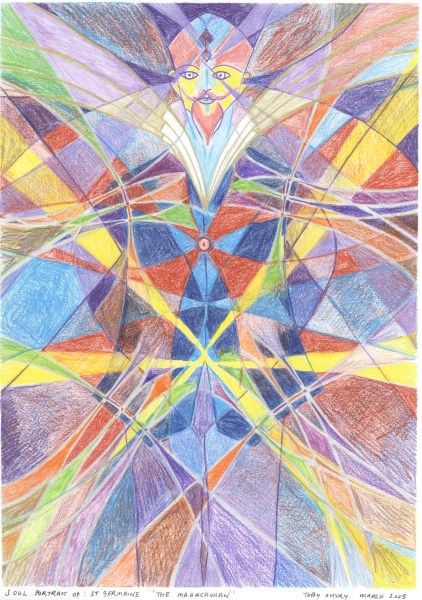
I have recently been working on re-titling and writing notes for some artworks that I completed back in 2005. The first of these “The Magician” you can see in the image on this page. The image itself is meant as a way of visually connecting to our “Inner Magician”. The inner magician is that part of our inner self that is both creative and magical, and that if we harness it effectively has the power to change our daily life and experience for the better.

Who or what is our inner magician? 

Here is a working definition:

“The higher expression of our inner magician is that part of self that is able to work with the higher, evolutionary or developmental expression of magic.”  

Magic in this context means the following:


1) Being able to affect or change one level of our reality by working on it from the level, or plane of reality above it.
2) Engaging our creative imagination vividly and consciously to “sculpt” our experience of any given situation for the better.
3) Not being content to let good ideas remain in our head, but actively finding ways of expressing those ideas concretely in our daily life.

Let’s take a closer look at these three aspects of magic:

1) Being able to affect or change one level of our reality by working on it from the level or plane of reality above it.
In its simplest terms this means that you use your mental or thought-based mind to change your physical and emotional reality for the better, and you use your spiritual or intuitive mind (which operates on a level beyond thought) to change your thinking patterns for the better.

A simple example might be this: 

  •  If I experience physical pain because of an injury or illness I use my thinking mind to be constructive, telling myself that the pain won’t last forever, and encouraging myself to practice patience. This is using my thoughts to positively affect my physical reality. 
  • If I find myself having repetitive dissonant thoughts about my pain and illness, then I can temporarily suspend my thinking (this is really where meditation comes into the picture) and move into a state of mind beyond thought. Doing this enables me to release the momentum of all the imbalanced thoughts that I was having, so that my mind becomes a “clean slate” so to speak which I can then replace the cycle of ‘negative’ thoughts with more appropriate and affirmative ones.
     

So, thinking mind works magic on physical world and emotions, spiritual/non-conceptual mind works to affect and control the thinking mind.

Looking at this example, you might think that this is simply working skillfully and creatively with your mind and consciousness to affect your bodily experience, but in terms of the way we are talking about it, that is exactly what a large part of functional magic is!

I’ll be posting a part 2 of this article next week, or if you like you can read the full original article here.

 
© Toby Ouvry 2025, you are welcome to use or share this article, but please cite Toby as the source and include reference to his website www.tobyouvry.com


Upcoming classes & workshops

Ongoing on Tuesday’s & Wednesday’s (live & online), 7.30-8.30pm 
– Weekly integral meditation classes

Starts Tuesday 11th & 12th November, 7.30-8.30pm – Going beyond your limitations, tapping into your hidden strengths – Meditating with your bright shadow, a 6-week course

Starts Saturday 15th November, 5.30-6.15pm SG time – Bright shadow meditation Deep-dive – A 5 session practice series

Saturday 29th November, 7-9pm – Living Life From Your Inner Center – Meditations for Going With the Flow of the Present Moment

Saturday 13th December, 9am-12.30pm – Psychic & Psychological Self-defence half day workshop


Follow Toby onLinkedInYouTubeInstagram

Integral Meditation Asia

Online Courses 1:1 Coaching * Books * Live Workshops * Corporate Mindfulness Training *Life-Coaching *  Meditation Technology
Categories
A Mind of Ease Concentration creative imagery Energy Meditation meditation and creativity Meditation and Psychology Meditation techniques Mindful Self-Leadership Mindfulness Presence and being present

Squares & triangles – Mindful strengths building

“Once you know how to breathe in squares and triangles, you can create your own mindful flow practices to build the qualities & capacities that you wish”

Dear Toby, 

This week’s article looks at a practice I have evolved over the years, designed to enable creativity within a basic, consistent structure. Enjoy!

Last call for this Saturday 22nd Nov, 9am-12.30pm – Meditations for Developing the Language of Your Shadow Self Workshop
 
In the spirit of building strength,

Toby


Squares and triangles – Mindful strengths building
 
Square and triangular breathing, the basic concepts
 
Square and triangular breathing are methods where you combine your inhalation and exhalation with short pauses. The practice of pausing your breath in itself offers benefits such as: 

  • calming the nervous system, improving focus, and enhancing emotional regulation
  • increasing the amount of carbon dioxide in the blood, which reduces the excitability of the amygdala (the brain’s fear center) and promotes a sense of calm
  • greater control over the breathing process, which can lead to increased mental clarity, resilience, and better decision-making

 
Square breathing is where we place a short pause both at the top and the bottom of the breath. A well-known form of this is called box-breathing where you breathe in, pause, breathe out and pause at the bottom of the exhalation, each for a count of four, hence ‘breathing in a box’, or square.
 
With triangular breathing there is just one pause, at the bottom of the breath, hence three stages or ‘sides’ like a triangle.
 
To use these breathing forms for strengths building, we simply combine the breathing with qualities, or states of mind to build them as we breathe. For example in my Wednesday class last week we began by practising breathing in a square in the following manner to cultivate mindful flow and presence:

  • Breathing in, gathering and focusing our energy in our body
  • Pause, being focused and present
  • Breathing out, relaxing our body, relaxing into the present moment
  • Pause, holding a state of relaxed presence

We practiced with sets of three square breaths like this, with pauses in between just to enjoy the sense of being in state of focused, relaxed presence. Focused, relaxed presence are foundational strengths for building competence in meditation and mindfulness. In this practice we used square breathing to build these strengths systematically.
 
In the Saturday class last week, we opened with a triangular breathing form, where:

  • As we breathed in, we opened to a state of adventurousness
  • Breathing out, dropping into a state of calm
  • Pausing at the bottom of the breath, relaxing in a state of calm adventurousness

 
Adventurousness and calm are qualities we can use to meet our challenges and opportunities in such a way that we enjoy them where possible, and also navigate them with calm strength. The triangular breathing provides a structure to cultivate these qualities deliberately in a structured way.
 
Once you know how to breathe in squares and triangles, you can create your own mindful flow practices to build the qualities and capacities that you wish to develop in our life and work. I like to combine qualities together into polarities that balance and complement each other. From the above examples you can see:

  • Relaxed and focused
  • Adventurous calm

 
There are many, many variations that I have used over the years:

  • Engaged detachment
  • Humble self-assertion
  • Gentle courage
  • Serious lightness

And so on…
 
The great thing about meditating with squares and triangles is that you have one technique, with many variations. So, you can create variety and stimulation in your practice, whilst at the same time keeping it basically consistent and ‘the same’.
 
Related reading:
Using mindful flow to train in strengths-building
Adventuring with attention (What is a Meditator?)
Meditation wings – Five foundational meditation polarities

 
© Toby Ouvry 2025, you are welcome to use or share this article, but please cite Toby as the source and include reference to his website www.tobyouvry.com


Upcoming classes & workshops

Ongoing on Tuesday’s & Wednesday’s (live & online), 7.30-8.30pm 
– Weekly integral meditation classes

Starts Tuesday 11th & 12th November, 7.30-8.30pm – Going beyond your limitations, tapping into your hidden strengths – Meditating with your bright shadow, a 6-week course

Starts Saturday 15th November, 5.30-6.15pm SG time – Bright shadow meditation Deep-dive – A 5 session practice series
 

21 Nov & 28th Nov, 8am-12pm – The wisdom of Zen meditation practice retreat & course, levels 1&2

Saturday 22nd November, 9am-12.30pm – Meditations for Developing the Language of Your Shadow Self Workshop

Saturday 29th November, 7-9pm – Living Life From Your Inner Center – Meditations for Going With the Flow of the Present Moment

Saturday 13th December, 9am-12.30pm – Psychic & Psychological Self-defence half day workshop


Follow Toby onLinkedInYouTubeInstagram

Integral Meditation Asia

Online Courses 1:1 Coaching * Books * Live Workshops * Corporate Mindfulness Training *Life-Coaching *  Meditation Technology
Categories
A Mind of Ease Energy Meditation Life-fullness meditation and creativity Meditation and Psychology Meditation techniques Mindful Resilience Mindfulness Zen Meditation

Zen ergonomics – Sailing with, rather than rowing against life

“How might I start to sail with this?”

Dear Integral Meditators, 

This week’s article explores an image that I use a lot in my coaching practice, and that also have found to be of enduring value in my own life challenges.

In the spirit of sailing rather than rowing, 

Toby


This week’s article: Zen ergonomics – Sailing with, rather than rowing against life
 
Zen – Buddhism meets Taoism
 
Zen is a non-dual school of meditation, and a Mahayana Buddhist one. Being a non-dual school means that is aims at a direct perception of reality As It Is, rather than as our mind thinks it is. To be a Mahayana school essentially means that Zen is underpinned by the motivation and aspiration of universal wise compassion, aiming to help all living beings find a release or liberation from their suffering.
 
Zen also offers an ergonomic approach to life, meaning that it aims to help us relax into our challenges and tribulations, rather than fighting with them. By learning to gradually accept things as they are and as we find them, we can find ways to work with what is going on rather than fighting it. It is very practical and ‘earthy’ in a way that combines the ‘transcendence’ of Buddhist meditation with the nature-based ‘flow’ philosophy of Taoism.
 
Sailing – working with, not fighting against
 
Alan Watts often used the image of sailing rather than rowing to give a sense of how this works. If you have a particular situation you are facing, notice the way in which you are approaching it. Are you trying to fight to overpower it, or are you relaxing into it, trying to find a way of relating to what is going on that is skilful? Fighting with a situation is like being in a boat and trying to row against the wind – every stroke takes effort, you pit your strength and energy against the wind and every stroke takes toil. A ‘sailing’ approach on the other hand involves trying to catch the wind and work with it, to use the energy to help you. If the wind is against you, then a good sailor knows how to tack, or sail diagonally into the direction of the wind, so even if the situation is difficult or challenging, we are looking to find ways to use it rather than fight it!
 
Centering, putting down concepts, your self-concept & entering relaxing into the beginning
 
Before you think about what to do in a situation to sail rather than row, it’s good to simply be present to it. A few pointers for this:

  • Center yourself in your body, in the moment. Try and feel the centre-line of the body, the mid-point between the front and back of the body, and the left and right halves of the body that runs from your crown to your perineum. Take a few slightly deeper breaths if you need to relax
  • Put down thinking, clear your mind. If you can’t stop thinking, then a skilful way is to not think about the thinking; be present to thoughts without causing them to generate more thoughts (if that sounds a bit Zen, it’s because it is!)
  • Notice and then put down your self-concept. Don’t just put down your thoughts, also notice you are carrying an idea of yourself into the situation; all the labels, roles and images you have about what and who you are
  • Relax into the beginning. Meet your situation in the moment, the now, free from your ideas about it, and what it should or shouldn’t be. Try and resist the temptation to start seeking a solution or a fix, just take your time being present with it, and relaxing into that as best you can

 
From this position of relative center, presence and relaxation ask yourself the question, “How might I start to sail with this?”
 
The better you get at sailing, the more relaxed you become under pressure, the less exhausted you feel when you become tired, and the more you notice how many small ways there are to sail through your life challenges with a degree of enjoyment, pleasure and creativity!
 
Related articlesNot thinking about thinking –  A Zen approach to non-conceptual awareness


© Toby Ouvry 2025, you are welcome to use or share this article, but please cite Toby as the source and include reference to his website www.tobyouvry.com


All upcoming classes & workshops

Ongoing on Tuesday’s & Wednesday’s (live & online), 7.30-8.30pm – Weekly integral meditation classes

Tuesday 2nd & 3rd September, 7.30-8.30pm, & then weekly – Integral Meditation from the Perspective of Zen – A 10 week series

Saturday 6th September, 5.30-6.15pm, & then weekly – Zen meditation Deep-dive – A 10 session practice series

Saturday 20th September, 5.30-6.30pm – Autumn equinox balancing & renewing meditation


Follow Toby onLinkedInYouTubeInstagram

Integral Meditation Asia

Online Courses 1:1 Coaching * Books * Live Workshops * Corporate Mindfulness Training *Life-Coaching *  Meditation Technology


Categories
A Mind of Ease Energy Meditation Enlightened Flow Integral Meditation Life-fullness meditation and creativity Meditation and Psychology Mindful Confidence Mindful Resilience Stress Transformation

Cycles of receiving, gratitude, & joy

“The more joy you feel, the easier it is to open in a state of receptivity, which leads to more gratitude, which in turn leads to more joy, in a virtuous cycle!”

Dear Integral Meditators, 

What might be a  skillful way of getting a better return on investment from your process of mindful attention? in this week’s article I outline a method that I have been enjoying this summer in my own practice.

In the spirit of virtous cycles, 

Toby


Cycles of receiving, gratitude, & joy
 
Integral mindfulness = Virtuous cycles of attention
 
Integral mindfulness is, in large part about putting together different elements of mindful attention in a way where the sum of the different elements produces a bigger effect than the individual parts. It’s a skillful way of getting a better return on investment from your practice. What I’m going to outline below is a cycle that I have been enjoying this summer in my own practice.
 
The receiving, gratitude, joyfulness cycle
 
Receptivity – This involves placing oneself in a state of receiving; openness to receiving all the good energy and experiences that are available to you in the moment. When we are open to these good things we can receive them. Receiving them is a little bit like, instead of just looking at nice food, you actually put it in your mouth and eat it! Receiving is like intentionally ingesting what is being given you in life, experiencing it in a way that then leads to the next stage…
 
Gratitude – If I am receiving and ‘eating’ the good things that life has to offer me, then it’s natural and relatively effortless to feel appreciation and gratitude for them. Its different from just making a gratitude list, because my receptivity is giving me an experience, a ‘tase’ that I can enjoy. This goes beyond the mere intellectual recognition. When you eat food, you start to feel full, satisfied, replete. This then leads to the third stage…
 
Joyfulness – Receiving and feeling grateful then gives us a sense of joy, a wonderment in being given a life to lead that has so much to offer us. This then leads to our being able to open receptively to good things as they come up in the moment, and feel joy as we are doing them rather than after the event. You might think of joyfulness (in this context) as spontaneous gratitude; the capacity to recognize and receive the good energy in life that is being offered right now!
 
Putting yourself in a state of receiving – As you sit and breathe now, gently soften your body, putting is in a state of receiving and receptivity.

  • Receiving the air that nourishes your body each breath
  • The love and care available to you in your relationships
  • Your health
  • Your ability to live a human life today that has freedoms

 
Let gratitude emerge from your state of receptivity – No need to try too hard, just let the thankfulness emerge naturally and easily from your experience of receiving. If you notice any inner resistance, don’t force, just stand at the doorway and wait until your mind and heart are ready to walk through.
 
Feel the fullness of joy emerging from your gratitude – You have been receiving energy, which helps you to feel fuller, to start to regenerate your energy. You have ‘eaten’ what you have received, which has led to experiencing gratefulness. From the gratefulness, now let the sunlight of joy start to emerge. It shouldn’t feel like much hard work.
 
The more joy you feel, the easier it is to open in a state of receptivity, which leads to more gratitude, which in turn leads to more joy, in a virtuous cycle!
 
This week I have been getting over the jet-lag from traveling back to Singapore after a few weeks in Europe. Jet lag as I’m sure you will know can make you feel pretty dreadful and discombobulated. Whilst awake in the middle of the night and in spare moments during the day I have been practising the receiving-gratitude-joy cycle, which has made the challenge of the jet lag much easier to navigate. So don’t wait until things are perfect in your life to give this a go, it’s a great way to mitigate pain and suffering!
 
Related articlesMindfully eating your thoughts
For every suffering a joy – cultivating positive non-attachment
A flower opening to the Sun – Choosing (& making distinctions around) joy


 © Toby Ouvry 2025, you are welcome to use or share this article, but please cite Toby as the source and include reference to his website www.tobyouvry.com


All upcoming classes & workshops

Ongoing on Tuesday’s & Wednesday’s (live & online), 7.30-8.30pm – Weekly integral meditation classes

Saturday 16th August, 9am-12.30pm – Taoist Pranayama & Breathwork Workshop – Improve physical health, wellbeing & inner peace though deep breathing
 

Saturday 23rd August, 3-4.30pm – One Heart Open Day: Sound of Zen meditation with singing bowls

Saturday 30th August, 7-9pm – Living Life From Your Inner Center – Meditations for Going With the Flow of the Present Moment

Tuesday 2nd & 3rd September, 7.30-8.30pm, & then weekly – Integral Meditation from the Perspective of Zen – A 10 week series

Saturday 6th September, 5.30-6.15pm, & then weekly – Zen meditation Deep-dive – A 10 session practice series

Saturday 20th September, 5.30-6.30pm – Autumn equinox balancing & renewing meditation


Follow Toby onLinkedInYouTubeInstagram

Integral Meditation Asia

Online Courses 1:1 Coaching * Books * Live Workshops * Corporate Mindfulness Training *Life-Coaching *  Meditation Technology
Categories
Energy Meditation Gods and Goddesses Inner vision Integral Awareness Life-fullness meditation and creativity Meditation and Psychology Meditation techniques Mindful Resilience Presence and being present Primal Spirituality spiritual intelligence Tree of Life

Mindful of: Your masculine & feminine balance

“If our masculine and feminine energies are harmonized, it is a huge plus for our inner resilience and sense of wellbeing.”

Dear Integral Meditators, 

This week’s article looks at working with your masculine & feminine balance. If you enjoy the article, you’d be welcome to join us for the Wednesday class & Saturday class where we will be working with this topic! 

If you are interested in Qi gong then do check out my workshop on Saturday 12th July, 9am-1pm – Qi Gong for Improving your Health and Energy Levels & for Self-Healing

In the spirit of your feminine/masculine balance, 

Toby 


Mindful of: Your masculine & feminine balance

In this article I want to explore a few mindful positions around your sense of the masculine and feminine energy within you, and how to bring them together into a harmonic, or mutually supportive partnership. If our masculine and feminine energies are imbalanced, or fighting each other, then this can be a source of conflict and dissonance. If they are working together, it is a huge plus for our inner resilience and sense of wellbeing.

Male & female, masculine & feminine

One thing to distinguish initially is the difference between your male and female energy on the physical and biological level, and our masculine and feminine. It is possible to be physically male and very feminine in terms of energy balance, or female biologically and quite masculine in energy balance. Obviously, we are either a man or a woman, and we will have a sense of how we experience that. We will also, as a man or woman have both masculine and feminine energy flowing through us. It is worth reflecting upon this, making the distinction, and then starting to get an intuitive sense of your own point of balance in terms of masculine and feminine polarities.

A balancing chart

Here is a list of masculine and feminine qualities, roughly arranged in complementary polarities:

It is not the only list, or a ‘complete’ list, but by looking over it you can start to give name and form to some of the natural polarities in terms of masculine and feminine, yin and yang energies. The idea with each of them is to build BOTH qualities within yourself, in a way that they are complementary, mutually supporting and ‘aware’ of each other. For example, if you take the first one, Loving and powerful, which is a fundamental one. Tune into the part of you that is loving in various ways. Then tune into the part that is powerful and expresses power. Working with them consciously, you can practise becoming both powerful and loving in your expression of your thoughts, words, relationships, and actions.

Merging your masculine & feminine self

Sitting quietly, imagine that on either side of you, you have a man and woman. Recognize these as being embodiments of your masculine and feminine selves. Feel into their energy on both sides of you to get a sense of both. When you are ready, as you breathe in, feel both figures moving inwards toward you, so that eventually their bodies merge with yours. Experience yourself as being one masculine and feminine being, balanced, harmonized and strong.
If you like you can do this exercise with one of the polarities in the above list. For example experiencing the ‘willful’ part of your masculine energy in the man, and the ‘nurturing’ aspect of your feminine energy in the woman. Then proceed with the merger as described.

Related articlesThe middle way
Polarity meditation – Working consciously with tension

© Toby Ouvry 2025, you are welcome to use or share this article, but please cite Toby as the source and include reference to his website www.tobyouvry.com


Follow Toby onLinkedInYouTubeInstagram

Integral Meditation Asia

Online Courses 1:1 Coaching * Books * Live Workshops * Corporate Mindfulness Training *Life-Coaching *  Meditation Technology
Categories
A Mind of Ease Concentration creative imagery Inner vision Insight Meditation Integral Awareness Life-fullness meditation and creativity Meditation and Psychology Meditation techniques mind body connection Primal Spirituality Shadow meditation Stress Transformation

The Cloud of Unknowing, the ocean of…

“Relaxing mindfully into your confusion often starts to dissipate the fogginess & return you to clarity without you ‘trying’ to”

Dear Integral Meditators, 

This week’s article looks at working with states of mind and emotion that we often consider to be in the way of our wellbeing, transforming them into the path of awakening. If you enjoy the article, you’d be welcome to join us for the Tuesday & Wednesday class where we will be working with this topic! 

Also, quick shout out for the beginners meditation workshop on Saturday the 28th June…

In the spirit of clouds & oceans, 

Toby 


The Cloud of Unknowing, the ocean of sadness

On aspect of tantric meditation is the transformation of difficult emotions, passions or feelings into the path to awakening. It requires a degree of skill and a willingness to experiment a bit, but if you are willing to try, it can bring some decent results quite quickly. In this article I want to focus on ignorance/confusion and sadness.

From confusion to the Cloud of Unknowing

This method can work with a range of feelings such as confusion, overwhelm, dullness, anxiety. Take the feeling of confusion that you might have about what to do in a particular situation. Imagine also that you’re feeling a little tired, and that your brain has been a little overworked, so you have that ‘foggy’ sensation behind your forehead and above your eyes. Most often these feelings are ones that we fight with to overcome and get rid of. In this method however, you simply relax into the feelings and sensations of the confusion. You sense the brain fog behind your eyes and relax into it, letting your mind become foggy and cloudy. You allow your confusion to make you dull. By doing this you relax into a ‘Cloud of Unknowing’, a non-conceptual space of relaxed spaciousness. The dullness becomes your friend in aiding you to let go of your thoughts and into a state where the unknowing-ness leads you into a state of open empty space that is ‘Just this’.

The term ‘Cloud of Unknowing’ is a contemplative expression:
“The Cloud of Unknowing (Middle English: The Cloude of Unknowyng) is an anonymous work of Christian mysticism written in Middle English in the latter half of the 14th century. The text is a spiritual guide on contemplative prayer. The underlying message of this work suggests that the way to know God is to abandon consideration of God’s particular activities and attributes, and be courageous enough to surrender one’s mind and ego to the realm of “unknowing”, at which point one may begin to glimpse the nature of God”.

Our own confusion and dullness can help us to start to awaken to deeper levels of consciousness through the Cloud! You will also find that relaxing into the Cloud also often starts to dissipate the fogginess, and help you return to clarity (without ‘trying’ to).

The Ocean of sadness

When working with confusion, I often use the feelings in my head as the focus point. With sadness the focus changes to the heart and stomach areas, where we often feel sadness most keenly. Here you take a feeling of sadness and relax into it. If you imagine the sadness is like an ocean, and you let yourself gently sink beneath the surface and into the deep depths. I also follow the feeling in my body down into my stomach, it’s like a sinking feeling from your stomach down into the abdomem. As you sink down you start to let go of the specifics of the sadness, and just relax into the deep, non-conceptual, oceanic space that the sadness opens up within you. It’s like you are drifting in the depths of an immense ocean. This technique transforms the specific sadness into a deep non-conceptual space that you can then use to meditate on consciousness itself. In this way you transform an obstacle to meditation into the gateway to meditation.
Like the confusion, you may also find yourself emerging from the sadness quite naturally and without effort as a side effect of this practice.

Related articlesDarkness emerging as light
Messiness, unlabeling, unknowing
Taking the weight off your chest (Transforming sadness)

© Toby Ouvry 2025, you are welcome to use or share this article, but please cite Toby as the source and include reference to his website www.tobyouvry.com


Follow Toby onLinkedInYouTubeInstagram

Integral Meditation Asia

Online Courses 1:1 Coaching * Books * Live Workshops * Corporate Mindfulness Training *Life-Coaching *  Meditation Technology
Categories
Energy Meditation Inner vision Integral Awareness Integral Meditation Integrating Ego, Soul and Spirit meditation and creativity Meditation techniques mind body connection Presence and being present Primal Spirituality spiritual intelligence

Practical dimensions of chakra meditation

“When you meditate, you start to learn to move or ‘travel’ between different states of consciousness, which opens up creative possibilities”

Dear Toby, 

This week’s article takes at the chakras as a way of navigating between states of consciousness in meditation. If you enjoy it, it will be the subject of this week’s Tuesday, Wednesday class, or the Saturday dee-dive session. You would be welcome to join, either live-in-person, or online!

In the spirit of inner traveling, 

Toby 


Practical dimensions of chakra meditation

The subtle energy body and levels of consciousness

When you meditate, you start to learn to move or ‘travel’ between different states of consciousness, which opens up creative possibilities. The simplest model of consciousness states is a set of three and looks something like this:

Gross level – Physical body and biological life force (The domains of physics, chemistry & biology)
The subtle level – The level of mind, ranging from the everyday mind and attendant emotions to more subtle, refined, higher levels (The domains of psychology, philosophy & metaphysics).
The causal, or very subtle level of consciousness – The level of consciousness itself, formless, timeless (a ‘living, primal emptiness’) and unitive in nature.

Some correspondences – Chakras as a map of states of consciousness

Chakras are subtle energy centres, or ‘wheels’. They are most often described as being located along a central channel, or energy meridian that runs from the base of the spine to the crown of the head, and then down to the third eye, or point between the eyebrows. different schools and systems use different colours, but the ‘rainbow’ version described below is a good version to start with. The three levels of consciousness are split into the seven levels as follows.

Gross levels of consciousness (Physics, chemistry biology)

Base chakra – Located at the base of the spine, red in colour, related to the world of physical form, and our surviving/ thriving in that domain.

Sacral chakra – Located at along the spine at the level of the sacrum, orange in colour, related to the biological world of sexuality, reproduction, relationships, and the attendant feeling/emotional states

The subtle levels of consciousness

Solar plexus chakra – Located at the solar-plexus level of the spine, yellow in colour, related to the psychological world of everyday thinking, healthy or dysfunctional ego formation, our sense of power or agency, and/or lack of it.
Heart chakra – Located at the heart-level of the spine, green in colour, related to our love energy, both in relation to ourself, others and the world around us.
Throat chakra – Located at the throat-level of the spine, blue in colour, related to our communication energy (speech), both in relation to ourself, others and the world around us. You could also add ‘truth’ to this chakra, as in “speaking one’s truth.”
Third eye chakra – Located between the eyebrows (If you imagine the chakra column of meridian rising from the base of the skull, up to the crown of the head and then down between the eyebrows), indigo in colour, related to our wisdom facility, and depth of perception.

The very subtle, or causal level of consciousness

Crown Chakra – Located at the crown of the head, violet/white in colour, related to our capacity to rest in an expanded state of causal or formless consciousness.

A simple meditation

  • Sitting in meditation, sense into your subtle body, same shape, and size as your physical body, interpenetrating it
  • See the chakra column with the attendant chakras extending from the base of your spine to the crown of your head, and then down to the third eye zone between your eyebrows
  • In meditation feel and see light and energy being activated within your base chakra. Feel it rising progressively through each of the chakras, with their attendant colours and capacities.
  • See the light rising into your crown chakra, where your personal consciousness dissolves and merges with the timeless emptiness of consciousness itself
  • See the light from your crown chakra descending to the third-eye chakra between your eyebrows, rest in stillness. After a while imagine seeing the world around you, and yourself being inseparable from the formless timeless emptiness you contacted in your crown charka. The world is a dream-like manifestation of consciousness itself, that you are. They co-exist singularly, like the two sides of one coin…

© Toby Ouvry 2025, you are welcome to use or share this article, but please cite Toby as the source and include reference to his website www.tobyouvry.com


Follow Toby onLinkedInYouTubeInstagram

Integral Meditation Asia

Online Courses 1:1 Coaching * Books * Live Workshops * Corporate Mindfulness Training *Life-Coaching *  Meditation Technology