Categories
Awareness and insight Inner vision Integral Awareness Integral Meditation Integrating Ego, Soul and Spirit Life-fullness Meditation and Psychology Meditation techniques mind body connection Mindful Self-Leadership Motivation and scope Presence and being present

Intention determines trajectory – Aspects of mindful intention

“Your intention determines your trajectory – choose to be more conscious and intentional during the day. Life your life ‘on purpose’!”

Dear Integral Meditators, 

This week’s article & video explores the concept that ‘intention determines trajectory’ & looks at practical ways you can start to explore it mindfully in your daily life.

If you enjoy the article, then do check out the upcoming course that will be starting in September on  Meditating with the power of intention.

In the spirit of the intentional, 

Toby


Watch Toby’s video on Mindful intention:


Article: Intention determines trajectory – Aspects of integrated mindful intention
 
Intention is one of what I call the ‘three pillars’ or ‘holy trinity’ of integral mindfulness: awareness, attention and intention. These three are what I call pre-skills, meaning skills that, if you develop them, they will help you to develop any other skill or capacity that you want to in life. The better you become at them, the more confident you will feel in the face of life’s challenges.
 
Intention determines trajectory
The statement ‘Intention is destiny’ might not be true in the absolute sense of the word, but it holds true on many levels in the sense that our intentions determine our motivations and actions in life. The intentions that we hold in our mind consistently are continually influencing what we do, where we go, what we say, what we choose. Its not difficult to see for example that someone who’s conscious intention is to contribute to society and make it a better place is going to have a very different life path from someone whose intention is simply to fit in with the prevailing norm, and not look too dumb. Given this understanding, the intention to make your intentions in life conscious is a good place to start!
 
You always have an intention
Something else about intention is that you always have one. It can be a conscious intention such as the intention to act to achieve a goal, or it can be an unconscious or instinctual intention, such as the impulse to eat an attractive food, or say something in a moment or reactivity. So, a second practice around intention is to start to notice and be mindful around the intentions that you are having thru-out the day. Notice them coming and going. Notice the ones that are deliberate. Notice intentions that you tend to hide from yourself, or suppress awareness around. “What is my intention for doing this?” is a question that helps you both to become aware of existing intentions, and for clarifying your intention, aligning yourself with the best intentions that you can muster.
 
Three levels or octaves of intention
Three ball park intentions that I practice on are simple and as follows:

  • The intention to be of benefit toward myself today
  • The intention to turn up well for my close circle, friends, family, colleagues
  • The intention (Partly by doing intentions 1&2 well) to be of benefit to humanity and the Planet

I call these ball park intentions, because they hold space well for the other more specific intentions that I may focus on in the day. They create a benevolent intentional space for my activities, and clarify the way in which I direct my energy. I often start a meditation with these three intentions, but they are equally important for:

  • Family interaction
  • Business transactions
  • Social activity

And so on…One thing to notice about these three levels is that we are aiming to create a harmonic between them, get them working together as a team. By benefiting myself I can become stronger, which helps me to turn up better for my close circle, and the enhanced interaction with my close circle ripples out into the world. You get the idea!

Practice points around mindful intention:

  • Be curious about the intentions, conscious and unconscious that you have during the day, witnessing them and noticing patterns
  • Choose to be more conscious and intentional during the day. Life your life ‘on purpose’!
  • Notice how your intentions determine your trajectory in life, both in the short, medium, and long terms
  • Generate and center around the three levels or octaves of intention regularly. Practice motivating yourself from these powerful, core intentions

Related readingIntention, dedication, meditation
Fourteen levels of mindful intention

Article & content © Toby Ouvry 2024, you are welcome to use or share this article, but please cite Toby as the source and include reference to his website www.tobyouvry.com


Follow Toby onLinkedInYouTubeInstagram

Integral Meditation Asia

Live & Online Courses * 1:1 Coaching * Books * Live Workshops * Corporate Mindfulness Training *Life-Coaching *Executive & Meditation coaching  

Categories
Awareness and insight Inner vision Integral Awareness Life-fullness meditation and creativity Meditation and Psychology mind body connection mindful dreaming Mindful Self-Leadership Mindfulness Presence and being present spiritual intelligence

Three levels of mindful intuition

“Teaming up our intuition & rationality helps us trust our natural inner guidance and signals”

Dear Integral Meditators, 

This week’s article offers some ways of making distinctions around different type of intuition, & beginning to work with them in daily life. If you enjoy it, feel free to join us for the Tuesday or Wednesday meditation class, where it will be a focus point of the meditation. 

In the spirit of intuition,

Toby


Three levels of mindful intuition
 
What is intuition?
 
For this piece, I’m going to define intuition as a way of experiencing and processing our life in a way that is almost instantaneous, often pre, or trans-rational, meaning preceding logical or systematic thought. Here are a couple of mainstream definitions from the internet that are complementary to mine:

  • Oxford languagesIntuition – using or based on what one feels to be true even without conscious reasoning; instinctive; “his intuitive understanding of the readers’ real needs”
  • Cambridge dictionary: Intuition – able to know or understand something because of feelings rather than facts or proof

 
Why is it useful to develop?
 
Reliable intuition is a wonderful capacity to develop, as it enables us to navigate life confidently, experientially, and more successfully. It is a capacity that is complementary to our reasoning, and analytical capacity, rather than in competition with it. If we can make our intuition and reasoning a team, then they can help us to verify choices, navigate confusion and so forth. Teaming up our rationality and intuition helps us trust our natural inner guidance and signals.
 
Three levels of intuition
 
Most often I think about intuition as having three levels; instinctual, mental and spiritual:

Instinctual intuition comes from our biological intelligence. It is the capacity that we share with animals. It is pre-rational, often sensual and sensory. If you quieten the mind and attune to your body-intelligence, then you’ll start to notice this level of your intuition providing you signals and feedback thru-out the day. When you are out in nature, you may notice this level of intuition really coming to the foreground of your awareness, as your animal nature attunes to its environment.

Mental or intellectual intuition is the capacity of our mind to compute answers based on the sum total of our knowledge and experience, before our conscious mind can do it in a linear way. For example, if we are an experienced chess or tennis player, our intuitive sense of the next move or shot will often come intuitively and instantaneously. This ‘feeling’ comes from the capacity of our intellect to make trans-rational calculations based on the totality of our knowledge and experience in this domain.

Spiritual intuition is that dimension of our intelligence that lies beyond both our instinct and our intellect. The intuition that comes from this level is distinct, sometimes characterised as a ‘still small voice within’. In a previous article I describe this intuitive voice as follows:
“What you are looking for is a quieter voice within you coming from a deeper level of your consciousness. Its nature is to be kind, and quiet, strong and wise. It’s easily drowned out by the louder voices of the everyday mind, which is why you need to listen for it closely, in a relaxed frame of mind”
Sometimes referred to as the Higher Self, Soul Self or Spiritual Self, spiritual intuition often feels as if it’s perspective comes literally from an ariel point of view, a ‘big picture’ perspective.
 
If you sit quietly, and recall a particular situation in your life, you can try gently to identify these three voices, attuning to the different information and perspectives they are giving you. Sometimes they will be in broad agreement, sometimes they will be saying different, even contradictory things to each other. It is your job as the conscious self to:

  • Identify these three voices of your intuitive guidance
  • Collate and assess them together, making a decision that you feel is best for you and the situation at hand, all things considered

Identifying and listening to these three levels of your intuition is a part of what I call learning to trust your inner guidance, or ‘inner guru’. Everyone has all three of these, it’s just a matter of putting in a little patient practice to start building your competency!
 
Related articlesTrusting your inner guru
Four ways of working with your inner voice

Article & content © Toby Ouvry 2024, you are welcome to use or share this article, but please cite Toby as the source and include reference to his website www.tobyouvry.com


Follow Toby onLinkedInYouTubeInstagram

Integral Meditation Asia

 1:1 Coaching * Books * Live & Online Workshops * Corporate Mindfulness Training *Life-Coaching *  Meditation Technology

Categories
creative imagery Energy Meditation Essential Spirituality Gods and Goddesses Meditation techniques mind body connection spiritual intelligence

Spiritual aspects of healing – The medicine Buddha

Spiritual healing is the art of bringing a higher, more whole and inclusive dimension of reality to bear upon a lower dimension, in order to bring that greater wholeness, healing and inclusivity to bear upon the lower dimension, thus effecting healing.

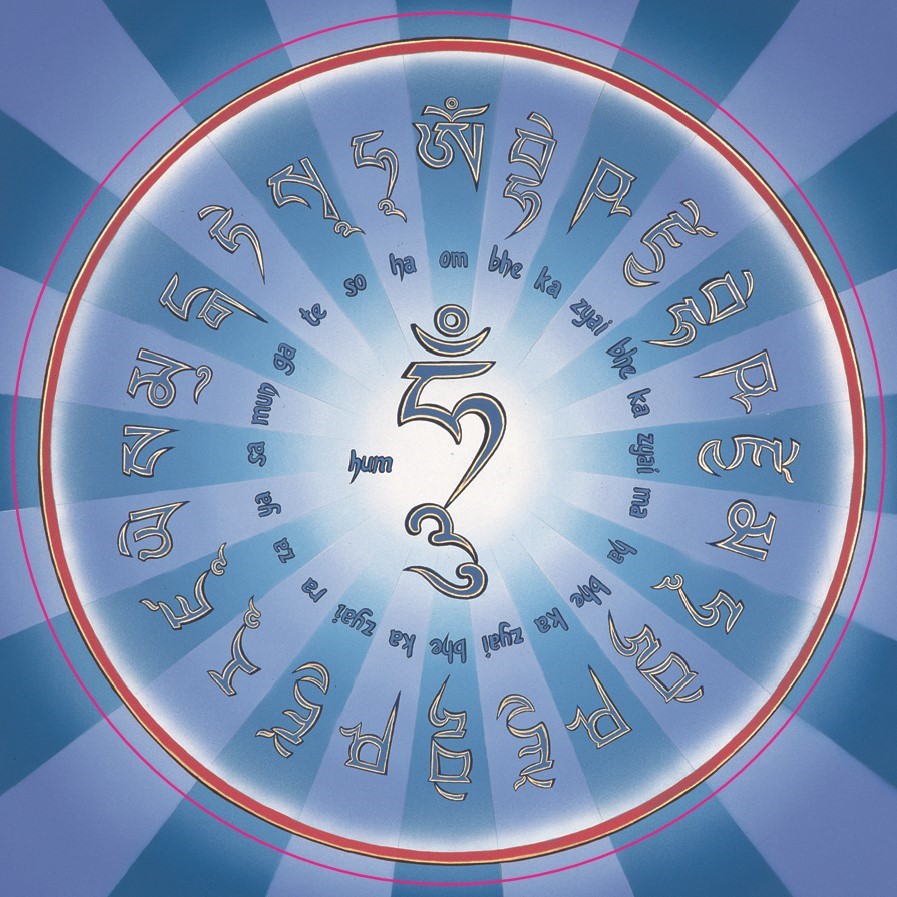
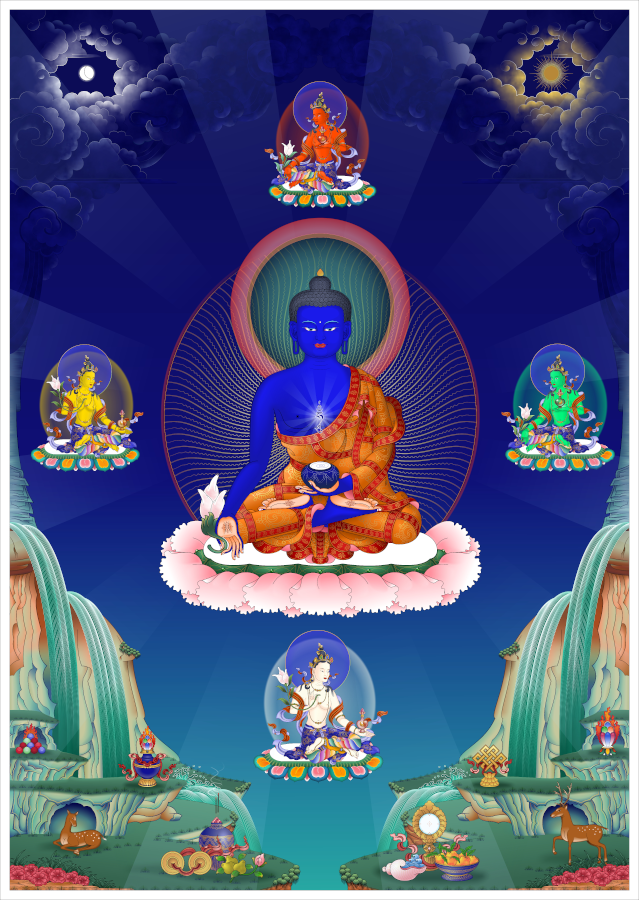
(Link to image source)

Dear Integral Meditators, 

The article below looks at principles of spiritual healing practice in general, and also specifically in terms of Medicine Buddha practice, which is something I picked up in my days as a Buddhist monk, and continue to engage with today. If you enjoy the article & are curious, do join me live or online for the Medicine Buddha Healing meditation this Saturday 11am-12.15pm.

Also, if you know anyone looking to get their meditation practice started, or if you want to get your own practice rebooted, then I recommend this Saturday’s session:Get Your Meditation Practice Started Now – The Shortest and Most Time Effective Meditation Workshop Ever

 
In the spirit of healing,

Toby


Spiritual aspects of healing – The medicine Buddha

What is spiritual healing? You might think about spiritual healing in terms of this definition:
Spiritual healing is the art of bringing a higher, more whole and inclusive dimension of reality to bear upon a lower dimension, in order to bring that greater wholeness, healing and inclusivity into the lower dimension, thus effecting healing.
To practice spiritual healing is then basically learning to meditate (Yes, mediate, or channel) higher, deeper dimensions of energy to people or places where healing is needed. It can be done in different ways:

  • To effect physical or psychological healing for ourself
  • To effect physical or psychological healing for others
  • To direct healing energy to groups of people or places on the planet

What/who is the Medicine Buddha
The Medicine buddha practice is an example of a spiritual healing practice. Sometimes Buddha’s are linked to actual people, but more often these are mythic rather than factual stories, and the Buddha in question is more of an embodiment of a particular enlightened quality, a primal archetype rather than a ‘person’. In the case of the Medicine Buddha, he may be thought of as the healing power of all the Buddhas (and our own enlightened Buddha nature) embodied in a human form, albeit with a blue body (!)
Having been related to in this way for over two thousand years, visualizing the Medicine Buddha and reciting his healing mantra provides a ready-made pathway in the human group consciousness that we can use to access this particular spiritual healing energy from the higher dimensions of reality to bring healing to ourself and others.

Paradigms for understanding disease
In the traditional Medicine Buddha teachings, there are four types of disease/illness:

  1. Illness that we can recover from without medicine (physical or spiritual)
  2. Illnesses that we need medicines to recover properly from
  3. Illnesses that have a ‘soul’ level or karmic cause, and that cannot be healed by physical medicine alone, but can be healed through spiritual healing practice
  4. Illness that is essentially untreatable, spiritually or with traditional medicine, and that we cannot recover from once they manifest.

From this we can see that spiritual healing practices like the Medicine Buddha are primarily helpful for the third class of disease, and as a preventative for helping to avoid the fourth class of disease coming into manifestation. In my own practice of the Medicine Buddha, I primarily focus on:

  1. Daily practice as a future disease prevention. This is a bit like taking supplements to increase immunity(!)
  2. Working to build strength and wholeness in the ‘weak’ spots in my body, again making illness and injury less likely
  3. In relation to symptoms of diseases I get, for example reducing pain and activating healing around a recent gastric flu I had. This was in conjunction with regular TCM type medication.
  4. For others I know who are sick and in need of healing, or who are vulnerable to illness

Healing meditation with the medicine Buddha, 3 ways
The methodology used to do spiritual healing is often deceptively simple, in the case of the Medicine Buddha it can be done in a very simple way by:

  • Generating a compassionate motivation
  • Visualizing him in the space in front of you, setting your specific intention for requesting healing
  • Reciting his mantra
  • Imagining healing light and nectar flowing down from his heart (where the mantra sits), into the person, area of the body or part of the world where you want the healing energy to flow
  • Finishing with a brief period of stillness

The mantra itself is Sanskrit:
TAYATHA OM GATE GATE, PARAGATE, PARASANGATE BODHI SOHA

(Link to image source)

This means quite literally ‘Oh doctor (Gate), doctor, great doctor, doctor of doctors, please grant us the healing attainments!’
The practice may look simple, childish even, but combined with good quality intention and focus, the effects can be felt quite rapidly and easily. It’s a practice I have had for years, if your looking for another dimension to your own healing methodologies, this is one I highly recommend.

Article & content © Toby Ouvry 2024, you are welcome to use or share this article, but please cite Toby as the source and include reference to his website www.tobyouvry.com


Follow Toby onLinkedInYouTubeInstagram

Integral Meditation Asia

Online Courses 1:1 Coaching * Books * Live Workshops * Corporate Mindfulness Training *Life-Coaching *  Meditation Technology

Categories
Inner vision Integral Awareness Integral Meditation Life-fullness Meditation and Psychology Meditation techniques mind body connection Mindful Resilience Mindfulness Stress Transformation

Your primal self as your object of mindfulness

“As we develop from one stage of growth to another as a person, we leave behind the old self in favour of a more evolved one. This new self-sense them becomes ‘I’ or me, with the previous self-identity becoming part of us that we manage or parent”

Dear Integral Meditators, 

This weeks article explores looks at oour early-stage development as an object of mindfulness, & what the benefits of doing so might be. If you like it, do consider joining us on the new adventure starting on 9/10th April: Exploring your hidden maps of consciousness –mindfulness meditation for growing up, either live or online!

This week there will be only one meditation class on Wednesday, & it will be on the subject of single-headness (how to manage your stress more effectively thru mindfulness) & ‘head-lessness‘ which is a kind of non-dual meditation.

In the spirit of primal integration,

Toby


Your primal self as your object of mindfulness
 
As we develop from one stage of growth to another (psychologically) as a person, we leave behind, or objectify the old sense of self, in favour of a more evolved one. This new sense of self them becomes ‘I’ or me, with the previous self-identity becoming a part of us that we manage.
 
Our first sense of self – Basic appetites, fusion confusion
 
The first 18 months of our life is characterized by the absence of a separate self-sense. Initially we are ‘fused’ our environment. Later we start to separate our self-sense physically, but remain for a while longer in a state of emotional fusion with our environment and particularly our mother.  This is a  symbiotic or fusion stage, a bit of a fusion-confusion!
This self-sense is accordingly completely dominated by our physiological needs, food, thirst, warmth, coolness, comfort, discomfort, rest.
 
Addictions & allergies – Yes, we left it behind but…
 
We start to grow out of this fusion-confusion stage from 18 months. As a 51 year old I say “I am hungry” rather than “I am hunger!”. I can distinguish myself physically and emotionally from my environment. However, if I have left parts of me behind at that level, either as a secret identity or as a dissociation, then that can result in an ‘addiction’ or an ‘allergy’. For example, regarding hunger:

  • Addiction: If I still have a part of me still fully identified as being (not having) hunger, then this may result in me having trouble regulating my diet and weight, resulting in extreme cases as obesity
  • Allergy: If I have dissociated myself from hunger, then I may be out of touch with my basic hunger needs, not eating properly and being underweight or undernourished. In extreme cases this might manifest in anorexia or bulimia

Sometimes also you may notice a fusion-confusion type experience with your environment or in your relationships. Public spaces become confusing as your senses ‘merge’ with them, or the emotional space between yourself and others becomes very blurred and difficult to regulate. Some of this may be due to a part of self that has been left behind at the primal stage.
 
Clearing up to grow up more fully using mindfulness
 
From a mindfulness-as-therapy point of view, the essential method is quite simple; you bring to mind basic needs like hunger, thirst, as well as experiences of ‘fusion-confusion’ mentioned above (separately, not all at once!), and practice mindfully observing them, and your relationship to them. The making subjects into objects nature of mindfulness will naturally help start to clear up any allergies or addictions that may remain at this stage…
 
My personal experience of being mindful with this stage
 
Regarding basic appetites I discovered that I tend toward the “allergy” relationship to food, I usually have trouble keeping up my weight, and eating is a discipline rather than a joy. So, it helped me re-balance that which was useful.
Secondly the revisiting the fusion-confusion stage resulted in me feeling a surprising increase in clarity regarding my environmental and relational awareness.
 
Integrating, transcending & including
 
A healthy integration of your primal-self* enables you to create healthy self-regulation of your basic needs & appetites. It also helps create a clear distinction of self from others & environment. We have a healthier ‘separate’ self-sense, but can engage (and withdraw from) conscious ‘fusion’ when appropriate.
 
I’d encourage you to spend some time with this as a practice, it seems initially that we should all have grown fully out or this stage. But if you look at problems humans have around basic appetites and self-regulation like food, we can see that there are huge imbalances there. You may be surprised at how powerful and transformative it is for you. It certainly was for me!
 
*In integral psychology this is level 1 of human psychological development, and termed ‘Infrared archaic’
 
Related contentSubjects to objects – How meditation helps you grow to greater degrees of freedom

Article & content © Toby Ouvry 2024, you are welcome to use or share this article, but please cite Toby as the source and include reference to his website www.tobyouvry.com


All upcoming classes and workshops at IMA:

Ongoing – Weekly Tuesday, Wednesday Online class schedule

Ongoing on Wednesday’s, 7.30-8.30pm – Wednesday Meditation for stress transformation and positive energy with Toby (Bukit Timah)

Ongoing on Tuesday evenings, 7.30-8.30pm – Tuesday Meditation for stress transformation and positive energy with Toby  (East Coast)

Starts Tuesday/Wednesday evening 9/10th April – Exploring your hidden maps of consciousness –mindfulness meditation for growing up

Saturday & Sunday April 20th & 21st – Integral Meditation 1.5 Day Retreat


Follow Toby onLinkedInYouTubeInstagram

Integral Meditation Asia

Online Courses 1:1 Coaching * Books * Live Workshops * Corporate Mindfulness Training *Life-Coaching *  Meditation Technology

Categories
A Mind of Ease Inner vision Integral Meditation Meditation techniques mind body connection Mindful Breathing Mindfulness Presence and being present

Using mindful flow to train in strengths-building

“Using mindful-flow to develop particular inner-strengths can rapidly accelerate the pace at which we can grow them. What would normally take much longer, mindful-flow enables us to assimilate with confidence in a much shorter period”

Dear Integral Meditators, 

This week’s article looks at a major foundation of integral meditation practice, mindful-flow, what it is and how to go about starting to use it in your life.


In the spirit of flow,
 
Toby


Using mindful flow to train in strengths-building
 
What is mindful flow?

Mindful flow is a method of concentration that meditators use to remain present in their practice, and stay present for extended periods. It consists of two complementary qualities:

  • The quality of focus
  • The quality of relaxation

Often when people begin meditation, they try a bit too hard to focus, which means they then have difficulty relaxing, which then means their mind has difficulty settling into meditative presence. Other people relax a bit too much and find themselves falling asleep, which is the other end of the spectrum. So good quality mindful concentration contains the alertness of focus, in combination with the ‘flow’ of relaxation, hence mindful-flow. If complete relaxation to the point of sleep is a 0, and absolute effortful focus is a 10, in meditation we are generally trying to stay somewhere within the 4-6 range.
 
Building the technique of mindful flow

Generally, I recommend specifically developing your practice of mindful flow as an exercise, which can be done using a simple breathing technique:

  • Breathing naturally, as you breathe in, emphasize focusing your attention on your in-breath. You can focus on a particular area of the breathing (like the movement of the belly for example), or the overall sensation of it.
  • As you breathe out, emphasize relaxing your body and mind. If you are aware of particular areas of tension in the body, you can be specific in relaxing those body parts.

You can practice mindful flow continuously for 5-10minutes, or if you like you can do it in sets, for example:

  • 3-5 breaths of mindful flow, followed by a short pause, and when you are ready repeat.

I find that this second technique is quite useful, because it encourages you to really focus well for those 3-5 breaths! 

Using mindful flow to bring strengths & strength-combinations

Once you have practiced mindful flow, and got a sense of that balance of focus and relaxation, you can then use it to build strengths, qualities and capacities within you. Here I am going to use gentle-determination as an example. Once you understand how to do it with one quality, you know how to do it with others. So then with gentle-determination:

  1. For the first part, as you breathe in, connect of a sense of gentleness, as you breathe out, relax into that feeling of gentleness.
  2. In the second part, connect to a sense of determination, perhaps about something specific in your life right now. As you breathe out, feel that sense of determination as an attitude in the mind and as an energy in the body.
  • In the third section, bring the qualities of gentle-determination together; as you breathe in connecting to determination, as you breathe out soften that determination with an appropriate degree of gentleness.

You can spend as much time as you like on each section, but ideally the most time would be spent with stage three, bringing the gentleness and determination together into a flow.
Dropping into a mindful-flow state and using it to develop particular strengths and qualities can rapidly accelerate the pace and depth at which we can grow them within us. What would normally take much longer to develop competency around, mindful-flow enables us to assimilate with confidence in a much shorter period of time!


Article & content © Toby Ouvry 2024, you are welcome to use or share this article, but please cite Toby as the source and include reference to his website www.tobyouvry.com


Follow Toby onLinkedInYouTubeInstagram

Integral Meditation Asia

Online Courses 1:1 Coaching * Books * Live Workshops * Corporate Mindfulness Training *Life-Coaching *  Meditation Technology

Categories
Awareness and insight Integral Awareness Integral Meditation Life-fullness Meditation techniques mind body connection Mindful Breathing Mindful Resilience Presence and being present

Meditation – Not missing your life

Ordinarily we are often primarily lost in thought, secondarily conscious of the present moment. A meditator aims to become primarily present in life, and secondarily thinking’

Dear Integral Meditators, 

This week’s article explores a foundational definition of meditation & how to start working with it on a practical level. Experience of it gives you a solid base for your practice that you can easily create enjoyable variations around.
 
In the spirit of presence,
 
Toby


Meditation – Not missing your life (Your basic meditation state or space)
 
Awakening in meditation

In some ways awakening to the state of meditation could not be simpler. Here is a working definition:
Meditation is the state of being awake, not lost in thought and not falling asleep. It is a state of being present in the moment, and aware of the present
If you bring your attention to your breath for the next three breaths, avoiding distraction, or falling asleep, and holding the recognition of the breathing in the present, then you are in meditation.
 
We are often close to being in meditation already

Through-out the day we spend periods of time when we are focused in the present moment, on a particular task, not lost in thought, and not asleep. Particularly when we are enjoying something or feeling relaxed, we can do it without too much trouble. Think of an activity you take pleasure in, and recall how it helps you land in the present more, temporarily liberating you from being ‘somewhere else’ in your head.  Children spend long periods of time completely absorbed in and present to activities they enjoy.
The difference between these times that we all experience and a state of meditation becomes clear in the second part of the above definition: “A state of being in the present in the moment, and aware of the present moment.” Most non-meditators, when they arrive in the present moment do so by accident, as a side effect of an activity. They are present, but they are unconsciously present, rather than consciously present. To be in meditation we need:

  • To be aware that we are in the present, and
  • Conscious of what we are trying to focus on in the present

The state of meditation is therefore very similar to a state that you are already quite familiar with. It is just a matter of making it conscious, and then it becomes basic meditative presence
 
Your basic meditation state as your ‘inner studio space’
Your basic meditation state, once you can identify it and hold it consistently, then becomes like an ‘inner studio space’ where you can place and cultivate a range of different states of body, mind, and heart. For example, you can use it to:

  • Build focus and relaxation
  • Cultivate stillness
  • Build greater love and compassion for yourself and others
  • Work on healing inner wounds
  • Develop your self-knowledge

There is a whole range of creative things you can cultivate within your meditation space, but there is one over-riding reason for meditating, and that is so that you don’t miss your life!
 
Meditation – Not missing your life

For many of us, much of the day is spent in a state of non-presence, or the opposite of meditation.

  • We are often lost in thought and distraction
  • When we are not lost in distraction, it is often due to mental fatigue or exhaustion so we find ourselves sleepy, unconscious and in a state of dullness

The result of this is that we miss our life. Our life itself is always happening now, in the present moment, but we forget to turn up, we are somewhere else. To put it simply:
 
Ordinarily we are often primarily lost in thought, secondarily conscious of the present moment. A meditator aims to become primarily present in life, and secondarily thinking’
 
As a meditator, thinking and reflecting consciously becomes a complementary activity to our primary activity of being aware and anchored in the present, thus turning up to our life rather than missing it.
 
The breath of life
As a practical way of exploring your basic meditation state, here are some simple pointers. Breathing comfortably and naturally:

  • Notice how awareness of the breathing brings you naturally into your basic meditation state
  • Notice what it feels like to be primarily present to your life, not lost in thought or on auto-pilot
  • Notice what it is like to be ‘awake’ to your life, here and now
  • See how deeply you can drop into your basic meditation state, and notice what happens when you do
  • Practice taking the basic meditation state into your everyday activities as the orientation point in the moment. Notice how it changes your experience.

Article content © Toby Ouvry & Integral Meditation Asia 2024. you are welcome to share, but please cite the source, thanks! Contact info@tobyouvry.com 


Follow Toby onLinkedInYouTubeInstagram

Integral Meditation Asia

Online Courses 1:1 Coaching * Books * Live Workshops * Corporate Mindfulness Training *Life-Coaching *  Meditation Technology

Categories
A Mind of Ease Energy Meditation Enlightened Flow Integral Awareness Integral Meditation Life-fullness Meditation techniques mind body connection Mindful Resilience Presence and being present

Pond & river. What is it that moves, what is it that is still?

Dear Integral Meditators, 

This week’s article looks at moving stillness as our object of meditation. It’s a capability that, when you start to get a practical handle on it can have a deeply transformative influence on your life!

If you enjoy it, then do check out the  Effortless effort – The art of doing by non-doing, a ten-week meditation course! that I’ll be starting this  week, both live & online on Tuesday & Wednesday evenings. 

You can also view my course  video on Effortless effort – Moving water that is still, still water that is moving

Final reminder, this Saturday 13th January, 9.30am-12.30pm I’ll be facilitating An Introduction to Integral Mindfulness & Meditation Practice 3 hour workshop. Great way to kick start your meditational year!
 
In the spirit of moving stillness,
 
Toby


Pond & river. What is it that moves, what is it that is still?
 
An important dimension of the practice of effortless effort is to bring stillness and movement together into a harmonic with you. This facilitates the ability to relax into our life and daily tasks ergonomically and effectively. It also enables us to combine two things:

  • Functional productivity, meaning getting our ‘to do list’ done in an effective manner
  • Creative productivity, meaning we are flexible and spontaneous, as well as capable of envisioning and articulating possibilities that have not yet come about

Ajahn Chah, the late well known Thai meditation teacher described the meditative state as ‘still water that moves, and moving water that is still’. When we are beginners at meditation, it seems like movement & stillness are the opposite of each other. Either we are still and relaxed, or we are thinking and active. To bring these two parts together into a state of effortless effort, we need to identify what part of our body-mind is always still, and what part of our body-mind moves.
If you look at your experience moment to moment, it seems relatively clear that your mind, body, and emotions move when they are activated. When they become still temporarily, we start to notice the space of consciousness itself, which, because it has no form is always still. The mind, body and emotions move within the stillness of consciousness. So then, in order to practice ‘moving stillness’ we need to be able to access the stillness of consciousness, and then let our movements of body, mind and emotions move without losing our connection to that stillness. As you can imagine, this takes practice and with this in mind, here is an exercise that you can try out in order to develop your capacity.
 
Pond & river
Imagine yourself sitting in a landscape with a still pond on once side, and a relatively rapidly moving river on the other side.

  • Focusing on the pond, let your mind become still and quiescent like the pond, relax into the stillness for a while. Notice that when you do this you will start to contact the actual, ever-present stillness of your inner consciousness. The image connects you with the presence of your always-still consciousness-itself
  • Then focus on the river, letting your mind feel into the activity and dynamism of the water. Try and ‘flow’ with the movement as you breathe
  • Now bring them together, centre in the stillness of the pond, then brining the sense of movement into the stillness. Initially this might feel a little unnatural, or even jarring, and you might lose your focus a few times. But with a bit of practice you will be able to combine the ‘noise’ of the river with the stillness of the pond.
  • As a final section to the meditation, spend a short while envisioning yourself going about your daily activities. As you do so feel yourself connected to the stillness of your consciousness, whilst at the same time physically,, mentally and emotionally interacting with your world. Imagine yourself to be like ‘moving water that is still & still water that moves’

This meditation will then give you the basis to start practicing effortless effort, bringing together stillness and dynamism as you meet the challenges of the day!

Article content © Toby Ouvry & Integral Meditation Asia 2024. you are welcome to share, but please cite the source, thanks! Contact info@tobyouvry.com 


Follow Toby onLinkedInYouTubeInstagram

Integral Meditation Asia

Online Courses 1:1 Coaching * Books * Live Workshops * Corporate Mindfulness Training *Life-Coaching *  Meditation Technology

Categories
A Mind of Ease Energy Meditation Integral Meditation Life-fullness Meditation and Psychology Meditation techniques mind body connection Mindful Confidence Mindful Resilience Mindful Self-Leadership Presence and being present Walking Meditation

What your body posture communicates to you

“The way in which we feel about our life and ourself shows up in the way we carry and hold our body. A healthier overall body posture & tension level will help you feel not just better in your mind and heart, but younger in your body!

Dear Integral Meditators, 

Wishing you all the very best for 2024! This week’s article is a reflection on mindfulness and body-posture, lots of things that we can have fun exploring in this area…

Tuesday & Wednesday classes start again this week with the2024 New year ‘Beginners mind’ meditation.
And if you enjoy the article, then do check out the9/10th January start of Effortless effort – The art of doing by non-doing, a ten-week meditation course!
 
In the spirit of embodiment,
 
Toby


What your body posture communicates to you (& new year beginners mind meditation)
 
The way in which we feel about our life and self shows up in the way we carry and hold our body. If you sit on the street and watch people walking past you, you’ll start to notice all sorts of ways in which this shows up in their way of moving. If you then start to observe your body posture as you walk, or sit or move, you’ll start to see how your doing it to.
One of the important insights about this is that it also works the other way around: You can get your body posture to communicate messages to your mind. Here is a simple example. I was walking along the street this morning to the bakery. I was feeling a little agitated and short tempered. Behind these feelings was a sense of life being a little hard, and that I needed to ‘armour’ against it. Becoming aware of this, I then looked at my manner of walking, my body tension, posture, and facial expression. All of them in one way or another were expressing subtly how I was feeling. I also had the sense that my body being in this posture was re-enforcing my mindset; because my body was this way I ‘felt’ that the world was like this, and that my mindset should stay on guard and edgy. Taking all of this in and observing it, I then did the following: Acknowledged how I felt and why. Then I consciously relaxed my body and explored what a body posture and walking gait would look like if I felt that:

  • Happiness and wellbeing were a natural, appropriate state for me to be in
  • That I felt confident, capable, and relaxed in the face of my life challenges
  • That everything in my life was ‘workable’ with, and that there was no need to feel overly threatened by it

For the duration of the rest of my walk home, I explored walking and moving my body in a way that expressed and embodied this. Needless to say, by the time I reached home I felt quite different emotionally and mentally, as well as physically.
You can explore this yourself when you walk, and sit. You can also take it as an object of meditation in your sitting practice. The three characteristics that I outline above are good for what I would call as sense of effortless effort, but you could explore what it would be like to walk compassionately, or freely, or harmoniously or any other quality you want to cultivate. Another powerful thing about working this way is that, because it is about embodiment, there is no danger that it remains just an intellectual exercise, it naturally works its way down into our physical and felt experience in daily life.
Another final proposition to consider; if you can develop a healthier overall body posture and tension level through this practice, then it will affect your physical health and the way in which your body ages. You will feel not just better in your mind and heart, but younger in your body!


Article content © Toby Ouvry & Integral Meditation Asia 2024. you are welcome to share, but please cite the source, thanks! Contact info@tobyouvry.com


Follow Toby onLinkedInYouTubeInstagram

Integral Meditation Asia

Online Courses 1:1 Coaching * Books * Live Workshops * Corporate Mindfulness Training *Life-Coaching *  Meditation Technology

Categories
A Mind of Ease Energy Meditation Inner vision Integral Meditation Life-fullness Meditation and Psychology Meditation techniques mind body connection Mindful Resilience Mindful Self-Leadership Presence and being present Zen Meditation

Practising non-striving with your ego 

“Superficially it might look like non-striving is primarily a method of relaxing and recovering well. But understood more deeply we see that it is a way of becoming more effective in the way that we exert effort in our life”

Dear Integral Meditators, 

This week’s article continues to consider different aspects of mindful effort,  inner power & what that really means. My January course on Effortless effort, will be exploring this in some detail!

Head’s up for the free Winter solstice balancing & renewing meditation (Online only) this Wednesday 20th December 7.30-8.30pm SG time. It’s a nice way to bring the year to a mindful close!

In the spirit of wings, 
 
Toby


Practising non-striving with your ego
 
What is non-striving?
In a previous article on non-striving I defined non-striving as:
A refusal to be in conflict with yourself and your life. Put another way, rather than seeing yourself in an adversarial relationship to yourself and your circumstances, you practice accepting and working with what is there.
 
Non-striving in relation to effort
Non-striving as a mindfulness practice is designed to help us become efficient in the way we apply effort in our lives. It looks for areas where one part of us is locked in a conflict with another part, and seeks to diffuse that conflict. Having diffused the conflict non-striving seeks to align the different elements of the self with each other, so that they are directed towards a common goal.
If the self is singular and pointed in one direction, then effort toward a particular goal tends to feel easy and naturally powerful. The more division within the self, the more effort it takes to do something, because there are elements of you that are pulling in different directions.
So then, superficially it might look like non-striving is primarily a method of relaxing and recovering well. But understood more deeply we see that it is a way of becoming more effective in the way that we exert effort in our life. It enables us by helping our inner energy to harmonize and unite.
 
Non-striving & the ego
Our ego (both the positive, negative & neutral versions of it) is often very pre-occupied with achievement, and in comparing our achievements to others. Quite often the way in which the ego conceives of effort in achieving is to strive effortfully against the competition, against our inner laziness, against the obstacles. Non-striving seeks to reframe this effort, creating a sense of co-operating and working with what is, both inwardly and outwardly, so as to move forward as seamlessly and effortlessly toward our goal. It seems like non-striving is trying to work against the ‘struggle’ of our ego, they are opposing each other. This is worth dwelling on a little.
 
“Who is it but the ego that needs to overcome the ego?” – Chuang Tzu
 
Let’s say we are in meditation, and we are trying to get into a state of non-striving. But there are certain inner conflicts that just keep popping up, so we keep trying harder and harder to let them go. One key understanding here is to see that the part of you that is trying to ‘let go’ is also the part of you that is preventing the non-striving. All non-striving asks you to do is accept and work with what comes up in a non-conflicting manner, to relax with what is. It’s only your ego that needs to ‘let go’ and, irony of ironies ‘overcome your ego’!
Using Chuang Tsu’s quote above as an object of sitting meditation can be a great way of really refining your non-striving practice, and getting rid of some of the subtle ego-conflicts that get in the way of deeper practice.
A final quote that also ties quite closely into non-striving, focused around suffering:
 
There are two kinds of suffering. There is the suffering you run away from, which follows you everywhere. And there is the suffering that you face directly, and so become free” – Ajahn Chah
 
Wishing you well in your path and exploration of non-striving!
 
Related articleThree levels of non-striving

Article content © Toby Ouvry & Integral Meditation Asia 2023. you are welcome to share, but please cite the source, thanks! Contact info@tobyouvry.com


Follow Toby on
LinkedInYouTubeInstagram

Integral Meditation Asia

Online Courses 1:1 Coaching * Books * Live Workshops * Corporate Mindfulness Training *Life-Coaching *  Meditation Technology

Categories
Awareness and insight Inner vision Insight Meditation Integral Awareness Life-fullness Meditating on the Self Meditation and Psychology Meditation techniques mind body connection Mindful Resilience Mindful Self-Leadership Mindfulness Presence and being present Shadow meditation Stress Transformation

Transcending & including – Integrating the big & the small selves

Dear Integral Meditators, 

This week’s article looks at the practice of transcending & including. It is an important practice for everyone, but particularly if you are on a path of inner growth, as you are actively transcending and including as your path evolves.

This week’s Tuesday & Wednesday meditation continues our journey into Therapeutic mindfulness, and will look at the theme of transcending & including. If you enjoy the article, feel free to join us!

In the spirit of inclusion, 
 
Toby


Transcending & including – Integrating the big & the small selves
 
As you grow you get inwardly, as well as outwardly bigger
Babies identify only with their physical body up until around 18months. Up until the age of 4 years, we can only take a first-person perspective: ‘me’, ‘I’ & ‘mine’. Growing older as children and teenagers, we see ourself as a part of a ‘we’ space, our family, our friends, my team. If we become fully fledged rational humans, we learn to take a healthy third person perspective, an ‘it’ space, where we consider everyone to have value, and our circle of concern becomes world-centric, universal and much bigger.
As we continue this growth further onto higher levels, our self-sense gets bigger and bigger, more and more inclusive. Our ‘I’ becomes more & more universal in nature.
 
The principle of transcending & including
When we grow it’s not that our older, smaller selves cease to exist, it’s just that they get transcended. My child-like egoic self is still there when I grow to the next stage, it’s just that it becomes only a part of what I am, held and contextualized by the bigger, more inclusive self of the next stage. The bigger self transcends, but includes the smaller self.

  • The ‘transcending’ part of this means that we grow beyond our previous limited sense of who we are
  • The ‘include’ part of this ensures that the smaller self feels secure and honoured within the new self structure.

A simple example: Yesterday I spent quite a lot of time playing with my three year-old. This meant my ‘inner child’ coming online and me being ‘childish’! However, my child-self was held by my mature or adult self. For my daughter, she ‘is’ the child. For me as an adult I act in a child like way, but he is held by a bigger self-sense that is the adult. My adult self transcends and includes my child self.
 
Avoiding allergies & addictions
Transcending and including needs to be done in a healthy manner otherwise:

  • If I transcend the previous stage too much, instead of detaching from it healthily, I disassociate with it, it becomes an ‘allergy’, something foreign. For example if I dissociate with my inner child, outer children become incomprehensible, silly and foreign. Inwardly I lose the ability to be playful, joyful and spontaneous. I become a stiff, repressed adult, ‘allergic’ to child-like behaviour
  • If I include the previous stage too much, a part of my identity gets ‘stuck’ at that level. I find myself compulsively becoming child-like in some situations, the behaviours feel like ‘addictions’. I keep regressing to this level uncontrollably. To return to the child analogy, I might usually keep a good diet, but then keep sabotaging that by eating one biscuit, and then the whole packet. My self-regulation becomes periodically child-like and chaotic!

 
Mindful therapeutic integration
To work therapeutically with the transcend and include principle, take any part of your smaller selves as the object. For example, you could take:

  • Your child self
  • Your eating urges
  • A part of you very identified with a past trauma
  • A part of you identified with a particular belief

The list here is very large. Sitting in a mindful state you simply bring it to mind, and watch it. As Ken Wilber says, you imagine you are video -taping it as an observer. The part of you that observes simply witnesses it with a ‘transcend and include’ approach:

  • The ‘transcendent’ part of it means that your witness has a sense of itself as something bigger than and separate from the part of self you are observing
  • The ‘include’ part of it means that your witness self acknowledges, accepts, and gently embraces the smaller self.

If you do this, the idea would be that any ‘addictions’ or ‘allergies’ that you have developed to smaller parts of yourself as you have grown beyond them will gradually be released. You will find yourself in an increasingly balanced and integrated relationship to your smaller selves, free from addictions and allergies.
 
Related reading:  Creating an inner therapeutic mindfulness space
Suppression & repression – the difference, & it’s importance
Bodies within bodies – Witnessing with your energy bodies
The body is in you – How to go into deep meditation quickly

Article content © Toby Ouvry & Integral Meditation Asia 2023. you are welcome to share, but please cite the source, thanks! Contact info@tobyouvry.com 


Integral Meditation Asia

Online Courses 1:1 Coaching * Books * Live Workshops * Corporate Mindfulness Training *Life-Coaching *  Meditation Technology
Follow Toby onLinkedInYouTubeInstagram