Categories
Beginners mind, resilient body creative imagery Energy Meditation Life-fullness Meditation and Psychology Meditation techniques mind body connection Mindful Resilience Mindfulness Presence and being present

Accepting & recycling your difficult emotions

“The quickest way to get to where you want to go is to accept where you are.”

Dear Integral Meditators, 

This week’s article looks at mindfulness around emotions, and working with emotional energy.  If you enjoy it, we will be exploring these methods in both the weekday (Weds eve) and Saturday sessions this week. You are invited!

You might also consider the Inner smile & energy balls meditation workshop – Build health, confidence & energetic resilience in life.

Final call for this weekends  Qi Gong for Improving your Health and Energy Levels & for Self-Healing!

In the spirit of inner recycling,

Toby


Accepting & recycling your difficult emotions

In last week’s article on ‘Your emotions as horses’ I led with this quote:

“The emotions you currently think of as being the most useless in your life might just be the ones that you need to learn to ride better”

In this piece, I want to explore the theme of accepting and recycling difficult emotions, as well as the mental narrative and the bodily/somatic states that goes with them.

To recycle the energy of difficult emotions, they first need to be acknowledged and accepted. There is a Zen saying that goes “Pulling the weeds we give nourishment to the plant,” meaning that we can learn to be grateful to our inner difficulties, if we know how to use their energy, like pulling and then burying weeds next to a plant so that they can nourish it.  

Our ‘normal’ approach to a difficult emotional state is to try and push it away, so that we can replaced it with a more ‘positive’ state. Another quote I often use in my trainings is:

 “The quickest way to get to where you want to go is to accept where you are.”

What this points to is that, counter-intuitively, if you can accept and be at peace with a difficult emotional state, the state itself can change more rapidly to something more constructive. It is the accepting and not resisting that enables the transformation.

For example, if I am hurt or disappointed by someone’s behaviour, acknowledging that feeling of hurt or disappointment is a first step towards transforming it.

Smiling at it to accept and soften the energy

From acknowledgment I can then move onto acceptance. Even though we may understand intellectually the principle and benefit of accepting, it is not easy to do! The gateway to accepting a difficult emotion is often guarded by resistance. One technique I find helpful when in a state of resistance is to gently smile at my resistance, inviting it to soften its hard, rigid stance. Smiling and inviting our resistance to let go (and not being in a hurry about this) enables us to access the feeling of the emotion itself. Once we have this access, we can then use the smiling technique to work with the emotion. In my example of hurt and disappointment, I can smile inwardly to the part of me that feels this way, encouraging a softening of the emotion, making its energy more malleable. This opens up the emotional energy to the ‘recycling’ or transformational stage of the practice that I explain below.

Recycling emotional energy using the microcosmic orbit

I have talked about the microcosmic orbit in a previous articles this year. With emotional energy we raise its vibration by looping it up the back of the body, and re-directing it down the front, which is the basic pattern in all M-O meditations.

Imagine two points of light within your body, one at the bottom of your perineum, the second at the crown of your head. Now imagine a golden thread running up the back of your body, from perineum to the base of the spine, up the back of the body to the crown. It continues thru the crown to your third eye, and down the front of your body, through the belly and back down to the perineum (see diagram).

As you breathe in, feel the energy in your body flowing up the back of the golden thread to your crown, raising and purifying the vibration of the energy as it does so. As you breathe out, feel energy flowing down the front of the body, bringing the higher vibrational energy back down into the torso. As you do this, imagine that the energy of your difficult emotion is being ‘sucked’ into this loop, recycled up the back of the spine and returning down the front of the torso, as neutral/positive emotional energy, ready to be deployed by you in other directions.

Recycling rather than avoiding emotions is a great way to increase your energy levels and resilience in life. Initially the techniques can sound a bit eccentric, but once you try them a few times, the principles are not that complicated.


Follow Toby onLinkedInYouTubeInstagram

Integral Meditation Asia

Online Courses 1:1 Coaching * Books * Live Workshops * Corporate Mindfulness Training *Life-Coaching *  Meditation Technology
Categories
creative imagery Energy Meditation Integral Awareness Life-fullness Meditation and Psychology Meditation techniques Mindful Resilience Stress Transformation Using the Energy of Negative Emotions

Your emotions as horses (& Lunar NY fire horse meditation)

“The emotions you currently think of as being the most useless in your life might just be the ones that you need to learn to ride better”

Dear Integral Meditators, 

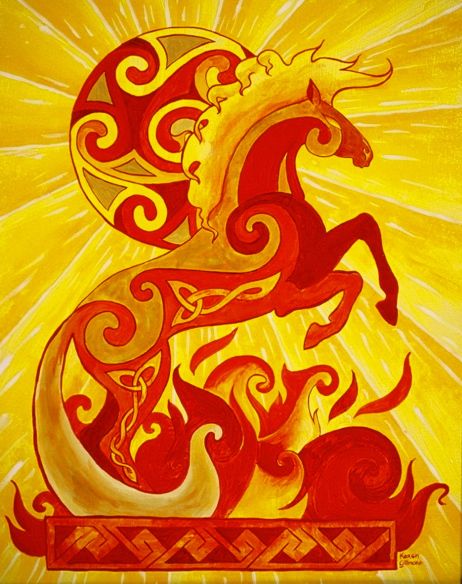
This week’s article is one I wrote in 2015, it seemed like a good time to post it, coming into the Lunar new year of the fire-horse!
If you look up a summary of the fire-horse year, you might get something like this:  “The 2026 Year of the Fire Horse (beginning Feb 17, 2026) is a rare, high-energy 60-year cycle event symbolizing rapid change, intense passion, and bold action” 

If you would like to tune into this energy for yourself, then I will be doing a Lunar New Year Meditation 2026: Connecting to the energy of the Fire Horse session at 5.30pm SG time this coming Saturday, both in person & online.

In the spirit of Lunar fire,

Toby


Your Emotions as Horses

Your emotions are like horses; powerful, fleet, full of energy and vitality. They are also willful and sometimes volatile. The flip side of this is they also contain their own instinctive and natural wisdom. You are the rider of the horses of your emotions.

If you try and control them by whipping and abusing them then they, like real horses will either become resentful, rebellious and devious or they will become broken, sad and scared.

If you simply indulge the horses of your emotions without directing them then they will simply run wherever they want without control, with the according results in your life.

Your emotions are tremendously strong. If you are scared of the strength of your emotions then they will sense that, and like horses with a nervous rider they will react to it.

If you learn how to ride your emotions with love and care, but at the same time with discipline and direction, then you have a tremendous energy source that you can put to positive use in your life, taking you faster in the direction that you want to go – So there is a lot ‘riding’ on the way you as the rider relate to the horses of your emotions!

Imagine you are on the back of a powerful horse now. It is the horse of your emotions. Feel the raw power, energy and life-force of the horse between your legs. When the horse wants to run, let him do so, feel the elation and the freedom as you gather speed, the wind in your hair, the trees and landscape flying by. Where do you want to go? You are the rider and director of this horse, and s/he wants your benevolent guidance.

Working mindfully with the image of yourself as rider and your emotions as horses can help us find out a lot about our current relationship to our emotions, and how we can learn to ride them better, with both more freedom and more control.

One of the keys to understand about emotions is that ‘positive’ and ‘negative’ emotions are like black and white horses (or brown etc…); it doesn’t matter what colour they are, what mainly matters is how you ride them. The emotions you currently think of as being the most useless in your life might just be the ones that you need to learn to ride better.

Related article: The Sea Snakes of the Mind
The Wild dogs of the Mind
A bag of rats & a big meadow (tactics or strategy?)


© Toby Ouvry 2026, you are welcome to use or share this article, but please cite Toby as the source and include reference to his website www.tobyouvry.com


Follow Toby onLinkedInYouTubeInstagram

Integral Meditation Asia

Online Courses 1:1 Coaching * Books * Live Workshops * Corporate Mindfulness Training *Life-Coaching *  Meditation Technology
Categories
Beginners mind, resilient body creative imagery Inner vision Integral Meditation Meditation techniques mind body connection Presence and being present Primal Spirituality Zen Meditation

The mind waving at itself & the Ocean-ness of consciousness

“Observing mind-waves helps us to relate to thoughts in a different, free-er way than our normal, or conditioned perception allows”

Dear Integral Meditators, 

All day your mind is waving at you, what does this mean? Find out in the article below! If you enjoy it, we will be exploring these methods in both the weekday (Weds eve) and Saturday sessions this week. You are invited!

If you are interested in Qi gong, do check out the Qi Gong for Improving your Health and Energy Levels & for Self-Healing that I will be facilitating on the 28th Feb.

In the spirit of mind-waves, 

Toby


The mind waving at itself & the Ocean-ness of consciousness

The ocean waves, the mind thinks

In Zen there is an expression; ‘the mind-waves’. Mind-waves is a term that helps us to relate to thoughts in a different way than we usually do. Our normal, or conditioned way of relating to thoughts is something like:

  • I am having thoughts – the thoughts are inside me; I am the possessor of the thoughts, the thoughts are the possessed object
  • I am identified with the thoughts – my identity has fused with the thoughts, to the extent that my sense of self has been reduced in the moment to this current train of thought

In meditation we can think of the mind, or consciousness as an ocean. The ocean is a vast body whose nature is water. Our mind is a vast containing space whose nature is awareness. The ocean ‘waves’, the currents and the wind produce waves on the surface of the water. The ocean and the waves are not two separate things; its is the nature of the ocean to ‘wave’ and the waves all have the nature of ‘ocean’.
Similarly, the currents in our mind and consciousness produce ‘thoughts’. It is the nature of the mind to ‘thought’ and the thoughts have the nature of the mind.

Practising: The mind waving to itself

Armed with our image then, we can start to watch our mind where we watch the mind ‘waving’ to itself. We notice that in the ‘ocean-field’ of our consciousness, there are thoughts coming and going. To get an initial feel for it you can use this method from my previous article:

“Use the body and breathing as an anchor for your attention. If you think about your attention as like a boat, and your thoughts and feelings as being like the waves, wind and other moving conditions around the boat. Your body and senses then become like the anchor that keeps the boat in one place. You don’t even need to try too hard still your mind and feelings. Just keep coming back to the anchor of your body, and you’ll find this gives you the basic ‘weight’ and stability for a sense of calm to start to come into your mind”

Once you feel relatively stable using this method, you can then simply practice watching the thoughts arising from your mind, like waves arising from the sea. You watch the mind ‘waving’ to itself, recognising the thoughts are a particular expression of the unlimited, oceanic nature of your own mind, or root-consciousness

Mind-waving and zones of the body

It can be interesting and informative to watch the waves of your mind whilst anchoring your attention at different levels of your physical body:

  • If you watch centered in your head, you will notice the mind-waves are more cognitive in nature
  • If you watch centered in your heart-centre, you will notice the mind-waves are more emotive in nature
  • If you watch centered in your belly, you will notice the mind-waves are more instinctual in nature

Watching from any of these levels, the watching of the waves should then lead to a capacity to relax into the nature of the mind itself; our formless timeless ‘Ocean-of-consciousness’. This is great for relaxation of you are a recreational meditator. If you are a professional, or more serious meditator then wave-watching is a great way to relate and connect to your already-awakened nature, and experience yourself as that.

Related reading:
Effortless wholeness – The ocean & it’s wave; not one, not two
Riding the Waves of the Mind
The sea snakes of the mind
A bag of rats & a big meadow (tactics or strategy?)

© Toby Ouvry 2026, you are welcome to use or share this article, but please cite Toby as the source and include reference to his website www.tobyouvry.com


Upcoming classes & workshops

Ongoing on Tuesday’s & Wednesday’s (live & online), 7.30-8.30pm 
– Weekly integral meditation classes

Ongoing on Saturdays, 5.30-6.45pm SG time – Saturday Integral meditation deep-dive sessions with Toby

Tues 13th, Weds 14th January, & then weekly – Beginners mind, resilient body – a 10-week integral meditation course

Starts Saturday 17th January, 5.30-6.15pm, & then weekly – Beginners mind, resilient body deep-dive: An 11 -session practice series

Saturday 28th February, 9am-1pm – Qi Gong for Improving your Health and Energy Levels & for Self-Healing


Follow Toby onLinkedInYouTubeInstagram

Integral Meditation Asia

Online Courses 1:1 Coaching * Books * Live Workshops * Corporate Mindfulness Training *Life-Coaching *  Meditation Technology

Categories
A Mind of Ease Beginners mind, resilient body creative imagery Inner vision Integral Awareness Life-fullness meditation and creativity Meditation and Psychology Meditation techniques Mindful Resilience Presence and being present Stress Transformation Zen Meditation

A bag of rats & a big meadow (tactics or strategy?)

“When you practice the ‘sheep in the meadow’ form of awareness, you can keep your attention on your ‘bigger Why’s,’ accepting the small obstacles that you encounter on the way toward your larger goals”

Dear Integral Meditators, 

This week I outline two images to help you refine and develop your awareness in a way that can significantly transform your daily experience. If you enjoy it, we will be exploring these methods in both the weekday (Tues&Weds) and Saturday sessions this week. You are invited!

If you are interested in Qi gong, do check out the Qi Gong for Improving your Health and Energy Levels & for Self-Healing that I will be facilitating on the 28th Feb.

In the spirit of the meadow mind, 

Toby


A bag of rats & a big meadow (tactics or strategy?)
 
This article explains what is essentially a perspective shift that changes your relationship to your thoughts, and how you experience them. It looks at how we can create an inner space for ourselves that contains a lot more acceptance and allowing. We will then look at some other applications of this principle in daily life.
 
The bag of rats – Your everyday ‘small’ mind
 
Imagine you are a rat in a dark sack. There are several other rats inside. It is dark, hot, and claustrophobic. You feel agitated by the rats around you, they in turn feel agitated by you. You have a very limited sense of where you are and what is happening to you, it is all close-up, friction-loaded and conducive to irritation, even paranoia.
In everyday life our mind can feel a bit like this bag of rats. It feels trapped inside our body. Often, we feel trapped in an even smaller space, the one between our ears, inside our skull! There are many thoughts about many things in this small space, bumping into each other, creating friction as they rub-up against the thoughts next to them. A lot of feelings and emotions are created from this rubbing. It is difficult to know which feelings come from which thoughts, and what emotional state came from where. It’s difficult not to get confused, to difficult to see our life clearly.
When your mind is like a bag of rats, life naturally feels a bit tough and contentious. States like acceptance, flow, curiosity come at a premium and are difficult to maintain.
 
The open meadow – Making your mind bigger
 
“To give your sheep or cow a large, spacious meadow is the way to control him” – Shunryu Suzuki
 
The quote from Suzuki above refers both to the method to control one’s mind, but also an approach to working with other people, and with experiences in our life. In terms of mind-training and meditation, this instruction stands in contrast to the ‘rats in the bag’ image from the first section. When sitting with the thoughts in your mind, rather than trying to control them, stop them or ‘fix’ them, you simply make your mind and awareness bigger, like a large open meadow. Rather than having your thoughts ‘in your head’ like rats in a bag, you make your mind big, with the thoughts like sheep in a big, spacious meadow. In such an environment an animal will tend to simply wonder off, find its place in the field and be content. So, when you make your awareness big, you can sit there watching the thoughts without being so bothered by them, and they in turn tend to gradually return to equilibrium, without you having to work that hard to control or fix them.
 
The movement from tactics, and making room for your ‘Big Why’
 
When your experience of your mind is of the ‘rats in the bag’ type, it is difficult to keep perspective. Everything that you are doing tends to be tactical, small picture, just dealing with what is right in front of you. When you practice the ‘sheep in the meadow’ form of awareness, you can keep things more in perspective. You can ‘choose your battles’. You can keep your attention on your ‘bigger Why’s’, accepting the small obstacles that you encounter on the way toward your broader goals.
 
Enjoy the meadow!

Related articleIntegrating field awareness & single-pointedness in daily life

© Toby Ouvry 2026, you are welcome to use or share this article, but please cite Toby as the source and include reference to his website www.tobyouvry.com


Follow Toby onLinkedInYouTubeInstagram

Integral Meditation Asia

Online Courses 1:1 Coaching * Books * Live Workshops * Corporate Mindfulness Training *Life-Coaching *  Meditation Technology