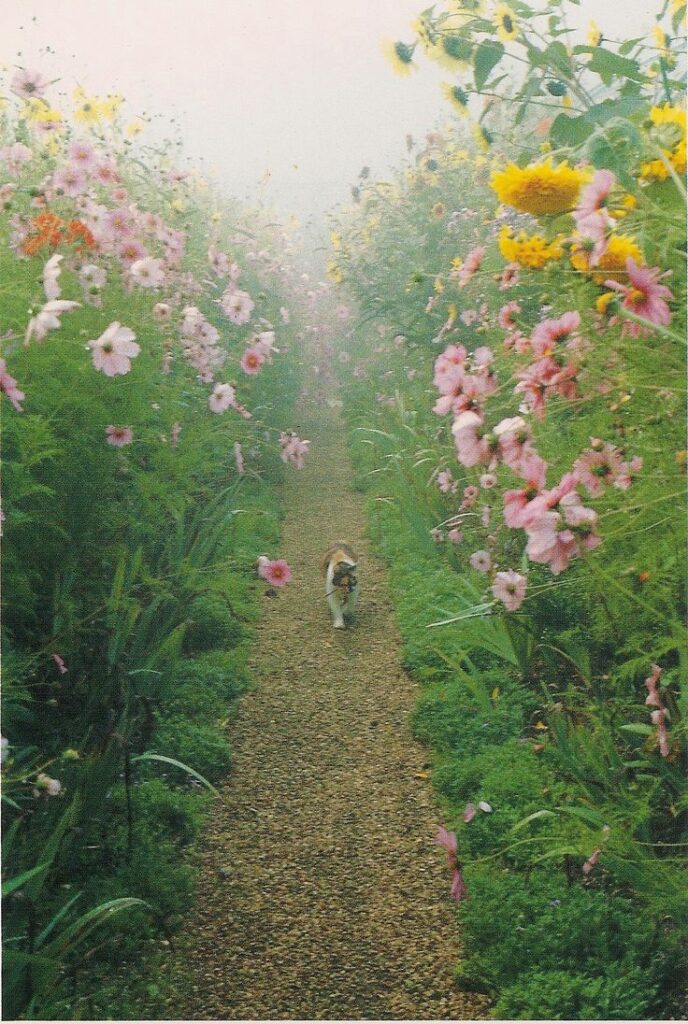
I hope that your meditation & mindfulness practice has been going well over the last month, remember, even five minutes a day has the power to make a difference; short & regular will definitely yeild positive results!
I’m excited about the line up of workshops for August, the full line up you can see below. We have two brand new, never done before meditation workshops; Meditation for Quetening the Mind on 15th, and Mindful Dreaming on the 29th. Add to this some very cool themes for the Integral Meditation evening classes, there is plenty for everyone this month!
“When meditations with animals, people often remark that their sense of time seems to take on a completely different quality”
Why meditate on & with animals?
I was asked the other day why I continue to guide workshops and classes on meditating with animals, given that to some of my client group it may seem a bit ‘strange’. Here are a few reasons to consider why meditating with animals is of great value, with a short practice at the end to try it out…
We’ve been doing it a long time
Prior to the transcendent spiritual traditions of Buddhism and Hinduism in the ‘east’ and Christianity/Islam in the ‘west’, human beings practiced an earth based spirituality where communion, learning and interaction with animals in the inner and outer worlds was a main part of our path to awakening and enlightenment. Our ability to do this type of meditation is long forgotten, but it is in our ‘dna’ so to speak, so most people find they can do it and have significant experiences without too much difficulty.
It re-connects us to parts of ourselves we have lost touch with
Meditating with animals connects us with our animal and instinctive nature in a benevolent way. It encourages us to use our imagination and capacity for inner visioning, and it encourages us to learn in a right brain creative, intuitive and visual way, very different from the way most of us use our minds and brains during the day.
It connects us to environmental awareness
Living in urbanized environment as many of us do it is very easy for us to lose touch with environmental awareness and a love for nature. Meditating with animals helps us recover our relationship to the natural world in an experiential way without literally having to travel outwardly to do so.
It can lead us into deep meditative states
When I lead meditation workshops and classes on meditating with animals, one thing that is always remarkable is the deep states of meditation that people go into during the sessions. People often remark that their sense of time seems to take on a completely different quality. Meditating with animals, landscape and nature can take us into these deep states very quickly and powerfully.
It fun!
Imagining playing and adventuring with animals is the sort of thing children do all the time. Meditating as an adult with animals can have an appropriately rejuvenating effect on our playful and spontaneous side! Meditating with animals helps us to get out of our mind and into a renewed contact with being alive.
How to meditate with animals
Here is a very short but in some ways quite complete methodology for the basics of meditating with animals: 1. Sit down, calm your mind for a short time and set your intention to connect in the spirit of love to animals in the inner world with whom you have a meaningful connection 2. With this intention, imagine yourself in a landscape within nature that you know and love, build it strongly in your inner vision. 3. After a while an animal will come to meet you in this environment. Connect to this animal in whatever way feels appropriate; s/he may want to take you on a journey in the landscape, engage in a communication of some sort, or simply hang out and enjoy the peace and calm with you. 4. When you are ready return back to your body and your outer awareness, seeing the inner environment where you have been fading away.
Because emotions are non-linear in their behaviour, quite often images can work better than direct instructions as to how we can go about working with them in a healthy way. The article below considers our emotions as horses.
In the spirit of the ride,
Toby
Your Emotions as Horses
Your emotions are like horses; powerful, fleet, full of energy and vitality. They are also willful and sometimes volatile. The flip side of this is they also contain their own instinctive and natural wisdom. You are the rider of the horses of your emotions.
If you try and control them by whipping and abusing them then they, like real horses will either become resentful, rebellious and devious or they will become broken, sad and scared.
If you simply indulge the horses of your emotions without directing them then they will simply run wherever they want without control, with the according results in your life.
Your emotions are tremendously strong. If you are scared of the strength of your emotions then they will sense that, and like horses with a nervous rider they will react to it.
If you learn how to ride your emotions with love and care, but at the same time with discipline and direction, then you have a tremendous energy source that you can put to positive use in your life, taking you faster in the direction that you want to go – So there is a lot ‘riding’ on the way you as the rider relate to the horses of your emotions!
Imagine you are on the back of a powerful horse now. It is the horse of your emotions. Feel the raw power, energy and life-force of the horse between your legs. When the horse wants to run, let him do so, feel the elation and the freedom as you gather speed, the wind in your hair, the trees and landscape flying by. Where do you want to go? You are the rider and director of this horse, and s/he wants your benevolent guidance.
Working mindfully with the image of yourself as rider and your emotions as horses can help us experiential find out a lot about our current relationship to our emotions, and how we can learn to ride them better, with both more freedom and more control.
One of the keys to understand about emotions is that ‘positive’ and ‘negative’ emotions are like black and white horses (or brown etc…); it doesn’t matter what colour they are, what mainly matters is how you ride them. The emotions you currently think of as being the most useless in your life might just be the ones that you need to learn to ride better.
How long does it take you to bounce back from psychological challenges? Are there unconventional methods that can help? The article below explores this theme, as well as the wisdom of Tom and Jerry!
Some of the themes from the article I will also be exploring on this Wednesday July 22nd 7.30-9pm a the Integral Meditation Session @ Basic Essence – “Meditation for connecting to a positive attitude” so do come down if your in Singapore!
In the spirit of deep cartoons,
Toby
Upcoming Courses at Integral Meditation next week!
Saturday 1st August, 2.30-5.30pm – Meditations for Developing the Language of Your Shadow Self – A Three Hour Workshop – Get in touch with a deeper level of psychological harmony and wellbeing within yourself. Learn how to access new levels of energy and confidence. Discover and heal hidden aspects of your psyche that are currently sabotaging your happiness in daily life and transforming them into something useful and powerful within you…
Tom and Jerry Mindfulness (Cartoon Character Positive Attitude)
Your psychic or psychological body is plastic
When your physical body is injured or becomes ill it takes time to recover, for example once you have broken a leg it is inevitable that you are going to have to spend time allowing it to recover and heal.
On a psychological level our subtle body or thought body is more flexible, malleable or ‘plastic’. When you take an emotional ‘hit’ to your psychic body the time it takes to recover is not fixed. We see this for example when two people facing the same circumstances, for example being sacked from their job or being rejected by someone they are attracted to, take different times to recover from such a blow. One person may go into a deep depression; the other may bounce back very quickly. The latter person almost seems like Tom in the Tom and Jerry cartoons when he is squashed flat by an enormous hammer (or equivalent) and then after a few moments bounces right back into his original shape, and resumes chasing the mouse!
The reason why the psychological recovery time of some people is so fast is because, actually if we know how to, we can heal our psychological body very quickly; it is made of energy, not flesh and bone, so it can change shape rapidly, sometimes instantaneously.
If we understand this, then we should at the very least be interested in how we can mindfully accelerate our own psychological healing and ability to become a bit more ‘Tom and Jerry –like’ in our approach to psychological healing.
‘Popping’ your subtle body back into shape – an example
At various periods in my life I have felt under quite a lot of financial stress, from back in my penniless Buddhist monk days to my current circumstances as an entrepreneur. I remember one time when I was feeling kind of miserable and stressed about this. You could say that my psychological body was in the ‘flattened Tom’ stage cartoon wise. Then I saw a rather grizzled looking man walk by smiling in a polo t-shirt that had a picture of a mop and a message on the back that said “Will work for food”. Seeing this man at the time when I was in the circumstances I was in was incredibly amusing to me and I started laughing. I then lost my fear of ending up broke and at the bottom of society wealth wise; the energy and shape returned almost instantaneously to my psychological body – like the cartoon cat ‘popping’ back into shape and resuming the chase of the mouse. The man in the t-shirt became my go-to response to this particular challenge and my way of ‘bouncing back’ whenever I felt down.
Some of the basic facets of Tom and Jerry Mindfulness:
Genuine acceptance of the reality of the challenging circumstances and the emotions that you are experiencing – You can’t pop-back psychologically from a place of denial! (See the Shadow Workshop on the 1st August!)
Engaging in the discipline of relaxation, new perspectives, humour and lightness
Acknowledging the realization that swift, even instantaneous recovery is sometimes possible
A story or image to hold in your mind that contains the essential ‘pop-back’ energy. For me in the story above this was the man in the t-short with the message.
The confidence and courage to step into your recovery space without hesitation (‘This can’t be real can it??’)
I’m not saying here that you should expect to heal all psychological wounds quickly, I’m just pointing out that our psychological body is plastic and malleable, and we can learn to help it to pop-back into shape faster if we know how.
What do we mean by ‘spiritual?’ the article below explores the relationship between spirituality as a quest for meaning and spirituality as a discipline that requires going beyond the quest for meaning. You’ll see what i mean when you read it!
In the spirit of the journey,
Toby
Deeper Meaning, Meaningless, Deeply Meaningless
The spiritual path – the quest for meaning What does ‘spiritual’ and to ‘be spiritual’ actually mean? One definition is that to be spiritual means to reflect deeply and consciously about the meaning of your life, and to to bring that meaningful purpose into reality through your actions. So for example:
If you feel strongly connected to parenting, you might feel motivated to create a service or resource through which people can become better parents
If you are a businessperson, you might feel motivated to redirect your efforts so that the meaning of your activities becomes to benefit others through your business as well as make money
If you are an artist you may feel spiritually motivated to keep working despite the financial obstacles because making art gives spiritual meaning and direction to your life
If you are a meditator, your motivation for meditating may mature from simply relaxing to pursing the path of enlightenment
There are of course endless examples…
So here spiritual means living one’s life on purpose and with purpose as opposed to living it unconsciously and without direction in a meaningless way. The spiritual path then involves a progression from superficial levels of motivation and direction to gradually deeper and more mature expressions of meaning, which works just fine until we get to the second meaning of spiritual, which is the enlightenment experience.
Deeply meaningless – the enlightenment experience In this context enlightenment means connecting to the formless, timeless, eternal, ever present dimension of consciousness through meditation and learning to rest ones awareness in this ‘already perfect’ state of awareness. Even if you haven’t done a lot of meditation before, if you simply relax your body, mind and heart deeply you will start to feel this open spacious feeling – that is the thing to which I am referring here, just realized on a much deeper level! From the point of view of the enlightenment experience, everything is perfect already, so there is really no point in holding onto any ‘deeper meaning’ in life; ultimately the meaning of life is present, right in front of you! When you connect to the enlightenment experience your life becomes ‘deeply meaningless’; there is nothing to realize and nowhere to go, you are already home and you always have been. To look anywhere other than the ‘Now’ for purpose is meaningless!
Integrating meaningful with deeply meaningless So then to be integrated in a spiritual way means to bring together your experience of deeper meaning with the ‘deep meaninglessness’;
On one level you gradually, reflectively and consistently bring deeper purpose to your life through meaningful and creative action
On another level you realize you are, ultimately already where you want to be and there is no higher purpose or meaning other than resting in the formless timeless now!
An analogy – The mud city In the city of Djenne there is the famous ‘mud mosque’; an elaborate and beautiful building build of mud (see picture above). Building spiritual meaning in your life is like building the mosque – you invest time and effort to build something beautiful. The enlightenment experience is like the mud – It does not matter what stage of the building you are at, the mud is always mud. In a similar way you can work each day to build spiritual meaning in your life whilst recognizing and resting in the ‘mud’ of the formless timeless present moment; We can meaningfully go somewhere without going anywhere!
Want to know how you can go about systematically developing and increasing your inner strength? The article below considers eight ways!
In the spirit of inner strength,
Toby
Increasing to Your Inner Strength – Eight Ways
Below are eight aspects of inner strength that we all have to a greater or lesser degree, and we can all develop more of through mindful intention. If you like you can pick the one that resonates most for you from the list below and focus on developing it specifically each day in your life for one week. If you enjoy that, then you can pick another and do the same. Do one week for each point below and you have your own two month course on developing your inner strength right there!
1. The strength of relaxation and regeneration – Regularly ensure that you are connecting to your own experience of relaxation and your sources of regeneration. Then no matter how busy life gets you will find yourself able to cope with what arises; you will be able to ‘bend but not break’ as the saying goes. That strength comes from relaxation is a very deep lesson for us all.
2. The strength of intention and clarity – Why are you doing what you are doing? What motivates you in life? What is the most meaningful use to which you can put your time today? The greater the clarity of the ‘whats’ and ‘whys’ you have in your life, the more solid and resilient you mind will be.
3. The strength of willpower and focus – Place your mind on one thing at a time and get it done, then focus on the next thing and do the same, rest where necessary, keep your eye on the prize. These first three inner strengths are a bit of a holy trinity; the more you integrate them together the more they support each other
4. The strength of economy and pacing – Don’t use more energy than you need to to get things done. Select the right ‘speed’ at which to do any given task. Sometimes going fast is required, other times going slowly is better. Mindfully develop the skill of how to do more with less.
5. The strength of feeling supported – We are all supported and loved by our close family and friends. If you make the effort to KNOW that every day and receive their energy and support (without shifting responsibility to them, your life is your responsibility) then we will feel inwardly stronger and (ironically) more autonomous.
6. The strength of being connected and fed by the limitless – Go to that place within you that is beyond your mind, beyond the thinking state; allow its limitless energy to feed your body, mind and heart. This is the ‘meditation’ aspect of point 1 above.
7. The strength of leveraging on the strengths that you have already – In your life you have already developed inner strengths, resilience and capabilities; what are they? Make a list of them and leverage on these already present inner strengths each day. Often you don’t have to re-invent the wheel; you just need to remember what you are capable of.
8. The strength of creativity and imagination – When you are in a place where you have tried everything you know and you are at the limits of your inner resources, then sometimes you have to imagine your way out, learn to do something that we have never done before. Sometimes what the capable, rational adult in us cannot figure out the playful child can! For best results let the playful child and the rational adult within you get together each day, compare notes and support each other. A final aspect of inner strength no.8; what symbols, images, figures and metaphors come to mind when you think about the words ‘inner strength’? A picture speaks a thousand words!
Why meditate? One reason worth thinking about is that it is a way of keeping yourself creatively energized by learning to tap into deeper levels of our collective consciousness. The article below explores this theme…
Two workshops in Singapore this Saturday, details are immediately below!
In the spirit of
Toby
Letting Ideas Grow Mindfully Though You
“If we surrendered to earths intelligence, we would rise up rooted, like trees” – R.M Rilke
A few people have remarked to me recently how substantial my article and blog output seems to be week-in week-out. They wondered how I keep it up, don’t I run out of ideas? The answer to that question is that no, I almost never find myself short of ideas. I normally have to choose what to write on from 4-5 creative ideas that are present in my mind at any given time. In this article I want to put down a few reasons as to why my creative energy doesn’t run out, and how this relates to meditation & mindfulness practice. With this in mind here are a few points and pointers.
The mediators view of the body-mind is the opposite to most conventional ideas. Rather than our mind being in our body, and specifically in our brain, experienced meditators start to realize that in many ways his/her body is in her mind. The mind is not limited to the body, and has access to a vast amount of creative energy and information that is outside of the individual body and brain. More than this, each of our individual minds are networked into what you might think of as a Universal mind or intelligence, in somewhat the same way computers are all linked to the internet.
This Universal or ‘Big’ mind (I’m using a convenient, simplistic term for something obviously deep and complex here) seeks people to grow and express its ideas through; people whose individual minds are open, receptive, balanced and resilient, and who are motivated to make a contribution to the betterment of the world.
In this sense you might think of yourself as an individual as being like the soil and sunlight in which an idea from the Universal Mind can grow like a plant. If you look at it this way you can see that the idea is not ‘yours’, it has a life of its own, you are just the caretaker and gardener for the idea to grow and enter the outer world.
Meditation – Becoming a terminal for the Universal mind
Looking at it this way you might think of meditation as like connecting a computer to the internet; when you sit still and go within you connect your own mind (the computer) with the Universal Mind (the internet) and consciously allow the Universal Mind to start ‘downloading’ creative ideas into your mind. Some of those ideas will be ideas that you have a unique ability to grow in the garden of your own mind (cue analogy shift back to gardens/plants!), for example I get a lot of ideas relating to meditation and mindfulness because I am already an expert in that domain; my ‘small mind’ is ideal soil and light for new ideas about meditation practice to grow through.
What ideas want to grow through you?
Imagine yourself sitting in a beautiful garden; it is the garden of your own mind. Set your intention; what type of creative ideas do you want to open up to? Business? Art? Relationships? With this intention relax and still your mind deeply as you sit in the inner garden of your mind. Stilling your mind with intention is like connecting it to the ‘internet’ of the Universal Mind. Patiently and without hurrying observe what sort of ideas, images, memories and intuitions start to ‘pop out’ of the stillness; what creative inspirations start to weave their way into the quietness of your garden. This stage is a bit like fishing (I know, yet another analogy!), it kind of like you just sit still and wait for a bite. You can’t push for it or try and control it.
Be playful, patient, be confident! – Once some ideas start to grow through you, how will you continue to grow them? How much time are you prepared to commit? What type of sacrifices are you prepared to make? As the ‘gardener’ it’s up to you how much you nurture your plants, but the more you do the more you’ll find that you are never ever short of creative inspiration in your life and work!
The article below examines five mindful ways in which we can cultivate our inner peace. If you work with them together, then you end up with a practice of inner peace made more resilient by the diversity of its sources. If you enjoy it and are in Singapore then you might consider the Mindful Resilience workshop on the 18th July.
Quick reminder of the Mindful Benevolence online class that remains on offer until the 14th July.
In the spirit of inner peace,
Toby
Five Ways of Mindfully Cultivating Your Inner Peace
Much of our efforts in life are directed towards finding peace of mind, to be able to relax and feel at ease. Here are five mindful ways in which we can cultivate our inner peace. If you work with them together, then you end up with a practice of inner peace made more resilient by the diversity of its sources.
The peace of tranquillity – This is the peace of connecting to places and activities that are tranquil, and help us feel calm. Quiet places in our home or working environment or places in nature that we can spend time in regularly. Just by connecting to the tranquil energy of these places and being present to them we can increase our own experience of inner peace.
The peace of awareness – Rather than focusing on the contents of our busy mind, the activity of our environment or our personal challenges we can sit and focus on the experience of awareness itself, which is always open, spacious and possess and abundance of peaceful not-in-a-hurryness.
The peace of accepting what is (& the peace of having done what you can) – “Today, despite both of our best efforts I was not able to meet my friend in town. We both tired our best, and really wanted to, but for one reason or another it just did not come off.” Accepting what is: that we were not able to meet, and that we did all we could, that is we tried to fix it but it did not happen is the peace of accepting what is and that you have done what you could.
Without this type of clarity it is very easy for our peace of mind to be destroyed by the ‘what if’s’ of our life.
The peace of being enough – This is the peace of being happy with who you are, and not having to continually prove your worthiness to yourself or to other people. It does not mean that you are not trying to improve yourself, but it does mean that you are basically secure in your self-image, you are enough, and so there is room to rest at ease.
The peace of self-efficacy – “I don’t know what challenges will come in my business over the next month, but I have confidence in my ability to meet those challenges effectively, and/or learn how to solve the problems that come up.” The peace of self-efficacy ace arises from your faith in yourself and the effectiveness of your abilities. It is the peace that comes from the confidence in your ability to learn and adapt in the way you need to in order to deal with what arises.
The Peace of Playfulness – This is the peace that comes from asserting your right to be playful in life. It is the peace that comes from taking things lightly, flexibly and easily. It’s not that you don’t know how to apply seriousness; it’s just that it is continually balanced by the peace of a playful mindset.
I’ve been thinking for a little while now about how to create an inexpensive way in which people can participate in the Integral Meditation Asia meditation & mindfulness experience online from anywhere in the world.
Below is the first of what I am planning will be a series of monthly meditation offerings for people to participate in! Scroll down to read further details & to listen to the free five minute meditation.
Up until July 14th it will be on a special launch offer price of Sing$15.
In the spirit of the journey,
Toby
Online Class: Meditating on Benevolence – Yours Sense of Inner Wealth
Types of class: This is a class available online, upon payment you will be sent the download links for the MP3 recordings and other class materials.
In a sentence: Combine relaxation and focus with the cultivation of benevolence, or your sense of big-heartedness and inner wealth
More details: The main content of this class is a 45 minute meditation where you will be guided through a process that helps you to
Connect to and cultivate the feeling of benevolence within your body, heart & mind
Enhance that experience of benevolence by connecting to your own personal symbols, images and role-models of benevolence
Further strengthen & grow your benevolence by receiving and giving benevolence to significant others in your life
Focus on ways in which you can integrate benevolence into your daily life & actions in a practical way
Listen to a free five minute sample of the class meditation:
What if you were able to enter into a state of mind where your sense of inner calm enhanced your experience of excitement in life, and your excitement was madfe more enjoyable by combining it with calm? The article below explains how!
Yours in the spirit of calm excitment,
Toby
Calm Excitement
One of the principles of integral meditation and mindfulness is the bringing together of different, contrasting qualities within ourself into complementary wholes. In this article we will have a look at calmness and excitement.
For many people the experience of being calm or excited is very much an either/or proposition; either I feel excited in a non-calm, non-reflective way or they I feel calm in an inactive way. What we are going to try and do in the exercise I outline below is to combining our capacity for ease, calm & relaxation with our experience of aliveness, excitement & engagement in life. We will do it in four steps:
1. Mindfully generating calm Recall a time or a place where you have felt calm, at ease and relaxed. It might be a landscape that when you recall it helps you to connect to that feeling, or a time in your life when you really felt connected to the experience of calm. As you connect to that experience of calm, bring the energy of it into your heart and your body as well as your mind, so that as you breathe all three of these dimensions of your being feel connected to the calm.
2. Mindfully connecting to excitement Now recall a time when you were enjoyably excited or exhilarated. This could be intellectually, emotionally, sexually, spiritually, physically or a combination of these. Connect to the memory, person or thing, allowing yourself to feel the excitement consciously in your body, mind and heart, noting the different ways in which these different parts of you experience the excitement.
3. Consciously combining the two Having worked with excitement and calm separately, now work to mindfully combine the two; imagine being excited in a way where a part of you is still connected to a dimension of calm. Then emphasize the experience of being calm whilst at the same time inviting excitement, aliveness and engagement into that space. Become familiar with what it feels like to hold calm and excitement together in your body, mind and heart in a way where they are mutually enhancing and supporting each other rather than contradicting or fighting against each other.
4. Taking it into your daily life With the experience of the above three stages you can then go about practicing bringing calm excitement into your daily activities, for example:
When you are in an emotionally charged conversation
When you are excited and want to prolong the experience in an enjoyable and sustainable way
When you feel your excitement is controlling you, you can emphasize calm to bring yourself back into benevolent control of what you are experiencing
When you feel your calm is moving toward inertia or boredom you can use your excitement to revitalize your experience
The overall goal of this exercise is to mindfully learn to derive more meaningful fun from our life and the experiences that we come across using this conscious combination of calm and excitment. What situation can you bring your own practice of calm excitement to today?
New I-Awake Meditation Technology Track: Turning In ~ Ambient Meditations
…relax into deep states of relaxation, de-stressing to the slow drumbeats and nature sounds embedded with binaural frequencies…from Deep Dub composer, Nadja Lind. On special launch price offer up until 7th July click link to listen to the free demo track and find out more!: goo.gl/jSZTCd