This week’s offering is a guided meditation recording of a technique called Smiling to your inner organs. It is a traditional Taoist/ Qi gong meditation technique where you learn to:
Use your meditative focus to send healthy, regenerative energy to your internal organs, in order to restore their balance and health
By restoring your internal organs to balance, you change your emotions and emotional energy
By changing your emotional energy, you change your mind, experience and the way you think!
You can read my previous article on the inner smile meditation, and you can see a traditional chart of internal organ/emotion correspondences in the chart below from Mantak Chia’s website.
“The essential skill we are developing with the smiling meditation is to generate positive mental and emotional energy, then direct it into the physical body for the purposes of emotional and physical healing”
Dear Integral Meditators,
This weeks article explores one of a main technique for physical and emotional healing; the smiling meditation. The article also touches on some of the principles of Qi gong.
In the spirit of emotional and physical health,
Toby
Smiling meditation & your psychosomatic health
We all have a sense that on some level our mental and emotional health affect our physical health. The aim of the ‘smiling’ meditation I describe below is to focus positive emotional and psychological energy into the body, and particular areas of the body, and using it to affect your bodily health. It has its precedent in the Buddhist and Qi gong mediation traditions. But its principles are easily understood, and it can be practiced successfully by someone from any background or beliefs. It has four essential stages
Selecting the area/s of the body that you want to work with
Visualizing a ‘memory ball’, and creating the smiling energy
Directing the smiling energy into the body
Creating an energy exchange between the body and the self
If you practice this meditation with some regularity, then you will develop confidence in its effectiveness quite quickly. Here is a brief breakdown of the stages:
Selecting the area/s of the body that you want to work with
You can choose to work with the body as a whole, or with a particular part of the body. For example, if you notice that you have been feeling ‘heavy of heart’ emotionally, or if you have an actual physical hearth condition, then you might choose to work on the heart. I’ll work below with the heart as an example.
Visualizing a ‘memory ball’, and creating the smiling energy
After settling into meditation, imagine a ball of light in front of your face, at about the height of your eyebrows. Within that ball, visualize good memories, joyful experiences, or places and landscapes that put you in touch with a strong (or as strong as you are capable) sense of happiness and wellbeing. Fill the ball with these energies until you can feel that it is full of smiling, joyful energy, enough to make you want to gently smile on a physical level.
Directing the smiling energy into the body
Now imagine a stream of light coming from the memory ball into your body through the mid-point between your eyebrows, and gathering in the mid-brain. Then feel it flowing (in this case) down into your physical heart, filling it with the smiling energy. As you breathe, just keep the smiling energy gently flowing into the heart. Notice what it is like to consistently extend the smiling energy and awareness to your heart. You may notice certain imbalanced energies and emotions gradually being released from the heart, until after a while you can feel the heart ‘smiling back to you’ as you send the smiling energy to it.
Creating an energy exchange between the body and the self
Once you can feel the exchange between yourself and your heart, just stay with that, gently amplifying the sensation of it in the physical space of your heart. When you are ready you can bring the meditation to a close.
So, that’s the basic technique. The essential skill we are developing with the smiling meditation is to generate positive mental and emotional energy and then direct it into the physical body for the purposes of emotional and physical healing. By practicing this technique, we can learn to reprogram the cellular structure and memory or our body to hold energy that is conducive to health and well-being, rather than dis-ease or discomfort.
The child self is one of a number of inner aspects of ourself that, if we meditate upon, we find ourselves connecting to in an experiential and enriching way. Other examples of this type of inner self, or sub-personality include the female self (if you are a male), the male self (if you are a woman), and the wise self, to name but a few.
Our inner child is important because in health it connects us to our creativity, our emotional health and spontaneity, our playfulness and vitality (remember how much energy you had as a child?!) Below I point out a few definitions and ways of beginning to relate to your inner child…. Read full article
Are you a stressed out parent (or stressed about becoming one) and looking for ways to manage that stress more effectively?
Would you like to improve your capacity to parent in a way that creates an improved experience of the parent-child relationship both for you and your kids?
Would you like to be able to demonstrate calm and being present to your children in a way that will help them to become more calm and present themselves?
Saturday 15th May – Qi Gong for Improving your Health and Energy Levels and for Self-Healing Masterclass & Mini-retreatQi-gong is the science of working with the body’s energy field. Literally translated into English it means ‘energy work’, or ‘energy skill’. In this workshop Toby will be teaching the art of moving subtle energy and life force into and around our body using a series of simple and easy to apply techniques that will enable you to:
Re-establish your body’s natural bio-rhythms
Strengthen your immune system
Balance the energy in your body and mind, leading to inner peace and wellbeing
“In order to find consistent balance we have to work consciously to adjust to changeability and imperfection. We have to be ready and expect life’s wobbles and curve balls!”
Dear Integral Meditators,
What does it mean to have a conscious and balanced approach to life’s imperfections and messiness, and how can we implement this approach effectively? this is the subject that I explore in the article below.
In the spirit of balance,
Toby
A wheel spinning out of balance
Life is pain?
The first noble truth of the Buddha when he started teaching was what he called the “Truth of dukha”. Dukha is a Sanskrit word that is most often translated as ‘suffering’. So then it looks like his observation is that life is fundamentally the experience of suffering, or pain
Dukha – A wheel spinning our of balance
If we look a little deeper, the Sanskrit word ‘dukha’ actually doesn’t have a direct english translation, but a closer translation would be something akin to “a wheel spinning out of balance”. So Buddha basically said “Life is like a wheel spinning out of balance”. What this means (in my opinion) is that he is observing that life is almost continuously uncomfortable, out of balance, inconvenient, uncertain. In order to find balance we have to work quite hard to be making adjustments to these imperfections. We have to be ready and expect life’s wobbles and curve balls!
Riding a wobbly bicycle
One image I use to meditate on Dukha is I imagine I am riding a bicycle with a buckled back wheel. As I ride, I bounce and lurch up and down, and from side to side as the wheel rotates. I have to be ready for the un-predictable movements, making adjustments to stay upright. I have to be mindful and alert to ride this bike of life, otherwise I’m going to fall off!
Accepting dukha, moving forward creatively
In terms of mindfulness, much of working with Dukha is acceptance; simply accepting the messy and intractable nature of life as it is. If we aren’t able to do this, then we do spend a lot of time suffering as a result of our inability to accommodate for life’s natural wobbly-ness! (See recent article on ‘Resilience thru acceptance – matching your expectation with your reality‘)
The second mindful skill we are trying to develop on the basis of acceptance is acting creatively to
Adapt to the wobbling movement
Act decisively to move in the direction we want to go, sculpting and molding the presenting circumstances into something worthwhile
Jumping from wheel to wheel
More recently I’ve been working with an image for this second, ‘creative action’ part of Dukha. I imagine a series of spinning wheels in the sky. I am having to jump from one to the other, ascending to higher and higher levels, like a dance. I am having to use my wit and dexterity to keep moving forwards and upwards, and avoid falling off!
If you like in your own meditation and contemplation, you can use these two images , of wobbly bicycling and jumping across the sky-wheels as a way of working with the dukha in our own life. Here’s to dancing with our messy, wobbly realities!
Saturday 8th May, 2-5pm – Mindful Parenting – Practical Techniques for Bringing Awareness, Appreciation and Enjoyment to the Experience of ParentingIn a sentence: Learn how you can enjoy your experience of parenting more, manage emotions more effectively, and become a better parent by using mindful awareness
Are you a stressed out parent (or stressed about becoming one) and looking for ways to manage that stress more effectively?
Would you like to improve your capacity to parent in a way that creates an improved experience of the parent-child relationship both for you and your kids?
Would you like to be able to demonstrate calm and being present to your children in a way that will help them to become more calm and present themselves?
Saturday 15th May – Qi Gong for Improving your Health and Energy Levels and for Self-Healing Masterclass & Mini-retreatQi-gong is the science of working with the body’s energy field. Literally translated into English it means ‘energy work’, or ‘energy skill’. In this workshop Toby will be teaching the art of moving subtle energy and life force into and around our body using a series of simple and easy to apply techniques that will enable you to:
Re-establish your body’s natural bio-rhythms
Strengthen your immune system
Balance the energy in your body and mind, leading to inner peace and wellbeing
“The tension between our expectation and our reality, unless addressed continuously wears down our energy and resilience in a way that is absolutely avoidable”
Dear Integral Meditators,
This weeks Tuesday and Wednesday classes will be meditations on resilience. In the article below I give some practical pointers for developing resilience by learning to match your expectations with your reality.
Resilience thru acceptance – matching your expectation with your reality
If we take a working definition of resilience as the ability to bounce back quickly from setbacks and obstacles (or apparent setbacks and obstacles), then what are the most important things to be aware of to get good at it? In this article I’m going to be exploring the role of empowered acceptance in competent resilience.
The gap that wears you down continuously
The gap I am pointing to here is the gap between how you want things to be and how things are. This tension between expectation and reality, unless addressed continuously wears down our energy and resilience in a way that is avoidable.
Here are three simple examples of how we can close this gap using acceptance.
How the night will go
Over the last 10 months i have been living with interrupted sleep due to my baby daughter. If I have a few nights where she sleeps quite well, then I start to have the expectation that this coming night will go a certain way. Of course, my baby’s sleep pattern changes. If it changes for the worse, and I go into the night expecting an easy night, then when I have a more interrupted night I will naturally become irritated. This is because my expectation (“I should be getting this much sleep”) no longer matches the reality. Much of the friction and frustration I experience now comes from the ‘gap’ between my expectation and reality. So, the movement here is to recognize and accept that the pattern has changed, and that things wont be so easy for tonight. If I can do this, my expectation and reality now match, and I can simply focus on dealing with what IS!
How the business should be going
If I go on a good run in my coaching business, accumulating clients and gigs with little effort, then I can start to have the expectation that this will be how things are permanently. If for whatever reason this changes, then a gap can appear between my expectation and reality. “It should be easy to get clients and gigs, I shouldn’t be having to try so hard!” (Notice when the experience/reality gap appears, we start to use the words should and shouldn’t a lot!). If I can accept that the landscape has changed, and that I need to come up with new strategies, then the expectation vs reality gap disappears, and I can simply focus on what needs to be done.
Acceptance leads to harmony and energy saving
Form the above examples I hope you can start to see that mindful acceptance leads to a harmonization of ourself with our reality, where we are no longer wasting energy resisting what is.
Acceptance leads to empowered action
when we are no longer resisting what is, then our energy and intelligence is then free to spring into action to be constructive and pro-active about the presenting challenge. We can create and innovate in the face of impermanence and change, and enjoy the good feeling that comes from being more adaptable and effective.
From this I hope you can begin to see how acceptance leads to resilience and winning the long game. Then the question is, what are the domains in your life where there is a expectation/reality gap? If you can identify two or three of these, and start working with mindful acceptance in them, you can start to make a noticeable difference on your own resilience focusing in these domains.
Saturday 17th April, 2.15-5.15pm –Mindfulness meditation for mastering & stilling the mind Mini-retreat In a sentence: Develop the mindful skills that will enable your mental health and wellbeing to thrive, and how to still and focus our mind. Make your mind a source of quiet confidence & cease feeling overwhelmed by mental over-activity and busyness.
Overview: Would you like to:
Develop ways of working with your mind that will enable it and you to thrive?
Learn how you can connect to an inner stillness that is able to withstand the stresses and strains of your daily life, helping you stop feeling mentally & emotionally overwhelmed?
Feel as if you are in control of your mind, rather than it controlling you?
Everyone deserves the ability to take joy in and feel enthusiasm around their mind and thinking, but its a treasure that we have to hunt for and cultivate, not something we are handed on a plate. This weeks article gives a range of practical pointers to build a greater degree of mental mastery in your life.
Re-discovering joy in your thinking – Five aspects of mindful mental mastery
Human beings are the mental Ferrari’s of the biological world. Our brains and minds are an incredibly powerful and creative instruments, which have enabled us to do incredible things. However, for many people this amazing capacity for thinking and conceptualizing is working against them. Most of us often feel:
That we cannot control the quantity or pace of our thoughts
That the content of our thoughts is often stressful or negative
We find ourself thinking about our problems in a way that makes them worse
Thinking feels exhaustive and addictive, we feel mentally overwhelmed and cognitively overloaded
The joy in our thinking is absent
Mental mastery, or mastery of the mind involves :
Exercising benevolent control over the quality and quantity of our thoughts
Turning useless, stressful ways of thinking into appropriately critical, useful ways of thinking
Avoiding cognitive overload and mental exhaustion
Learning to re-discover joy and enthusiasm in our thinking
Here are five fundamental mindfulness practices that can help you use your mind masterfully. Each can be found in different forms in different mindful traditions, eastern and western, ancient and modern. You might think of them as perennial, or fundamental practices:
Emphasize quality over quantity Think less and slower. If you were to reduce the quantity of your thinking by say 10%, and increase the quality of your thinking by the same percentile, then you wold find that your mental environment will change substantially. More room, more positivity, less stress!
Think from appreciation and abundance
Daily, deliberate reflection on what has caused you joy, what makes your life rich, and what has happened that invites appreciation and gratitude. Practicing this as a discipline changes radically the inner context from which you see your life.
Observation and objectivity
Watching the content of your consciousness as an observer frees us from the bondage of over-identifying with our thoughts and thinking. ‘Stability comes from holding the position of the observer’ is a truth that means this type of mindful observation has been recommended by multiple meditation traditions, eastern and western for thousands of years.
Think critically
Thinking critically means making objective assessments according to the facts available to us. If we can reduce our negative critical thinking, particularly around ourselves, then we can start to use our critical thinking as a weapon for positive change in our life.
Don’t think
For many people this might seem like an ‘advanced’ skill that is out of their reach. However, for example if you were to commit to stopping your thoughts for 5mins, 4-5times a week (see my old article on meditating cold turkey) you’d be surprised at how competent you could be at it.
Everyone deserves the ability to take joy in and feel enthusiasm around our mind and thinking, but its a treasure that we have to hunt for and cultivate, not something we are handed on a plate. Happy mindful hunting!
Once sentence summary: Learn the practical fundamentals of how to meditate and begin your own meditation practice in this short 90minute workshop
You may have heard how meditation can increase:
Tues 30th & Weds 31st March – Full Moon Meditation & Manifestation SessionThis meditation, done on or around the full moon capitalizes on the heightened lunar energies at this time of the month to:
Bring energy and health to our physical body
Increase benevolent, life affirming emotions such as appreciation, joy and gratitude
Release patterns of energy, thinking and feeling that are no longer serving us
Focus on clarifying our intentions and manifesting our current life-goals
Saturday 17th April 11.30am-1.30pm & 2.15-5.15pm – Mindfulness meditation for mastering & stilling the mind – Masterclass & Mini-retreat In a sentence: Develop the mindful skills that will enable your mental health and wellbeing to thrive, and how to still and focus our mind. Make your mind a source of quiet confidence & cease feeling overwhelmed by mental over-activity and busyness.
Overview: Would you like to:
Develop ways of working with your mind that will enable it and you to thrive?
Learn how you can connect to an inner stillness that is able to withstand the stresses and strains of your daily life, helping you stop feeling mentally & emotionally overwhelmed?
Feel as if you are in control of your mind, rather than it controlling you?
“We don’t need to wait for optimism to come to us, we can cultivate it and learn to generate it deliberately in and out of meditation. By doing so it can become a state that is instinctive and intuitive for us, rather than happening only occasionally and circumstantially.”
Dear Integral Meditators,
This weeks article is an exploration of the state of optimism. If you enjoy it, we will be meditating on it in the Tuesday and Wednesday meditation class.
Quick practical note, the timings for the Psychic Self-Defence Masterclass and Mini-retreat have now been adjusted to be both on Saturday 27th March.
In the spirit of optimism,
Toby
Mindful Optimism
Finding optimism
What is the state of optimism like? Here are a few characteristics that occur to me:
Joyful-ness, enthusiasm
A sense of being supported by tangible and intangible forces in the world
The feeling of a bright and possibly exciting future ahead
The reasonable expectation good things are going to happen to you, both now and in the future
An expansive, bright and comfortable feeling in the body, as if you belong in the world, and you can operate there with ease
If you think about times when you have felt optimistic in the past, you may start to notice that it is a bit like my description above. What other qualities characterize your own experience of optimism?
We don’t need to wait for optimism to come to us, we can cultivate it and learn to generate it deliberately in and out of meditation. By doing so it can become a state that is instinctive and intuitive for us, rather than happening only occasionally and circumstantially.
The Brightness of your life-force
To me optimism is very related to an overall sense of life-fullness. The experience is feeling full of life, with your life-force strongly present in the body, radiating out from your center into your energy field and into the world. Being optimistic makes you creative and solar, rather than passive and resigned.
Why optimism is difficult and pessimism is often easier
It can be easier to be pessimistic than optimistic. Reasons for this include:
Our natural psychological bias toward negative thinking and threat detection
Cognitive overload and emotional exhaustion
Anxiety
Previous traumas and negative experiences
A sense of being helpless in the face of the overwhelming problems of the world that are beyond our control
Each one of these factors is worth acknowledging within ourselves in order to release and let go of. The space and we create by doing this we can then begin to fill with conscious optimism.
Optimism, reason and reasoning
As well as the feeling of optimism, it’s well worth looking for verifiable facts in our life that make optimism reasonable and realistic. For example if I look at the state of my (own and my family’s) health, friendships and business right now there is a legitimate, factual basis for optimism. It’s important to have facts to back up our optimism, because pessimism, depression and anxiety often come as an overwhelming feeling. They ‘feel’ real, even if they have no basis.
Embodying and acting from optimism
We can back up the feeling of optimism by deliberately speaking optimistically and acting in a way that is consistent with optimism. For example, if I am talking to a friend about a problem that I am having, I usually make a point about why the challenge could be a good thing for me and all concerned. This way of speaking about it frames it in a way that makes it feel and seem like there is plenty of room for optimism, even if some aspects of what is happening are unpleasant or difficult.
Balancing optimism with critical thinking
Optimism makes it easier to face up to problems and challenges because we feel less intimidated by them. It is then easier to see drawbacks, problems, uncertainties in a critical and objective way, that doesn’t threaten our sense of optimism, and is indeed complementary to it.
PS: Life-fullness, which I mention in Paragraph 2 is also the style of coaching that I offer, the unique characteristics of which you can read about and watch here.
In a sentence: Learn how you can effectively defend yourself from negative people, energies and places outside of yourself, as well as the fears and problematic emotions that you feel present within yourself using simple & specific mindfulness & meditation techniques.
Overview:
How can I keep myself strong, directed & happy when other people around me are negative, unhappy or even consciously or unconsciously verbally/psychologically attacking me?
When I am under stress and can feel my own negativity, anxiety, depression, anger & so on surfacing, how can I defend myself effectively?
Tues 23rd & Weds 24th March – Spring Equinox balancing and renewing meditationThe Spring Equinox in the northern hemisphere marks the mid-point between the cooler, darker seasons of the year and the lighter, warmer ones. The forces of day and night, light and dark are of equal strength. As such it represents time to emphasize balance and harmony, both in our life and meditation practice.
It is also good time to attune the life-force in the earth and creative energies within ourselves. We will be taking the time to get in touch with the new ideas, energies and creativity within ourselves as they emerge like new plants and flowers in spring…read full details
“Fill your bowl to the brimand it will spill.” – Lao Tsu
Dear Integral Meditators,
In the article below I outline a few practical ways to deal with cognitive overload, which is an almost ever present challenge in the information age!
In the spirit of mindful intelligence,
Toby
Too much information! – Dealing mindfully with cognitive overload
“Fill your bowl to the brimand it will spill.” – Lao Tsu
In the Information Age we are all cognitively overloaded
‘Cognitive load’ is the term used to describe basically how much information and decisions our mind and brain can cope with before becoming ineffective. If we are trying to process too much information and thinking, then we become ‘cognitively overloaded’ leading to mental exhaustion, bad decisions and mental fog. Because we live in the Information Age, and are very addicted to our online devices, cognitive overload is a huge issue that most of us suffer from in one way or the other. Learning to deal with it effectively is a primary mindfulness skill.
Mental exhaustion is different from physical exhaustion
Cognitive overload is different from feeling physically exhausted. It’s important to make this distinction, because the way in which you recover from mental fatigue is different from physical fatigue. It’s a matter of resting your mind, rather than your body!
Cognitively overloaded people make bad choices
It’s important not to spend too much time in cognitive overload, because in such a state we tend to make bad choices, simply because we are not processing the information effectively. To make good choices you need to have your full intelligence available to you. When your mind is overloaded, your intelligence always goes down.
You need to take charge of the information streams in your life
Because of our mobile phones and the internet, infinite information is available to us all the time. It’s super easy to get overloaded, in part because of this. So, choosing your information carefully, and spending time deliberately not processing mental information is key.
Recovering from cognitive overload through non-thinking
A simple mindful recovery practice is to set aside time in the day to do nothing. Give yourself permission to stop processing mental information, mentally planning and fixing things. At first this can feel very unnatural, but once you get used to it, it becomes a space that you can drop into easily without a problem.
Fishing without a hook
Imagine you are by a beautiful lake or river, perhaps one that you know. You have a fishing rod, and you cast the line into the water. The line has no hook at the end (it might have a bit of food for the fish if you want!). You are fishing not to catch anything, but in order simply to drop into a space of relaxed non-thinking. You can stand or sit by the side of the water, looking at the line, enjoying the beauty of your surroundings and doing nothing, thinking about nothing. Let your body, mind and heart relax into this state of presence and let your brain recover from cognitive overload and regain its strength and vigour.
This class is done monthly around the turn of the new moon and enable us to open to new beginnings, new possibilities and make a fresh start, specifically with regard to physical health and psychological wellbeing. Full details
Learn a series of meditation practices specifically designed to help you cope and thrive in an age of overwhelm, fast change, infinite choice, information overload and uncertainty.
This is a workshop that teaches you specific meditation practices to manage stress, focus and remain calm amidst your complex daily life. Read full details
Each session involves simple practices that you can apply to make a real difference to your wellbeing and effectiveness in life…full details of classes
At a glance: All upcoming classes and workshops for at IMA:
In meditation, one of the things we are aiming to develop the ability to do is to move our body-mind into a state of open relaxation that feels so good that, even if we had many reasons in the day to not be happy we would still naturally feel connected to happiness anyway. Read full article…
A picture speaks a thousand words! Learn how to build powerful meditation states through your imagination and visualization that can be put to many practical uses… Read more about the workshop
Sundays 6-6.50pm – Qi gong energy body activation meditation(Livestream)These are Qi gong meditation sessions to activate and enhance the flow of ‘qi’ or subtle energy in your body. We will then be using this flow for:
Enhancing physical health and healing
Increased emotional wellbeing and mental balance
Access to deeper, more dynamic meditation states to transform and regenerate your body, mind and soul…Full details of session
These are meditation classes done monthly around the turn of the new moon that enable us to open to new beginnings, new possibilities and make a fresh start with regard to:
How to start your own effective daily meditation practice with just a five minute a day commitment
Provides you not only with the workshop but also with support materials; MP3 meditation recordings (1×15 minute and 3x 5 minute), short articles and diagrams to help you keep meditating after the workshop.
In a sentence: Learn how to work creatively with uncertainty, imperfection and life’s inherent messiness to realize your leadership and self-leadership potential. Manage stress and anxiety better using mindfulness in combination with the practical philosophy of Wabi-Sabi. Full details of the workshop
Each session involves simple practices that you can apply to make a real difference to your wellbeing and effectiveness in life…full details of classes
Here’s this weeks guided meditation, you can read more about the practice in the article below, essentially its how to practice three mindful positions around your thinking: 8 minute power meditation on thinking well or not thinking
Here’s a mindful game that you can play with yourself. Take a period of time, say between 3-15 minutes. In this time frame your principle object of mindfulness is going to be your thoughts. The rules are that whatever you are thinking about you should either think about it well or simply stop your thinking… Read full article
A picture speaks a thousand words! Learn how to build powerful meditation states through your imagination and visualization that can be put to many practical uses… Read more about the workshop
Each session involves simple practices that you can apply to make a real difference to your wellbeing and effectiveness in life…full details of classes
“On a practical level I find that if I am being effective in the moment, then what I do tends to set up ‘waves’ of energy where a good, successful and/or unexpectedly pleasurable future emerges alive and well from the here and now”
Dear Integral Meditators,
The unpredictability of the future is a big thing right now, in the article below I outline a few mindful positions will help you set up a way of working with the future that is both sustainable, enjoyable and effective!
In the spirit if the present dancing into the future,
Toby
Controlling the future
Mindfulness is not just about being ‘in the present moment’, it’s also about developing a conscious relationship to how we approach and think about the past and future.
If you look at the source if much of your anxiety and fear, much will be about the future. Because the future is by definition uncertain, a certain degree of anxiety and concern is natural. However, if we respond to this anxiety by obsessively trying to control and predict the future, then that won’t help us too much. Reasons for this include:
We aren’t very good about trying to predict the future. What actually happens in the future often defies and contradicts our best predictions
Trying to hard to control the future leads to mental rigidity, where we close ourself off to options arising in the present moment that could give rise to a better future than the one we are trying so hard to create through control
Having said this, General Eisenhower also said: “No battle was ever won according to plan, but no battle was ever won without one…plans are useless but planning is indispensable”
For me this captures very well the dilemma about how to approach the future. You have to think ahead and plan, but you also have to let go and meet the future as it arises in this moment, and be prepared to dance and improvise!
With this in mind, here is a simple mindful pattern or process that you can establish in order to work effectively with the future:
For a short period of time in your day, bring your attention to your future. With all your mindful wisdom and intelligence, plan, strategize and set up tasks for the next 24 hours or so that you think gives you the best chance of getting you to your best future.
Then, stop dwelling on the future! Focus on relaxing into the present moment, keeping your attention on what you are doing. Avoid rumination, unnecessary anxiety, and trying to predict or trying control the future.
Set aside a ‘next time’ when you are going to think about the future. Before that time, if you notice yourself dwelling anxiously on uncertainty, or trying to predict or control, let go of it and come back to the present moment, Just stop! Focus on relaxing, and on the execution of your chosen tasks.
This practice enables you to set up a positive polarity between:
Effective, conscious thinking regarding the future, and
Enjoyment of the present moment, and the effective execution of your activities in that moment
The funny thing is, on a practical level I find that if I am being effective in the moment, then what I do tends to set up ‘waves’ of energy where a good, successful and/or unexpectedly pleasurable future emerges alive and well from the here and now.
Enjoy dancing from the present into the future!
How can you move from coping to thriving in your life as a man?
Much is asked of men in their traditional roles as fathers and sons, partners and husbands, students and teachers, employees and employers….read full details
This practical and super short (90min) workshop teaches you:
What meditation is and how it works
How to start your own effective daily meditation practice with just a five minute a day commitment
Provides you not only with the workshop but also with support materials; MP3 meditation recordings (1×15 minute and 3x 5 minute), short articles and diagrams to help you keep meditating after the workshop.
Each session involves simple practices that you can apply to make a real difference to your wellbeing and effectiveness in life…full details of classes
All classes in Singapore time. Not in Singapore? Check the time for your country HERE.
How to sign up: Simply message info@tobyouvry.com or +6596750279 with the time of the class that you wish to attend. The link to attend each class is next to the class. Then make payment using the methods detailed below.
Cost: SGD$30 per class, or set of 4 classes for $100
Payment can be made in Singapore using PayNow on +6596750279, Or you can use the PayPal Link HERE to pay from anywhere in the world.
To pay for a set of 4 classes on PayPal, click HERE.
 Dear Toby,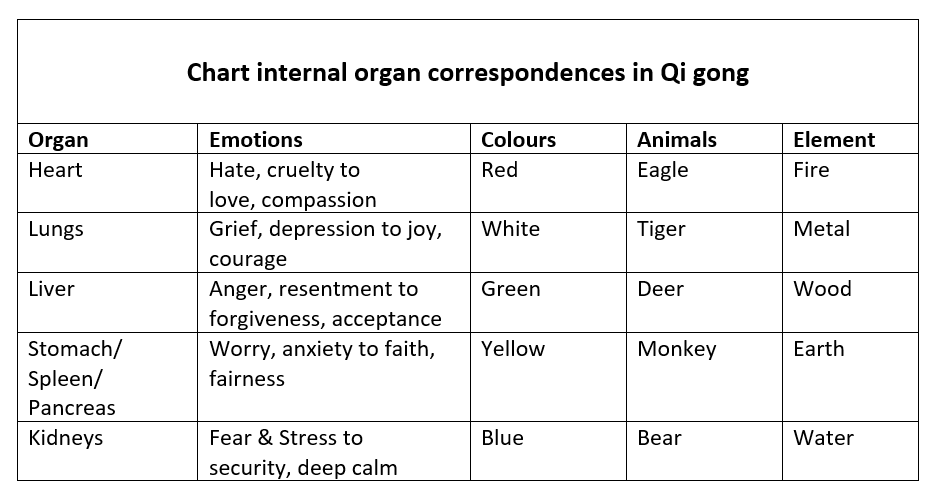
 Smiling meditation & your psychosomatic health


 Dear Integral Meditators,
 Dear Integral Meditators,
 Dear Integral Meditators,

 Dear Integral Meditators,

 Dear Integral Meditators,


 Dear Integral Meditators,


 Dear Integral Meditators,
 Dear Integral Meditators,