Categories
Beginners mind, resilient body creative imagery Energy Meditation Life-fullness Meditation and Psychology Meditation techniques mind body connection Mindful Resilience Mindfulness Presence and being present

Accepting & recycling your difficult emotions

“The quickest way to get to where you want to go is often to accept where you are.”

Dear Integral Meditators, 

This week’s article looks at mindfulness around emotions, and working with emotional energy.  If you enjoy it, we will be exploring these methods in both the weekday (Weds eve) and Saturday sessions this week. You are invited!

You might also consider the Inner smile & energy balls meditation workshop – Build health, confidence & energetic resilience in life.

Final call for this weekends  Qi Gong for Improving your Health and Energy Levels & for Self-Healing!

In the spirit of inner recycling,

Toby


Accepting & recycling your difficult emotions

In last week’s article on ‘Your emotions as horses’ I led with this quote:

“The emotions you currently think of as being the most useless in your life might just be the ones that you need to learn to ride better”

In this piece, I want to explore the theme of accepting and recycling difficult emotions, as well as the mental narrative and the bodily/somatic states that goes with them.

To recycle the energy of difficult emotions, they first need to be acknowledged and accepted. There is a Zen saying that goes “Pulling the weeds we give nourishment to the plant,” meaning that we can learn to be grateful to our inner difficulties, if we know how to use their energy, like pulling and then burying weeds next to a plant so that they can nourish it.  

Our ‘normal’ approach to a difficult emotional state is to try and push it away, so that we can replaced it with a more ‘positive’ state. Another quote I often use in my trainings is:

 “The quickest way to get to where you want to go is to accept where you are.”

What this points to is that, counter-intuitively, if you can accept and be at peace with a difficult emotional state, the state itself can change more rapidly to something more constructive. It is the accepting and not resisting that enables the transformation.

For example, if I am hurt or disappointed by someone’s behaviour, acknowledging that feeling of hurt or disappointment is a first step towards transforming it.

Smiling at it to accept and soften the energy

From acknowledgment I can then move onto acceptance. Even though we may understand intellectually the principle and benefit of accepting, it is not easy to do! The gateway to accepting a difficult emotion is often guarded by resistance. One technique I find helpful when in a state of resistance is to gently smile at my resistance, inviting it to soften its hard, rigid stance. Smiling and inviting our resistance to let go (and not being in a hurry about this) enables us to access the feeling of the emotion itself. Once we have this access, we can then use the smiling technique to work with the emotion. In my example of hurt and disappointment, I can smile inwardly to the part of me that feels this way, encouraging a softening of the emotion, making its energy more malleable. This opens up the emotional energy to the ‘recycling’ or transformational stage of the practice that I explain below.

Recycling emotional energy using the microcosmic orbit

I have talked about the microcosmic orbit in a previous articles this year. With emotional energy we raise its vibration by looping it up the back of the body, and re-directing it down the front, which is the basic pattern in all M-O meditations.

Imagine two points of light within your body, one at the bottom of your perineum, the second at the crown of your head. Now imagine a golden thread running up the back of your body, from perineum to the base of the spine, up the back of the body to the crown. It continues thru the crown to your third eye, and down the front of your body, through the belly and back down to the perineum (see diagram).

As you breathe in, feel the energy in your body flowing up the back of the golden thread to your crown, raising and purifying the vibration of the energy as it does so. As you breathe out, feel energy flowing down the front of the body, bringing the higher vibrational energy back down into the torso. As you do this, imagine that the energy of your difficult emotion is being ‘sucked’ into this loop, recycled up the back of the spine and returning down the front of the torso, as neutral/positive emotional energy, ready to be deployed by you in other directions.

Recycling rather than avoiding emotions is a great way to increase your energy levels and resilience in life. Initially the techniques can sound a bit eccentric, but once you try them a few times, the principles are not that complicated.


Follow Toby onLinkedInYouTubeInstagram

Integral Meditation Asia

Online Courses 1:1 Coaching * Books * Live Workshops * Corporate Mindfulness Training *Life-Coaching *  Meditation Technology

Categories
creative imagery Energy Meditation Integral Awareness Life-fullness Meditation and Psychology Meditation techniques Mindful Resilience Stress Transformation Using the Energy of Negative Emotions

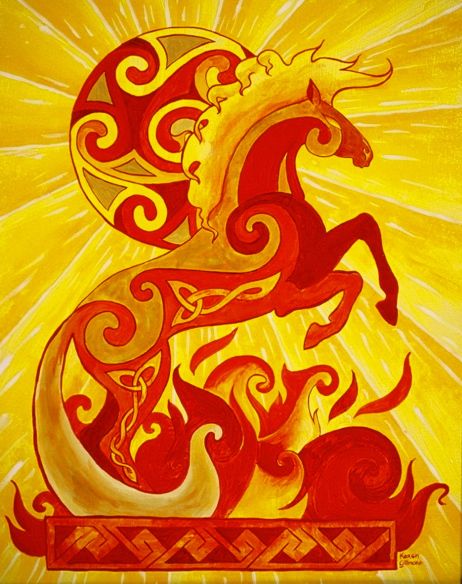
Your emotions as horses (& Lunar NY fire horse meditation)

“The emotions you currently think of as being the most useless in your life might just be the ones that you need to learn to ride better”

Dear Integral Meditators, 

This week’s article is one I wrote in 2015, it seemed like a good time to post it, coming into the Lunar new year of the fire-horse!
If you look up a summary of the fire-horse year, you might get something like this:  “The 2026 Year of the Fire Horse (beginning Feb 17, 2026) is a rare, high-energy 60-year cycle event symbolizing rapid change, intense passion, and bold action” 

If you would like to tune into this energy for yourself, then I will be doing a Lunar New Year Meditation 2026: Connecting to the energy of the Fire Horse session at 5.30pm SG time this coming Saturday, both in person & online.

In the spirit of Lunar fire,

Toby


Your Emotions as Horses

Your emotions are like horses; powerful, fleet, full of energy and vitality. They are also willful and sometimes volatile. The flip side of this is they also contain their own instinctive and natural wisdom. You are the rider of the horses of your emotions.

If you try and control them by whipping and abusing them then they, like real horses will either become resentful, rebellious and devious or they will become broken, sad and scared.

If you simply indulge the horses of your emotions without directing them then they will simply run wherever they want without control, with the according results in your life.

Your emotions are tremendously strong. If you are scared of the strength of your emotions then they will sense that, and like horses with a nervous rider they will react to it.

If you learn how to ride your emotions with love and care, but at the same time with discipline and direction, then you have a tremendous energy source that you can put to positive use in your life, taking you faster in the direction that you want to go – So there is a lot ‘riding’ on the way you as the rider relate to the horses of your emotions!

Imagine you are on the back of a powerful horse now. It is the horse of your emotions. Feel the raw power, energy and life-force of the horse between your legs. When the horse wants to run, let him do so, feel the elation and the freedom as you gather speed, the wind in your hair, the trees and landscape flying by. Where do you want to go? You are the rider and director of this horse, and s/he wants your benevolent guidance.

Working mindfully with the image of yourself as rider and your emotions as horses can help us find out a lot about our current relationship to our emotions, and how we can learn to ride them better, with both more freedom and more control.

One of the keys to understand about emotions is that ‘positive’ and ‘negative’ emotions are like black and white horses (or brown etc…); it doesn’t matter what colour they are, what mainly matters is how you ride them. The emotions you currently think of as being the most useless in your life might just be the ones that you need to learn to ride better.

Related article: The Sea Snakes of the Mind
The Wild dogs of the Mind
A bag of rats & a big meadow (tactics or strategy?)


© Toby Ouvry 2026, you are welcome to use or share this article, but please cite Toby as the source and include reference to his website www.tobyouvry.com


Follow Toby onLinkedInYouTubeInstagram

Integral Meditation Asia

Online Courses 1:1 Coaching * Books * Live Workshops * Corporate Mindfulness Training *Life-Coaching *  Meditation Technology
Categories
Beginners mind, resilient body creative imagery Inner vision Integral Meditation Meditation techniques mind body connection Presence and being present Primal Spirituality Zen Meditation

The mind waving at itself & the Ocean-ness of consciousness

“Observing mind-waves helps us to relate to thoughts in a different, free-er way than our normal, or conditioned perception allows”

Dear Integral Meditators, 

All day your mind is waving at you, what does this mean? Find out in the article below! If you enjoy it, we will be exploring these methods in both the weekday (Weds eve) and Saturday sessions this week. You are invited!

If you are interested in Qi gong, do check out the Qi Gong for Improving your Health and Energy Levels & for Self-Healing that I will be facilitating on the 28th Feb.

In the spirit of mind-waves, 

Toby


The mind waving at itself & the Ocean-ness of consciousness

The ocean waves, the mind thinks

In Zen there is an expression; ‘the mind-waves’. Mind-waves is a term that helps us to relate to thoughts in a different way than we usually do. Our normal, or conditioned way of relating to thoughts is something like:

  • I am having thoughts – the thoughts are inside me; I am the possessor of the thoughts, the thoughts are the possessed object
  • I am identified with the thoughts – my identity has fused with the thoughts, to the extent that my sense of self has been reduced in the moment to this current train of thought

In meditation we can think of the mind, or consciousness as an ocean. The ocean is a vast body whose nature is water. Our mind is a vast containing space whose nature is awareness. The ocean ‘waves’, the currents and the wind produce waves on the surface of the water. The ocean and the waves are not two separate things; its is the nature of the ocean to ‘wave’ and the waves all have the nature of ‘ocean’.
Similarly, the currents in our mind and consciousness produce ‘thoughts’. It is the nature of the mind to ‘thought’ and the thoughts have the nature of the mind.

Practising: The mind waving to itself

Armed with our image then, we can start to watch our mind where we watch the mind ‘waving’ to itself. We notice that in the ‘ocean-field’ of our consciousness, there are thoughts coming and going. To get an initial feel for it you can use this method from my previous article:

“Use the body and breathing as an anchor for your attention. If you think about your attention as like a boat, and your thoughts and feelings as being like the waves, wind and other moving conditions around the boat. Your body and senses then become like the anchor that keeps the boat in one place. You don’t even need to try too hard still your mind and feelings. Just keep coming back to the anchor of your body, and you’ll find this gives you the basic ‘weight’ and stability for a sense of calm to start to come into your mind”

Once you feel relatively stable using this method, you can then simply practice watching the thoughts arising from your mind, like waves arising from the sea. You watch the mind ‘waving’ to itself, recognising the thoughts are a particular expression of the unlimited, oceanic nature of your own mind, or root-consciousness

Mind-waving and zones of the body

It can be interesting and informative to watch the waves of your mind whilst anchoring your attention at different levels of your physical body:

  • If you watch centered in your head, you will notice the mind-waves are more cognitive in nature
  • If you watch centered in your heart-centre, you will notice the mind-waves are more emotive in nature
  • If you watch centered in your belly, you will notice the mind-waves are more instinctual in nature

Watching from any of these levels, the watching of the waves should then lead to a capacity to relax into the nature of the mind itself; our formless timeless ‘Ocean-of-consciousness’. This is great for relaxation of you are a recreational meditator. If you are a professional, or more serious meditator then wave-watching is a great way to relate and connect to your already-awakened nature, and experience yourself as that.

Related reading:
Effortless wholeness – The ocean & it’s wave; not one, not two
Riding the Waves of the Mind
The sea snakes of the mind
A bag of rats & a big meadow (tactics or strategy?)

© Toby Ouvry 2026, you are welcome to use or share this article, but please cite Toby as the source and include reference to his website www.tobyouvry.com


Upcoming classes & workshops

Ongoing on Tuesday’s & Wednesday’s (live & online), 7.30-8.30pm 
– Weekly integral meditation classes

Ongoing on Saturdays, 5.30-6.45pm SG time – Saturday Integral meditation deep-dive sessions with Toby

Tues 13th, Weds 14th January, & then weekly – Beginners mind, resilient body – a 10-week integral meditation course

Starts Saturday 17th January, 5.30-6.15pm, & then weekly – Beginners mind, resilient body deep-dive: An 11 -session practice series

Saturday 28th February, 9am-1pm – Qi Gong for Improving your Health and Energy Levels & for Self-Healing


Follow Toby onLinkedInYouTubeInstagram

Integral Meditation Asia

Online Courses 1:1 Coaching * Books * Live Workshops * Corporate Mindfulness Training *Life-Coaching *  Meditation Technology
Categories
A Mind of Ease Beginners mind, resilient body creative imagery Inner vision Integral Awareness Life-fullness meditation and creativity Meditation and Psychology Meditation techniques Mindful Resilience Presence and being present Stress Transformation Zen Meditation

A bag of rats & a big meadow (tactics or strategy?)

“When you practice the ‘sheep in the meadow’ form of awareness, you can keep your attention on your ‘bigger Why’s,’ accepting the small obstacles that you encounter on the way toward your larger goals”

Dear Integral Meditators, 

This week I outline two images to help you refine and develop your awareness in a way that can significantly transform your daily experience. If you enjoy it, we will be exploring these methods in both the weekday (Tues&Weds) and Saturday sessions this week. You are invited!

If you are interested in Qi gong, do check out the Qi Gong for Improving your Health and Energy Levels & for Self-Healing that I will be facilitating on the 28th Feb.

In the spirit of the meadow mind, 

Toby


A bag of rats & a big meadow (tactics or strategy?)
 
This article explains what is essentially a perspective shift that changes your relationship to your thoughts, and how you experience them. It looks at how we can create an inner space for ourselves that contains a lot more acceptance and allowing. We will then look at some other applications of this principle in daily life.
 
The bag of rats – Your everyday ‘small’ mind
 
Imagine you are a rat in a dark sack. There are several other rats inside. It is dark, hot, and claustrophobic. You feel agitated by the rats around you, they in turn feel agitated by you. You have a very limited sense of where you are and what is happening to you, it is all close-up, friction-loaded and conducive to irritation, even paranoia.
In everyday life our mind can feel a bit like this bag of rats. It feels trapped inside our body. Often, we feel trapped in an even smaller space, the one between our ears, inside our skull! There are many thoughts about many things in this small space, bumping into each other, creating friction as they rub-up against the thoughts next to them. A lot of feelings and emotions are created from this rubbing. It is difficult to know which feelings come from which thoughts, and what emotional state came from where. It’s difficult not to get confused, to difficult to see our life clearly.
When your mind is like a bag of rats, life naturally feels a bit tough and contentious. States like acceptance, flow, curiosity come at a premium and are difficult to maintain.
 
The open meadow – Making your mind bigger
 
“To give your sheep or cow a large, spacious meadow is the way to control him” – Shunryu Suzuki
 
The quote from Suzuki above refers both to the method to control one’s mind, but also an approach to working with other people, and with experiences in our life. In terms of mind-training and meditation, this instruction stands in contrast to the ‘rats in the bag’ image from the first section. When sitting with the thoughts in your mind, rather than trying to control them, stop them or ‘fix’ them, you simply make your mind and awareness bigger, like a large open meadow. Rather than having your thoughts ‘in your head’ like rats in a bag, you make your mind big, with the thoughts like sheep in a big, spacious meadow. In such an environment an animal will tend to simply wonder off, find its place in the field and be content. So, when you make your awareness big, you can sit there watching the thoughts without being so bothered by them, and they in turn tend to gradually return to equilibrium, without you having to work that hard to control or fix them.
 
The movement from tactics, and making room for your ‘Big Why’
 
When your experience of your mind is of the ‘rats in the bag’ type, it is difficult to keep perspective. Everything that you are doing tends to be tactical, small picture, just dealing with what is right in front of you. When you practice the ‘sheep in the meadow’ form of awareness, you can keep things more in perspective. You can ‘choose your battles’. You can keep your attention on your ‘bigger Why’s’, accepting the small obstacles that you encounter on the way toward your broader goals.
 
Enjoy the meadow!

Related articleIntegrating field awareness & single-pointedness in daily life

© Toby Ouvry 2026, you are welcome to use or share this article, but please cite Toby as the source and include reference to his website www.tobyouvry.com


Follow Toby onLinkedInYouTubeInstagram

Integral Meditation Asia

Online Courses 1:1 Coaching * Books * Live Workshops * Corporate Mindfulness Training *Life-Coaching *  Meditation Technology

Categories
Beginners mind, resilient body Concentration creative imagery Enlightened Flow Integral Meditation Life-fullness Meditating on the Self Meditation techniques Mindful Breathing Mindful Resilience Presence and being present Zen Meditation

The swinging door – when the breathing does itself

“Rather than trying to focus on your breathing, simply try & experience the breathing doing itself, just BE the breathing. This often results in better focus, without having to try so hard.”

Dear Integral Meditators, 

How much will power do you need to exert in meditation, and in life? This week’s article explores what happens when you take your ‘I’ out of your efforts to meditate, and instead let it ‘do itself’.
 
If you enjoy the article, we will be exploring these subjects in both the weekday (Tues&Weds) and Saturday sessions this week.

In the spirit of the singing door, 

Toby


The swinging door – when the breathing does itself
 
“What we call ‘I’ is just a swinging door that moves when we inhale and when we exhale” – Shunryu Suzuki, from Zen Mind, Beginners Mind
 
Making your meditation focus more ergonomic
 
When we try and focus in meditation, or in a daily task, often we try in a particular way, where the feeling is ‘I’ am trying to focus on ‘it’. So as the ‘I’ in meditation we exert effort to focus on the breathing and cut out distractions as an act of will.
You can try an interesting experiment; rather than trying to focus on your breathing, simply try and experience the breathing doing itself, just BE the breathing. You can be the breathing doing itself, or, alternatively ‘do’ the breathing doing itself. The proposition here is that our ‘I’ or the idea of our I is actually surplus to requirements, unnecessary. A side effect of this is that you may find that your attention to the breathing starts to become free-er, more relaxed, effortless. You find your focus becomes better quality, but you don’t have to try so hard.
 
The breathing as a swinging door
 
In Zen meditation the image of a swinging door is used; you focus on your breathing in the throat as if it were a swinging door; swinging in as you inhale, out as you exhale. With the technique of the breathing doing itself, you simply watch that swing in and swing out, attuning to the rhythm and as far as feels possible leaving your I out of the equation. Put another way you could relate to your ‘I’ as being nothing more than the swing-door of the breath.
 
Bringing your inner and outer worlds together
 
Continuing with the Zen image, you can then imagine the breath flowing from your outer world to your inner world as you breathe in, and from your inner world to your outer world as you breathe out. You can then develop this in the way described by Shunryu Suzuki in the same passage as the first quote at the top of the article:
 
“The inner world is limitless, and the outer world is also limitless. We say “inner world” and outer  world,” but in reality there is just one whole world, our throat is like a swinging door. The air comes in and goes out like someone passing through a swinging door. If you think “I breathe,” the I is extra.”
 
Using the breathing in this way we can go from the breath moving from our “inner” to out “outer” world and back again, to simply the movement of the breath to and from a single world, a unified world. It is just the movement of the breath in a unified world, in a state of one-ness with the world, with no “I” necessary.
 
A heart union
 
I also like to do this practice down at the heart level. At the heart level we connect with our feeling nature, so the meditation takes on a more emotive dimension when I go down there. As I breathe in, I feel a soft light and energy expanding out into the world, as I breathe in I feel the light and life from the outer world flowing back into my heart. This then simply becomes the one-world, the one being expanding and contacting as I breathe. You can try it and see if you like it, or work with the traditional Zen techniques outlined above.

© Toby Ouvry 2026, you are welcome to use or share this article, but please cite Toby as the source and include reference to his website www.tobyouvry.com


Follow Toby onLinkedInYouTubeInstagram

Integral Meditation Asia

Online Courses 1:1 Coaching * Books * Live Workshops * Corporate Mindfulness Training *Life-Coaching *  Meditation Technology
Categories
A Mind of Ease Beginners mind, resilient body creative imagery Energy Meditation Inner vision Integral Awareness Integral meditation training pages meditation and creativity Meditation Recordings Meditation techniques mind body connection Mindful Resilience Mindfulness Qi gong Zen Meditation

Not two, not one – The unified body-mind & brain illumination

“The body-mind are not one, not two, & also both one & two. If you just read these words, it can seem either complex or non-sensical. However, when you actually DO it in meditation, it is quite simple!”

Dear Integral Meditators, 

This week’s article has several aspects to it, including recordings that you can listen to to experience the meditations. If you don’t have time for all the material, just focus on the first section ‘Not one, not two – The integrated, or unified body-mind’, and enjoy digesting that!
 
If you enjoy the article, we will be exploring these subjects in both the weekday (Tues&Weds) and Saturday sessions this week.
 
And final call for this Saturday’s Meditation and Mindfulness for Self-Healing and Creating High Levels of Energy!
 
In the spirit of not one, not two,

Toby


Not two, not one – The unified body-mind & brain illumination
 
This article looks at creating a combination of Zen and energy meditation techniques, putting them together in a complementary, mutually enhancing way.
 
Not one, not two – The integrated, or unified body-mind
 
The first position is a Zen meditation on the unified body-mind. The basis of this meditation is explained very succinctly in this quote from Shunryu Suzuki, from his book Zen mind beginners mind:
 
“Our body and mind are not two and not one. If you think your body and mind are two, that is wrong. If you think that they are one, that is also wrong. Our body and mind are both two and one. We usually think that if something is not one, it is more than one; if it is not singular it is plural. But in actual experience, our life is not only plural, it is singular. Each one of us is both dependent and independent”
 
Normally in everyday life it feels like our mind and body are separate. Our body is doing one thing whilst our mind is thinking about something else. Often it feels as if our mind is the ‘owner’ and operator of the body. Either way they feel like two things. When we sit in meditation focusing on the body and breath, the temporary cessation of thoughts brings the mind and body together in a unity, or singularity. We experience a unified body-mind, it feels like they are one. In reality, the body mind are not one or two, they are as they are. We can explore this ‘not one-not two’ experience in meditation, using it as a gateway to experiencing our body-mind as they are, in the present moment, not one, not two, and also both one and two.
This meditation by itself is a great way to move beyond conceptual awareness, using the apparent paradox presented. If you just read the words above, it can seem either complex or non-sensical. However, when you actually DO it in meditation, it is really quite simple!
 
Practice the unified body-mind 10-minute meditation recording
 
Brain energy activation microcosmic orbit meditation, basic mindful positions
 
Position 1: Connecting to our light body, or energy body,
Position 2Visualizing the microcosmic orbit within our energy body, focusing on activating the energy centre within the perineum and coccyx
Position 3: Practicing circulating energy within the M-O, from the perineum and coxyx up to the base of the skull, crown and third eye centers to activate and illuminate the brain.
Position 4: Circulating the energy up the back & down the front of the body. More generally for integration.
Position 4: Pausing the flow of the microcosmic orbit, breathing in and out of our navel/belly area. Letting the energy go to an area of our body that needs healing or energizing.
 
Practice the microcosmic orbit 12-minute brain activation meditation
 
If you practice both techniques in combination, the effect is designed to be that:

  • Your unified body-mind meditation helps you establish a solid based
  • The brain illumination practice enables you to refine and brighten your consciousness to then go deeper into the unified body-mind state
  • And so on in a virtuous cycle

Finally, here is a ten-minute combination form that puts them together in a shorter format.
 
Enjoy!

© Toby Ouvry 2026, you are welcome to use or share this article, but please cite Toby as the source and include reference to his website www.tobyouvry.com


Upcoming classes & workshops

Ongoing on Tuesday’s & Wednesday’s (live & online), 7.30-8.30pm 
– Weekly integral meditation classes

Ongoing on Saturdays, 5.30-6.45pm SG time – Saturday Integral meditation deep-dive sessions with Toby

Tues 13th, Weds 14th January, & then weekly – Beginners mind, resilient body – a 10-week integral meditation course

Starts Saturday 17th January, 5.30-6.15pm, & then weekly – Beginners mind, resilient body deep-dive: An 11 -session practice series

Saturday 24th January, 9.00am-12.30pm – Meditation and Mindfulness for Self-Healing and Creating High Levels of Energy


Follow Toby onLinkedInYouTubeInstagram

Integral Meditation Asia

Online Courses 1:1 Coaching * Books * Live Workshops * Corporate Mindfulness Training *Life-Coaching *  Meditation Technology

Categories
A Mind of Ease creative imagery Inner vision Life-fullness meditation and creativity Meditation techniques Mindful Resilience

From ‘life is a problem and…’ to ‘life is good and…’

“Meditation is developing our capacity to generate happiness within & project it outward, rather than needing outer circumstances to align before we can be happy”

Dear Integral Meditators, 

This week’s article explains a fundamental paradigm for how meditation works that I use often in my workshops and sessions. Once you ‘get it’ its easy to stay motivated in your meditation practice!

Heads up for this Saturday’s Saturday 13th December, 9am-12.30pm – Psychic & Psychological Self-defence half day workshop, & also I have just posted the new class series’ for January: 
Tues 13th, Weds 14th January, & then weekly – Beginners mind, resilient body – a 10-week integral meditation course
Starts Saturday 17th January, 5.30-6.15pm, & then weekly – 
Beginners mind, resilient body deep-dive: An 11 -session practice series

 
In the spirit of ‘life is good and…’,

Toby


Article: From ‘life is a problem and…’ to ‘life is good and…’
 
One definition of meditation that I learned from my Tibetan Buddhist days is this one:
 
“Meditation means to focus our attention on an object (or in a state) that, when we dwell on it, causes our mind to become positive, calm and/or happy.”
 
The task of a meditator from this point of view is to discover as many ‘positive’ states, ways of thinking, ways of non-thinking, emotions, temperaments, dispositions and so on as they can. A meditator then tries to keep her attention oriented around one or other of these positive objects or states during the day. The net effect of this is that they spend most of their life in a condition of happiness, even in the face of substantial obstacles. To be a meditator is empowering in this sense, because we are developing our capacity to generate happiness within ourselves and project it outward, rather than needing outer circumstances to align before we can be happy.
 
From life is a problem to life is good
 
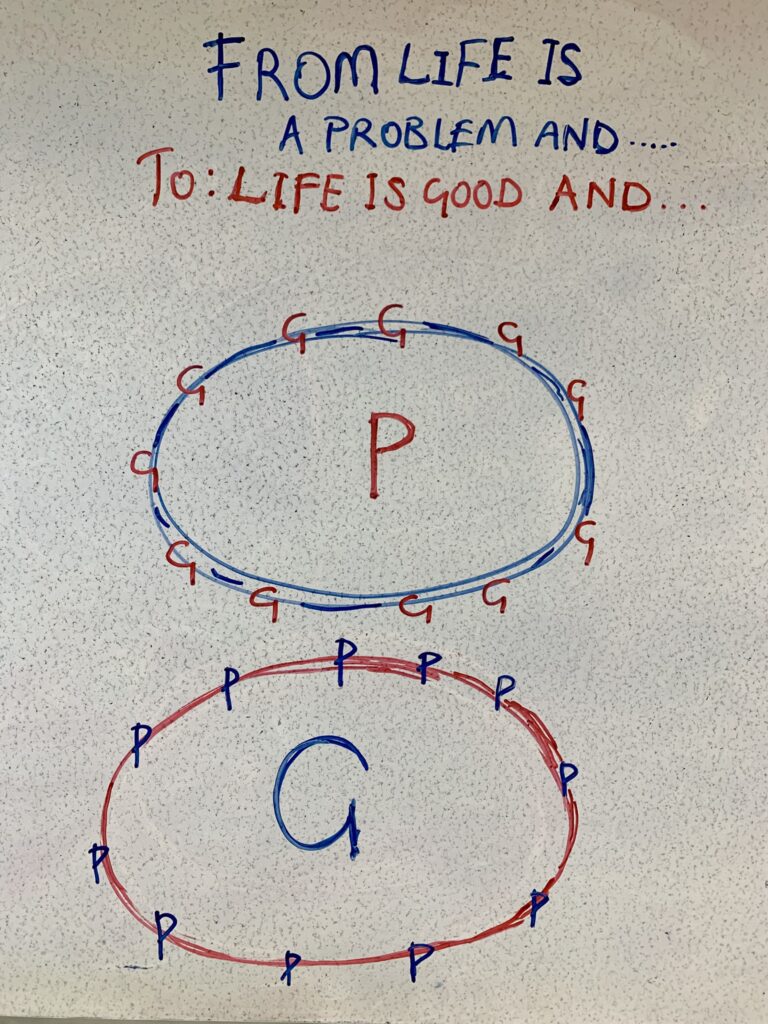
One simple paradigm I often use to illustrate the basic task and practice of a meditator is the one that you can see in the picture. Both oval shapes represent a person’s field of awareness.
 
Life is a problem and… The upper circle represents the everyday persons awareness field. In it you can see in the center there is a ‘P’ which stands for problem. On the edge of the circle, you can see several small ‘g’s, which represent the good things in our life. Unless we are careful, this is a place where we can spend a lot of our day and life; with our problems front and center of our awareness, and the good things in our life a secondary, background element of experience. With this perceptual dynamic or habit in place we literally experience our life as mostly a problem, as it is our problems that appear front and center of our awareness. This position can feel very defensive; our problems dominate, and the good things lack power due to their peripheral position.
 
What we are trying to do as meditators is ‘flip’ this so that our perceptual state goes from ‘life is a problem and…’ to:
 
Life is good and… the lower circle you can see has a ‘G’ for good things in the center, with the ‘p’ for problems pushed out to the periphery. Here you are simply keeping the good things in your life front and center of your awareness as you go through the day. You can understand ‘good things’ to represent a broad category here, that you are then making specific to your particular life experience. Because we keep the good things front and center, the power of our problems to dominate our awareness reduces as they are pushed out to the periphery.
An important thing to note here is that the change is perceptual, nothing external needs to change for us to do this. The difference between someone with the ‘P’ mostly front and center of awareness, and someone with a ‘G’ is the habit and discipline of focusing awareness in a particular way. You could have two people with almost identical life-circumstances, but a completely different experience simply due to their habit of focus. When we push the ‘p’s out to the periphery, we are not denying our problems, or the need to deal with them effectively. We are just placing them in a particular context, the ‘G’s, in a way that puts them in perspective and makes them feel much more manageable
 
A simple practicum: Set aside a fixed amount of time, say 5-10mins. Watch your awareness. Notice the ‘P’s often taking center-stage. Practice placing your ‘G’s front and center instead, pushing the ‘p’s benevolently to the periphery. Notice how your experience changes, and enjoy.
 
Related articleMeditation – Life as a positive mindfulness game 
© Toby Ouvry 2025, you are welcome to use or share this article, but please cite Toby as the source and include reference to his website www.tobyouvry.com


Upcoming classes & workshops

Ongoing on Tuesday’s & Wednesday’s (live & online), 7.30-8.30pm 
– Weekly integral meditation classes

Starts Tuesday 11th & 12th November, 7.30-8.30pm – Going beyond your limitations, tapping into your hidden strengths – Meditating with your bright shadow, a 6-week course

Starts Saturday 15th November, 5.30-6.15pm SG time – Bright shadow meditation Deep-dive – A 5 session practice series

Saturday 13th December, 9am-12.30pm – Psychic & Psychological Self-defence half day workshop

Tues 13th, Weds 14th January, & then weekly – Beginners mind, resilient body – a 10-week integral meditation course

Starts Saturday 17th January, 5.30-6.15pm, & then weekly – Beginners mind, resilient body deep-dive: An 11 -session practice series


Follow Toby onLinkedInYouTubeInstagram

Integral Meditation Asia

Online Courses 1:1 Coaching * Books * Live Workshops * Corporate Mindfulness Training *Life-Coaching *  Meditation Technology

Categories
Awareness and insight creative imagery Inner vision Integrating Ego, Soul and Spirit Life-fullness Meditation and Art meditation and creativity Mindful Self-Leadership Motivation and scope Primal Spirituality spiritual intelligence

Getting your imagination & creativity to work for you

“Your reality is a dynamic co-creation between your imagination & your environment. Learn how to use this to open doors in life for you, rather than close them”

Dear Integral Meditators, 

This week’s article focuses on the psycho-dynamic relationship between your imagination and your environment. 
If you enjoy it, then feel free to come along to the Wednesday and Saturday bright shadow meditations, which are psycho-dynamic in the way described below. 

Heads up for the last workshop of the year, Saturday 13th December, 9am-12.30pm – Psychic & Psychological Self-defence half day workshop, also very much an ‘evolutionary magical’ focus here.
 
In the spirit of the imaginal,

Toby


Your inner magician part 2 – getting your imagination & creativity to work for you
 
In my previous article on activating your inner magician I defined your inner magician as:
“The inner magician is that part of our inner self that is both creative and magical, and that if we harness it effectively has the power to change our daily life and experience for the better”


I then went onto define magic as defined magic as:
“The higher expression of our inner magician is that part of self that is able to work with the higher, evolutionary or developmental expression of magic.”  
 
This article looks at the second and third aspect of activating our inner magician:
 
“Engaging our creative imagination consciously to ‘sculpt’ our experience of any given situation for the better,” and
 
“Not being content to let good ideas remain in our head, but actively finding ways of expressing those ideas concretely in our daily life.”
 
Aspect 2: Engaging our creative imagination consciously to ‘sculpt’ our experience of any given situation for the better
 
We think that there is a concrete reality ‘out there,’ waiting to be discovered, that has some kind of fixed or intrinsic qualities. Actually this is not quite the case. What happens is that the “bare facts” our outer reality meets our mind, which then imagines or projects its own ideas onto that outer reality.
From this we can see that what we experience in life has something to do with the “facts” of our life, but equality as much it also has to do with our imaginative response to those facts. Our reality and our imagination are in a constant process of interacting together in a psycho-dynamic manner. To work with magic is to realize the power of your imagination to co-create any given situation in your life, and leverage on that imaginative power effectively. For more on this you can read my past article “Taking your creative imagination as your object of meditation”.
Our imagination is deeply and powerfully magical, it can create great art and great bliss, or it can create our own private hell.
 
Aspect 3: Not being content to let good ideas remain in our head, but actively finding ways of expressing those ideas concretely in daily life.
 
Our inner magician realizes that any good idea that we understand, create or hear about is an INJUNCTION. An injunction is somewhere between an invitation and an obligation. This means that when we have or hear a great idea, we recognize that our understanding of this idea is INVITING us to use the idea as a practical tool with which we can change our life for the better. By virtue of understanding of the idea we could also say that we have an OBLIGATION to try and integrate that idea into our life. If we just let that idea remain in our intellect that would be a great waste right? Many of us are guilty of this; having great insights and ideas about our life, but not implementing them, thus wasting them.
So, our magical self or inner magician is delighted when good idea come our way and immediately seeks ways to start expressing these ideas in a practical way to change our life for the better.
 
Practical Work
 
If you want to follow up on this article on a practical level, here are two suggestions:
 

  1. Use the image above as an object of meditation in order to help you to intuitively connect to your own “Inner Magician”. Alternatively find a picture of a ‘magical person that resonates with you, and use that as a visual base for connecting to your IM.
  2. Observer the interaction between your imagination and inner conditioning with your outer environment. Notice how your reality is a dynamic co-creation between these two. Reflect on how to use this to open doors in life for you, rather than close them.
  3. As soon as you have or understand a good idea intellectually, immediately ask yourself “How can I make this idea a concrete, practical reality in my life?” Do whatever you can to act upon your answer to this question.

 
Related articleConnecting to your magical self or inner Magician part 1

 
© Toby Ouvry 2025, you are welcome to use or share this article, but please cite Toby as the source and include reference to his website www.tobyouvry.com


Upcoming classes & workshops

Ongoing on Tuesday’s & Wednesday’s (live & online), 7.30-8.30pm 
– Weekly integral meditation classes

Starts Tuesday 11th & 12th November, 7.30-8.30pm – Going beyond your limitations, tapping into your hidden strengths – Meditating with your bright shadow, a 6-week course

Starts Saturday 15th November, 5.30-6.15pm SG time – Bright shadow meditation Deep-dive – A 5 session practice series

Saturday 13th December, 9am-12.30pm – Psychic & Psychological Self-defence half day workshop


Follow Toby onLinkedInYouTubeInstagram

Integral Meditation Asia

Online Courses 1:1 Coaching * Books * Live Workshops * Corporate Mindfulness Training *Life-Coaching *  Meditation Technology
Categories
A Mind of Ease Concentration creative imagery Energy Meditation meditation and creativity Meditation and Psychology Meditation techniques Mindful Self-Leadership Mindfulness Presence and being present

Squares & triangles – Mindful strengths building

“Once you know how to breathe in squares and triangles, you can create your own mindful flow practices to build the qualities & capacities that you wish”

Dear Toby, 

This week’s article looks at a practice I have evolved over the years, designed to enable creativity within a basic, consistent structure. Enjoy!

Last call for this Saturday 22nd Nov, 9am-12.30pm – Meditations for Developing the Language of Your Shadow Self Workshop
 
In the spirit of building strength,

Toby


Squares and triangles – Mindful strengths building
 
Square and triangular breathing, the basic concepts
 
Square and triangular breathing are methods where you combine your inhalation and exhalation with short pauses. The practice of pausing your breath in itself offers benefits such as: 

  • calming the nervous system, improving focus, and enhancing emotional regulation
  • increasing the amount of carbon dioxide in the blood, which reduces the excitability of the amygdala (the brain’s fear center) and promotes a sense of calm
  • greater control over the breathing process, which can lead to increased mental clarity, resilience, and better decision-making

 
Square breathing is where we place a short pause both at the top and the bottom of the breath. A well-known form of this is called box-breathing where you breathe in, pause, breathe out and pause at the bottom of the exhalation, each for a count of four, hence ‘breathing in a box’, or square.
 
With triangular breathing there is just one pause, at the bottom of the breath, hence three stages or ‘sides’ like a triangle.
 
To use these breathing forms for strengths building, we simply combine the breathing with qualities, or states of mind to build them as we breathe. For example in my Wednesday class last week we began by practising breathing in a square in the following manner to cultivate mindful flow and presence:

  • Breathing in, gathering and focusing our energy in our body
  • Pause, being focused and present
  • Breathing out, relaxing our body, relaxing into the present moment
  • Pause, holding a state of relaxed presence

We practiced with sets of three square breaths like this, with pauses in between just to enjoy the sense of being in state of focused, relaxed presence. Focused, relaxed presence are foundational strengths for building competence in meditation and mindfulness. In this practice we used square breathing to build these strengths systematically.
 
In the Saturday class last week, we opened with a triangular breathing form, where:

  • As we breathed in, we opened to a state of adventurousness
  • Breathing out, dropping into a state of calm
  • Pausing at the bottom of the breath, relaxing in a state of calm adventurousness

 
Adventurousness and calm are qualities we can use to meet our challenges and opportunities in such a way that we enjoy them where possible, and also navigate them with calm strength. The triangular breathing provides a structure to cultivate these qualities deliberately in a structured way.
 
Once you know how to breathe in squares and triangles, you can create your own mindful flow practices to build the qualities and capacities that you wish to develop in our life and work. I like to combine qualities together into polarities that balance and complement each other. From the above examples you can see:

  • Relaxed and focused
  • Adventurous calm

 
There are many, many variations that I have used over the years:

  • Engaged detachment
  • Humble self-assertion
  • Gentle courage
  • Serious lightness

And so on…
 
The great thing about meditating with squares and triangles is that you have one technique, with many variations. So, you can create variety and stimulation in your practice, whilst at the same time keeping it basically consistent and ‘the same’.
 
Related reading:
Using mindful flow to train in strengths-building
Adventuring with attention (What is a Meditator?)
Meditation wings – Five foundational meditation polarities

 
© Toby Ouvry 2025, you are welcome to use or share this article, but please cite Toby as the source and include reference to his website www.tobyouvry.com


Upcoming classes & workshops

Ongoing on Tuesday’s & Wednesday’s (live & online), 7.30-8.30pm 
– Weekly integral meditation classes

Starts Tuesday 11th & 12th November, 7.30-8.30pm – Going beyond your limitations, tapping into your hidden strengths – Meditating with your bright shadow, a 6-week course

Starts Saturday 15th November, 5.30-6.15pm SG time – Bright shadow meditation Deep-dive – A 5 session practice series
 

21 Nov & 28th Nov, 8am-12pm – The wisdom of Zen meditation practice retreat & course, levels 1&2

Saturday 22nd November, 9am-12.30pm – Meditations for Developing the Language of Your Shadow Self Workshop

Saturday 29th November, 7-9pm – Living Life From Your Inner Center – Meditations for Going With the Flow of the Present Moment

Saturday 13th December, 9am-12.30pm – Psychic & Psychological Self-defence half day workshop


Follow Toby onLinkedInYouTubeInstagram

Integral Meditation Asia

Online Courses 1:1 Coaching * Books * Live Workshops * Corporate Mindfulness Training *Life-Coaching *  Meditation Technology

Categories
Awareness and insight creative imagery Inner vision Integral Awareness Integrating Ego, Soul and Spirit Life-fullness Meditating on the Self Meditation techniques Shadow meditation

Re-working the story you tell yourself (about yourself)

“What of you could re-model the story of your life into one you look forward to engaging with, that energises both your experience of the moment, & your visions for the future?”

Dear Integral Meditators, 

This week’s article is something of a sequel to last week’s on creativity with our self-concept. What they both offer are creative ways of using mindful observation & imagination to live a fuller, more dynamic & vibrant life.
If you enjoy the articles, then do have a look at the Bright shadow weekday & Saturday series, which explore this type of creative mindfulness extensively. They can be participated in in-person, online or via the recordings.
 
In the spirit of mindful storytelling,

Toby


Re-working the story you tell yourself (about yourself)
 
Your story
 
The story you tell yourself about you is one that emerges substantially from your self-concept, or your idea of who you are. Here is a quote from a past article of mine on ‘the story’:
 
“The heavy bag of our story: For many of us our ‘story’, our past, our history is something that we are carrying around with us all the time. Unless we are careful it can end up like a heavy bag that we never put down, sapping our energy. It can define what we believe we are capable of; filling out mind with what could have been, what we did wrong, what we wish we could change and so on…”
 
How your story turns up in your daily life
 
Often our story doesn’t turn up as a literal voice in our head narrating away. Most often it turns up more subtly in our body and daily actions. It turns up as instinctive feelings and emotions arising in response to the events of the day. If you listen to yourself talking to people, you will hear it in the things that you say, perhaps more importantly in the tone of voice that you use, and the body language that you adopt when saying it. So, what I am saying here is that, although our story is active within us all the time, mostly it turns up implicitly and unconsciously, without our being fully aware of it.
 
Listening to and observing your story
 
If you can start picking up cues about your story from your feelings, behavioral reactions and so forth, you can then start to find out the ‘narratives’ behind them. For example, if I notice that often avoid or shy away from confrontations, I can be curious about why that is. I can then enquire within myself about why that is. Listening to the responses I might get answers such as:

  • “I don’t like being disapproved of, it reminds me of being powerless in the face of stern adults when I was a child”
  • “I already often find life overwhelming, to confront would only make things worse”
  • “I hate feeling disliked and judged by others, to confront would risk experiencing this”
  • I’m afraid that I will be violent if I really express how I feel in a confrontational situation

Simply becoming aware of, accepting, and observing this inner narrative, making it into an object, rather than a subject of awareness can be a powerful step in itself toward becoming free from it.
 
Putting it down
 
Having recognised it and observed this aspect of our story, we can than practice dropping it for periods of time. We do this simply by entering into the present moment without the burden of our story, experiencing the freedom of becoming a person without a story, a man or woman of no rank.
 
Re-telling it
 
Putting your story down also gives you a space where you can introduce a new story, a new narrative that liberates you from the prison or limitations of the old one. It opens doors rather than closes them. For example, in the case of confrontation, you can look for people who are good with confrontation and model them in your approach. You can rework the wording of your narrative

  • “Disapproval from others isn’t such a big deal, in fact sometimes it can be a good sign…”
  •  “Confrontations in the present are not linked to my past childhood experiences. I can choose a new way of asserting myself as an adult”
  • “I can use this experience to build confidence around non-violent ways to deal with confronters and bullies”

And so on…
 
Being it
 
The final stage then is to practice doing it and embodying your new story in daily life. By doing so you can gradually go about re-modelling the story of your life into one that you look forward to engaging with each day, and that energises both your experience of the moment, and your visions for the future.
 
Related readingChange your idea, change yourself – (Five stages to) Working creatively with your self-concept
Mindfully dropping (and picking up) your story
Making Objects of Your Subjects

 
© Toby Ouvry 2025, you are welcome to use or share this article, but please cite Toby as the source and include reference to his website www.tobyouvry.com


Upcoming classes & workshops

Ongoing on Tuesday’s & Wednesday’s (live & online), 7.30-8.30pm 
– Weekly integral meditation classes

Saturday 25th October, 9am-12.30pm – Finding Freedom From What Holds You Back in Life: Practical meditations & techniques for working with your shadow-self

Starts Tuesday 11th & 12th November, 7.30-8.30pm – Going beyond your limitations, tapping into your hidden strengths – Meditating with your bright shadow, a 6-week course

Starts Saturday 5.30-6.15pm SG time – Bright shadow meditation Deep-dive – A 5 session practice series

21 Nov & 28th Nov, 8am-12pm – The wisdom of Zen meditation practice retreat & course, levels 1&2

Saturday 22nd November, 9am-12.30pm – Meditations for Developing the Language of Your Shadow Self Workshop

Saturday 29th November, 7-9pm – Living Life From Your Inner Center – Meditations for Going With the Flow of the Present Moment


Follow Toby onLinkedInYouTubeInstagram

Integral Meditation Asia

Online Courses 1:1 Coaching * Books * Live Workshops * Corporate Mindfulness Training *Life-Coaching *  Meditation Technology