Categories
A Mind of Ease creative imagery Energy Meditation Inner vision Integral Awareness Life-fullness Meditating on the Self meditation and creativity Meditation and Psychology Meditation techniques Mindful Resilience Presence and being present Stress Transformation

Mindfulness of mood & atmosphere of your life-story

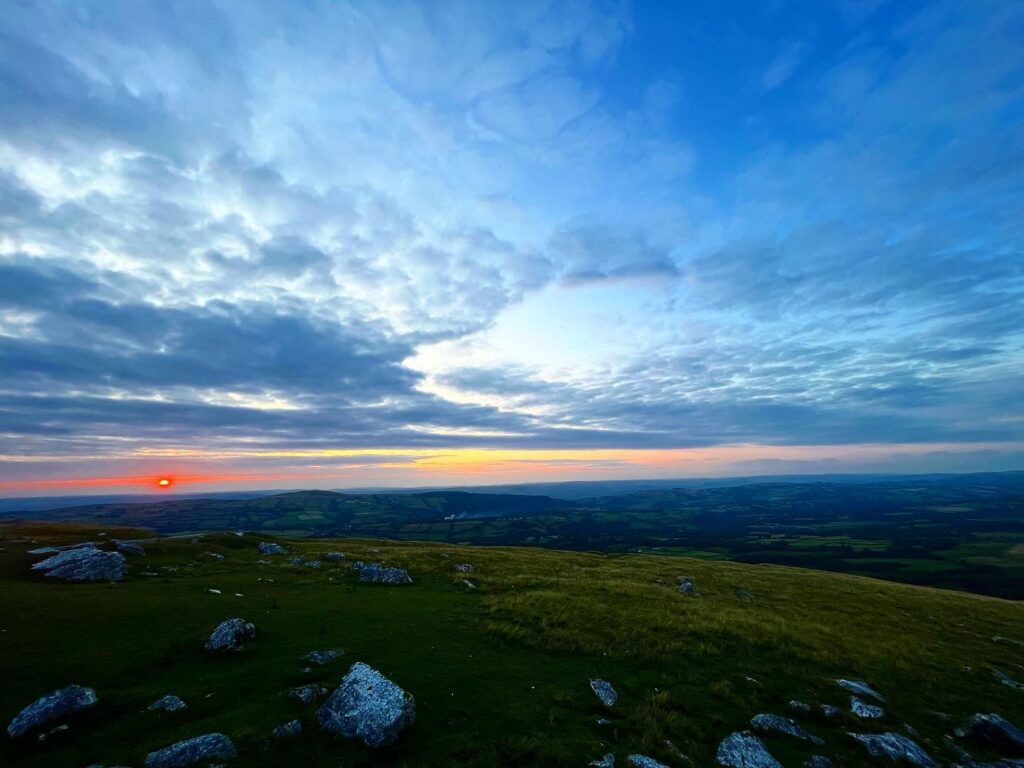
“You might think about your inner mood as being like the weather. If you are playing a game of tennis in a sunny, lightly breezy day, its completely different from playing it on a rainy, very windy day. We can usually shift ourself at least partially toward a better mood if we try, and this then affects everything for the better”

Dear Integral Meditators, 

This week’s newsletter slightly early, and has three things in it:

  • Firstly, an article on the importance of mindfulness around your mood.
  • Secondly if you are interested in meditation sound technology, I have been using I-awake for many years now. They have some great products, and they are all on a 30% off Labour day sale until 4th September (US time). This technology is also a great way to help change the mood and ambience of your life for the better!
  • Thirdly, beneath the article you can find all the courses and workshops for September, quite an exciting line-up, starting with the Qi gong workshop on the 9th September!

 
In the spirit of mood & atmosphere,

Toby 


Now Live: iAwake Labor Day Weekend Sale
 
From August 31 – September 4, 2023, we are holding our annual Labor Day Weekend Sale, one of our biggest sales this year. This sale features 30% OFF on Digital Tracks and 25% OFF on CDs + Digital. Check out our catalog and take advantage of this annual opportunity to receive huge discounts on iAwake tracks and add to or complete your iAwake toolkit.
 
Discount Coupon Code for DIGITAL (30% OFF): IAWAKELABOR2023


Mindfulness of mood & atmosphere of your life-story
 
When trying to improve our daily experience through mindfulness quite often peoples focus is upon

  • Focusing better
  • Thinking more positively
  • Thinking less
  • Relaxing more

These are all noble pursuits of course, but what I find often gets missed is attention to the mood and the inner atmosphere that we do things. If you think about it our mood is very important. For example, if your mood is habitually anxious and fearful then this naturally

  • Interrupts your focus
  • Makes it difficult to think positively
  • Creates low-grade mental busyness/ habitual overthinking
  • Makes it tough to relax

In my classes and coaching recently, one of the things that I have been emphasizing to students and clients is awareness of their habitual moods, and deliberately moving them toward a lighter more benevolent inner atmosphere. For example, if having noticed our inner mood in the moment we then direct it towards a combination of

  • Curiosity & playful inquisitiveness
  • Warmth & care

Then if we can establish that as an atmosphere in our body-mind, it then starts to colour our daily experience and activities

  • Warm & curious atmospheres are easy to build relaxed-focus in
  • Its natural and quite easy to think positively
  • We feel less compelled to think all the time
  • Activities just ‘feel’ naturally more enjoyable

 
The weather you are playing the game in
You might think about your inner mood as being like the weather. If you are playing a game of tennis in a sunny, lightly breezy day, its completely different from playing it on a rainy, very windy day. We can’t always completely control our mood, but we can usually shift ourself at least partially toward a better mood if we try, and this then affects everything for the better.
Playing with moods therapeutically
In my article last week on Therapeutic mindfulness I outline six practices which might also be thought of as ways of creating inner moods that are both strengthening and healing:

  • Grounded & sensory
  • Safety & non-emergency
  • Warmth & compassion
  • Appreciation
  • Curiosity & courage
  • A sense of being supported

All of these are possible moods that you can cultivate. Of course, there are many more that you could choose to focus on, according to your needs and inclinations. It’s something to have fun cultivating!


If you enjoy this article, you might enjoy the upcoming Therapeutic mindfulness course beginning on 26/27th September!

Related articleMindful of your moods, emotions and dispositions

© Toby Ouvry 2023, you are welcome to use or share this article, but please cite Toby as the source and include reference to his website www.tobyouvry.com


All upcoming classes and workshops at IMA:

Ongoing – Weekly Tuesday, Wednesday Online class schedule

Ongoing on Wednesday’s, 7.30-8.30pm – Wednesday Meditation for stress transformation and positive energy with Toby (Bukit Timah)

Ongoing on Tuesday evenings, 7.30-8.30pm – Tuesday Meditation for stress transformation and positive energy with Toby  (East Coast)

Ongoing Tues/Weds in August/Sept – The Wisdom of Awakening Series: Meditations for developing wisdom around inner-growth, happiness & fulfillment

Saturday August 26th, 9.30-11.30am – Monthly Qi Gong & Taoist Breathwork Clinic & Mini-retreat

Saturday Saturday 9th September, 9am-12.30pm – Qi Gong for Improving your Health and Energy Levels and for Self-Healing

Wednesday 20th September, 7.30-8.30pm – Autumn Equinox balancing & renewing meditation

Starting Tues 26th & Weds 27th September – Re-discovering your inner vitality & joie-de-vivre – An introduction to integrative therapeutic mindfulness & meditation

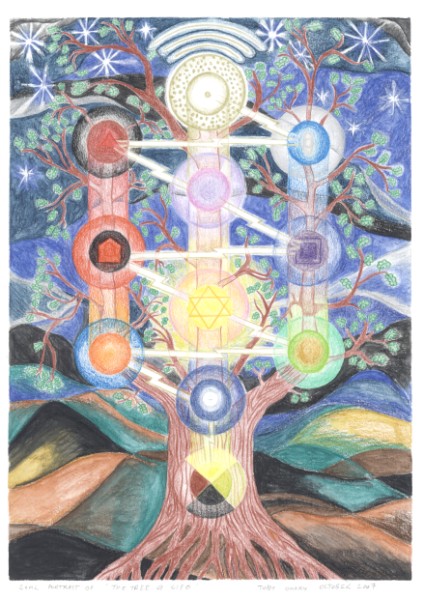
Saturday 30th September & Sunday 1st October, 9.30am-1pm – Meditations for connecting to the Tree of Life, and growing your own personal Life Tree

Saturday October 7th, 9.30-11.30am – Monthly Qi Gong & Taoist Breathwork Clinic & Mini-retreat

Saturday & Sunday October 28th & 29th – Integral Meditation Two Day Retreat

Tues/Weds Oct 31st, Nov 1st – Seasonal classSamhain – Healing the wounds & receiving the gifts of our ancestors

Tues/Weds Nov 14th/15th – Seasonal classDeepavali -connecting to your inner light


Integral Meditation Asia

Online Courses 1:1 Coaching * Books * Live Workshops * Corporate Mindfulness Training *Life-Coaching *  Meditation Technology
Categories
A Mind of Ease Energy Meditation Life-fullness Meditation and Psychology Meditation techniques mind body connection Mindful Breathing Mindful Resilience Qi gong Zen Meditation

Reverse abdominal breathing – Relieving inner stress effectively

“The pattern of reverse abdominal breathing can be combined with the recognition and feeling of stress, thus enabling us to feel confident about releasing tension & stress, even if it feels strong and intractable”

Dear Integral Meditators, 

This week’s article looks at a traditional Qi gong breathing technique that, as well as the physical health benefits, I also find particularly effective for regulating my psychological & somatic tension. If you enjoy the article then we will be exploring reverse abdominal breathing in this week’s Tuesday & Wednesday meditation class, and in the Monthly Qi Gong & Taoist Breathwork Clinic & Mini-retreat on Saturday. 

In the spirit of in the spirit of positive reversals,

Toby 


Reverse abdominal breathing – Relieving inner stress effectively
 
Reverse abdominal breathing is a traditional form of Qi gong breathing practice that is designed to promote the circulation of qi/life-force in your body, and particularly in your abdominal region. The pressure it creates gives a massaging effect to your abdominal organs which is very good for their (and your) health.
 
Psychological & somatic stress
As well as the physical benefits, R-A breathing can also help you regulate your mental stress effectively. Our mental and emotional stress builds up as a felt-tension in our physical body, that can be quite difficult to release and let go of. The pattern of R-A breathing can be combined with the recognition and feeling of that stress, thus enabling us to feel confident about releasing stress, even if it feels strong and intractable.
 
Reverse abdominal breathing – The practice
 
Step 1: Establishing basic functional breathing
Sitting or standing in a comfortably upright position, relax your shoulders and chest. Breathe in through the nose, extending the air down into your lower lungs. Feel yourself activating your diaphragm as you inhale. As you do this you will feel your belly moving out gently, and then moving back to resting position as you breathe out (breathe out through the nose or mouth). This pattern of breathing is your basic functional breath, enjoy breathing in this way for a short while.
 
Step 2: Contracting the pelvic floor
Now as you breathe in, gently contract the muscles in your pelvic floor, to about 30% of their strength. If you do this, you will notice the downward pressure of the diaphragm and the upward pressure of the pelvic floor creates a gentle squeezing effect on the abdominal organs. Relax the pelvic floor as you exhale. Get used to this pattern of breathing for a few breaths.
 
Step 3: Contracting the abdominal wall
As you breathe in, contract the pelvic floor, and at the same time gently contract the abdomen, so that your belly cannot move out as the pressure builds from the descending diaphragm. You will feel a ‘pressure cooker’ effect on the abdominal organs as you inhale, that is then released as you exhale. This is the reverse abdominal breathing technique. Stay with this for a few breaths, noticing the building & releasing of pressure.
 
Step 4: Combining reverse abdominal breathing with stress release
As you breathe in allow yourself to feel some of your psychological and emotional stress from the day. Feel it to be centring in your belly as the pressure builds, then, as you exhale, feel yourself releasing the stress as you release into your exhalation. You can to this for say 3-6sets of six breaths, taking small pauses in between to relax.
 
At the end it’s a good idea if you have the time to just go back to your basic functional breathing and meditate, enjoying the feeling of release and relaxation that has come from the R-A breathing.
 
Related articlesFunctional breathing
Breathing like a wave

Find out about Toby’s Qi gong coaching

© Toby Ouvry 2023, you are welcome to use or share this article, but please cite Toby as the source and include reference to his website www.tobyouvry.com


All upcoming classes and workshops at IMA:

Ongoing – Weekly Tuesday, Wednesday Online class schedule

Ongoing on Wednesday’s, 7.30-8.30pm – Wednesday Meditation for stress transformation and positive energy with Toby (Bukit Timah)

Ongoing on Tuesday evenings, 7.30-8.30pm – Tuesday Meditation for stress transformation and positive energy with Toby  (East Coast)

Ongoing Tues/Weds in August/Sept – The Wisdom of Awakening Series: Meditations for developing wisdom around inner-growth, happiness & fulfillment

Saturday July 15th, 9.30-11.30am – Monthly Qi Gong & Taoist Breathwork Clinic & Mini-retreat


Integral Meditation Asia

Online Courses 1:1 Coaching * Books * Live Workshops * Corporate Mindfulness Training *Life-Coaching *  Meditation Technology
Categories
A Mind of Ease Energy Meditation Meditation techniques mind body connection Mindful Breathing Mindful Resilience Mindfulness Presence and being present Zen Meditation

On patience, productivity & the breathing

“Using your breathing to facilitate patience does not mean that you won’t have any stress, but it means that your stress will side on eu-stress, or productive stress, rather than negative or debilitating stress”

Dear Integral Meditators, 

The article below is a personal reflection on my current situation. It outlines a way of using your breathing to be patient and calm, and using the patience to then be productive. If you get these fundamentals right, it can be life changing!

Quick heads up for the weekly classes which will be re-starting next week with The Wisdom of Awakening Series: Meditations for developing wisdom around inner-growth, happiness & fulfillment starts on Aug 15th/16th. 

In the spirit of patient creativity, 

Toby 


On patience, productivity & the breathing
 
This article outlines a way of using your breathing to be patient and calm, and using the patience to then be productive. If you get these fundamentals right, it can be life changing!
I’ve been on holiday with my toddler for the last 10 days or so without my wife. As a solo parent with a toddler, it can actually be quite stressful and frustrating being on holiday. The routine of the child is interrupted, familiar surroundings are interrupted and so getting anything constructive done beyond the bare minimum is quite tricky. Each day I have had a certain amount of work to do, and only a small, non-fixed window of time to do it in. So, this means that I must take it when I can!
In order to do that however, I need to arrive at my work window un-strained and reasonably calm, otherwise I’ll just use quite a bit of my ‘work’ time de-stressing and getting in the mood to work, rather than actually working.
The way I’ve been doing this on this holiday has been simply regulating my breathing in an informal way as I’m going about the day and parenting duties. As one of my favourite coaches Scott Sonnon says:
 
Nearly half of all stress-regulation, attentional stamina, and calmness are accomplished merely by paying attention to what breathing sensations feel like
 
With this principle I mind, I’ve been simply being mindful of my breathing, focusing on good ‘breathing form’ and letting that process modulate my mental, emotional, and physical stress, so that when I arrive at my work window, or find an opportunity to really relax and enjoy the holiday, my body-mind is in a state to really take advantage of the opportunity!
 
Below are seven basic aspects of Qi Gong breathing as I teach in my Qi gong classes. To begin with you will have to practice each aspect separately, in order to get a feel for it, but after a while you will find that you can combine all the features into a smooth cycle of breathing without having to exert effort. Using these pointers, you can be checking in on your breathing and using good breathing form to help regulate your stress as you go through your day.
This does not mean that you won’t have any stress, but it means that your stress will side on eu-stress, or productive stress, rather than negative or debilitating stress.

1.  Breathe in through the nose and out through the mouth*. The tip of the tongue should be placed on the palette behind the top front teeth.
*Specifically when practicing formal Qi Gong exercises – In daily life breathing in and out through the nose is generally recommended if possible.

2.  Breathe into the belly. This means, as you breathe in, you are directing air down into the bottom of the lungs, so that you can feel your diaphragm expanding downward, and exerting a gentle pressure on the abdominal organs.

3. Breathe in to about 60-70% of your lung capacity, not to shallow, not too deep. Do not breathe in more deeply than is comfortable and relaxing.

4. When inhaling, as well as directing the air down into the bottom of the lungs, try also to utilize the sides, the front and the back of your lower-mid lungs. This means that as you inhale you can feel the front, back and sides of your lower and mid ribcage gently expanding. Then as you exhale you will feel your ribcage contracting accordingly.

5. As you inhale, gently (no more than 40% strength) contract the muscles in the perineum, so that you can feel your pelvic floor rising and becoming firm. As you do this you will feel a gentle squeeze or pressure being exerted upon the abdominal organs as the diaphragm pushes down on them from above, and the pelvic floor rises from below. You don’t need to do this all the time during the day, but regular ‘sets of 3-6’ are really helpful.

6. Make your breathing regular and balanced. Below is one Qi gong method, it is an example, not the only option you might choose!
Make quality of the breathing should be smooth, gentle and continuous, without a gap or break between the inhalation and the exhalation. This is called circular, or wave breathing. In the same way that as soon as a wave has broken upon the shore it begins to ebb and be absorbed back into the ocean, as soon as we have reached the peak of our inhalation, we should begin our exhalation. Likewise, at the end of the exhalation, we should begin the inhalation immediately and smoothly with no break between.
 
7. Combine your breathing with your movement. For example, if you are walking, co-ordinate your inhaling and exhaling with your stepping. There is a lot of possible depth and variation in this subject, but it can be done in simple ways right away.

Related articlesFour functional breathing techniques

© Toby Ouvry 2023, you are welcome to use or share this article, but please cite Toby as the source and include reference to his website www.tobyouvry.com


Integral Meditation Asia

Online Courses 1:1 Coaching * Books * Live Workshops * Corporate Mindfulness Training *Life-Coaching *  Meditation Technology
Categories
Energy Meditation Inner vision Integral Awareness Life-fullness Meditating on the Self Meditation and Psychology Meditation techniques mind body connection Mindful Breathing Mindful Confidence Mindful Resilience Mindful Self-Leadership Presence and being present

Self-belief (the most powerful creative force in your life)

“Once you get used to it, being creatively powerful in your life feels less and less stressful, and more and more of a pleasure. Rather than ‘life happening to me’ I have the feeling that ‘I am happening to life!’”

Dear Integral Meditators, 

This weeks article explores mindfulness to help you become more powerful, engaged & directed in your life. It’s partly my own response to completing a recent course on mindful self-leadership with some of my students, but thematically it’s fairly central to my overall approach to ‘engaged mindfulness’. 

Classes and workshops for August are out, including the wisdom of awakening series, meditating with animal guides & familiars, and a mindfulness course for teenagers

In the spirit of creativity, 

Toby 


Self-belief (the most powerful creative force in your life)
 
I am the most powerful force in my life, you are the most powerful in yours
I’ve recently completed a series on ‘Mindful self-leadership’ with my public program students. It’s a program that I also run with companies and organizations at least six times a year. Each time I deliver it, slightly different themes energy as important for me. This time around the insight that kept coming back again and again as the course went on was ‘I am the most important creative force in my life’. The simple recognition of this is a tremendously powerful object of mindful attention.
 
The most powerful force in the world?
Of course you aren’t, there are many more powerful forces in the world than you or I.  But, in terms of your life, it is you that sits in the middle of it, your energy & focus, your choices to do or not to do, your thoughts & emotions. What you choose to focus on and do in your life is the most powerful directional force in it!
 
The feeling of helplessness
Sometimes there can be an overriding feeling of helplessness in the face of events in our life. We can feel like a puppet, the strings of which are being pulled by other people and external forces. Sometimes we can convince ourselves that ‘we have no choice’ and allow ourselves to become a victim of circumstances. There is even comfort in being a victim, we can tell ourselves that we had no choice and blame it on others.
 
Sometimes things don’t work out
It is true that sometimes things don’t work out as we had hoped, despite our best efforts. But even then, we are the ones who decide how we approach the fact that things didn’t work out how we had hoped. We are the ones who decide how to mentally frame what has happened, and how we are going to work with it. We are the ‘eye of the storm’, we are still the primary causal factor in our experience.
 
It’s sometimes hard work owning your creative power
If you own your power, then sure, you have to stay alert, think things through, confront difficult choices and people. But all of this is no harder work than not owning your power, and being buffeted mercilessly by the forces of chance and fate. Once you get used to it, being creatively powerful in your life feels less and less stressful, and more and more of a pleasure. Rather than ‘life happening to me’ I have the feeling that ‘I am happening to life!’. We can be calm, collected, and powerful. If we do so we burn less energy, we feel more in control. From this then a stable experience of self-belief starts to emerge, a faith in our ability to work thru and work out our problems, and enjoy doing it!
 
Meditating:
Sit down quietly. As you breathe, breathe your energy and awareness into the centre of your chest and torso area. Feel your creative power gathering in your body as you inhale, relax into it as you exhale. As you breathe, dwell upon the recognition: “I am the most powerful creative force in my life”. Stay with that recognition and feeling for the time you have set aside for meditation, really letting it sink in.
As you go about your daily life, remember the recognition, and act as if you believed it. Play with your power creatively, taking ownership of it. Notice how your experience starts to change.
 
Recent articles related to self-leadership & creative power:
A flower opening to the Sun – Choosing (& making distinctions around) joy
Trusting your inner signals
Empowering (& then dropping) the self
Making yourself big
Pro-activity in the face of life & breathing pro-actively
Becoming a Self-determining entity – Five stages to mindful self-leadership

© Toby Ouvry 2023, you are welcome to use or share this article, but please cite Toby as the source and include reference to his website www.tobyouvry.com


Integral Meditation Asia

Online Courses 1:1 Coaching * Books * Live Workshops * Corporate Mindfulness Training *Life-Coaching *  Meditation Technology
Categories
A Mind of Ease Energy Meditation Inner vision Integrating Ego, Soul and Spirit Life-fullness meditation and creativity Meditation and Psychology Meditation techniques Mindful Self-Leadership Motivation and scope Presence and being present

A flower opening to the Sun – Choosing (& making distinctions around) joy

Joy is available to you more often than you think. Often, it’s a matter of choosing to identify with it during the day, rather than getting sucked into some of the louder, more dissonant voices within us. Own the choice to open to the joys and excitements, the loud and the quiet ones, of your life

Dear Integral Meditators, 

I’ve been meaning to do an article on joy for a while, and a conversation this morning prompted me to get down to it! If you enjoy the article, it will be the focus for this weeks Tuesday & Wednesday meditation class, you are welcome to join, either live or online.

After this week, I’ll be taking a break from classes for three week’s until mid-August, when we will be kicking off again withThe Wisdom of Awakening Series: Meditations for developing wisdom around inner-growth, happiness & fulfillment on Aug 15th. 

In the spirit of joy, 

Toby 


A flower opening to the Sun – Choosing (& making distinctions around) joy
 
Your own vocabulary of joy
If we think about joy as an unusual or perhaps pronounced feeling of happiness, then one useful question to ask is ‘What are the activities, places, people and things that cause me joy, great or small?’ If you sit with this question, you will find a list of things that currently cause you joy. If you then make a habit of letting your attention dwell mindfully upon these subjects, then you will find that more joy comes to you and into your life. On one level, if you want more joy, this is all you need to do to start!
 
Natural joy
Causal joy is joy that is caused by an event or occasion:

  • I feel joy when I paint
  • I feel joy in the company of children
  • I feel joy over this success

Most people experience this joy periodically. Natural joy is slightly different. Is the joy that emerges from contact with life and being. We all experience this sometimes, for example when relaxing in nature. But we can increase this contact substantially, and make it more available to us through meditation. When we develop the skill of sitting quietly and making contact with the natural warmth and vividness of our life-force and consciousness, we discover that part of its basic nature is joy. It’s like being a flower opening up to the sun; by opening to being we discover its natural warmth, light and joy. If we can access our being in this way, then joy becomes more naturally and sustainably available to us, as we don’t have to wait for something to ‘happen’ before we feel it.
 
Spiritual joy
Spiritual joy is very much a part of natural joy. The discovery of our ‘spiritual’ being as described above causes joy. Another aspect of spiritual joy is the joy we discover through meaningful activity

  • Doing work that I feel passionate about
  • Making something that benefits others in some way
  • Discovering my potential & capability through a particular action

With this type of joy the activity can be hard, the going can be tough, other emotions can be coming up that are definitely not joy. Joy however accompanies the activity and ‘having done’ the activity. It’s different and more durable than the transient joy that comes just from ‘nice things’ happening to you. Find activities you find meaningful, OR find ways to discover meaning in activities you already do, and joy will follow.
 
Joy can exist with a range of other emotions & qualities
Most often joy does not exist in a vacuum. If we establish a strong, stable connection to joy, we discover it can happily co-exist with the sadness, frustration, excitement, disappointment, and other emotions that are of a very different tone from it. In fact, if we try and squash all our difficult emotions, we tend to squash our joy too. Real joy comes then, in part from the courage and wisdom to stay open to the range of emotions we are presented with today.
 
An image for joy
If you imagine a flower opening joyfully to the sun, and practice being that flower, then this is quite a powerful image to kickstart our journey into natural and spiritual joy. You can then go about exploring and growing joy in contemplation using the paragraphs above as little ‘base camps’.
 
Choosing joy
A final thought, joy is available to you more often than you think. Often, it’s a matter of choosing to stay with it and identify with it during the day, rather than getting sucked into some of the louder, more dissonant voices within us. Own the choice to open to the joys and excitements, the loud and the quiet ones, of your life.
 
Related readingFor every suffering a joy (Cultivating positive non-attatchment)


© Toby Ouvry 2023, you are welcome to use or share this article, but please cite Toby as the source and include reference to his website www.tobyouvry.com


All upcoming classes and workshops at IMA:

Ongoing – Weekly Tuesday, Wednesday Online class schedule

Ongoing on Wednesday’s, 7.30-8.30pm – Wednesday Meditation for stress transformation and positive energy with Toby (Bukit Timah)

Ongoing on Tuesday evenings, 7.30-8.30pm – Tuesday Meditation for stress transformation and positive energy with Toby  (East Coast)

Starts Tues/Weds, June 13th/14th – Becoming a self-determining entity – A six-week course in Mindful Self-Leadership

Saturday July 15th, 9.30-11.30am – Monthly Qi Gong & Taoist Breathwork Clinic & Mini-retreat

Starts Tuesday /Wednesday 15th/16th August – The Wisdom of Awakening Series: Meditations for developing wisdom around inner-growth, happiness & fulfillment

Saturday August 15th, 2-5pm –The Call of the Wild–Meditations for deepening your inner connection to the animal kingdom and the Green-world


Integral Meditation Asia

Online Courses 1:1 Coaching * Books * Live Workshops * Corporate Mindfulness Training *Life-Coaching *  Meditation Technology
Categories
creative imagery Energy Meditation Life-fullness Meditation techniques Presence and being present Walking Meditation

Standing like a tree

Dear Integral Meditators,

Sometimes we may not feel like meditating sitting down because we have been sitting down at our desk all day already. Of course it is possible to lie down to meditate, but there are also a variety of standing meditations that we can do. Standing meditations often focus on energy building and balancing as their objective. The practice of ‘standing like a tree’ I outline below is an example of one such meditation from the qi gong tradition.
If you like the article then do consider coming along to the Meditation and Mindfulness for Self-Healing and Creating High Levels of Energy this Saturday 8th July, 9.30am-12.30pm.
 
In the spirit of connection,

In the spirit of health & energy,

Toby 


Standing Like a Tree

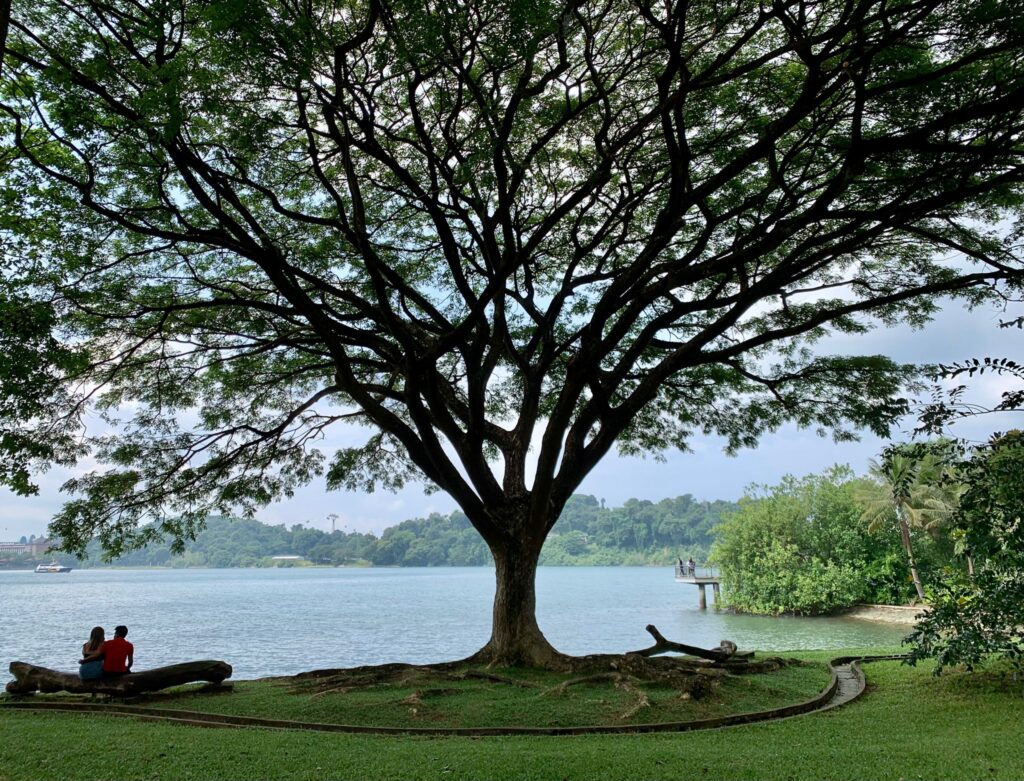
In Qi Gong trees are taken as a role model for our standing posture, as they are strong, stable and balanced, with their roots deep in the earth, and their branches reaching high into the heavens. In the meditation called ‘Standing like a tree’ We try and emulate this in our own standing posture; drawing stability from our connection to the earth through our feet, keeping our centre of gravity low in our belly, our upper body relaxed, our head and shoulders open to receiving energy from the sky, sun and stars.

The meditation
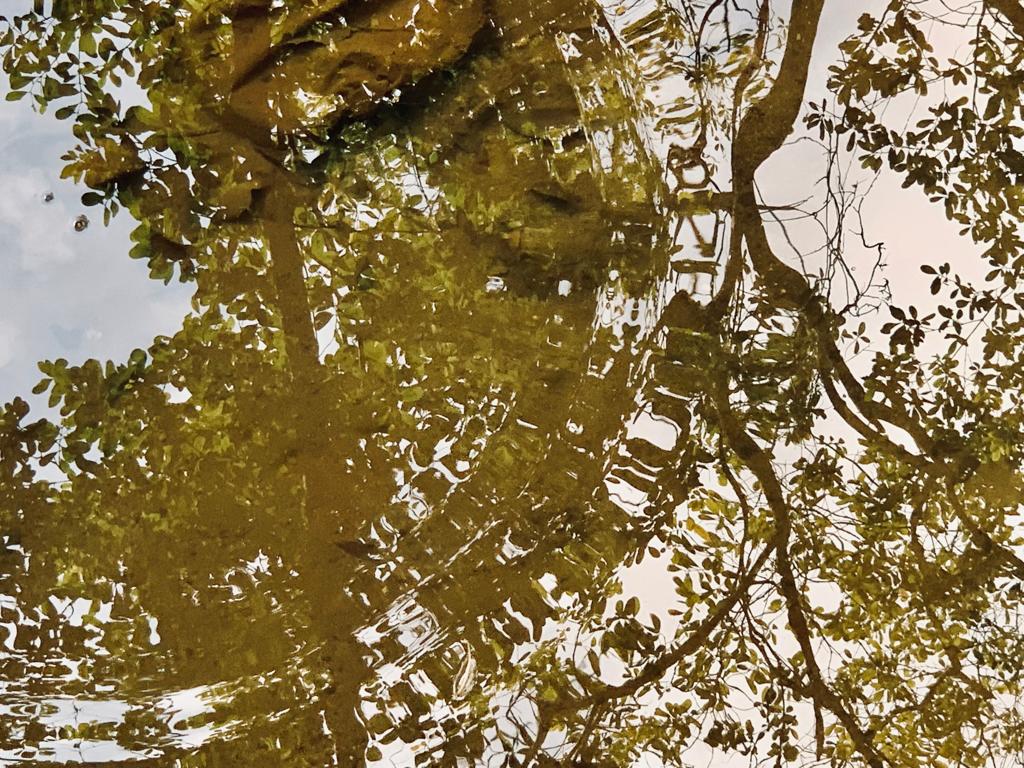
Imagine now that there is a tall, strong, and beautiful tree in front of you (if you can stand in front of an actual tree all the better!). Feel and see its roots extending down into the earth, drawing up energy, water and nutrients. Feel the strength and flexibility of its trunk, and the branches reaching high into the sky, drawing down qi and light from the sky.
Now become the tree. Feel your roots flowing down deep into the earth giving you deep stability and energy. Feel the stability of your trunk, flexible and strong. Feel your branches and leaves reaching up toward the sky and sun, drawing down their qi into your being. Now as you breathe, feel every cell in your body breathing in qi from the earth beneath you and the sky above you. Feel light and qi flowing in and out of every cell in your body as you breathe in and out.

Directing energy with the hands and palms:
We can learn to direct qi though our body in a more powerful way through the positioning of our hands. If you like, you can try the following hand and arm positions as you ‘stand like a tree’. Initially this should not be done for more than five minutes at a time.

  1. Whilst focusing on your roots (the soles of your feet) angle the palms of your hands upward so that they are facing the earth. As you breathe in feel qi rising from the earth below into your body. As you breathe out, feel that earth-qi expanding through each cell of your body.
  2. Now raise your hands and arms up so that they are at shoulder height, parallel to the ground. Face your left palm down, and your right palm up. As you hold this posture, feel qi rising up from the earth beneath you into your trunk/torso, and simultaneously feel the flow of sky-qi flowing down through your crown, head and shoulders. Feel these two energies merging and harmonizing in the centre of your torso.
  3. Now raise your hands above your head, opening the palms to the sky above. Feel as if you have branches and leaves reaching up into the sky, drawing down qi and light from the sun, stars and sky. As you breathe, feel this sky-qi moving and flowing through
  4. Move back to position 2, and then to position 1, ending in the basic standing posture.

Related articleMeditating with trees & plants

© Toby Ouvry 2023, you are welcome to use or share this article, but please cite Toby as the source and include reference to his website www.tobyouvry.com

All upcoming classes and workshops at IMA:

Ongoing – Weekly Tuesday, Wednesday Online class schedule

Ongoing on Wednesday’s, 7.30-8.30pm – Wednesday Meditation for stress transformation and positive energy with Toby (Bukit Timah)

Ongoing on Tuesday evenings, 7.30-8.30pm – Tuesday Meditation for stress transformation and positive energy with Toby  (East Coast)

Ongoing, Tues/Weds evening 7.30-8.30pm– Becoming a self-determining entity – A six-week course in Mindful Self-Leadership

Saturday the 8th July 9.30am-12.30pm – Meditation and Mindfulness for Self-Healing and Creating High Levels of Energy

Saturday July 15th, 9.30-11.30am – Monthly Qi Gong & Taoist Breathwork Clinic & Mini-retreat


Integral Meditation Asia

Online Courses 1:1 Coaching * Books * Live Workshops * Corporate Mindfulness Training *Life-Coaching *  Meditation Technology
Categories
Energy Meditation Integral Awareness Meditation techniques mind body connection Mindful Breathing Mindful Resilience Presence and being present Qi gong Stress Transformation

How to meditate when you are ill or sick

“When you are ill, trust your body and it’s capacity for healing. Relax and get yourself out of the way. Dropping into short spaces of non-doing really helps to stay stable and keep on keeping on, even when your energy is low and you are feeling somewhat dis-oriented”

Dear Integral Meditators,

This weeks article is a personal reflection on some of the basic meditation techniques I use when I get ill. They are relatively simple positions that, if you can remember to do them make a huge difference! If your going through a  stage where your being exposed to bugs at the same time as having to work hard (like I am with a pre-schooler in the house), then having a meditation plan around sickness is a game changer…

If you enjoy the article, then you might be interested in the Meditation and Mindfulness for Self-Healing and Creating High Levels of Energy workshop that I will be doing on Saturday the 8th July 9.30am-12.30pm as a live & live-stream session.

In the spirit of health & energy,

Toby 


How to meditate when you are ill or sick
 
This last week I have been a little under the weather with a flu and cough bug. Even a minor illness has quite a lot of power to incapacitate our meditation efforts, so what I have done below is to outline a few positions I use when I am ill to navigate the process smoothly, and also maintain the basic momentum of my practice even though I’m not feeling great.  
 
Basic positions: Being primarily present & maintaining functional breathing  
Your basic task as a meditator is to establish your awareness as being primarily present in the moment, and secondarily thinking about stuff. This is the easiest and most essential position to stay with. You can take your body and breathing to do this, and it’s surprising how calm it can make you feel, even when you’re not feeling great.
Within your ‘primarily present’ position, you can then pay attention to your manner of breathing, and focus on ‘functional breathing’, which is breathing through your nose, and sending the air down into the lower lungs on your inbreath, connecting your nose to your belly. This is often one of the first things to go when you get ill, sustaining it helps your body to get on with its job of healing.
These two practices are your basic ‘navigation tools’ while you are sick. If you stay with them, the journey whilst you heal will be very much a part of your meditation journey.
 
Extending compassion to yourself & your body
Your body and you are suffering from the illness, so basic care and compassion is a no brainer that is easy to overlook. Will doing this help your body to heal faster? Maybe. It will certainly ease the process of the journey.
 
Trusting your body & non-doing
Trust your body and it’s capacity for healing, relax and get out of the way! One of the best ways to help your body is to do nothing, not just physically, but mentally and emotionally. If you are not able to stop working to recover, then dropping into short spaces of non-doing really helps to stay stable and keep on keeping on, even when your energy is low and you are feeling somewhat dis-oriented.
 
Context through appreciation
Just because you are ill doesn’t mean there is suddenly nothing to appreciate in life. Recognizing this and appreciating what there is to feel good about undoubtedly helps you get through a bout of illness.  
 
Minimalist meditations
If normally I would do let’s say 100 Medicine Buddha Mantras per day, I might change that to five-ten mins of the following pattern:

  • Three mantras, followed by a pause (back to basically present & functional breathing), three mantras, pause, and so forth

Less is more!
 
Mindful pro-activity
Final ‘active meditation’ is to ensure that you put together the best ‘healing protocol’ that you know regarding that illness. Creating and following such a routine is empowering. I have a routine of eastern and western supplementation, power napping (and prioritizing sleep in general) and gentle movement I follow for flu-type sickness. As so as I notice the signs, I activate the plan, and use the strategy to minimize the ability of the sickness to get a grip on my system.
I hope this give you a few ideas for when your next feeling under the weather!

© Toby Ouvry 2023, you are welcome to use or share this article, but please cite Toby as the source and include reference to his website www.tobyouvry.com


All upcoming classes and workshops at IMA:

Ongoing – Weekly Tuesday, Wednesday Online class schedule

Ongoing on Wednesday’s, 7.30-8.30pm – Wednesday Meditation for stress transformation and positive energy with Toby (Bukit Timah)

Ongoing on Tuesday evenings, 7.30-8.30pm – Tuesday Meditation for stress transformation and positive energy with Toby  (East Coast)

Ongoing, Tues/Weds evening 7.30-8.30pm– Becoming a self-determining entity – A six-week course in Mindful Self-Leadership

Saturday the 8th July 9.30am-12.30pm – Meditation and Mindfulness for Self-Healing and Creating High Levels of Energy

Saturday July 15th, 9.30-11.30am – Monthly Qi Gong & Taoist Breathwork Clinic & Mini-retreat


Integral Meditation Asia

Online Courses 1:1 Coaching * Books * Live Workshops * Corporate Mindfulness Training *Life-Coaching *  Meditation Technology
Categories
A Mind of Ease Energy Meditation Life-fullness Mindful Breathing Presence and being present

Four functional breathing meditations

“The average adult breathes 20,000 times a day, and 7 million times a year. We are breathing all the time, and the way we breathe both reflects and affects our physical, psychological, and spiritual equilibrium. Since we are breathing all the time, if we have good breathing habits then our breathing is working to support us in life as we go through it”

Dear Integral Meditators,

This quote from the article below gives an indication of the potential value of mindful breathwork.
 
In the spirit of the the breathing,

Toby 


Four functional breathing meditations
 
Functional & dysfunctional breathing
The average adult breathes 20,000 times a day, and 7 million times a year. We are breathing all the time, and the way we breathe both reflects and affects our physical, psychological, and spiritual equilibrium. Since we are breathing all the time, if we have good breathing habits then our breathing is working to support us in life as we go through it. Correspondingly if we have bad breathing habits, these are undercutting our efforts toward wellness and effectiveness thru-out the day.
I’ve placed some past articles I’ve written on the breathing at the end of this article, but here I just want to outline the basic characteristics of functional and dysfunctional breathing:


Functional breathing is – Breathing in through the nose and down into the belly. You breathe in through the nose, sending the air down into the lower lungs. As you do this you will notice that you activate the diaphragm, and your belly moves out. Then is you breathe in, your belly moves back to resting position.


Dysfunctional breathing is – breathing in through the mouth and into the chest. To quote Alexia Conda on mouth breathing “Mouth breathing is the catalyst for the diaphragm to stop working and become lazy in the process of breathing. Mouth breathing is dysfunctional breathing, or over-breathing, and has a detrimental impact on your health, especially over a period of time.”
 
Some of the benefits of nose to belly breathing

  1. Increases lung function
  2. Promotes diaphragm breathing
  3. Is the body’s filtration system of the air coming into our body
  4. Builds immunity and strengthens the immune system
  5. Helps to balance the acid and alkaline levels in the body
  6. Stimulates the nerve endings at the base of the lungs that are sending messages to the brain to activate the relaxation response
  7. Triggers the release of hormones, endorphins and dopamine, which elevate mood and reduce pain

See full list here.
 
Four functional breathing meditations
Here are four very simple ways to meditate with functional breathing. With each of them the basis is simply establishing a pattern of functional breathing, and using it for the duration of the session.


On the breathing itself – The first method is simply to get comfortable with this pattern of breathing, and establishing it as a habit. As you are doing it during meditation, the functional breathing will help your body-mind to move towards equilibrium and balance, and you simple enhance that by concentrating on the experience with relaxed focus.


For muscle relaxation – Mouth breathing tends to produce excess tension and muscle effort in the chest and shoulders. In this second exercise you practice functional breathing, observing the movement of the belly and diaphragm. As you do so, and relax the muscles in chest and shoulders, noticing how it feels. Of course, you can relax other muscles in the body too, but the main point here is to get your breathing process using only the muscles it needs.


Witnessing– Here we establish functional breathing and either simply watch our thoughts coming and going. As we do so we notice our body’s response to these comings and goings, all the while sustaining our functional breathing pattern.  


Smiling to the internal organs – Establishing functional breathing we then explore our torso cavity. When we notice discomfort or fatigue in any part of the torso, or in an internal organ, we direct our attention there, breathing in and out of that organ as we smile gently to it.
The practice during the day is to simply notice our breathing and try and keep nose-to-belly breathing our default method, establishing it firmly as a habit.
 
Related articleDeep breathing – How to and the benefits
Pro-activity in the face of life & breathing pro-actively

© Toby Ouvry 2023, you are welcome to use or share this article, but please cite Toby as the source and include reference to his website www.tobyouvry.com


All upcoming classes and workshops at IMA:

Ongoing – Weekly Tuesday, Wednesday Online class schedule

Ongoing on Wednesday’s, 7.30-8.30pm – Wednesday Meditation for stress transformation and positive energy with Toby (Bukit Timah)

Ongoing on Tuesday evenings, 7.30-8.30pm – Tuesday Meditation for stress transformation and positive energy with Toby  (East Coast)

Starts Tues/Weds, June 13th/14th – Becoming a self-determining entity – A six-week course in Mindful Self-Leadership

Tues 20th/Weds 21st June – Summer solstice balancing & renewing meditation

Saturday June 24th, & July 15th, 9.30-11.30am – Monthly Qi Gong & Taoist Breathwork Clinic & Mini-retreat


Integral Meditation Asia

Online Courses 1:1 Coaching * Books * Live Workshops * Corporate Mindfulness Training *Life-Coaching *  Meditation Technology

Categories
creative imagery Energy Meditation Enlightened service Life-fullness Meditating on the Self meditation and creativity Meditation and Psychology Meditation techniques Mindful Resilience Mindful Self-Leadership Mindfulness Motivation and scope Presence and being present spiritual intelligence Stress Transformation

Making yourself big

“It can be helpful to work on changing our idea of our inner self, and the scale on which it is able to work”

Dear Integral Meditators, 

Do you have a question about meditation or mindfulness?
If you have a question about meditation & mindfulness, either that you have been wondering about, or you may have asked people before but not received a satisfactory answer? If so then please send me a message with it to: info@tobyouvry.com. I’d like to start integrating some questions into my articles and videos, and it would be fun to do it with questions from you!

New course coming up: Do check out the mindful self-leadership workshop & six week course that I’ll be putting on over the weekend (the workshop), and then beginning next week (six week course).

And finally, please find below the article relating to this weeks Tuesday & Wednesday class. 

In the spirit of mindful questioning, 
 
Toby 


Making yourself big
 
When we get onto some kind of evolutionary path, we start to develop bigger intentions and aspirations. Rather than simply thinking about ourself and our close circle of family and friends in a material and temporary manner, we start to think in terms of benefitting the planet and the evolution of humanity. When this happens it can feel intimidating, ‘What can someone as small as I do in the face of such large forces? Can I really make any kid of significant impact?’
If we continue to identify our ‘self’ as being a small being trapped in a small physical body, then this can indeed feel overwhelming, as there is a mismatch between ‘self’ and ‘goal’. It can be helpful therefore to work on changing our idea of our inner self, and the scale on which it is able to work. A traditional Hermetic meditation technique is to visualize yourself as becoming very big, literally! Here is a source quote from a text called ‘the Corpus Hermeticum’:

Increase thyself to an immeasurable height, leaping clear of all body, and surmounting all time, become eternal and thou shalt know God. There is nothing impossible to thyself. Deem thyself immortal and able to do all things…become higher than all height, and lower than all Depth…to be everything at the same time in earth and sea and heaven. Think that thou art as yet begotten, that thou art in the womb, that thou art young, that thou art old, that thou has died and art beyond death: perceive all things together…and thou shalt know God. But if thou shuttest up thy soul in thy body, and abasest thyself and sayest ‘I know nothing, I can do nothing, I am afraid of earth and sea, I cannot mount heaven, I know not what I was or what I shall be;’ then what hast thou to do with God?

The basic idea here is that, if I identify myself as a small, limited, ignorant being, then I won’t leap beyond that limited idea of myself into my true potential. There are a lot of ideas to work with in the quote, but to make it very simple, as you sit in meditation you could imagine your body becoming larger, to the size of the room, then the house, then the apartment block, then your feet on the floor your head above the clouds, then country-size, then Planet size….You can go as big as you want or feels appropriate. As your body expands, feel your consciousness expanding with it, experience your everyday personal worries as insignificant, and yourself as a powerful effector of positive change on a great scale. If you relax and start to experiment with this, you will find your consciousness, and your sense of who you are and what you are capable of will change significantly. If you do it in a positive, balanced way all these changes can be used for the good.
 
But will I become delusional?
One fear that we may have in doing this is that we will simply become delusional, using this as a way of evading our reality and getting a completely inappropriate sense of who we are and our importance in the world. So of course, everything has to be held in balance here. If we understand the purpose of the exercise is to transcend our limited self-concept, freeing us to work in a way that currently we cannot. Understanding this specific purpose, we can do this exercise safely and get the benefits without falling into any potential dangers. It is also an exercise you can do when your ‘small self’ is simply feeling overwhelmed by life and its challenges. It can change the context of your experience very powerfully for the good.
 
Enjoy working with your ‘big body!

© Toby Ouvry 2023, you are welcome to use or share this article, but please cite Toby as the source and include reference to his website www.tobyouvry.com


All upcoming classes and workshops at IMA:

Ongoing – Weekly Tuesday, Wednesday Online class schedule

Ongoing on Wednesday’s, 7.30-8.30pm – Wednesday Meditation for stress transformation and positive energy with Toby (Bukit Timah)

Ongoing on Tuesday evenings, 7.30-8.30pm – Tuesday Meditation for stress transformation and positive energy with Toby  (East Coast)

Ongoing Tues/Weds, 7.30-8.30pm – Meditations for thriving and energy creation – An eight week course

Saturday June 10th, 9.30am-12.30pm – Mindful Self-Leadership: A Three-hour mindfulness & meditation workshop

Starts Tues/Weds, June 13th/14th – Becoming a self-determining entity – A six-week course in Mindful Self-Leadership

Saturday June 24th, 9.00am-5pm – Taoist Breathwork Day Meditation Retreat


Integral Meditation Asia

Online Courses 1:1 Coaching * Books * Live Workshops * Corporate Mindfulness Training *Life-Coaching *  Meditation Technology
Categories
A Mind of Ease Energy Meditation Enlightened Flow Inner vision Integral Meditation Life-fullness meditation and creativity Meditation and Psychology Meditation techniques mind body connection Mindful Resilience Mindful Self-Leadership Motivation and scope Presence and being present

Hopeless relief & the brightness of optimism

“With hopelessness in place, we can then cultivate it’s ‘bright twin’, balanced optimism. It is remarkable how coming back to and centering yourself in a state of optimism can change your sense of how your life is going, and your sense of what is possible”

Dear Integral Meditators

This weeks article pairs hopelessness and optimism into a dynamic partnership that we can cultivate together to increase our energy levels, and also to make our energy more balanced and consistent. If you enjoy it, then do consider coming along live or online to this Tuesday & Wednesdays Integral Meditation class, where we will be taking it as our object of meditation. 

In the spirit of hopeless optimism, 
 
Toby 


Hopeless relief & the brightness of optimism
 
Appreciating hopelessness
Hopelessness for most of us has a strong negative connotation, and exists in our mind along with things like despair, depression, giving up and so on. As an object of meditation, we can clarify what we are working with here by defining hopelessness as simply ‘the absence of hoping for anything’. Understood this way, the practice of hopelessness then becomes the discipline of not hoping for anything, and therefore allowing our mind and energy to rest, relax and become fully present, absolutely at ease in the not-wishing/hoping to be somewhere else.
If you reflect upon it, much of the ups and downs in our life, the anxiety, the dis-ease comes from the hopes that we have in the face of the ongoing uncertainties. Often-times we get most hurt or have the most trouble recovering when one of our dearest-held hopes is not fulfilled. So, with hopelessness we are learning not to be beholden to our hopes, and also the fears that come from our hopes. We relax into the present and a type of genuine liberation that comes from strategically putting down our hopes for a while and becoming a hopeless person! Once you get a taste for how balancing hopelessness can be, you will start to feel real enthusiasm for it as an object of mindful attention.
 
Balanced optimism
With hopelessness in place, we can then cultivate it’s ‘bright twin’, balanced optimism. Here are a few of the basic characteristics of optimism, taken from my past article on ‘mindful optimism’:

  • Joyful-ness, enthusiasm
  • A sense of being supported by tangible and intangible forces in the world
  • The feeling of a bright and possibly exciting future ahead
  • The reasonable expectation good things are going to happen to you, both now and in the future
  • An expansive, bright, and comfortable feeling in the body, as if you belong in the world, and you can operate there with ease

It is remarkable how coming back to and centring yourself in a state of optimism can change your sense of how your life is going, and your sense of what is possible.
 
Putting them together
In a meditation you can practice putting these two together as a complementary pair. For example, if you had a twenty-minute meditation you could spend:

  • Five minutes putting down all hopes and relaxing into hopelessness
  • Five minutes opening to optimism, both the feeling in general, and also specific areas and instances in your life where you want to cultivate it as a supporting state
  • Five minutes return to hopelessness
  • Ending with five minutes back to optimism

As you go about your daily life, you can use them both to help each other; balanced presence through hopelessness, bright optimism to balance it out.
 
Related readingHopefully hopeless
Mindful optimism
Optimistic stoicism

© Toby Ouvry 2023, you are welcome to use or share this article, but please cite Toby as the source and include reference to his website www.tobyouvry.com


Saturday 13th May 9am-12.30pm – Psychic & Psychological Self-defence half day workshop

Overview: This workshop aims to answer the following questions: 

  • How can I keep myself strong, directed & happy when other people around me are negative, unhappy or even consciously or unconsciously verbally/psychologically attacking me?
  • When I am under stress and can feel my own negativity, anxiety, depression, anger & so on surfacing, how can I defend myself effectively?
  • How can I cultivate awareness of the way environments and places affect my energy & protect myself from unwanted influences?
  • Is it possible to develop my own ‘psychic faculties’ & ‘inner senses’ in a way that is experiential, useful & genuine without having to buy into any form of ‘new age metaphysics’?

Read full details


All upcoming classes and workshops at IMA:

Ongoing – Weekly Tuesday, Wednesday Online class schedule

Ongoing on Wednesday’s, 7.30-8.30pm – Wednesday Meditation for stress transformation and positive energy with Toby (Bukit Timah)

Ongoing on Tuesday evenings, 7.30-8.30pm – Tuesday Meditation for stress transformation and positive energy with Toby  (East Coast)

Ongoing Tues/Weds, 7.30-8.30pm – Meditations for thriving and energy creation – An eight week course

Saturday 13th May 9am-12.30pm – Psychic & Psychological Self-defence half day workshop

Tues 30th/Weds 31st May – Wesak meditation

Saturday May 27th, 9.30-11.30am – Monthly Qi Gong & Taoist Breathwork Clinic & Mini-retreat


Integral Meditation Asia

Online Courses 1:1 Coaching * Books * Live Workshops * Corporate Mindfulness Training *Life-Coaching *  Meditation Technology