Categories
Awareness and insight Concentration creative imagery Energy Meditation Inner vision Integral Awareness Integrating Ego, Soul and Spirit Life-fullness Meditating on the Self Meditation techniques mind body connection Mindful Confidence Mindful Resilience Mindful Self-Leadership Mindfulness

The conscious-self – Your inner CEO

“Your Conscious-self is: The captain of your inner ship directing the crew, The CEO of your consciousness, setting the direction of your inner organization, & the conductor of your inner orchestra, co-ordinating all the different sub-elements of the self into a coherent unity”

Dear Integral Meditators, 

This week’s article explores the theme of the Conscious-self, and it’s importance in the health and wellbeing of our self-sense and personality. If you enjoy it, then do consider coming along to the Mindful Presence Masterclass & group coaching: The Inquisitive Sumo Wrestler – Turning up to life calm & curious , where we will be looking at mindfulness practices to create a high-functioning Conscious self. 

If you like you can combine the Masterclass with the Qi gong class as an  Integral Life Practice Session. It’s a morning you will come out of feeling at the top of your game!

In the spirit of your inner CEO,
 
Toby


The Conscious-self – Captain of your ship & CEO of your body-mind
 
The Conscious-self is that part of you that is aware in the present, and of what it finds in the present moment. This includes:

  • Sensory orientation in your environment
  • Co-ordinating what is going in within the body
  • Content of mind; thoughts, emotions, patterns of mental activity
  • The activity of your subconscious mind
  • Awareness of awareness itself, and where we are directing it through attention in any given moment

 
The Conscious-self is responsible for the wellbeing of our body, mind, and emotions. It oversees our choices and decision-making process. It is in charge of how we deploy our energy and resources. It is in charge of our life-plan and self-discipline. All the different sub-personalities that exist within ourself should be marshalled by and taken care of by the conscious-self. Think of your Conscious-self as being like:

  • The Captain of your Ship directing the crew
  • The CEO of your consciousness, setting the direction of your inner organization
  • The conductor of your orchestra, co-ordinating all the different sub-elements of the self into a coherent unity

 
The Conscious-self (C-S) is supported by your higher mind (your soul-level or philosophical/principled self), and your Overmind, or spiritual being. These appear mainly as aspects of our values, imagination & intuition that the C-S can access and refer to for guidance. The C-S is in charge of co-ordinating our ego and personality in everyday life, directing it towards a sense of effectiveness in the face of challenges, and happiness in its various forms. The Higher and Over-mind’s are like a wise inner ‘Board of directors’ that the C-S can refer to for advice and wisdom.
 
Leading yourself through life
The Conscious-self is, in essence the leader of your consciousness. As the leader, its main functions are:

  • Creating a compelling vision for the rest of the personality to follow, that can take us boldly and enthusiastically into our future from where we stand in the present
  • Getting the ‘buy in’ from the rest of the personality. For example, if a part of us is feeling doubtful about the vision, the C-S needs to listen and help the doubter to come along for the ride.

This leadership function is very much like the CEO of a company; The main job is envisioning the future creatively, getting the buy-in from the team, and then delegating tasks to the team members. The C-S delegates to the other parts of self, tells them what to do and why they are doing it!
 
Contemplation
 
Being present as your conscious mind – In meditation, get used to sitting and centring yourself in your conscious-self. Practice being present to the content of your consciousness, observing the movement of the different elements. Get used to distinguishing the C-S as the Captain and CEO in charge, and the other activities of your consciousness, which are what your C-S oversees.
 
Observing your relationship to choices – Notice how comfortable your C-S is with making choices and taking responsibility. Notice when you want to ‘duck’ choices, feel anxious and confused, want to give away responsibility for what you need to decide on. Work on getting more comfortable, confident, and responsible in this space.
 
Inspiring and supporting – From your position as the C-S, the CEO of consciousness, the captain of your ship, set an inspiring direction:

  • For the next 3-5 years,
  • For the next year, 6 months, 3 months
  • The next month, week, day,
  • For the next activity today!

Create a vision for your life that the rest of your body, mind and personality can follow. Then delegate tasks, and support your sub-selves, getting them on board and up for the program.
 
In conclusion, a high-functioning Conscious-self is the key to effective self-leadership, and to organizing your life effectively. The proposition would also be that the better at self-leadership you become, the better you will tend to be at outer leadership…
 
Article content © Toby Ouvry & Integral Meditation Asia 2023. you are welcome to share, but please cite the source, thanks! Contact info@tobyouvry.com 


Integral Meditation Asia

Online Courses 1:1 Coaching * Books * Live Workshops * Corporate Mindfulness Training *Life-Coaching *  Meditation Technology
Follow Toby onLinkedInYouTubeInstagram

Categories
Energy Meditation Inner vision Insight Meditation Integral Meditation Meditating on the Self Meditation techniques mind body connection Presence and being present Qi gong spiritual intelligence Zen Meditation

Bodies within bodies – Witnessing with your energy bodies

“Liberation in meditation is achieved by progressive, healthy levels of dis-identification with our different bodies, and the recognition that they are ‘in us’ as the witnessing consciousness, rather than we being ‘in them’. This then liberates us into a much more playful, creative and loving relationship to life ourself and others. Healthy dis-identification leads us toward a fuller, richer, deeper experience of life, rather than a blander one!”

Dear Integral Meditators, 

This week’s article explores the concept & experience of ‘energy bodies’, & the relationship between them & inner freedom. 
If you enjoy it, then the Shamanic meditation workshop retreat on Sat/Sun Nov 25th/26th November is about learning to ‘travel’ in your subtle energy bodies, so that may be of interest.
Also, theIntegral Life Practice Sessions, are very much about working with your different bodies, and getting them all into shape!

Finally, this week’s Tuesday & Wednesday class is the Seasonal classSamhain – Healing the wounds & receiving the gifts of our ancestors. It’s a nice way to appreciate and capitalize on our ancestral inheritance…
 
In the spirit of inner freedom,
 
Toby


Bodies within bodies – Witnessing with your energy bodies
 
We can all recognize our physical body, and if someone askes you to focus on your physical body you could probably do it for a while with a reasonable degree of proficiency, distractions aside. According to the meditative traditions, we have not just one body, but a series of bodies across a range of energy from gross to subtle to very subtle. There are different ways of describing it, but here is a relatively typical one:

  • The gross physical body, corresponding to the literal weight-&-mass aspect of our body
  • A vital, or etheric body corresponding to our biological life force, that surrounds and interpenetrates our physical body, but it is an ‘energy body’ rather than a physical body
  • An astral or emotional body, subtler still than the etheric, that surrounds and interpenetrates the physical and etheric
  • psychic or mental body that corresponds to our thinking self, more subtle than the three lower levels, surrounding & interpenetrating them
  • causal, or very subtle body, made of formless consciousness, that contains all the lower levels

There are ‘levels within each level’ so to speak, but the above gives you a basic idea. You can get a sense of each ‘body’ by observing them in meditation:

  • You can practice mindfulness of the physical body, and the sensations within it. You can further observe the more subtle movement of energy within the etheric or vital body
  • You can get a sense of your astral & psychic bodies by watching your thoughts and emotions, and getting a sense of the ‘body of energy’ that holds and contains them
  • As a slightly more advanced practice you can watch consciousness itself, and get a sense of the very subtle ‘body of energy’ that corresponds to the experience of awareness itself.

Practising all three of the above levels over time, you will get a sense of each body being contained, or held by the next level of energy-body.
 
Combining this with witnessing practice
‘Liberation’ in meditation is achieved by progressive, healthy levels of dis-identification with our different bodies, and the recognition that they are ‘in us’ as the witnessing consciousness, rather than we being ‘in them’. For example, we can observe that:

  • Often it feels as if our ‘I’ is sitting inside our physical body, we are it and it is us. If we take a position of ‘self as the consciousness that witnesses the body’, then we can flip this, reflecting that “I am not within my body, my body is within me”. The physical body becomes an object of consciousness (an ‘it’), rather than the subject (an ‘I’)
  • Similarly, we can notice that often our sense of self is locked inside our thoughts and emotions, we mistake our mental and emotional activity for ‘me’. Noticing this in meditation, we can perform a similar ‘flip’ of perception; “I am not my mind and emotions, my mind and emotions are within me.” Again, here we are identifying the ‘I’ as the witnessing consciousness, not the thoughts & emotions that are the ‘content’ of consciousness
  • A ‘level three’ practice is to observe the formless awareness of our consciousness body, and discern that there is ‘consciousness’ and ‘the observer of consciousness’. Once again, after noticing this we do a ‘flip’; “I am not within my consciousness, my consciousness is within me”.

The above practices gradually lead to a sense of self that is related to but different from our gross body, mind and consciousness. Our ‘I’ becomes liberated from, or ‘free’ from identification with the things that are not it.
The practical effect of witnessing our bodies in this way is that our life becomes much less stressful. Even when faced with challenges, sufferings and tribulations, we can sustain a sense of even-mindedness because we take it less personally. There is less ‘I’ caught up with the drama. This then liberates us into a much more playful, creative and loving relationship to life ourself and others. Healthy dis-identification leads us toward a fuller, richer, deeper experience of life, rather than a blander one!

Related articles:  The body is in you – How to go into deep meditation quickly

Watching & then dropping the watcher

Article content © Toby Ouvry & Integral Meditation Asia 2023. you are welcome to share, but please cite the source, thanks! Contact info@tobyouvry.com  


Integral Meditation Asia

Online Courses 1:1 Coaching * Books * Live Workshops * Corporate Mindfulness Training *Life-Coaching *  Meditation Technology
Follow Toby onLinkedInYouTubeInstagram

Categories
creative imagery Inner vision Insight Meditation Integrating Ego, Soul and Spirit Life-fullness Meditating on the Self meditation and creativity Meditation and Psychology Meditation techniques Mindful Confidence Mindful Resilience Mindful Self-Leadership Stress Transformation

Re-working your ego by expanding your self-concept (AKA: Van Halen therapy)

In a situation where your self-concept doesn’t believe you can meet & solve a challenge, you can do one of two things. You can give up, or you can change your idea of yourself, making it one that can work with what is presenting

Dear Integral Meditators, 

This weeks article explores how to work mindfully with your ego & self concept in a creative, empowered way. If you enjoy it, then you are invited to come along to the Tuesday or Wednesday meditation class, where we will be focusing on this subject. 

A couple of dates for your diary, in addition to the Two day meditation retreat on Oct 28-29th:

In the spirit of turning subjects into objects,

Toby 


Re-working your ego by expanding your self-concept (AKA: Van Halen therapy)
 
The Ego is
One of the definitions that I like for the ego is simply ‘the unifying centre of awareness’ of a person. It is the self-sense that sits in the middle of you as you navigate your daily experiences. Ego is not a positive or negative term, but a neutral one. However, we can say that a person has a strong or functional ego, which is a good thing, or a weak, dysfunctional ego which is not a good thing. Our ego also operates according to ethical values, or a lack of ethical values, and this distinction also makes an ego a relatively ‘positive’ or ‘negative’ thing. These values can be held consciously or unconsciously by the ego in question.
 
Your self-concept is
Your idea of who you are. It is the mental template that you have built up over your life about:

  • The ‘type’ of person you are
  • What is possible & not possible for you
  • The story of how you became who you are

…and so on. Your self-concept generally creates a sense of what you can and can’t do in life, what you like and don’t like. When you are faced with a challenge, your ability to deal with that problem is intimately related to your self-concept. Your self-concept projects onto the situation what it thinks and believes. In a situation where your self-concept doesn’t believe you can meet and solve a challenge, you can do one of two things:

  • You can give up, or
  • You can change your idea of yourself, making it one that can work with what is presenting

 
Relating imaginatively to a new idea of yourself
I remember one time when I was feeling particularly overwhelmed by always having to ‘put myself out there’ as a creative and as a small business owner. I really felt out of my comfort zone. It felt alien to my idea of myself, it felt uncomfortable and exhausting. I had a dream one night of being with Daid Lee Roth (ex-lead singer of Van Halen). I was hanging out with him on the void-deck of an HDB block of flats in Singapore. Preparations were underway for a concert, and after chatting enthusiastically to me for a short while, DL-R just got up on stage with his band and did the concert, singing and dancing around half-naked, and just letting go and enjoying himself with the small group of people that was there.
I woke up feeling light, energised, and encouraged. In the subsequent days, week’s, and still to this day (the dream was years ago) I often think of this dream, and imagine myself being like David L-R, just dancing though my life, meeting what is there with enthusiasm, spontaneity, and not being afraid of a bit of exhibitionism.
This idea, and working with it imaginatively really changed my self-concept, and consequently my sense of what is possible, what can energise me not drain me, and so on. In short, I re-worked my ego using a new image-template.
 
Using this expanded self for inner healing & growth
So, the basic idea is that if you have a psychological block that is holding you back, or you don’t think you care ‘capable’ of achieving something, you create an image or idea of yourself that can, and then start relating to that image.
 
Paths beyond the ego
If you are connected to the Soul level of things, quite often you will find that ideas, images, and happenings occur in your life that you can readily use for this type of work, so pay attention!
The ego is the mental/psychological level of self, so there are a number levels of self beyond ego on the soul and spiritual level of things. However, the ego and self-concept are really ‘lynch-pins’ between the upper and lower levels of self, so we really need to work on making our self-concept a healthy, resilient, wise and fun-loving one!
 
Related readingYour bright shadow – The one who can do what you can’t

Article content © Toby Ouvry & Integral Meditation Asia 2023. you are welcome to share, but please cite the source, thanks! Contact info@tobyouvry.com  


In case you missed last week’s video: ‘Subjects to objects – How meditation helps you grow to greater degrees of freedom’

Summary: This video discusses two main subjects related to meditation. The first part explores why and how a meditation practice helps individuals grow as individuals. Meditation is described as a process that transforms subjects of consciousness (e.g., body, emotions, ego) into objects of consciousness, leading to reduced identification with these aspects and increased inner freedom…watch full video


Integral Meditation Asia

Online Courses 1:1 Coaching * Books * Live Workshops * Corporate Mindfulness Training *Life-Coaching *  Meditation Technology
Follow Toby onLinkedInYouTubeInstagram

Categories
Enlightened Flow Integral Awareness Integral Meditation Meditating on the Self Mindful Self-Leadership Presence and being present Videos

‘Subjects to objects – How meditation helps you grow to greater degrees of freedom’

Dear Toby, 

Retreat events this month include a short one: This Saturday morning’s Monthly Qi Gong & Taoist Breathwork Clinic & Mini-retreat, & for the main event for October, theIntegral Meditation Two Day Retreat on the weekend of the 28/29th.
The two day retreat is a great opportunity to really deepen your meditation practice in a profound way. Don’t be deceived by the relative shortness of the time span, the methods we use are designed to get practitioners into the ‘zone’ right from the get go….
The new video I have created, entitled ‘Subjects to objects – How meditation helps you grow to greater degrees of freedom’ explores the essential dynamic of meditation, and how short bursts of meditation such as retreats can really catalyze that process!  

In the spirit of turning subjects into objects,

Toby 

Summary: This video discusses two main subjects related to meditation. The first part explores why and how a meditation practice helps individuals grow as individuals. Meditation is described as a process that transforms subjects of consciousness (e.g., body, emotions, ego) into objects of consciousness, leading to reduced identification with these aspects and increased inner freedom. It aids in personal evolution by moving from one level of consciousness to another. The second part focuses on the long-term effects of a meditation practice, emphasizing that continued meditation leads to increasing degrees of freedom from the objects within one’s consciousness. This liberation allows individuals to endure stress calmly and undertake challenging tasks with ease. The analogy of dissolving salt in water is used to illustrate how a larger, more expansive mind mitigates the impact of suffering and stress. Ultimately, meditation enhances the quality of life, making it less painful and more enjoyable.

Related articleArticle on meditation & the salt analogy


In case you missed it this weeks article: Fourteen types & levels of mindful intention
 
We almost always have an intention, even in our dreams. Some of these intentions are conscious, some of them are unconscious. These intentions drive our actions & acts as the context for our experiences, shaping them substantially. What intentions have you been oriented around today, and how have they been shaping your experiences and actions?
One way you could define mindfulness is ‘Living with conscious intentionally’…read full article

Article © Toby Ouvry 2023, you are welcome to use or share this article, but please cite Toby as the source and include reference to his website www.tobyouvry.com 


Integral Meditation Asia

Online Courses 1:1 Coaching * Books * Live Workshops * Corporate Mindfulness Training *Life-Coaching *  Meditation Technology

Follow Toby onLinkedInYouTubeInstagram

Categories
Awareness and insight Energy Meditation Life-fullness Meditating on the Self Meditation and Psychology Mindful Resilience Mindful Self-Leadership Presence and being present

Distinguishing suppression & repression

“Suppression can be used positively and strategically to enhance our effectiveness and wellbeing in life, whereas repression almost always results in long term inner turbulence and interference in our ability to see and work with our present life as it is”

Dear Integral Meditators, 

The distinction between suppression & repression is an important one for preserving our overall sense of inner balance & harmony. One requires temporarily foregoing emotional expression, the second engaging emotion that we might not want to face. 
If you enjoy the article, then do consider coming along for the Therapeutic mindfulness course starting next week. The aim in a nutshell is to re-wire your relationship to your past in order to engage your present & future with vitality & enthusiasm.

Also, quick reminder of the workshop this weekend: Meditations for connecting to the Tree of Life, and growing your own personal Life Tree
 
In the spirit of controlled flow,

Toby 


Suppression & repression – the difference, & it’s importance
 
Why is it important to know the importance between these two?
Its important to know the difference between these two because one can be used positively and strategically to enhance our effectiveness and wellbeing in life, whereas the other almost always results in longer term inner turbulence and interference in our ability so see and work with our present life as it is.
 
What does it mean to supress?
Speaking in emotional terms, to supress means to be aware that you have that emotion, and to exert self-control in order not to express it in the moment, for example:

  • I might be very angry, but refrain from expressing it right now
  • I might feel sad, but put on a ‘brave face’
  • I might feel affection and want to hug someone, but it just might not be appropriate for the situation

Conscious suppression enables us to go away with our feelings and deal with them later, in a way that is appropriate. It prevents us doing things that we may later regret or consider unhelpful. Done skillfully, we can consider it a good ability to have! This is with the caveat that, having suppressed the emotion we do not then repress it…
 
What does it mean to repress?
To repress an emotion (or an experience that brings up painful emotion) means to push it out of our conscious awareness, and into our unconscious. It means to ‘pretend’ to ourself that the emotion and/or related experience does not exist, that we do not, in fact have then at all.

  • I am angry, but when asked, “Anger, what anger? Why would I be angry”
  • Rather than consciously putting on a brave face while feeling sad, I simply am not sad (even though I am)
  • I am scared by my affection for someone enough to simply squash it and pretend I don’t have it

Repression constricts and uses up our energy (to repress takes effort). It means we have to lie to ourselves. It messes up our rational thinking, turning it into rationalisation of the denial we want to be true. It often results in our feeling and expressing other surface emotions that are really all about the repressed emotion, for example:

  • I am angry (the repressed), so I react by feeling sad and bursting into tears (the expressed)
  • I am sad (the repressed), so I lash out and attack my colleague (the expressed)

Repression makes us suffer, often unconsciously. It makes us less capable in the face of reality. It can create unhealthy physical habits, and in the longer term it can even start to cause physical health issues.
 
Can you supress & then repress?
Of course, you can supress and emotion that you know you’re having, and then conveniently ‘forget’ about it later through repression.
 
Observing your own habits & patterns mindfully
So, the thing here is on a practical level start to watch yourself in real time and assess your patterns of repression and suppression. Just observe honestly and notice if you are using suppression in a healthy or unhealthy manner, and what emotions/experiences you tend to outright repress. Re-working your habits in this domain will serve you well for the rest of your life!
 
Processing old repressions
Of course, all of us have a bunch of repressions from or recent and distant path. Part of the function of Therapeutic Mindfulness is to dig these out and bring them to resolution, so that they stop interfering with our present life and our aspirations for the future. You can see a recent reflection of mine on my own inner child process by clicking the link. The effect of processing past repressions is almost always a resurgence of life force, and an enhanced sense of the joy of being alive.
 
If you enjoy this article, then do consider participating in my new course  An introduction to therapeutic mindfulness & meditation – Re-discovering your inner vitality & joie-de-vivre. It starts 26/27th Sept, and can be participate on live, online or via recording.
 
Related articleFrom resignation to positive acceptance

Article © Toby Ouvry 2019, you are welcome to use or share this article, but please cite Toby as the source and include reference to his website www.tobyouvry.com 


Special Coaching Offer for the Month of September – Free 20minute coaching session with Toby

For the remaining two weeks of September Integral Meditation Asia is offering free 20minute coaching sessions with Toby!
If you have been interested in the idea of getting some personal coaching on a particular issue or challenge, and/or want to explore what 1:1 meditation coaching can do for you in terms of both your quality of and direction in life, this is a great opportunity to find out what it is like with Toby. These 20minute sessions can be done on Zoom or via Whatsapp.
You can find read the general write up of Toby’s Life-fullness Coaching here, & his other forms of coaching here.
You can read feedback and reviews from Toby’s coaching sessions here

To arrange your 20minute session or for further enquiries: Email info@tobyouvry.com, or W-App65-96750279


Integral Meditation Asia

Online Courses 1:1 Coaching * Books * Live Workshops * Corporate Mindfulness Training *Life-Coaching *  Meditation Technology

Follow Toby onLinkedInYouTubeInstagram

Categories
Biographical creative imagery Energy Meditation Inner vision Integral Awareness Life-fullness Meditating on the Self meditation and creativity Meditation and Psychology mind body connection Presence and being present

Progressively recovering your joie de vivre (Meditating with your inner child)

If you are prepared to do the work, it seems there truly are no edges to your level of inner joy

Dear Integral Meditators, 

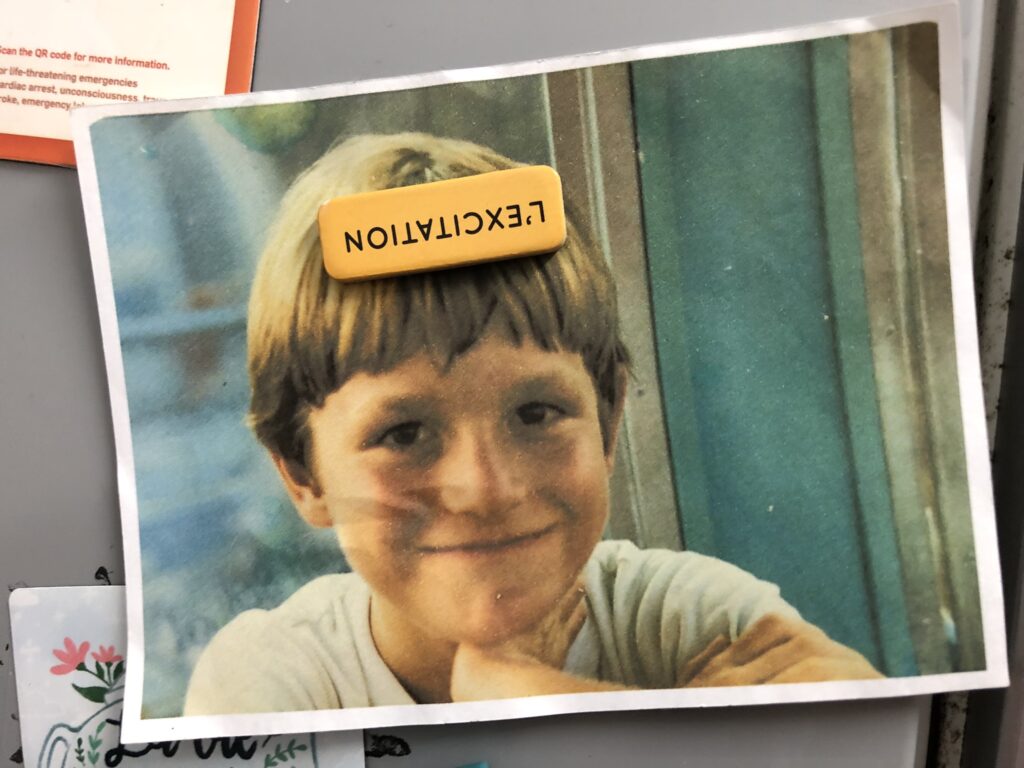
The photo of the child with this article is me when I was around 8 or 9. I keep it on the fridge. I noticed last week that the fridge magnet marked ‘l’excitacion’, or excitement in French had been placed on my forehead, which inspired me to write about my own ongoing journey in the domain of Therapeutic mindfulness. 
If you enjoy the article, then do consider participating in the upcoming Therapeutic mindfulness course, which is full of practices to help you re-connect to the joy of living, and move beyond long-held fears.  

And final heads up for this Wednesday’s Autumn Equinox meditation, either live or online!
 
In the spirit of exitacion,

Toby 


Progressively recovering your joie de vivre (Meditating with your inner child)
 
When I left my life as a Buddhist monk, aged 31, I had been practising eastern meditation forms in a very disciplined manner for a decade. I had experienced many wonderful and amazing meditation states, and had a solid working experience of the awakened state/enlightenment experience. Despite this I noticed that there were still parts of my everyday consciousness that seemed to have been untouched by all this work. I found that certain types of anxiety, irritability and fear had not gone away, and sometimes seemed even worse. This was partly why I left my life as a monk, because I felt I needed to broaden my search for answers to these unresolved areas. The answer was not just ‘do more meditation’, I had to do something differently.

One of the things that I focused on that year was exercises specifically based on the psychological level of my being, based around western theories of trauma and around working with emotional states. I began regular work with my ‘inner child’, exercises including visualization, dialoguing, breathing and body-work. I was very surprised how much work there was to be done! I considered myself pretty well-adjusted as a person, which I think I was, but even so, there was so much to re-connect to, so much to work with, so much to discover. During this period, I really felt I recovered much of my joie de vivre, and got a badly needed ‘second-wind’ for my inner growth that powered me into the next decade of my life.
But the amazing thing about this is that even though I felt that I now had a very good relationship to my inner child (and other sub personalities), it is a process that does not seem to end. Fast forward to the beginning of this year. At the beginning of the year, I often check in with my ‘inner family’ in meditation. When meeting my inner child, I had this experience:

I am walking along the middle of a shallow river that I used to play in as a child. I come to a bridge from which I used to look down at the big fish swimming in and out of the dark water underneath. On the sand to one side of the bridge I see my inner child. I wade over to him, and we squat for a while looking under the bridge. Then he smiles to me and we begin to walk into the water and under the bridge (I never went under the bridge as a child). We stand in silence looking and feeling the fish around our feet, in gentle awe and excitement. After while we walk on and out from the other side of the bridge. We walk on to a meadow next to the river. My child-self utters a cry, and starts to run around the meadow, whooping, and laughing out of pure joy, I watch on, quite amazed, and aware of a new level of joy in myself that I have never experienced before.

After the meditation, this new level of joy within myself has persisted, and it seems clear to me that some level of inhibition or fear in my child has been resolved. This is a full fifteen years after starting my active relationship with him. So even now my life and experience are expanding and growing from my inner work with my child self and other related therapeutic mindfulness practices aimed at building a strong inner-self psychologically. If you do the work, it seems there truly are no edges to your level of inner joy.
   
 
Related articleMeditating with your child self
Creating a therapeutic mindfulness space
Wake, up, Grow up, Clean up, Flow – The Art of Enlightened Flow


Special Coaching Offer for the Month of September – Free 20minute coaching session with Toby

For the remaining two weeks of September Integral Meditation Asia is offering free 20minute coaching sessions with Toby!
If you have been interested in the idea of getting some personal coaching on a particular issue or challenge, and/or want to explore what 1:1 meditation coaching can do for you in terms of both your quality of and direction in life, this is a great opportunity to find out what it is like with Toby. These 20minute sessions can be done on Zoom or via Whatsapp.
You can find read the general write up of Toby’s Life-fullness Coaching here, & his other forms of coaching here.
You can read feedback and reviews from Toby’s coaching sessions here

To arrange your 20minute session or for further enquiries: Email info@tobyouvry.com, or W-App65-96750279


Integral Meditation Asia

Online Courses 1:1 Coaching * Books * Live Workshops * Corporate Mindfulness Training *Life-Coaching *  Meditation Technology
Follow Toby onLinkedInYouTubeInstagram

Categories
Energy Meditation Enlightened Flow Inner vision Meditating on the Self Meditation techniques spiritual intelligence Tree of Life

Meditating on the Tree of Life

“Meditation on the Tree of Life aims to balance and harmonize various aspects of the self by connecting with different universal energies represented by the tree’s structure”

Dear Integral Meditators,

I’m just preparing for my upcoming workshop on the Meditations for connecting to the Tree of Life, and growing your own personal Life Tree, & am placing below an article introducing the idea of meditating with the Tree. The full article is quite long, so I have placed a brief summary below, with the full detailed article beneath.

It’s one of my favorite meditation practices, I hope that by posting it here I’ll inspire a few to find out more about it! When reading, you can use the above picture for reference.

In the spirit of the Life Tree,

Toby


Article & meditation summary:

The Tree of Life is a significant concept in Western meditation traditions. The Tree of Life is represented as a diagram with three pillars and three triangles, each symbolizing various aspects of the universe and individual development. Here’s a brief summary of the key points and stages of the meditation:

  1. Visualization of the Tree: Start by visualizing a beautiful tree in nature. Imagine a pillar of light extending from its roots to the sky, with spheres of earth, lunar, solar, and stellar energies along the central column. Two side pillars also contain orbs of energy.
  2. Merging with the Tree: Visualize yourself sitting at the base of the tree and gradually merging into it, aligning with the central column of light. Feel the energies of the earth, moon, sun, and stars flowing into your being, filling you with light and energy.
  3. Ascending and Descending the Central Pillar:
    • Lunar/Personality Sphere: Move your consciousness up to the lunar sphere, where silvery moon energies strengthen and balance your body,  mind (orange light) and emotions (green light).
    • Solar/Soul Level Sphere: Ascend further to the solar sphere, where golden sun energies balance with your willpower and sense of justice (red/crimson light) and your sense of mercy and compassion (blue/indigo light).
    • Stellar/Spiritual Sphere: Rise to a sphere beneath the stellar sphere, where white stellar energies balance with your feminine energy and presence (dark light) and masculine energy and creativity (silvery-grey light). Achieve balance and harmony between these aspects.
  4. Merging with the Tree/Body Mandala Practice: Descend the central pillar until you’re back at the base, and then expand your consciousness to become the Tree of Life. Your spine and core represent the central column, while your left and right halves embody the energies of the left and right columns. This step integrates the tree’s energies into your being.
  5. Conclusion: Gradually return your awareness to your physical surroundings, relax your visualization, and conclude the meditation.

This meditation on the Tree of Life aims to balance and harmonize various aspects of the self by connecting with different universal energies represented by the tree’s structure.


Meditating on the Tree of Life (full article)

The Tree of Life is a major strand of the western tradition of meditation. It is essentially a diagram consisting of:

  • Three pillars: A central pillar of equilibrium/balance, a right-hand pillar (as you look at it) that is ‘masculine’ or yang in nature, and a left-hand pillar that is ‘feminine’ or yin in nature
  • Three triangles stacked vertically: A bottom one representing the body, mind and emotions, or ‘personality’. A middle one representing justice, compassion & beauty, or the ‘soul’. The third, top triangle represents the energy of primal yin, yang and formless (causal) consciousness, or ‘spirit’

Arranged on the pillars and triangles are 10/11 ‘Sephiroth’ or spheres, each representing a particular universal energy. You can see this depicted in the picture that accompanies this article, which is one that I drew many years ago.

The great thing about the Tree of Life is that it depicts all major aspects of the Universe, and of ourselves as individuals. If we know the Tree, we know where to put all of our meditation practices and other activities, and how to develop ourselves holistically in a balanced manner as a result. Below is a brief meditation on the Tree, traveling up the central column, that is a good basis from which other Tree-practices can be developed.

Basic meditation on the Tree of Life

Stage 1: Visualizing the Tree

Imagine you are facing a beautiful tree, somewhere in nature, if you like pick one that you know and love. Visualizing it in front of you, feel its energy. See a pillar of light extending from the roots up the trunk and into the sky. At the bottom of the pillar, just beneath the Earth, is a sphere of earth-energy. A two/three metres up the column is a lunar sphere made of silvery light. Midway up the trunk us a sphere of golden sun energy. Toward the top of the canopy is a sphere of white, star-energy. Either side of the central pillar you can see two other pillars of light, each with three beautiful orbs of energy along its length.

Stage 2: Merging with the Tree

Now visualize yourself going over and sitting at the base of the tree, with your back resting on the tree trunk. After a while feel yourself moving backwards into the tree, so that you are sitting in the centre of the central column of light, with the energies of the earth rising beneath, grounding you, and the energies of the moon, sun and stars flowing into you from above. Feel your own body glowing with light and energy as this happens.

Stage 3: Ascending & descending the central pillar

The Lunar/Personality sphere

Feel your body ascending the central pillar to the lunar sphere, feel your energy-body being strengthened by the silvery energies of the moon. Feel two streams of light flowing into the sphere.

  • To your right, feel a flow of orange light flowing into the sphere, strengthening, and balancing your mind
  • To your left feel a flow of green light flowing into the sphere, strengthening, and balancing your emotions

Feel your mind, body and emotions coming into balance and harmony as these energies flow together within you.

The Solar/Soul level sphere

Feel your body rising again up the central pillar to the solar sphere. feel your energy-body being balanced by the beautiful golden energies of the Sun. Feel two streams of light flowing into the sphere.

  • To your right, feel a flow of red/crimson light flowing into the sphere, strengthening, and balancing your willpower and sense of justice
  • To your left feel a flow of blue/indigo light flowing into the sphere, strengthening, and balancing your sense of mercy and compassion

Feel your willpower, compassion, and sense of beauty/harmony coming into balance as these energies flow together within you

The Stellar/Spiritual sphere

Feel your body rising again up the central pillar to a sphere of light a little way beneath the stellar sphere. feel your energy-body being balanced by the beautiful white energies of the stellar sphere descending into you directly from above. Then feel two streams of light flowing into the sphere.

  • To your right, feel a flow of dark light flowing into the sphere, strengthening, and balancing your feminine energy and presence
  • To your left feel a flow of silvery-grey light flowing into the sphere, strengthening, and balancing your masculine energy and creativity

Feel your feminine, masculine, and spiritual/stellar energy coming into balance and harmony as these energies flow together within you. At this stage you may like to enter a period of silent awareness for a while.

Stage 4: Merging with the Tree/ body mandala practice

Without being in a hurry, feel yourself descending the middle pillar of the Tree, until you are sitting once more within the base at ground level. Now imagine that your body grows and expands, so that you become the Tree of Life, with your spine and vertical core as the central column, and the left and right halves of your body containing the energies of the left and right columns respectively.

When you are ready, become aware of your immediate physical surroundings, relax your visualization, and bring the meditation to a close.

© Toby Ouvry 2023, you are welcome to use or share this article, but please cite Toby as the source and include reference to his website www.tobyouvry.com


Integral Meditation Asia

Online Courses 1:1 Coaching * Books * Live Workshops * Corporate Mindfulness Training *Life-Coaching *  Meditation Technology
Follow Toby on: LinkedIn, YouTube, Instagram

Categories
A Mind of Ease creative imagery Energy Meditation Inner vision Integral Awareness Life-fullness Meditating on the Self meditation and creativity Meditation and Psychology Meditation techniques Mindful Resilience Presence and being present Stress Transformation

Mindfulness of mood & atmosphere of your life-story

“You might think about your inner mood as being like the weather. If you are playing a game of tennis in a sunny, lightly breezy day, its completely different from playing it on a rainy, very windy day. We can usually shift ourself at least partially toward a better mood if we try, and this then affects everything for the better”

Dear Integral Meditators, 

This week’s newsletter slightly early, and has three things in it:

  • Firstly, an article on the importance of mindfulness around your mood.
  • Secondly if you are interested in meditation sound technology, I have been using I-awake for many years now. They have some great products, and they are all on a 30% off Labour day sale until 4th September (US time). This technology is also a great way to help change the mood and ambience of your life for the better!
  • Thirdly, beneath the article you can find all the courses and workshops for September, quite an exciting line-up, starting with the Qi gong workshop on the 9th September!

 
In the spirit of mood & atmosphere,

Toby 


Now Live: iAwake Labor Day Weekend Sale
 
From August 31 – September 4, 2023, we are holding our annual Labor Day Weekend Sale, one of our biggest sales this year. This sale features 30% OFF on Digital Tracks and 25% OFF on CDs + Digital. Check out our catalog and take advantage of this annual opportunity to receive huge discounts on iAwake tracks and add to or complete your iAwake toolkit.
 
Discount Coupon Code for DIGITAL (30% OFF): IAWAKELABOR2023


Mindfulness of mood & atmosphere of your life-story
 
When trying to improve our daily experience through mindfulness quite often peoples focus is upon

  • Focusing better
  • Thinking more positively
  • Thinking less
  • Relaxing more

These are all noble pursuits of course, but what I find often gets missed is attention to the mood and the inner atmosphere that we do things. If you think about it our mood is very important. For example, if your mood is habitually anxious and fearful then this naturally

  • Interrupts your focus
  • Makes it difficult to think positively
  • Creates low-grade mental busyness/ habitual overthinking
  • Makes it tough to relax

In my classes and coaching recently, one of the things that I have been emphasizing to students and clients is awareness of their habitual moods, and deliberately moving them toward a lighter more benevolent inner atmosphere. For example, if having noticed our inner mood in the moment we then direct it towards a combination of

  • Curiosity & playful inquisitiveness
  • Warmth & care

Then if we can establish that as an atmosphere in our body-mind, it then starts to colour our daily experience and activities

  • Warm & curious atmospheres are easy to build relaxed-focus in
  • Its natural and quite easy to think positively
  • We feel less compelled to think all the time
  • Activities just ‘feel’ naturally more enjoyable

 
The weather you are playing the game in
You might think about your inner mood as being like the weather. If you are playing a game of tennis in a sunny, lightly breezy day, its completely different from playing it on a rainy, very windy day. We can’t always completely control our mood, but we can usually shift ourself at least partially toward a better mood if we try, and this then affects everything for the better.
Playing with moods therapeutically
In my article last week on Therapeutic mindfulness I outline six practices which might also be thought of as ways of creating inner moods that are both strengthening and healing:

  • Grounded & sensory
  • Safety & non-emergency
  • Warmth & compassion
  • Appreciation
  • Curiosity & courage
  • A sense of being supported

All of these are possible moods that you can cultivate. Of course, there are many more that you could choose to focus on, according to your needs and inclinations. It’s something to have fun cultivating!


If you enjoy this article, you might enjoy the upcoming Therapeutic mindfulness course beginning on 26/27th September!

Related articleMindful of your moods, emotions and dispositions

© Toby Ouvry 2023, you are welcome to use or share this article, but please cite Toby as the source and include reference to his website www.tobyouvry.com


All upcoming classes and workshops at IMA:

Ongoing – Weekly Tuesday, Wednesday Online class schedule

Ongoing on Wednesday’s, 7.30-8.30pm – Wednesday Meditation for stress transformation and positive energy with Toby (Bukit Timah)

Ongoing on Tuesday evenings, 7.30-8.30pm – Tuesday Meditation for stress transformation and positive energy with Toby  (East Coast)

Ongoing Tues/Weds in August/Sept – The Wisdom of Awakening Series: Meditations for developing wisdom around inner-growth, happiness & fulfillment

Saturday August 26th, 9.30-11.30am – Monthly Qi Gong & Taoist Breathwork Clinic & Mini-retreat

Saturday Saturday 9th September, 9am-12.30pm – Qi Gong for Improving your Health and Energy Levels and for Self-Healing

Wednesday 20th September, 7.30-8.30pm – Autumn Equinox balancing & renewing meditation

Starting Tues 26th & Weds 27th September – Re-discovering your inner vitality & joie-de-vivre – An introduction to integrative therapeutic mindfulness & meditation

Saturday 30th September & Sunday 1st October, 9.30am-1pm – Meditations for connecting to the Tree of Life, and growing your own personal Life Tree

Saturday October 7th, 9.30-11.30am – Monthly Qi Gong & Taoist Breathwork Clinic & Mini-retreat

Saturday & Sunday October 28th & 29th – Integral Meditation Two Day Retreat

Tues/Weds Oct 31st, Nov 1st – Seasonal classSamhain – Healing the wounds & receiving the gifts of our ancestors

Tues/Weds Nov 14th/15th – Seasonal classDeepavali -connecting to your inner light


Integral Meditation Asia

Online Courses 1:1 Coaching * Books * Live Workshops * Corporate Mindfulness Training *Life-Coaching *  Meditation Technology
Categories
A Mind of Ease Insight Meditation Integral Awareness Life-fullness Meditating on the Self Meditation and Psychology Meditation techniques Mindfulness Presence and being present Stress Transformation Using the Energy of Negative Emotions

Creating an inner therapeutic mindfulness space – six positions

The purpose of therapeutic mindfulness is to go back to previous stages in our development in order to reconnect to feelings, emotions, body sensations & memories that we have repressed, denied, or lost touch with. The healthy re-integration of these experiences sets the scene for a renewed sense of wellbeing within our present life, & for safely engaging in higher, deeper levels of personal growth.”

Dear Integral Meditators, 

On the 26th/27th September I will be starting a 10 module program – “An introduction to integrative therapeutic mindfulness & meditation – Re-discovering your inner vitality & joie-de-vivre“, the article below explores how we can create a context for mindfulness as a therapeutic practice. Many of the positions below I’ve written about reasonably extensively before, but the ordering of them is specific to doing therapeutic mindfulness. 

If you enjoy the article I invite you to click on the link & find our more about the course!

In the spirit of our inner support system,

Toby 


Creating an inner therapeutic mindfulness space – six positions
 
The purpose of therapeutic mindfulness is to go back to previous stages in our development in order to reconnect to feelings, emotions, body sensations and memories that we have repressed, denied, and lost touch with. The healthy re-integration of these experiences sets the scene for a renewed sense of wellbeing within our present life. It also lays the foundation for then exploring the higher, deeper levels of meditation states (psychic, subtle, causal, non-dual) in a way that is balanced and sustainable. Below are a set of qualities to cultivate when engaging in therapeutic mindfulness. Each one of them has benefits in an of themselves, but practiced together they make for a good combination within which we can then go on to do some inner healing work.
 
Grounding in the senses – Work that involves contacting potentially volatile emotions or feelings needs to be done whilst grounded enough in the present moment in order to feel the stability of our senses supporting us, so that we don’t feel completely ‘carried away’ by the experience.


Safety – Repressed emotions can feel dangerous, so connecting to the basic safety of this moment – recognizing that there are no immanent threats to our present wellbeing – is a fundamental position to be familiar with.


Warmth & compassion – Establishing as far as we can a feeling of basic warmth and compassion toward ourselves at the beginning of the session, and as we encounter our experiences during the TM session.


Appreciation – Having an appropriate sense of our life being a good place with the existence of people, places and experiences that make it rich and enjoyable. This then means that when we encounter challenges in our therapeutic mindfulness practice, it is always contextualized by this sense of overall appreciation/ positivity.


Curiosity & courage – TM can feel like heavy work sometimes, so cultivating a sense of lightness and curiosity is helpful in this regard. It helps us avoid getting overly caught up and identified in the experience. Similarly, courage can help us hugely as, by its nature TM involves contact and sometimes confrontation with parts of us that we fear or would otherwise wish to avoid. This doesn’t mean you have to be some kind of big hero, just that you have whatever courage you possess present and available to you when doing TM.


A sense of being supported – It can be useful if you have any belief or sense of a higher, deeper supporting being or intelligence to invoke or feel the presence of it/her/him before you engage in therapeutic mindfulness practice. This is personal and can be done any way that the practitioner finds acceptable or appropriate.
 
With these six positions available to you and in place, you should then feel confident in engaging in any kind of therapeutic mindfulness practice that you might want to, with a sense of these qualities supporting and enhancing your practice.

© Toby Ouvry 2022, you are welcome to use or share this article, but please cite Toby as the source and include reference to his website www.tobyouvry.com


All upcoming classes and workshops at IMA:

Ongoing – Weekly Tuesday, Wednesday Online class schedule

Ongoing on Wednesday’s, 7.30-8.30pm – Wednesday Meditation for stress transformation and positive energy with Toby (Bukit Timah)

Ongoing on Tuesday evenings, 7.30-8.30pm – Tuesday Meditation for stress transformation and positive energy with Toby  (East Coast)

Ongoing Tues/Weds in August/Sept – The Wisdom of Awakening Series: Meditations for developing wisdom around inner-growth, happiness & fulfillment

Saturday August 26th, 9.30-11.30am – Monthly Qi Gong & Taoist Breathwork Clinic & Mini-retreat

Saturday Saturday 9th September, 9am-12.30pm – Qi Gong for Improving your Health and Energy Levels and for Self-Healing

Wednesday 20th September, 7.30-8.30pm – Autumn Equinox balancing & renewing meditation

Starting Tues 26th & Weds 27th September – Re-discovering your inner vitality & joie-de-vivre – An introduction to integrative therapeutic mindfulness & meditation

Saturday 30th September & Sunday 1st October, 9.30am-1pm – Meditations for connecting to the Tree of Life, and growing your own personal Life Tree

Saturday & Sunday October 28th & 29th – Integral Meditation Two Day Retreat


Integral Meditation Asia

Online Courses 1:1 Coaching * Books * Live Workshops * Corporate Mindfulness Training *Life-Coaching *  Meditation Technology
Categories
creative imagery Inner vision Integral Awareness Life-fullness Meditating on the Self meditation and creativity Meditation and Psychology Meditation techniques Mindful Resilience

Meditating with your teenage-self

“The ‘teenage self’ is one of several aspects of our inner-self or psyche that, if we take the time to connect to, we can find ourselves being enriched. For example, if I am well connected to my inner teenager, then I can draw upon his innate curiosity, ambition and appetite for life in a way that other middle-aged folk who lack a vital connection to their inner teenager cannot!”

Dear Integral Meditators, 

This weeks article comes under the domain of what you might call ‘Theraputic mindfulness’, & has strong, explicit connections to the wellbeing of our psychological self. It relates to the area of coaching work that I offer in my Mindful self-knowledge program.  

In the spirit of inner vitality, 

Toby 


Meditating with your teenage-self
 
Definitions of your youthful and teenage self:
The ‘teenage self’ is one of several aspects of our inner-self or psyche that, if we take the time to connect to, we can find ourselves being enriched in a number of ways. Some of these ways are therapeutic, as in healing inner wounds and burdens from our teenage past. Other ways include connecting to the strengths of our youthful/teenage self that we can draw upon in our present stage of life. For example, at my present age of 51, if I am well connected to my inner teenager, then I can draw upon his innate curiosity, ambition and appetite for life in a way that other 50-somethings who lack a vital connection to their inner teenager cannot!
Our teenage self is different from our ‘inner child-self’ (who is worked with commonly in a therapeutic context) in the sense that our inner child is a pre-sexual being, whereas our inner teenager is an adolescent and therefore sexually defined/sexually activated. Consequently, the concerns of the inner child and teenager, and their perspectives/needs differ substantially.
Below I point out a few definitions and ways of beginning to relate to your inner teenager.
 
The youthful or teenage self is that part of us that has matured from the child to the early-adult stage of human development. It sees the initial development of an adult personality; it is concerned with things such as:

  • Defining and distinguishing ourself from others,
  • Appetite for and ambitions in life,
  • Career/life goals,
  • Sexuality and romantic relationships
  • Willingness to keep learning new things

 
A psychological definition:
 
The teenage-self is the component of the psyche containing the “personality” of the adolescent one once was, with that teenager’s range of values, emotions, needs and responses; not a generic teenager or universal archetype, but a specific, historical one, unique to an individual’s history and development.
– Nathaniel Branden, definition taken from the Six Pillars of Self Esteem, page 265ff.
 
Meditation pointers for the teenage-self:
 
Free association: Bring to mind the words ‘my teenage, or youthful-self ’. Holding it within your awareness allow your mind to start to free –associate feelings, images, memories, thoughts, and desires around your teenage-self. At this stage the main thing is to focus on being curious as to what sort of memories, feelings and so on arise when you contemplate the idea of your teen self; whether these feelings and memories are pleasant or unpleasant is secondary, the main thing is simply to see what comes up without editing any of the content.
If you like you can use the following sentence-stems as departure points for your free association:

  • When I think of the young adult or teenager within me –
  • One of the things that I found challenging about growing to adulthood was –
  • One of my favourite memories about my teenage or young adult life was –

Connecting to your teenage-self: Imagine yourself in a place that you knew and loved as a teenager. As you sit or stand in that place, imagine your teenage self comes to meet you there. Spend time with your teenager, talking, connecting, and building trust. Starting questions for the interaction might include:

  • What do you need from me to help feel happy and secure?
  • Is there anything that you want to say to me or offer me at this time?
  • What do you think about this (choose your domain) aspect of our life?
  • How can we find more time for play & exploration in our life together?

Like outer teens, your inner–teen needs parenting with an appropriate amount of firmness and love, but with more freedom and autonomy given than you would with your child self. By connecting to your inner-teenager you can also become a better parental self, both toward your inner-teens, and toward outer teenagers!
 
Related articlesMeditating with your child-self
Meditating with your parental-self

© Toby Ouvry 2023, you are welcome to use or share this article, but please cite Toby as the source and include reference to his website www.tobyouvry.com


Integral Meditation Asia

Online Courses 1:1 Coaching * Books * Live Workshops * Corporate Mindfulness Training *Life-Coaching *  Meditation Technology