Categories
Beginners mind, resilient body Concentration creative imagery Enlightened Flow Integral Meditation Life-fullness Meditating on the Self Meditation techniques Mindful Breathing Mindful Resilience Presence and being present Zen Meditation

The swinging door – when the breathing does itself

“Rather than trying to focus on your breathing, simply try & experience the breathing doing itself, just BE the breathing. This often results in better focus, without having to try so hard.”

Dear Integral Meditators, 

How much will power do you need to exert in meditation, and in life? This week’s article explores what happens when you take your ‘I’ out of your efforts to meditate, and instead let it ‘do itself’.
 
If you enjoy the article, we will be exploring these subjects in both the weekday (Tues&Weds) and Saturday sessions this week.

In the spirit of the singing door, 

Toby


The swinging door – when the breathing does itself
 
“What we call ‘I’ is just a swinging door that moves when we inhale and when we exhale” – Shunryu Suzuki, from Zen Mind, Beginners Mind
 
Making your meditation focus more ergonomic
 
When we try and focus in meditation, or in a daily task, often we try in a particular way, where the feeling is ‘I’ am trying to focus on ‘it’. So as the ‘I’ in meditation we exert effort to focus on the breathing and cut out distractions as an act of will.
You can try an interesting experiment; rather than trying to focus on your breathing, simply try and experience the breathing doing itself, just BE the breathing. You can be the breathing doing itself, or, alternatively ‘do’ the breathing doing itself. The proposition here is that our ‘I’ or the idea of our I is actually surplus to requirements, unnecessary. A side effect of this is that you may find that your attention to the breathing starts to become free-er, more relaxed, effortless. You find your focus becomes better quality, but you don’t have to try so hard.
 
The breathing as a swinging door
 
In Zen meditation the image of a swinging door is used; you focus on your breathing in the throat as if it were a swinging door; swinging in as you inhale, out as you exhale. With the technique of the breathing doing itself, you simply watch that swing in and swing out, attuning to the rhythm and as far as feels possible leaving your I out of the equation. Put another way you could relate to your ‘I’ as being nothing more than the swing-door of the breath.
 
Bringing your inner and outer worlds together
 
Continuing with the Zen image, you can then imagine the breath flowing from your outer world to your inner world as you breathe in, and from your inner world to your outer world as you breathe out. You can then develop this in the way described by Shunryu Suzuki in the same passage as the first quote at the top of the article:
 
“The inner world is limitless, and the outer world is also limitless. We say “inner world” and outer  world,” but in reality there is just one whole world, our throat is like a swinging door. The air comes in and goes out like someone passing through a swinging door. If you think “I breathe,” the I is extra.”
 
Using the breathing in this way we can go from the breath moving from our “inner” to out “outer” world and back again, to simply the movement of the breath to and from a single world, a unified world. It is just the movement of the breath in a unified world, in a state of one-ness with the world, with no “I” necessary.
 
A heart union
 
I also like to do this practice down at the heart level. At the heart level we connect with our feeling nature, so the meditation takes on a more emotive dimension when I go down there. As I breathe in, I feel a soft light and energy expanding out into the world, as I breathe in I feel the light and life from the outer world flowing back into my heart. This then simply becomes the one-world, the one being expanding and contacting as I breathe. You can try it and see if you like it, or work with the traditional Zen techniques outlined above.

© Toby Ouvry 2026, you are welcome to use or share this article, but please cite Toby as the source and include reference to his website www.tobyouvry.com


Follow Toby onLinkedInYouTubeInstagram

Integral Meditation Asia

Online Courses 1:1 Coaching * Books * Live Workshops * Corporate Mindfulness Training *Life-Coaching *  Meditation Technology
Categories
A Mind of Ease Beginners mind, resilient body Energy Meditation Integral Meditation Meditation techniques mind body connection Mindful Breathing Mindful Resilience Primal Spirituality Qi gong

Creating ‘healing & energy snacks’ – meditating on Jing qi

Dear Integral Meditators, 

Movement coaches that I follow often recommend ‘movement snacks’, meaning short mobility and movement breaks in your day to keep your body and joints nourished. I think this can be applied just as easily and importantly to nourishing our mind, heart and inner energy. To this end, here is an example of a short meditation snack to promote healing and energy:

Stand or sit comfortably, feet shoulder-width apart, spine straight, shoulders relaxed.
Place hands over the lower abdomen.
Inhale slowly through the nose, letting the belly expand.
Exhale gently, drawing the belly inward.
Repeat for 6–12 breaths, focusing on building warm, grounding energy in the belly.

 
Try it 3x a day for the next 5 days and notice how you feel!
 
There is an article of mine explaining a bit more about energy in the belly (from a qi gong perspective) below if you want to find out a bit more.
 
And if you want to learn a whole range of healing and energy snacks, as well as full meditations, then I invite you to this Saturdays workshop Meditation and Mindfulness for Self-Healing and Creating High Levels of Energy, live or online.
 
In the spirit of healthy snacking,
 
Toby


Article: Guided qi gong healing visualization and breathing exercise for developing, maintaining and increasing our Essential energy or “jing-qi”
 
The main body of this article is going to be a practical guided exercise, but first I want to mention expand a little on the term “jing qi” (see also my article of the four levels of qi).

What is jing qi?

Jing qi translates as meaning “essential energy.” Our essential energy is derived from the potency of the fluids in our body that carry the energy of our life force, particularly our sexual fluids, hormones and neuro-chemicals.
Qi gong exercises and lifestyle advice often centre on the development of this form of qi within our energy system, as when it is strong our immunity system will be strong and our energy levels will be high.
Our jing qi is supported by our “Yuan qi” or primordial energy (the pre-natal life force that we received from our parents) and “Jen qi” or true energy (postnatal energy derived from breathing and metabolism of food). Thus, qi gong exercise nurtures our jing qi, and we support this by good diet and breathing habits (yuan qi), and the preservation and care of our yuan qi.
In general our jing qi pervades our body and all of the subtle energy meridians that interpenetrate our physical being. However, in qi gong the focus or fulcrum of our jing qi is explained to be in our lower dan-tien (dan tien meaning elixir filed or energy centre). For this reason the exercise below uses the lower belly area as its point of focus.

Qi gong healing visualization and breathing exercise for developing, maintaining and increasing our Essential energy

Preparation
Sit or stand in a relaxed position, with the head, neck, chest, belly and pelvis aligned vertically with each other, so that the weight of your upper body is able to travel down your lower torso in to the chair (if seated), or down your lower torso and legs into the floor (if standing).

Finding your core
Visualize a line of light and energy coming down from the sky, passing through the dead centre of your crown, brain, neck, chest, belly and pelvis, exiting through your perineum and passing down into the centre of the Earth. This is the vertical core line of your body. Once you have a clear image or feeling for it, breathe in and out of it gently for a little while.

Focusing your jing qi
Now see along the core line of your body at the level approximately 3cms beneath your belly button there is a ball of light about the size of a golf ball. This is the fulcrum of the jing qi or essential energy in your body. Focus on it gently for a while, as you focus on it you will feel its light begin to glow and intensify.
(See general article for core body breathing HERE).

Building and distributing your jing qi

As you breathe in, visualize the ball of light in your belly glowing intensely with energy and qi. As you breathe our, feel light and energy flowing out from your lower belly into the energy meridians of your body. By the time time you finish your exhalation you can feel all the energy meridians of your body from your crown to your toes glowing with the light of your jing qi. Follow this breathing pattern for as long as is comfortable.

© Toby Ouvry 2026, you are welcome to use or share this article, but please cite Toby as the source and include reference to his website www.tobyouvry.com


Follow Toby onLinkedInYouTubeInstagram

Integral Meditation Asia

Online Courses 1:1 Coaching * Books * Live Workshops * Corporate Mindfulness Training *Life-Coaching *  Meditation Technology
Categories
A Mind of Ease Beginners mind, resilient body creative imagery Energy Meditation Inner vision Integral Awareness Integral meditation training pages meditation and creativity Meditation Recordings Meditation techniques mind body connection Mindful Resilience Mindfulness Qi gong Zen Meditation

Not two, not one – The unified body-mind & brain illumination

“The body-mind are not one, not two, & also both one & two. If you just read these words, it can seem either complex or non-sensical. However, when you actually DO it in meditation, it is quite simple!”

Dear Integral Meditators, 

This week’s article has several aspects to it, including recordings that you can listen to to experience the meditations. If you don’t have time for all the material, just focus on the first section ‘Not one, not two – The integrated, or unified body-mind’, and enjoy digesting that!
 
If you enjoy the article, we will be exploring these subjects in both the weekday (Tues&Weds) and Saturday sessions this week.
 
And final call for this Saturday’s Meditation and Mindfulness for Self-Healing and Creating High Levels of Energy!
 
In the spirit of not one, not two,

Toby


Not two, not one – The unified body-mind & brain illumination
 
This article looks at creating a combination of Zen and energy meditation techniques, putting them together in a complementary, mutually enhancing way.
 
Not one, not two – The integrated, or unified body-mind
 
The first position is a Zen meditation on the unified body-mind. The basis of this meditation is explained very succinctly in this quote from Shunryu Suzuki, from his book Zen mind beginners mind:
 
“Our body and mind are not two and not one. If you think your body and mind are two, that is wrong. If you think that they are one, that is also wrong. Our body and mind are both two and one. We usually think that if something is not one, it is more than one; if it is not singular it is plural. But in actual experience, our life is not only plural, it is singular. Each one of us is both dependent and independent”
 
Normally in everyday life it feels like our mind and body are separate. Our body is doing one thing whilst our mind is thinking about something else. Often it feels as if our mind is the ‘owner’ and operator of the body. Either way they feel like two things. When we sit in meditation focusing on the body and breath, the temporary cessation of thoughts brings the mind and body together in a unity, or singularity. We experience a unified body-mind, it feels like they are one. In reality, the body mind are not one or two, they are as they are. We can explore this ‘not one-not two’ experience in meditation, using it as a gateway to experiencing our body-mind as they are, in the present moment, not one, not two, and also both one and two.
This meditation by itself is a great way to move beyond conceptual awareness, using the apparent paradox presented. If you just read the words above, it can seem either complex or non-sensical. However, when you actually DO it in meditation, it is really quite simple!
 
Practice the unified body-mind 10-minute meditation recording
 
Brain energy activation microcosmic orbit meditation, basic mindful positions
 
Position 1: Connecting to our light body, or energy body,
Position 2Visualizing the microcosmic orbit within our energy body, focusing on activating the energy centre within the perineum and coccyx
Position 3: Practicing circulating energy within the M-O, from the perineum and coxyx up to the base of the skull, crown and third eye centers to activate and illuminate the brain.
Position 4: Circulating the energy up the back & down the front of the body. More generally for integration.
Position 4: Pausing the flow of the microcosmic orbit, breathing in and out of our navel/belly area. Letting the energy go to an area of our body that needs healing or energizing.
 
Practice the microcosmic orbit 12-minute brain activation meditation
 
If you practice both techniques in combination, the effect is designed to be that:

  • Your unified body-mind meditation helps you establish a solid based
  • The brain illumination practice enables you to refine and brighten your consciousness to then go deeper into the unified body-mind state
  • And so on in a virtuous cycle

Finally, here is a ten-minute combination form that puts them together in a shorter format.
 
Enjoy!

© Toby Ouvry 2026, you are welcome to use or share this article, but please cite Toby as the source and include reference to his website www.tobyouvry.com


Upcoming classes & workshops

Ongoing on Tuesday’s & Wednesday’s (live & online), 7.30-8.30pm 
– Weekly integral meditation classes

Ongoing on Saturdays, 5.30-6.45pm SG time – Saturday Integral meditation deep-dive sessions with Toby

Tues 13th, Weds 14th January, & then weekly – Beginners mind, resilient body – a 10-week integral meditation course

Starts Saturday 17th January, 5.30-6.15pm, & then weekly – Beginners mind, resilient body deep-dive: An 11 -session practice series

Saturday 24th January, 9.00am-12.30pm – Meditation and Mindfulness for Self-Healing and Creating High Levels of Energy


Follow Toby onLinkedInYouTubeInstagram

Integral Meditation Asia

Online Courses 1:1 Coaching * Books * Live Workshops * Corporate Mindfulness Training *Life-Coaching *  Meditation Technology

Categories
A Mind of Ease Beginners mind, resilient body Energy Meditation Enlightened Flow Inner vision Integral Awareness Integral Meditation Integral meditation training pages Life-fullness Meditation Recordings Meditation techniques mind body connection Mindful Breathing Mindful Resilience Mindfulness Presence and being present Primal Spirituality Qi gong Zen Meditation

Foundational beginners mind/energy resilience practice with guided meditation

Dear Integral Meditators, 

The Beginners mind, resilient body integral meditation courses start this week!
 
The article below outlines the basic practices, and links to two guided meditations that you can have a listen to. I’ve been enjoying my own practice preparing for these sessions, you might find participating is just the thing to get your 2026 going from good to great!

In the spirit of new beginnings, 

Toby


Foundational beginners mind/energy resilience practice with guided meditation
 
This article outlines the basic forms of two meditations:

  • The beginners mind meditation,
  •  and the microcosmic orbit meditation.

 
These are the two meditations that we will be exploring in the ‘Beginners mind, resilient body’ meditation programs’. There are then two short, 10minute meditations that you can use to get some experience of both practices.
 
Here are two quotes that communicate something of the essential meaning and benefit of each meditation style.
 
Beginners mind“If your mind is empty, it is always ready for anything. In the beginner’s mind there are many possibilities, in the expert’s mind there are few.” – Shunryu Suzuki from the book ‘Zen mind, beginner’s mind.’
 
Microcosmic orbit“When we do not know how to conserve, recycle and transform our internal force, our energy consumption becomes as inefficient as a car that only goes at 5miles per gallon…. By practicing the M-O meditation, we can get in touch with our energy-flow and locate weak spots in its path, so that we can correct them. This helps us to use our life-force more efficiently and achieve better internal ‘milage’.” – Mantak Chia, from the book ‘Awaken healing light.’
 
Basic descriptions, & guided meditations
 
With the both basic descriptions, you can see links to more detailed articles embedded. The recording links are at the end of each description.
 
Beginners mind basic ‘mindful positions:
 
Position 1: Establishing stable meditation posture & breath, sitting between the two trees, being present, not lost in thought, not falling asleep.
Position 2: Meditating on the two Soto Zen principles:

  1. Sitting meditation and awakening are not two different things
  2. One must not wait for awakening

Position 3: Recognizing each moment as a new beginning
 
Practice the 10minute beginners mind meditation with the recording
 
Microcosmic orbit basic mindful positions
 
Position 1: Connecting to our light body, or energy body,
Position 2Visualizing the microcosmic orbit within our energy body
Position 3: Practicing circulating energy within the M-O, up the back & down the front of the body. Noticing areas of the orbit that feel open and areas that feel closed
Position 4: Pausing the flow of the MO, letting the energy go to an area of our body that needs healing or energizing
 
Practice the 12miute basic microcosmic orbit meditation with the recording.
 
Initially, you can practice them individually to get a feel for the process. What I like to do, and what I teach in the Beginners mind, resilient body programs, is to then combine them together. So, you can listen to the beginner’s mind first, and then do the microcosmic orbit practice after. You’ll find that:

  • With a relaxed, open beginners mind, you can open to the energy flow in your body, when you do the microcosmic orbit practice.
  • When you do the microcosmic orbit practice, this helps to feel alert and balanced which makes your beginners mind more accessible.

You can also put them together in different ways, for example you might do the beginners mind in the morning, and the microcosmic orbit in the evening; not all at once, but doing both in the same day. It’s up to you to find a combination that works for you and your schedule.

An integration recording

Once you have some familiarity with the ten-minute guided meditations above, you can try this:

Beginners mind + Microcosmic orbit 10minute integration form
 
Enjoy!

© Toby Ouvry 2026, you are welcome to use or share this article, but please cite Toby as the source and include reference to his website www.tobyouvry.com


Upcoming classes & workshops

Ongoing on Tuesday’s & Wednesday’s (live & online), 7.30-8.30pm 
– Weekly integral meditation classes

Ongoing on Saturdays, 5.30-6.45pm SG time – Saturday Integral meditation deep-dive sessions with Toby

Tues 13th, Weds 14th January, & then weekly – Beginners mind, resilient body – a 10-week integral meditation course

Starts Saturday 17th January, 5.30-6.15pm, & then weekly – Beginners mind, resilient body deep-dive: An 11 -session practice series

Saturday 24th January, 9.00am-12.30pm – Meditation and Mindfulness for Self-Healing and Creating High Levels of Energy


Follow Toby onLinkedInYouTubeInstagram

Integral Meditation Asia

Online Courses 1:1 Coaching * Books * Live Workshops * Corporate Mindfulness Training *Life-Coaching *  Meditation Technology
Categories
Insight Meditation Integral Awareness Life-fullness meditation and creativity Meditation and Psychology Mindful Confidence Mindful Resilience Motivation and scope Presence and being present

Your inner voice & tone of presence

“We often talk to ourself too much, sometimes unskilfully, but it is also possible to talk to little, when we could really do with a voice of support from within”

Dear Integral Meditators, 

This week’s article is a complementary to my one from a few weeks ago on Mindfully talking, & not talking to yourself. Both articles point to some psycho-dynamic mindfulness practices that can have a dramatic empowering effect on your experience!

Before the article are details of the main courses and workshops for January, your welcome to come on the journey of any or all of them!

In the spirit of mindful inner chatter, 

Toby


Starts Tues 13th, Weds 14th January, & then weekly – Beginners mind, resilient body – a 10-week integral meditation course

Starts Saturday 17th January, 5.30-6.15pm, & then weekly – Beginners mind, resilient body deep-dive: An 11 -session practice series

In a sentence: Combine the mental agility, flexibility & wisdom of a beginner’s mind with resilient energy levels with these ‘integral cross-training’ meditation course!


Saturday 24th January, 9.00am-12.30pm – Meditation and Mindfulness for Self-Healing and Creating High Levels of Energy

Learn how you can use meditation and mindfulness order to accelerate the healing of a physical health condition, create higher levels of energy in your body and/or break through difficult energy patterns in your physical body that are affecting your mental and emotional wellbeing…read full details


Article: Your inner voice & tone of presence, overactive or not active enough?
 
This is a complementary article to my one from a few weeks ago on Mindfully talking, & not talking to yourself.
Our inner voice accompanies much of our experience, narrating, judging and commenting on our experience, creating and adding to our perception of what we think we are going through…
As well as our tone of voice, there is also what I would call our ‘tone of presence’. This is the mood, atmosphere, and way of being present to ourself as we go through the day. It is distinct from our inner voice in the sense that it is not a voice, but a presence, an energy.
 
Our inner voice and tone of presence play off each other. A harsh judgment from our inner voice can lead to a sense of energetic or emotional presence that feels oppressive and stifling. Contrastingly, a gentle mood and energy of presence can lead to the expression of an accepting, loving inner voice.
 
If you reflect on how these two have been interacting within you today, what do you notice or observe?
 
Ideally, we want a tone of presence and inner voice that are mutually aware and re-enforce each other in ways that are constructive and balanced, promoting a sense of inner wholeness and integrity. However, it is all too easy for them to becoming mutually antagonistic, dividing us against ourselves, and setting up spirals of imbalance and conflict.
Here are some overactive and under active expressions of our voice and tone of presence, as well as their higher and lower expressions.
 
Overactive inner voice, oppressive tone of presence
 
In this scenario, we are taking and narrating to ourselves a lot, in a neurotic manner. It’s like sitting next to someone on an aeroplane who just won’t shut up. The underlying tone of presence is accordingly anxious, and characterised by emotions such as fear, anger, blame, regret and so on. This almost always makes what we are going through more difficult. I’m sure you can think of examples from your own experience of this.
When we notice ourself becoming triggered in this way, the direction we want to emphasise is:

  • A slower, gentler, more compassionate inner voice
  • A warmer, more inwardly supportive tone of presence

 
Under active inner voice, absence rather than presence
 
An under active inner voice is when we could be, should be talking ourself through something in a pro-active, supportive manner. But instead we just ‘go silent’ or ‘freeze’ like a rabbit in the headlights. Our inner voice is absent where it should be talking pro-activelly!
In terms of our tone of presence, this can manifest as a kind of absence, or non-presence. We are trying to escape the discomfort of where we are by being absent energetically, rather than present! Again, you will find it quite easy to find examples from your own experience of this.
Corrections for under activity include:

  • Waking up and being pro-active with our inner voice, encouraging ourself skilfully and appropriately
  • Bringing supportive, attentive presence to the situation, being alert to possibilities

 
Practice points for growing à balanced inner voice, harmonised
presence include:

  • Get used to watching and being aware of your inner voice and tone of presence
  • Reducing/recalibrating their impulsiveness, speed and energy where appropriate
  • Increasing presence and supportive inner chatter where it is needed

 
What situation in your life can you start practicing around this today?
 
Related articleMindfully talking, & not talking to yourself

© Toby Ouvry 2026, you are welcome to use or share this article, but please cite Toby as the source and include reference to his website www.tobyouvry.com


Upcoming classes & workshops

Ongoing on Tuesday’s & Wednesday’s (live & online), 7.30-8.30pm 
– Weekly integral meditation classes

Ongoing on Saturdays, 5.30-6.45pm SG time – Saturday Integral meditation deep-dive sessions with Toby

Tues 13th, Weds 14th January, & then weekly – Beginners mind, resilient body – a 10-week integral meditation course

Starts Saturday 17th January, 5.30-6.15pm, & then weekly – Beginners mind, resilient body deep-dive: An 11 -session practice series

Saturday 24th January, 9.00am-12.30pm – Meditation and Mindfulness for Self-Healing and Creating High Levels of Energy


Follow Toby onLinkedInYouTubeInstagram

Integral Meditation Asia

Online Courses 1:1 Coaching * Books * Live Workshops * Corporate Mindfulness Training *Life-Coaching *  Meditation Technology
Categories
Beginners mind, resilient body Energy Meditation Enlightened Flow Life-fullness Meditation techniques Presence and being present Primal Spirituality Qi gong

Brightening your brain using your vital energy – Microcosmic orbit meditation

“Linking your vital energy to your brain function is one of the most effective ways to improve your cognitive function and your overall energy resilience”

Dear Integral Meditators, 

This weeks article explores a fundamental ‘energy resilience ‘ practice that I highly recommend becoming familiar with!

In the spirit of resilience,

Toby


Article: Brightening your brain using your vital energy – Microcosmic orbit meditation
 
Microcosmic orbit meditation is an ‘energy meditation’ that I’ve been using for thirty years or so. It is very simple in essence. In this article I am going to:

  • Explain a simple microcosmic orbit technique you can get started with
  • Give examples of how I have been using it to help with my health, mental clarity and energy levels

 
Your vital or generative energy
 
Microcosmic orbit meditation uses as its base the sexual, generative, or vital energy that we carry in our lower belly, hips and generative organs. It raises this energy up the back of the body into the brain, enhancing our brain energy, but simultaneously raising the vibration of the vital force. You start then by focusing awareness down to your hips and loins, bringing some warm, friendly, nurturing attention to this area of your body. This can be done over the course of a few breaths, being nurturingly present to your vital energy.
 
The basic circuit
 
If you then imagine that there is a loop or circuit of energy, made up of two channels. The first runs from the perineum, to your crown, up the spine into the brain.  The second runs down the front of your body. You can imagine it as:

  • A point of energy in the perineum
  • The back channel as a tube made of light rising from perineum to the coccyx, up the spine to the base of the skull, then up the back of the head to the crown, down to the third eye between the eyebrows, and down to the upper lip
  • The frontal channel runs from the lower lip down the front of the chin, neck, chest belly, then down thru the sexual organs back down to the perineum

 
A simple practicum
 
So, then a twelve-breath practice that I like to do is as follows:

  • Three breaths smiling gently and sending friendly awareness to my vital energy down in my lower belly and generative organs
  • Six breaths where I am focusing on feeling the energy rising up the back of my body as I inhale and exhale, rising into the brain, flowing up to the crown and down to the third eye
  • Three breaths focusing on the energy flowing down the front channel from my third eye and lips down to my sexual organs again, completing the circuit
  • Pausing and feeling the flow continue organically

 
Repeat 1-3 times as a little ‘set’ of microcosmic orbit practice. Part of the point of this practice is to:

  • Use your vital energy to being energy and clarity to your brain and mind-function
  • Circulate your vital energy thru-out the whole body to promote overall health and wellbeing
  • Promote a sense of balance and increased capacity for presence

 
Examples of when I use this practice during the day include:

  • As a part of my daily sitting practice, to bring clarity and energy to my meditation
  • As a short work break to re-set my energy
  • If I cannot sleep at night as a way of balancing the energy of my body and making it easier to relax

  • You can see a slightly more detailed description of the meditation technique here:
  • Meditation on the microcosmic orbit
  •  
  • It’s the sort of practice that builds not just over one or two repetitions, but over extended periods of short, consistent practice. We will be using a number of variations and types of this meditation in the upcoming Wednesday & Saturday series on ‘Beginners mind, resilient body’, as it forms the ‘resilient body’ half of the program.

© Toby Ouvry 2025, you are welcome to use or share this article, but please cite Toby as the source and include reference to his website www.tobyouvry.com


Upcoming classes & workshops

Ongoing on Tuesday’s & Wednesday’s (live & online), 7.30-8.30pm 
– Weekly integral meditation classes

Ongoing on Saturdays, 5.30-6.45pm SG time – Saturday Integral meditation deep-dive sessions with Toby

Ongoing on Wednesday, 7.30-8.30pm – Going beyond your limitations, tapping into your hidden strengths – Meditating with your bright shadow, a 6-week course

Tuesday 30th December,  7.30-8.30pm, SG time – 2026 New year ‘Beginners mind’ meditation (Free, online only)

Tues 13th, Weds 14th January, & then weekly – Beginners mind, resilient body – a 10-week integral meditation course

Starts Saturday 17th January, 5.30-6.15pm, & then weekly – Beginners mind, resilient body deep-dive: An 11 -session practice series

Saturday 24th January, 9.00am-12.30pm – Meditation and Mindfulness for Self-Healing and Creating High Levels of Energy


Follow Toby onLinkedInYouTubeInstagram

Integral Meditation Asia

Online Courses 1:1 Coaching * Books * Live Workshops * Corporate Mindfulness Training *Life-Coaching *  Meditation Technology

Categories
Insight Meditation Integral Awareness Life-fullness Meditating on the Self Meditation and Psychology Meditation techniques mind body connection Mindful Confidence Mindful Resilience Mindful Self-Leadership Presence and being present Uncategorized

Mindfully talking, & not talking to yourself

“The most important conversations you are having are the inner ones that you are having with yourself. Has what you have been saying today inwardly helped or hindered you?”

Dear Toby, 

This week’s article looks at the inner conversation that we all have with ourselves, and how to start working with it mindfully…

A couple of free seasonal meditations coming up, the Winter solstice & new year online sessions, you are all invited!
 
In the spirit of self-talk,

Toby


Article: Mindfully talking, & not talking to yourself
 
Most of the time you are talking to yourself
 
For almost all people, there is an internal conversation we are having with ourself all the time. It is probably the most important conversation you are having because:

  • As mentioned, it is going on almost all the time, whether someone else is around or not
  • If it is working for you, it can be an almost constant source of support, encouragement, and resilience
  • If it is working against you, it is an almost constant source of discouragement, conflict, and weakness
  • You can’t escape it by running away. Unlike other people, the voice follows you wherever you go!

 
Noticing the conversation & making adjustments
 
Step one then could be to recognize the inner conversation and acknowledge its importance. This can then be a motivator to start working with it. To start working with it, we need to start to watch it and notice what’s going on as we talk to ourselves!
As in all mindfulness practice just becoming aware of it, and starting to study it as an object of consciousness can be profoundly transformative. Based on your observation, you can then practice making small, skilful interventions in the conversation that make it more balanced and useful for you. For example, there is a tremendous difference between
“You’ve just wasted half an hour procrastinating, you idiot, why do you always do that”
And:
“Its normal for me to take half an hour or so to settle into my work, lets see if I can make it just twenty minutes today!”
It’s not rocket science, but it can make a big impact, particularly if we do it regularly, and start to get the compound effect going!
 
 
Learning to suspend the conversation
 
Part of the joy of meditation of course, is to learn that you can actually switch the conversation off, what a relief! Ways to begin the conversation suspension include:

  • Watching the spaces between the words in your inner conversation, dropping into them and gradually extending them
  • Placing short pauses between your inbreath and out breath, practising suspending the conversation just for those pauses

Exercises such as there help to build familiarity with the state of silence, even when our mind is still quite active
 
Being pro-active about the conversation
 
A final method that I can’t recommend highly enough is to activate your ‘inner life-coach’. This means you are taking charge of your inner conversation and saying things to yourself that are encouraging, supportive, balanced, and wise as you go through your day. Being pro-active about this conversation when I play sport is the single best and most consistent tool I have found to bring my best performance out. But, and more importantly, if life is the sport, and today, right now is ‘game day,’ then the time to activate this capacity within yourself is now!
Sometimes it may feel like being pro-active like this takes a lot of work. But then its a lot more work living with a miserable, oppressive inner voice. So you may as well engage in the inner work that is taking you somewhere, rather than just being miserable and running round in circles!
 
Practicum

  • Set aside time to watch your inner conversation with a degree of curious objectivity
  • Practice making small skilful interventions
  • Practice ceasing the conversation for short periods
  • Cultivate your ‘inner life-coach’!

 
Related articlesLife-fullness
From ‘life is a problem and…’ to ‘life is good and…’
Trusting your inner guru
Four ways of working with your inner voice

© Toby Ouvry 2025, you are welcome to use or share this article, but please cite Toby as the source and include reference to his website www.tobyouvry.com


Follow Toby onLinkedInYouTubeInstagram

Integral Meditation Asia

Online Courses 1:1 Coaching * Books * Live Workshops * Corporate Mindfulness Training *Life-Coaching *  Meditation Technology
Categories
Energy Meditation Inner vision Insight Meditation Integrating Ego, Soul and Spirit Life-fullness Meditation and Art meditation and creativity Meditation and Psychology Meditation techniques Mindful Resilience Mindful Self-Leadership

Connecting to your magical self or inner Magician

“Magic means being able to change one level of our reality by working on it from the level, or plane above it”

Dear Integral Meditators, 

This week’s article is the first part of a re-work  of an old article of mine on your ‘inner magician’, with part 2 next week. 
If you enjoy it, then you might enjoy coming along to the Wednesday and Saturday bright shadow meditations, which are magical in the way described below. 

Heads up for the last workshop of the year, Saturday 13th December, 9am-12.30pm – Psychic & Psychological Self-defence half day workshop, also very much an ‘evolutionary magical’ focus here.
 
In the spirit of your inner magician,

Toby


Connecting to your magical self or inner Magician

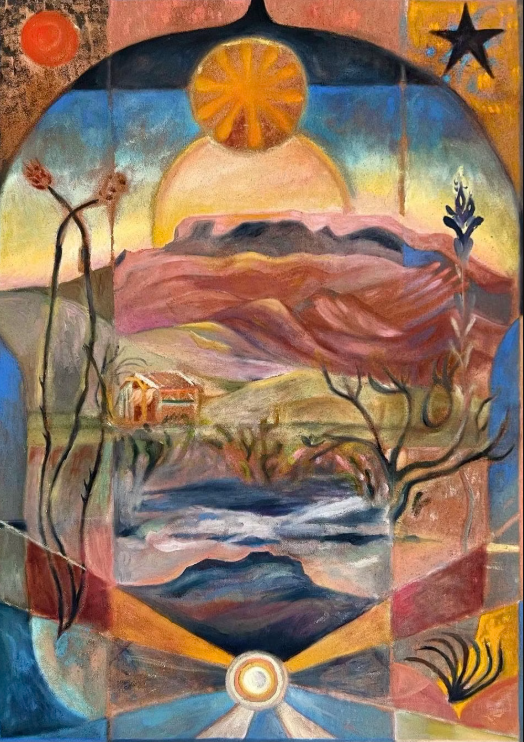
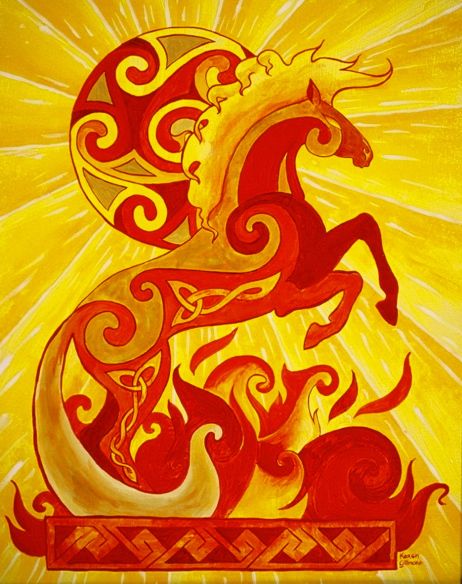
I have recently been working on re-titling and writing notes for some artworks that I completed back in 2005. The first of these “The Magician” you can see in the image on this page. The image itself is meant as a way of visually connecting to our “Inner Magician”. The inner magician is that part of our inner self that is both creative and magical, and that if we harness it effectively has the power to change our daily life and experience for the better.

Who or what is our inner magician? 

Here is a working definition:

“The higher expression of our inner magician is that part of self that is able to work with the higher, evolutionary or developmental expression of magic.”  

Magic in this context means the following:


1) Being able to affect or change one level of our reality by working on it from the level, or plane of reality above it.
2) Engaging our creative imagination vividly and consciously to “sculpt” our experience of any given situation for the better.
3) Not being content to let good ideas remain in our head, but actively finding ways of expressing those ideas concretely in our daily life.

Let’s take a closer look at these three aspects of magic:

1) Being able to affect or change one level of our reality by working on it from the level or plane of reality above it.
In its simplest terms this means that you use your mental or thought-based mind to change your physical and emotional reality for the better, and you use your spiritual or intuitive mind (which operates on a level beyond thought) to change your thinking patterns for the better.

A simple example might be this: 

  •  If I experience physical pain because of an injury or illness I use my thinking mind to be constructive, telling myself that the pain won’t last forever, and encouraging myself to practice patience. This is using my thoughts to positively affect my physical reality. 
  • If I find myself having repetitive dissonant thoughts about my pain and illness, then I can temporarily suspend my thinking (this is really where meditation comes into the picture) and move into a state of mind beyond thought. Doing this enables me to release the momentum of all the imbalanced thoughts that I was having, so that my mind becomes a “clean slate” so to speak which I can then replace the cycle of ‘negative’ thoughts with more appropriate and affirmative ones.
     

So, thinking mind works magic on physical world and emotions, spiritual/non-conceptual mind works to affect and control the thinking mind.

Looking at this example, you might think that this is simply working skillfully and creatively with your mind and consciousness to affect your bodily experience, but in terms of the way we are talking about it, that is exactly what a large part of functional magic is!

I’ll be posting a part 2 of this article next week, or if you like you can read the full original article here.

 
© Toby Ouvry 2025, you are welcome to use or share this article, but please cite Toby as the source and include reference to his website www.tobyouvry.com


Upcoming classes & workshops

Ongoing on Tuesday’s & Wednesday’s (live & online), 7.30-8.30pm 
– Weekly integral meditation classes

Starts Tuesday 11th & 12th November, 7.30-8.30pm – Going beyond your limitations, tapping into your hidden strengths – Meditating with your bright shadow, a 6-week course

Starts Saturday 15th November, 5.30-6.15pm SG time – Bright shadow meditation Deep-dive – A 5 session practice series

Saturday 29th November, 7-9pm – Living Life From Your Inner Center – Meditations for Going With the Flow of the Present Moment

Saturday 13th December, 9am-12.30pm – Psychic & Psychological Self-defence half day workshop


Follow Toby onLinkedInYouTubeInstagram

Integral Meditation Asia

Online Courses 1:1 Coaching * Books * Live Workshops * Corporate Mindfulness Training *Life-Coaching *  Meditation Technology

Categories
A Mind of Ease Concentration creative imagery Energy Meditation meditation and creativity Meditation and Psychology Meditation techniques Mindful Self-Leadership Mindfulness Presence and being present

Squares & triangles – Mindful strengths building

“Once you know how to breathe in squares and triangles, you can create your own mindful flow practices to build the qualities & capacities that you wish”

Dear Toby, 

This week’s article looks at a practice I have evolved over the years, designed to enable creativity within a basic, consistent structure. Enjoy!

Last call for this Saturday 22nd Nov, 9am-12.30pm – Meditations for Developing the Language of Your Shadow Self Workshop
 
In the spirit of building strength,

Toby


Squares and triangles – Mindful strengths building
 
Square and triangular breathing, the basic concepts
 
Square and triangular breathing are methods where you combine your inhalation and exhalation with short pauses. The practice of pausing your breath in itself offers benefits such as: 

  • calming the nervous system, improving focus, and enhancing emotional regulation
  • increasing the amount of carbon dioxide in the blood, which reduces the excitability of the amygdala (the brain’s fear center) and promotes a sense of calm
  • greater control over the breathing process, which can lead to increased mental clarity, resilience, and better decision-making

 
Square breathing is where we place a short pause both at the top and the bottom of the breath. A well-known form of this is called box-breathing where you breathe in, pause, breathe out and pause at the bottom of the exhalation, each for a count of four, hence ‘breathing in a box’, or square.
 
With triangular breathing there is just one pause, at the bottom of the breath, hence three stages or ‘sides’ like a triangle.
 
To use these breathing forms for strengths building, we simply combine the breathing with qualities, or states of mind to build them as we breathe. For example in my Wednesday class last week we began by practising breathing in a square in the following manner to cultivate mindful flow and presence:

  • Breathing in, gathering and focusing our energy in our body
  • Pause, being focused and present
  • Breathing out, relaxing our body, relaxing into the present moment
  • Pause, holding a state of relaxed presence

We practiced with sets of three square breaths like this, with pauses in between just to enjoy the sense of being in state of focused, relaxed presence. Focused, relaxed presence are foundational strengths for building competence in meditation and mindfulness. In this practice we used square breathing to build these strengths systematically.
 
In the Saturday class last week, we opened with a triangular breathing form, where:

  • As we breathed in, we opened to a state of adventurousness
  • Breathing out, dropping into a state of calm
  • Pausing at the bottom of the breath, relaxing in a state of calm adventurousness

 
Adventurousness and calm are qualities we can use to meet our challenges and opportunities in such a way that we enjoy them where possible, and also navigate them with calm strength. The triangular breathing provides a structure to cultivate these qualities deliberately in a structured way.
 
Once you know how to breathe in squares and triangles, you can create your own mindful flow practices to build the qualities and capacities that you wish to develop in our life and work. I like to combine qualities together into polarities that balance and complement each other. From the above examples you can see:

  • Relaxed and focused
  • Adventurous calm

 
There are many, many variations that I have used over the years:

  • Engaged detachment
  • Humble self-assertion
  • Gentle courage
  • Serious lightness

And so on…
 
The great thing about meditating with squares and triangles is that you have one technique, with many variations. So, you can create variety and stimulation in your practice, whilst at the same time keeping it basically consistent and ‘the same’.
 
Related reading:
Using mindful flow to train in strengths-building
Adventuring with attention (What is a Meditator?)
Meditation wings – Five foundational meditation polarities

 
© Toby Ouvry 2025, you are welcome to use or share this article, but please cite Toby as the source and include reference to his website www.tobyouvry.com


Upcoming classes & workshops

Ongoing on Tuesday’s & Wednesday’s (live & online), 7.30-8.30pm 
– Weekly integral meditation classes

Starts Tuesday 11th & 12th November, 7.30-8.30pm – Going beyond your limitations, tapping into your hidden strengths – Meditating with your bright shadow, a 6-week course

Starts Saturday 15th November, 5.30-6.15pm SG time – Bright shadow meditation Deep-dive – A 5 session practice series
 

21 Nov & 28th Nov, 8am-12pm – The wisdom of Zen meditation practice retreat & course, levels 1&2

Saturday 22nd November, 9am-12.30pm – Meditations for Developing the Language of Your Shadow Self Workshop

Saturday 29th November, 7-9pm – Living Life From Your Inner Center – Meditations for Going With the Flow of the Present Moment

Saturday 13th December, 9am-12.30pm – Psychic & Psychological Self-defence half day workshop


Follow Toby onLinkedInYouTubeInstagram

Integral Meditation Asia

Online Courses 1:1 Coaching * Books * Live Workshops * Corporate Mindfulness Training *Life-Coaching *  Meditation Technology
Categories
Energy Meditation Inner vision Integral Awareness Integrating Ego, Soul and Spirit Life-fullness Meditating on the Self Meditation and Psychology Meditation techniques mind body connection Presence and being present Shadow meditation Stress Transformation

Change your idea, change yourself – Working creatively with your self-concept

“We can learn to relate creatively to our self-concept in a way that opens doors, rather than closes them. The older we get, the more important this creative capacity becomes”

Dear Integral Meditators, 

This week’s article explores a creative & psycho-dynamic meditation form. The stages of it form the basis of my upcoming weekday & Saturday series on ‘how to work with your bright shadow’. If you enjoy the article, then do consider attending one program, or even both of them!
 
In the spirit of opening to possibilities,

Toby


Change your idea, change yourself – (Five stages to) Working creatively with your self-concept
 
By the time you get to adulthood, your dominant sense of self, at least for most people, is an idea. This idea is called your ‘self-concept.’ It is a dynamic collection of conditioned beliefs, assimilated past experiences, habitual emotional states, absorbed philosophies, learned behaviour and so on that you identify as ‘me’.

  • “I am an extrovert”/introvert
  • “I am an Asian/European/African and therefore I can/can’t….”
  • “I’m an optimist/pessimist”
  • “I am good at/not good at…”

You get the idea. Your self-concept is just an idea of who you are, but it is an idea that you are completely or at least very closely identified with. It defines most of how you turn up, how you behave and what you feel yourself to be capable of.
Furthermore, your self-concept has two parts, conscious and unconscious. The conscious part of yourself concept is your self-image. The unconscious part is the part that is not acceptable to your self-image, and that you repress and reject. Any part of your self-concept that you don’t like or feel threatened by, you can push into your unconscious, where it becomes a part of your shadow, or dis-owned self.
 
What I outline below is a way of working creatively with your self-concept, to open possibilities, rather than close them. By doing so it becomes possible to relate to our idea of ourself in a way that opens doors, rather than closes them particularly, but not only as we find ourselves getting older.
 
For this work, it is a good idea to take a specific area of your life and self-concept, bearing it in mind as you work your way though the five stages below…
 
Step one, observing – noticing the narrative, conceptual and non-conceptual
 
Firstly, take the position of the observer in your field of awareness, and practice, observing, listening to and accepting this part of your self-concept, and your close identification with it. For example, if you are taking your idea of self-as-parent:

  • Notice the commentary within you about what a parent should or shouldn’t be, and how you are measuring up
  • Observe the emotional range coming up within you, and your judgements about those emotions
  • Accept whatever arises as fully as you can

At this stage I find working on accepting and observing with the qualities of curiosity, courage and care to be particularly useful.
 
Step two, dis-identifying – dropping the labels, badges, and roles
 
Secondly, practice putting down, or dis-identifying with all the labels, roles and badges that are involved in this part or aspect of your self-concept.  Practice becoming a man or woman. A person of no-rank, no position in life. Practice just being a being, and enjoying the freedom of that space.
 
Step three, imagining – exploring new ideas of self-in-role
 
From your position as a person of no-rank, explore new ideas, and possibilities of yourself in the role you are working on (parenting, romantic partner, professional, etc…). Connect to new ideas and possibilities that you might integrate into this area of yourself in this role.
 
Step four encountering – meeting and communicating with your new self
 
Visualize the self that you have imagined in step three as a person in front of you. S/he looks very much like you, but embodies the qualities that you have been imagining. As you see this person in front of you, invite a communication.  Ask them a question such as:

  • What are you asking of me right now?
  • How can I integrate you more fully into my daily life?
  • What is your perspective on this situation/problem that I am facing right now??

Have a chat and see what transpires!
 
Step five role-playing – developing yourself in your new role
 
Imagine the ‘self’ in front of you steps toward you. Imagine you step toward them. Another step and you step into each other, and merge. Experience yourself AS this newly imagined self, BE them.
 
Once you have finished the meditation, work on role-playing this new self into your daily life. Meet your challenges AS them, particularly with regard to the specific roles you identified in step 2 above.
 
Related articlesWhy we may repress our strengths – six reasons
The bright shadow, the one who can do what you cannot do

 
© Toby Ouvry 2025, you are welcome to use or share this article, but please cite Toby as the source and include reference to his website www.tobyouvry.com


Upcoming classes & workshops

Ongoing on Tuesday’s & Wednesday’s (live & online), 7.30-8.30pm 
– Weekly integral meditation classes

Ongoing Tuesday & Weds September, 7.30-8.30pm, – Integral Meditation from the Perspective of Zen – A 10 week series

Ongoing Saturdays 5.30-6.15pm – Zen meditation Deep-dive – A 10 session practice series

Saturday 25th October, 9am-12.30pm – Finding Freedom From What Holds You Back in Life: Practical meditations & techniques for working with your shadow-self

Starts Tuesday 11th & 12th November, 7.30-8.30pm – Going beyond your limitations, tapping into your hidden strengths – Meditating with your bright shadow, a 6-week course

Starts Saturday 5.30-6.15pm SG time – Bright shadow meditation Deep-dive – A 5 session practice series

21 Nov & 28th Nov, 8am-12pm – The wisdom of Zen meditation practice retreat & course, levels 1&2

Saturday 22nd November, 9am-12.30pm – Meditations for Developing the Language of Your Shadow Self Workshop

Saturday 29th November, 7-9pm – Living Life From Your Inner Center – Meditations for Going With the Flow of the Present Moment


Follow Toby onLinkedInYouTubeInstagram

Integral Meditation Asia

Online Courses 1:1 Coaching * Books * Live Workshops * Corporate Mindfulness Training *Life-Coaching *  Meditation Technology