Categories
A Mind of Ease creative imagery Integral Meditation Meditation and Psychology Meditation techniques Mindful Breathing Mindfulness Presence and being present

‘Linear breathing’ – De-fragmenting your flow of time

Integral Meditators,

Mindfulness could be thought of in some ways as a de-fragmentation process for your mind and attention. the article below explores how, specifically with reference to our sense of time.

In the spirit of de-fragmentation,

Toby


‘Linear breathing’ – De-fragmenting your flow of time

Often we hear of mindfulness in terms of being more present, less in the past and future, as if the present moment is something static or fixed. In reality however the present moment in time is an ever-changing flow, from this moment, to the next to the next. To stay ‘in the present’ from this point of view therefore means to keep with this ever-moving flow, rather than remain stuck statically in one place.

If we were to observe our mind for a period, often if not always we would see that our sense of time is fragmented or broken. Our mind leaps from something happening in the present to something that we are planning, to something that happened in the past, followed by something imagined in a non-linear stream-of-consciousness manner, often accompanied by anxiety, fear or stress. Experiencing time like this is like looking into a broken mirror; our reality appears in ‘bits’ and pieces’, as fragments, all jumbled together. This fragmentation adds to our anxiety and stress, as it makes our reality appear chaotic, unpredictable and uncontrollable.

One of the reasons that the breathing is such a good basic object of mindfulness is that it proceeds in a linear flow from past to present to future in a predictable, rhythmic manner. The breath of this moment was preceded by the breath of the previous moment, which looked quite a lot like it (!) The breath of the next moment will succeed this present one in a predictable manner in a steady stream, or flow.

When we start to practice mindfulness of the breathing, one effect is our sense of time starts to de-fragment, to heal and to come together as a linear flow, from this moment to the next in a steady, sane way. To practice what I call ‘linear breathing’ means to focus on the breathing from moment to moment in order to heal our fragmented sense of time. Using the predictable, linear flow of the breathing flowing from past to present to future, where we are always at the point of ‘this moment’ and ‘this breath’. By doing this our mind starts to settle down into a rhythm of calming linear time that is both relaxing, clarifying and strengthening.

Practicing linear breathing

Stage one: Observing fragmented time – Spend time watching your mind and becoming aware of how your present experience of time is broken up, chaotic and fragmented. Don’t try to fix it, just recognize it and see it. As you watch in this way you might also observe how these fragmented thoughts-in-time are also related to feelings and tensions in your physical body.
Stage two: Watching the linear flow of the breathing – Observe how the breathing progresses in a linear fashion, one after the other, from moment to moment, moving in a predictable, rhythmic flow from past to present to future. Allow your attention to follow the breathing, allowing your fragmented experience of time to start to heal and come together into a linear flow.
You can alternate between stages one and two several times in a single meditation. For example, you could spend five minutes on stage one followed by five minutes on stage two. Then you could return to stage one for five minutes, followed by another five minutes of stage two.
Stage three: Watching the non-linear flow of time from the stable flow of the linear breathing – a final stage involves watching the non-linear movement of your mind using the breathing as a rudder or anchor. Here you allow your mind to move more slowly, mindfully and contemplatively to thoughts of past and future in an organic way, whilst returning regularly to the breathing for stability.

© Toby Ouvry 2017, you are welcome to use or share this article, but please cite Toby as the source and include reference to his website www.tobyouvry.com


Upcoming Courses at Integral Meditation Asia

Ongoing on Wednesday’s, 7.30-8.30pm – Wednesday Meditation Classes at Basic Essence with Toby
Ongoing on Tuesday evenings , 7.30-8.30pm – Tuesday Meditation Classes at One Heart with Toby (East coast)

Tuesday & Wednesday evenings from April 18th&19th – Meditations for creating a mind of ease, relaxed concentration and positive intention – A six week course

Saturday April 22nd, 2-3pm – ‘How to develop your capacity for inner sight, and seeing inner worlds’

Saturday 29th April, 10am-5pm & Monday 8th May, 10am-5pm – How to do Soul Portraits Workshop

Saturday May 6th, 9.30am-12.30pm – Integral meditation & mindfulness deep dive half day retreat


Integral Meditation Asia

Online Courses 1:1 Coaching * BooksLive Workshops * Corporate Mindfulness Training *Life-Coaching *  Meditation Technology

Categories
Awareness and insight Concentration creative imagery Inner vision Integral Awareness Life-fullness Meditation and Art meditation and creativity Meditation and Psychology Meditation techniques mindful dreaming Mindfulness

On boredom, creativity & ‘mindful fishing’

Dear Integral Meditators,

How can being mindful of our boredom make us more creative and enhance the quality of our life? The article below considers the answer to this question in a practical way.

In the spirit of ‘mindful fishing’,
Toby


On boredom, creativity & ‘mindful fishing’

One of the problems of having distractions always available to us at hand which we all do now with handphones, is that we are not forced to encounter and learn to value the state of boredom. Why is boredom valuable? For the purposes of this article I want to suggest that boredom is a valuable state of mind as it often happens when we are transitioning from a functional, non-creative, information-consuming mental state to a creative, imaginative mind-state.
What do I mean by this? Let’s say I am coming home from work on an evening. My work tasks have been completed, and I find myself on the train or bus. My functional mind that I have been using at work now starts to get bored because there is nothing to do; it wants some information to consume, a distraction, it does not want to have to sit still and simply ‘be’ because it finds it uncomfortable.
At this point, what normally happens is we reach for our phone and distract ourselves by reading the online news, texting, playing a video game and so on. This re-engages our functional, doing mind, distracts us from our anxiety, and alleviates our boredom temporarily. It doesn’t necessarily make us happy per-se, it just alleviates the discomfort of the boredom.
But let’s say we are feeling bored on the train and we resist the temptation to distract ourselves, and just sit with the state of boredom, sinking into it patiently. What we find will then starts to happen is our mind will begin to shift from a consuming, non-creative state to a slightly deeper, creative, contemplative state. Put another way, instead of looking to be entertained or distracted, our mind will start coming up with its own creative content and entertainment, it starts to produce rather than consume.
Once this shift happens we naturally transition out of our ‘bored’ mind state, and begin to enjoy the relaxed, contemplative, imaginative state that our mind has now moved into, because of having patiently tolerated and moved through our boredom.
Basically, what I am advocating here is that when we find ourselves getting bored, instead of looking impulsively for distractions, we can mindfully relax into that state of boredom. This in turn will enable us to transition from a non-creative, functional mind state to a creative, contemplative, ‘self-entertaining’ state. In this creative state, we discover the part of us that is ‘the artist and philosopher’ in our life; that part of us that is self-directed and self-entertaining. This part of ourself enjoys thinking for him/herself, enjoys finding her own opinions, enjoys seeing things from new angles and thinking thoughts that have not occurred to us before.

Transitioning boredom though ‘mindful fishing’.
The next time you are in a place where there is nothing to ‘do’ (Eg: a commute home) and you sense your mind getting restless, bored and looking for a distraction, recognize the opportunity at hand to transition to a more creative mode. Relax into your boredom, perhaps imagine yourself fishing by a lake, just looking at the line and the water in front of you; relax into that state of ‘waiting for a bite from the fish’. In this case the ‘bite from the fish’ that you are looking for is the emergence of creative thoughts and ideas as you transition into your creative contemplative state. This happens not by trying hard, but relaxing into the boredom and allowing your mind to ‘change gears’ naturally, by itself, without being in a hurry.
So, the next time you start feeling bored instead of finding something to distract yourself, try a bit of mindful fishing!

© Toby Ouvry 2017, you are welcome to use or share this article, but please cite Toby as the source and include reference to his website www.tobyouvry.com


Upcoming Courses at Integral Meditation Asia

Ongoing on Wednesday’s, 7.30-8.30pm – Wednesday Meditation Classes at Basic Essence with Toby

Ongoing on Tuesday evenings from November, 7.30-8.30pm – Tuesday Meditation Classes at One Heart with Toby (East coast)

Saturday April 1st, 1.30-5pm – Meditations for Transforming Negativity and Stress into Energy, Positivity and Enlightenment – A Three Hour Workshop

Saturday April 8th, 9.30am-12.30pm – Integral meditation & mindfulness deep dive half day retreat

Saturday 29th April, 10am-5pm & Monday 8th May, 10am-5pm – How to do Soul Portraits Workshop


Integral Meditation Asia

Online Courses 1:1 Coaching * BooksLive Workshops * Corporate Mindfulness Training *Life-Coaching *  Meditation Technology

Categories
Concentration creative imagery Enlightened love and loving Inner vision Integral Meditation Life-fullness meditation and creativity Meditation techniques Motivation and scope spiritual intelligence

Five Steps To Creating Your Own Meditation Objects

W

Dear Integral Meditators,
Is it possible to create your own, personal objects of meditation, your own ‘mindful vocabulary’? The article below explores how you can start doing exactly that, today!

In the spirit of creative awareness,

Toby


Five steps to creating your own meditation objects (Building your own mindful vocabulary)

For me meditation is not just about following a formal set of rules and processes like a robot, it is about being creative and building my own mindful language of living ‘meditation objects’ that I experience in a very personal way and that moves me, changing the way in which I experience my world. This article explains a simple method by which you can create your own meditation objects using a simple, five stage process, using compassion as an example:

Stage 1: Select and define your object – If I want to meditate on compassion I need to come up with a working definition. When doing this by yourself, you have full license to define it in your own way, but here is mine for the sake of this example: Compassion is a state of mind that arises when I experience care or love for others or myself, I understand the ways in which they or I suffer, and I develop the wish to alleviate that suffering, or at least express understanding and/or healthy empathy.

Stage 2: Contemplate in a freeform way around your object – Having defined it, now ask key questions about your experience of compassion such as:

  1. When have I personally experienced compassion in the past, what did it feel like?
  2. Which people I know, personally or from the public sphere really embody the energy of compassion for me?
  3. If I practised 10% more compassion today, what might change in my perception and experience?

Contemplate these questions one by one in a freeform way. Explore the ways in which you have experienced compassion, who inspires you in terms of their compassion, and what the benefits of compassion might be in terms of bringing it into your own life.

Stage 3: Focus in – Having contemplated in a general way, now select the most powerful experience of compassion that arises from stage 2; the most powerful memory, the most inspiring person, or the most motivational insight into the benefits of compassion. The defining characteristic of your selection is that it must move you personally, such that the emotional experience/energy of compassion arises in your body, it is not just an intellectual abstraction.

Stage 4: Sink into, absorb – Once you have decided on the particularly powerful object of compassion in stage 3, you then simply focus your attention gently upon your object, allowing the feeling and power of it to sink deeply into your awareness, creating a gentle but powerful impact. It can be nice at this stage to mount the feeling of compassion in the breathing; as you breathe in feel yourself connecting and experiencing the compassion, as you breathe out feel yourself sinking into and absorbing the experience.

Continue to explore in daily life – After the formal meditation, keep looking for ways to explore, feel and express compassion in your life. Flex the ‘compassionate muscle’ that you have started to build in your meditation as you go about your daily activities, looking for ways to integrate it into your way of going and being in the world.

So there you go, a five stage process for building your own meditation objects. What objects of meditation would you like to build into your own practice this week?

© Toby Ouvry 2017, you are welcome to use or share this article, but please cite Toby as the source and include reference to his website www.tobyouvry.com


Integral Meditation Asia

Online Courses 1:1 Coaching * BooksLive Workshops * Corporate Mindfulness Training *Life-Coaching *  Meditation Technology

Categories
creative imagery Inner vision Integral Meditation Life-fullness meditation and creativity Meditation and Psychology Meditation techniques Mindfulness Presence and being present

Mindfully ‘eating’ your thoughts

Dear Integral Meditators,

There are three ways in which we can use our mind in order to ‘digest’ our thoughts and experiences. The article below explores how we can use mindfulness to consciously integrate these three into our daily life, so that they are supporting each other, and helping us to enhance the quality of our life.

In the spirit of eating your thoughts,

Toby


Mindfully ‘eating’ your thoughts

In order to ‘eat and digest’ the information coming into and from our mind, we need to be competent in three modes of processing that information. These three modes are thinking, reflecting and non-thinking.

The first mode, ‘thinking’ involves actively using our cognitive intelligence to problem solve, seek information, stimulate action, strategize, assess risk, and generally actively create thoughts regarding our life. For many people this is the ‘default’ mode that they use their mind for. Many of us are compulsive thinkers to the extent that, even when there is nothing really urgent to think about or solve, we invent a bunch of thinking and problems to solve just so as we don’t have to sit with the discomfort of our relationship to, and feelings about, ourself. This first mode of using our mind, thinking, in the analogy of ‘eating our thoughts’ might be likened to the process of creating and eating food.

The second mode of using our mind is ‘reflecting’. Reflecting involves a much reduced pace of actual thinking and thought creation; it is mainly concerned with observing and dwelling contemplatively upon the experiences we may have had during the day. It principally uses awareness and acceptance to look back upon and ‘digest’ what we are going through. It enables us to process our life constructively in the same way that sitting quietly for a period after a meal enables us to digest our food and obtain nutriment from it.
The third mode of using our mind is ‘non-thinking’ which is where we deliberately cease processing our world mentally and cognitively for a period of time in order to renew and regenerate our energy. In terms of our ‘eating’ analogy, non-thinking corresponds to the ‘emptying’ part of the metabolic process; If you kept eating and digesting food, but never ‘emptied’ your bowels and intestines, then they would very rapidly become a bursting, fetid mess. In a similar way emptying our mind through non-thinking cleanses and empties our mental space, enabling us to receives new experiences and to think and contemplate them in fresh ways. For many people meditation practice is explicitly the way in which they at least try and practice the discipline of non-thinking.

To come back to the eating analogy, it is clear to everyone that in order for our body to remain healthy we need to eat, digest and then empty the waste product of our eating. Similarly, in order to ‘eat’ properly mentally we should have periods each day where we are consciously focused either upon thinking or contemplating or non-thinking, integrating these three processes in a balanced way into our life.
In terms of your mindfulness practice, one basic question to ask yourself is “What is it most appropriate for me to be doing right now; thinking, contemplating or non-thinking?” and then act upon the answer that comes back to you.
We can also structure our day formally into sections where we deliberately think and problem solve, sections when we are reflecting/digesting, and sections when we are simply emptying. This can be done in an organic manner, for example by choosing to emphasize reflection rather than thinking on the bus home, or simply choosing to drink our coffee whilst thinking as little as possible and emphasizing ‘emptying’.
Simply understanding these three modes of using your mindfulness to apply them consciously to your life can be tremendously empowering!

© Toby Ouvry 2017, you are welcome to use or share this article, but please cite Toby as the source and include reference to his website www.tobyouvry.com


Integral Meditation Asia

Online Courses 1:1 Coaching * BooksLive Workshops * Corporate Mindfulness Training *Life-Coaching *  Meditation Technology

Categories
A Mind of Ease creative imagery Energy Meditation Life-fullness Meditation and Psychology Meditation techniques mind body connection Mindful Breathing

Finding inner strength through softness

Dear Integral Meditators,

I’ve had a couple of conversations this week with friends and clients about how much effort it is to meditate and still the mind. The article below explores how to work on stilling the mind with as little effort as possible, using the softness of the body.

In the spirit of softness,

Toby


Finding inner strength through softness

If we understand that our body and mind are co-arising symbiotically together in each moment, then we can start to observe how our thinking affects or body, and how the way in which we hold our body affects our mind. If you come back to your body from time to time in between periods of thinking, you will notice that your thinking has created particular patterns of energy and tension in your body. Those patterns of energy, feeling and tension in turn predispose us to continue thinking in a similar way to the thoughts that created them.
For example, If I have a habit of thinking in an anxious and insecure way about my relationships, then this creates a pattern of energy and feeling in my body that primes my mind to continue thinking in that way.
One simple way to reduce the amount that you think, and break patterns of compulsive thinking is to consciously relax your body so that it is no longer holding the tension of your thinking. You can use this simply to meditate and relax, or to break negative patterns of thinking that are not serving you, doing it whenever you find yourself stuck with compulsive thoughts. The technique is basically very simple; you make your body too soft to hold thoughts. How does this work?

  • As your sitting right now, over the next few out-breaths release tension from your body and feel it becoming soft like cotton, or like a cloud, or like a pillow, or like a feather or like jelly. Make it so soft that it is unable to hold the tension of a thought structure. As soon as a thought arises in your awareness it dissipates and dissolves away because there is no tension in your body to hold the thought.
  • Stay focused on your physical being, making it soft like the body of a baby at rest. As you do so you will observe how this creates a state of mental relaxation, where thoughts have real difficulty sustaining themselves, simply because you are feeling so relaxed and comfortable
  • You may/will notice as you are doing this that there are parts of your body that seem to be holding knots of tension. As you breathe out focus upon softening these specific areas, so that the tension is released.
  • Relax into the feeling of mental spaciousness and comfort arising from the physical softness of your body.

For many of us this technique may take a bit of getting used to because we are not really somatically attuned to our body and its feelings, we are kind of stuck in our head. However, once we start to get a feeling for it, we will discover a very energy efficient, simple and reliable method for being able to step out of our compulsive, habitual thinking mind into a state of presence and relaxation using the softness of our body.

© Toby Ouvry 2017, you are welcome to use or share this article, but please cite Toby as the source and include reference to his website www.tobyouvry.com


Special 1:1 Coaching Offer at Integral Meditation Asia in January
The beginning of the year can be a great time to spend quality time on getting your mind, body and heart prepared for the challenges you are facing as the year progresses. With this in mind I will be offering a special 20% discount offer on all 1:1 meditation and mindfulness coaching services for the month of January at Integral Meditation Asia. This is a saving of Sing$120 if you book as set of 3x 60minute sessions, or Sing$44 per single session…click HERE for full details!


Upcoming Courses at Integral Meditation Asia

3rd & 4th January – New year releasing and inviting meditation

Starts Tuesday and Wednesday January 10th/11th 2017 – Transformation through mindful intention –a three module meditation course

Ongoing on Wednesday’s, 7.30-8.30pm – Wednesday Meditation Classes at Basic Essence with Toby

Ongoing on Tuesday evenings from November, 7.30-8.30pm – Tuesday Meditation Classes at One Heart with Toby (East coast)

Ongoing Mondays & Thursdays – Morning integral meditation classes with Toby

Saturday January 14th, 2-5.30pm – Relaxing your way to enlightenment – Regenerative meditations for releasing stress & connecting to your primally awakened state

Saturday 21st January, 9.30am-1pm – The six Qi gong healing sounds: Qi gong for self-healing & inner balance workshop

Saturday 25th February, 10am-5pm – An Introduction to Meditation from the Perspective of Shamanism
Sunday 26th February, 10am-5pm – Meditation from the Perspective of Shamanism Level 2 – Deeper into the Shamanic journey


Integral Meditation Asia

Online Courses 1:1 Coaching * BooksLive Workshops * Corporate Mindfulness Training *Life-Coaching *  Meditation Technology

Categories
creative imagery Inner vision Meditation and Art meditation and creativity Meditation techniques Mindfulness

Mindfulness; becoming the sculptor of your reality

Dear Integral Meditators,
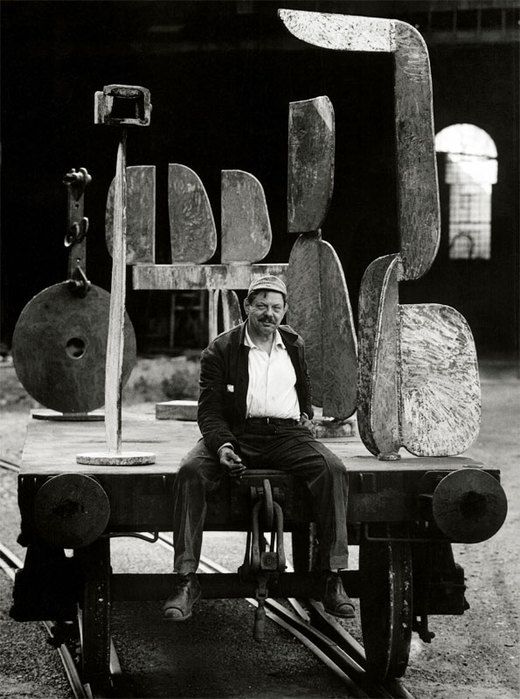
I hope that 2017 has started brightly and mindfully for you! Before I was a meditation teacher I was a sculptor, this weeks article looks at how we can become a ‘sculptor of our life’ through mindfulness.

In the spirit of sculpting reality,

Toby


Mindfulness; becoming the sculptor of your reality 

Last night in the early hours of the morning I was experiencing some genuinely unpleasant and dis-orienting jet lag. As a mindfulness practitioner I found myself with several good options:

  • I could recognize that the challenging feelings and thoughts in my body-mind were largely a result of the condition of jet-lag, and dis-identify with them.
  • I could seek out the difficult emotional energies and feelings somatically in my body, progressively recognizing, relaxing and releasing them.
  • I could ‘duck under’ the inner disturbance by moving myself into a ‘thoughtless’ state
  • I could choose to develop a mind of patient appreciation and gratefulness; ‘I am experiencing this jet-lag because I’ve just had a great series of experiences on holiday, how great that I had the freedom and resources for this type of activity (many people don’t!)’

Overall I used a combination of all of the above over the two or so hours that I was awake. What really struck me was how many choices I had to work with, and how relatively easily and effectively I was able to accept and transform my experience as a result of being a mindfulness practitioner.

One way of thinking about mindfulness is as the art of living intentionally and on purpose. It’s about taking responsibility for your experience of reality through your use of choice and attitude, backed up by the ability to put those choices and attitudes into practice in an effective way, especially when you are under real pressure.

Becoming the sculptor of your reality
As an artist I often think of mindfulness practice as being like becoming the conscious sculptor, moulder and producer of your reality. This is as opposed to being formed, sculpted and molded by your circumstances or a victim of the forces and currents surrounding you, which is what happens to many people.
Of course a sculptor has to work with his materials, for example if I am working with a piece of clay I have to understand what it can and can’t do. Similarly, we are all working with different circumstances and forces in our lives; In the example I give above of working with jet-lag I am working with the experience of jet-lag, I am not trying to deny it or wish it away.

A mindful question
With the above in mind, look at what you are experiencing today or right now and ask yourself the question ‘In this situation am I the sculptor of my reality, or am I being sculpted by it?’

Exercise: The sculptor in their workshop
Imagine yourself as a sculptor in your workshop, surrounded by your materials, tools and creations. Perhaps one or two of the sculptures that you see around you are influenced by projects that you are actually working on in your life, both personal and professional. You are the creator, and this is your workshop. Surrounding you are your creations; things that you have worked upon, molded, crafted. Now become aware of your physical reality around you, the challenges you face today, the opportunities you will have. You are the mindful sculptor of your reality, your tools are your awareness, your intention, your motivation & focus, your power to choose and to use your intelligence effectively.

© Toby Ouvry 2017, you are welcome to use or share this article, but please cite Toby as the source and include reference to his website www.tobyouvry.com


Upcoming Courses at Integral Meditation Asia

3rd & 4th January – New year releasing and inviting meditation

Starts Tuesday and Wednesday January 10th/11th 2017 – Transformation through mindful intention –a three module meditation course

Ongoing on Wednesday’s, 7.30-8.30pm – Wednesday Meditation Classes at Basic Essence with Toby

Ongoing on Tuesday evenings from November, 7.30-8.30pm – Tuesday Meditation Classes at One Heart with Toby (East coast)

Ongoing Mondays & Thursdays – Morning integral meditation classes with Toby

Saturday January 14th, 2-5.30pm – Relaxing your way to enlightenment – Regenerative meditations for releasing stress & connecting to your primally awakened state

Saturday 21st January, 9.30am-1pm – The six Qi gong healing sounds: Qi gong for self-healing & inner balance workshop


Integral Meditation Asia

Online Courses 1:1 Coaching * BooksLive Workshops * Corporate Mindfulness Training *Life-Coaching *  Meditation Technology
Categories
A Mind of Ease creative imagery Enlightened Flow Inner vision meditation and creativity Meditation techniques

Images of renewal – The body-mind of a newborn

Dear Toby,

It’s the time at the end of one year and the beginning of the next, a good time to focus on our own inner renewal. The article below explores three simple images that we can use to move into a state of unity and renewal using the power of images and the imagination.

Wishing you all the very best for the turn of the year, and the beginning of 2017!

Toby


Images of renewal – The body-mind of a newborn

Can you coax your mind from its wandering
and keep to the original oneness?
Can you let your body become
supple as a newborn child’s? *

Much of the basic meditation experience involves creating a unified body-mind, where our mind, body and feelings are in the same place, at the same time. Below are three images that we can use in order to access this state of unified body-mind within ourself. Quite often if we use an image as our point of entry into meditation, it can help us achieve that state of meditative consciousness more quickly by engaging our imagination. When we engage our imagination with a meditation object, then its wanderings cease to become a distraction for us, because the force of our imagination is engaged in the experience of the meditative image it elf. In particular, the three images below are designed to facilitate an experience of renewal and regeneration that we can access during the day, either in a short 1-3 minute exercise, or enter more deeply into during a longer meditation.

The newborn child – Imagine you are a newborn child, resting at ease, perhaps wrapped in a blanket. Your body is completely relaxed. your mind is pure awareness, no thought or concept at all. Because your body is so completely relaxed, and your mind contains no thought, they are experienced as one; the sensory relaxation of the body and the non-moving nature of the mind come together in a state of unity or singularity. Spend a few moments entering into this experience with your imagination sampling what it is like, and noting the way in which your own, adult body-mind start to merge together into a unity quite naturally, and without effort.

The tree in the forest – Imagine a tree in a forest, it can be one you know and are familiar with if you like. Observe the tree in your mind’s eye, sensing its singularity, its deep rootedness and stability, its opening to the sky through its branches. Now imagine yourself as the tree; physically strong, no thought at all within its consciousness, completely at-ease with itself and its environment; all the processes in the tree are done with no thought; the water rises, the sunlight is absorbed, the branches bend in the trees, the birds come and go. The trees body and its consciousness are always one, always here.

The earth – Sense the earth beneath your feet, allow yourself to ‘sink’ down into it, so that perhaps you are about waist or chest deep. sense the vast body of both the earth’s physical mass beneath and around you, as well as the consciousness of the earth; her huge all-embracing presence. The consciousness of the earth and the body of the earth are unified, a single entity. All the thoughts and activities of the humans and other creatures are contained within the body-mind of the earth, but this activity is completely dwarfed and drowned out of your awareness by the overwhelming stability, singularity and presence of the earths unified body-mind; her deep presence. Now experience yourself as the earths unified body-mind; completely singular, strong and stable.

As a final stage to any of these meditations, return to an awareness of your own body-mind, and bring the feeling of unity into it, so that you are able to experience your own body-mind in a state of stability, unity and resilience.

Related article: Renewal

*Quote from Chapter 10 of the Tao te ching by Lao Tsu, Stephen Mitchell translation

© Toby Ouvry 2016, you are welcome to use or share this article, but please cite Toby as the source and include reference to his website www.tobyouvry.com


Upcoming Courses at Integral Meditation Asia

3rd & 4th January – New year releasing and inviting meditation

Starts Tuesday and Wednesday January 10th/11th 2017 – Transformation through mindful intention –a three module meditation course

Ongoing on Wednesday’s, 7.30-8.30pm – Wednesday Meditation Classes at Basic Essence with Toby

Ongoing on Tuesday evenings from November, 7.30-8.30pm – Tuesday Meditation Classes at One Heart with Toby (East coast)

Ongoing Mondays & Thursdays – Morning integral meditation classes with Toby

Saturday January 14th, 2-5.30pm – Relaxing your way to enlightenment – Regenerative meditations for releasing stress & connecting to your primally awakened state

Saturday 21st January, 9.30am-1pm – The six Qi gong healing sounds: Qi gong for self-healing & inner balance workshop


Integral Meditation Asia

Online Courses 1:1 Coaching * BooksLive Workshops * Corporate Mindfulness Training *Life-Coaching *  Meditation Technology

Categories
Awareness and insight creative imagery Essential Spirituality Inner vision Integral Meditation Integrating Ego, Soul and Spirit Meditating on the Self Meditation techniques mind body connection

Two meditation gateways

Dear Integral Meditators,

Wishing all in the norther hemisphere a very happy winter solstice, and those in the southern hemisphere a happy summer solstice! As we sit in the middle space between the solstice and Christmas, you might enjoy exploring the two ‘meditation gateways’ that I describe below.

In the spirit of inner doorways,

Toby


Two meditation gateways

These are two gateways that I have been using on my own meditation practice recently, they are very simple, relaxing, and offer a place where we can go at anytime in order to develop our experiential wisdom. They are essentially ‘threshold’ spaces between different worlds that we inhabit, enabling us to compare and contrast these worlds, and see how they can support and enhance each other in our lives

The breathing as the gateway between your inner and outer worlds
The first gateway is your breathing. If you come back to the rhythm of your breathing, perhaps as you find it in your nostrils, you can see that it sits between the outer world that surrounds you, and your inner world. When I say our inner world, I mean the literal, interior, somatic experience of your own body, but also the interior world of your thinking /feeling self, or psychic/psychological self. As you breathe out, feel your awareness going forward into the outer world as perceived by your senses. As you breathe in allow your attention to flow toward your inner world; the feelings in your body, the images and thoughts flowing through your mind. Sit at the gateway between your inner and outer world and rest. Become aware of how your interior experiences relate to and interact with your outer world.

The inner gateway between the mind and awareness
A more subtle ‘second gate’ is the one that lies between the inner world of your mind, and the formless, timeless world of awareness itself. If you imagine within you there is a gateway, perhaps within your heart space. If you ‘sit’ within that gateway and look ourward, you can see and experience the world of your thinking, conceiving, imagining and remembering mind. If you look inward through the gateway, you stare into the immeasurably vast space of formless timeless awareness that lies beyond your thinking mind. You are sitting in the gateway or threshold space between the world of your thoughts, and the world of your consciousness, or spirit.

Further building your inner gateway, and the self that sits within it
If you like you can further build your experience of this second, inner gateway by giving it beautiful architectural features, perhaps some steps leading up to it, some climbing plants around it, whatever feels right. You might also like to visualize a ‘deeper-self’ or ‘soul-self’, with a body made of light. We can build and visualize this self as something separate from us initially, but then enter into that body and experience ourself as that deeper self, sitting at the threshold between our mind and that which lies beyond our mind…

You might enjoy spending a little time in meditation this week identifying and sitting in these two threshold or gateway spaces, relaxing, regenerating and reflecting as we move toward the end of 2016 and toward the beginning of the new year!

© Toby Ouvry 2016, you are welcome to use or share this article, but please cite Toby as the source and include reference to his website www.tobyouvry.com


Upcoming Courses at Integral Meditation Asia

3rd & 4th January – New year releasing and inviting meditation

Starts Tuesday and Wednesday January 10th/11th 2017 – Transformation through mindful intention –a three module meditation course

Ongoing on Wednesday’s, 7.30-8.30pm – Wednesday Meditation Classes at Basic Essence with Toby

Ongoing on Tuesday evenings from November, 7.30-8.30pm – Tuesday Meditation Classes at One Heart with Toby (East coast)

Ongoing Mondays & Thursdays – Morning integral meditation classes with Toby


Integral Meditation Asia

Online Courses 1:1 Coaching * BooksLive Workshops * Corporate Mindfulness Training *Life-Coaching *  Meditation Technology
Categories
creative imagery Life-fullness meditation and creativity Meditation techniques Primal Spirituality

Not over-sharpening your blade (the three ‘uns’)

Dear Integral Meditators,

The article below explores the image of the sharpened blade, and its relevance to the practice of integrated mindfulness.

In the spirit of the blade of the mind,

Toby


Not over-sharpening your blade (the three ‘uns’)

‘Keep sharpening your knife
and it will blunt.’ – Tao Te Ching chapter 9

The fear of being left out and left behind
It seems like there is a lot of pressure upon us these days not to ‘get left behind’ or ‘loose our edge’. In terms of work, in terms of parenting, in terms of our body, health and fitness, looks, education and being educated, pretty much everything. It’s all too easy to find ourself unconsciously running after goals in our life simply because of this fear, without even asking ourselves if it is really serving us to keep running in this way. The problem is that if we keep running in this way, we are going to wear ourselves down and, ironically start to lose our ‘edge’. This is like the ‘over-sharpened blade’ referred to in the quote above from the Tao Te Ching; if we over sharpen a knife, the edge becomes too thin and weak, and so it becomes easier to blunt when we use it. Ideally we sharpen a knife to a point of balance, so that it is sharp, but is also retains appropriate thickness and strength; this is the balance that we are trying to keep in our life.

The need for being blunt to keep our edge
In terms of our own mental, physical, spiritual and emotional edge, if we ‘over-sharpen’ ourselves by not periodically resting, regenerating and slowing the pace enough we (and our mindful intelligence) will become weak due to over use. So what we need to do is create times when we are deliberately resting and allowing ourselves to become ‘blunt’, still and let go of our fear of being left behind. By resting in this way we ‘renew our edge’ and can pursue the goals that are most meaningful to us to the highest degree that we are capable.

Practical points for mindfulness practice; the three ‘uns’

The part of us that fears getting left behind is generally

  • A control freak, wanting to be certain about everything and guaranteed of success
  • Wants to know it all and be an expert, you mustn’t not know, or worse still be seento look like you don’t know
  • It wants to be able to predict the future, take the variables out of the game, to ensure we won’t be left behind!

Consequently, we can practice mindfulness of, and learn to rest in what I call the ‘three uns’ in order to temporarily stop ‘sharpening our blade’ and regenerate our edge. The three uns are uncertainty, unknowing, unpredictability

  • By accepting what you can and can’t control you can rest in the experience of uncertainty, and make a friend of it.
  • By recognizing the current limits of your knowledge, and resting in your sense of unknowing you can overcome your fear of being left behind in terms of knowledge.
  • By temporarily stopping trying to predict the future and opening to the inherent unpredictability of life we can enjoy and find energy from places and spaces where what will happen next is unknown

By cultivating and being mindful of the three ‘uns’ as well as the image of the unsharpened blade, we can release our fear of being left behind, find a space of ease and relaxation where most people would be neurotic and, counter-intuitively, we can keep the blade of our mindful intelligence sustainably both strong and sharp in the long term!

The full verse 9 of the Tao te ching (Steven Mitchell translation)

Fill your bowl to the brim
and it will spill.
Keep sharpening your knife
and it will blunt.
Chase after money and security
and your heart will never unclench.
Care about people’s approval
and you will be their prisoner.

Do your work, then step back.
The only path to serenity.

© Toby Ouvry 2016, you are welcome to use or share this article, but please cite Toby as the source and include reference to his website www.tobyouvry.com


Upcoming Courses at Integral Meditation Asia

Ongoing on Wednesday’s, 7.30-8.30pm – Wednesday Meditation Classes at Basic Essence with Toby

Ongoing on Tuesday evenings  – Tuesday Meditation Classes at One Heart with Toby (East coast)


Integral Meditation Asia

Online Courses 1:1 Coaching * BooksLive Workshops * Corporate Mindfulness Training *Life-Coaching *  Meditation Technology


Categories
A Mind of Ease creative imagery Energy Meditation Enlightened Flow Inner vision Meditation and Psychology Meditation techniques mindful dreaming Mindfulness

Becoming mindfully unfocused

“Becoming mindfully unfocused is a technique to use specifically to relax and regenerate the energy of your mind when it has been working hard and needs a break”

Dear Integral Meditators,

It’s tough to keep focused these days, when there are seemingly so many things demanding our attention. In the article below I explain a method that I use for regenerating my mental energy and willpower when they are feeling a little run-down…

In the spirit of soft focus,

Toby


Becoming mindfully unfocused

Becoming mindfully unfocused is a technique I use specifically to relax and regenerate the energy of my mind when it has been working hard and needs a break, or when I feel my willpower is low and needs to gather its strength. The short-term effect is the experience of feeling mentally and physically refreshed, but I also feel that in the long-game of aging over the years this type of method can help prolong the shelf-life and functioning of my mind, brain, willpower and nervous system.
To practice mindful non-focusing, sit or lie down in a comfortable position and take a few breaths to relax your body-mind and bring it into the present moment.
Then imagine that your brain has a kind of ‘sleep mode button’, that when you switch it, it goes into a kind of semi-sleep, semi-awake mode; you are still awake and aware, but most of the ‘thinking’ function of the brain has been shut down. It’s like you are asleep and awake at the same time. In this ‘sleep mode’ allow your body, mind and heart to relax as deeply as they can. Now allow your mind to become unfocused, in the same way that for example a movie camera dilates to a ‘soft focus’ where everything is slightly blurred, soft and indistinct.
At this point with your thinking brain in ‘sleep mode’ and your mind in ‘soft-focus mode’, simply work on relaxing into and sustaining that state of mindful non-focus. Allow it to help you rest your mind and regenerate your energy. The key is to apply just enough ‘effort ‘ to sustain this state of being mindfully unfocused. It is a little bit like having a nap, whilst at the same time increasing the capacity of your conscious mind to remain awake and attentive in a state of deep relaxation and ease.
A final point here is that this state of restful unfocused-ness is one that we are dipping in and out of unconsciousness at various times during the day, so this technique like many other mindful methods is a way of connecting to an already existing state of mind, using mindfulness to put it to positive use to our own ends.

© Toby Ouvry 2016, you are welcome to use or share this article, but please cite Toby as the source and include reference to his website www.tobyouvry.com


Upcoming Courses at Integral Meditation Asia

Ongoing on Wednesday’s, 7.30-8.30pm – Wednesday Meditation Classes at Basic Essence with Toby

Ongoing on Tuesday evenings from November – Tuesday Meditation Classes at One Heart with Toby (East coast)

19th November – One Heart Celebration Day (Joint event)

Saturday 26th November 10am-5pm – Engaged Mindfulness day workshop/retreat

3rd December, 2-5pm – Mindful Resilience three hour workshop


Integral Meditation Asia

Online Courses 1:1 Coaching * BooksLive Workshops * Corporate Mindfulness Training *Life-Coaching *  Meditation Technology