Categories
A Mind of Ease Energy Meditation Integral Awareness Integral Meditation Meditation techniques mind body connection Mindfulness Presence and being present Primal Spirituality Qi gong

Mindful-flow around 360-degree centering

Dear Integral Meditators, 

In an article from last week I explain awarness as the basic form of love. If you were to combine that with this week’s article on centering, you would have loving centered-ness, balance & flow!



Last 24hours to catch the I-Awake 16th anniversary 50% sale . If you are interested in how sound can help you in your journey as an aide on many levels, check it out.

In the spirit of 360, 

Toby


Mindful-flow around 360-degree centering
 
This article explains an exercise that, once you are used to it takes only a couple of minutes. You can also be putting to good use informally in your daily life once you have put it in place. Benefits include:

  • A more balanced, broad-focused sense of awareness
  • Getting out of a hyper-focused, excessively narrow focused or over-focused mode
  • Getting out of mental drifting into a more grounded sensibility
  • A place of presence that is adaptable, and can move from resting to action relatively seamlessly
  • A specific somatic form of mindful-flow that helps us to navigate the ups and downs of our day more evenly and effectively

 
Our narrow habit of attention
Often in our day, our sense of awareness is essentially focused on a narrow range: in front and out to the sides a little, kind of like your field of vision if you look straight ahead. This is understandable, as our awareness often follows our senses, and our field of vision in particular. However, staying in this narrow range can lead to an imbalance in our awareness that we can re-work quite easily with 360-degree centering.
 
Centering within the four quarters of the body
Actually, your body can ‘sense’ in every direction. All you need to do is to being awareness to the four zones of the body; front & back, left & right, in order to activate this. This can be done very simply, as a preparation for meditation, or as an end in itself. Sitting or standing comfortably:

  • Your front line – From the crown of your head, let your awareness flow down the front section of the body, face, neck, chest, belly, hips, front of legs, feet and toes. Notice any areas of tension, release them a little, notice what it is like to be aware along this front line
  • Your back line – From the crown of your head, let your awareness flow down the back of the body, back of head, neck, shoulders, back, back of legs, ankles and feet. Notice any areas of tension, release them a little, notice what it is like to be aware along this back line
  • Your right line – From the crown of your head, let your awareness flow down the right side of the body, side of head, right ear, neck, shoulders, right arm, from right armpit down to hips, side of right leg, ankles and feet. Notice any areas of tension, release them a little, notice what it is like to be aware along this right line
  • Your left line – From the crown of your head, let your awareness flow down the left side of the body, side of head, left ear, neck, shoulders, left arm, from left armpit down to hips, side of left leg, ankles and feet. Notice any areas of tension, release them a little, notice what it is like to be aware along this left line
  • Simultaneous – After doing all four individually, take a few breaths where you are aware of all four zones together. Notice what it feels like to be aware of all four sections simultaneously. If this feels too much initially, try just with two; the front and back simultaneously, and the left and right simultaneously.

 
Finding your mid-line
From your crown now imagine you have a line of light and energy going down the middle of your body, all the way down to your perineum. This is your mid-line, the mid-point between the front and back, & left and right halves of the body. Practice breathing in and out of this mid-line.
 
Linking your mid-line to the four quarters
Focusing on your mid-line, as you inhale, gently gather your energy into your center. As you breathe out, relax from your center-line, feeling the energy flowing out evenly to the four quarters of the body. Gradually build capacity to feel the focused inflow to the core as you breathe in, relaxing outflow as you exhale.
 
Related articles:
Making your physical awareness balanced & whole
Finding your spiritual, physical home
Aspects of environmental meditation
 

© Toby Ouvry 2026, you are welcome to use or share this article, but please cite Toby as the source and include reference to his website www.tobyouvry.com 


Follow Toby on: LinkedIn, YouTube, Instagram

Integral Meditation Asia

Live workshops & online Courses * 1:1 Coaching * Books * Corporate Mindfulness Training *Life-Coaching *  Meditation Technology

Categories
A Mind of Ease Awareness and insight Energy Meditation Enlightened love and loving Life-fullness Meditation and Psychology Meditation techniques mind body connection Motivation and scope Presence and being present spiritual intelligence

The easy way to love more

“Be present to &pay attention to things, feel the basic, rudimentary love. Let it feed you & your life. Imagine it is easier than you think!”

Article: The easy way to love more
 
Two parts of awareness
 
If you look at your experience of awareness, you may notice that you can kind of divide it into two parts:

  • The part that can observe, that can register or be aware the object that it looks at
  • The feeling that comes with the awareness like a ‘touching’ or ‘embracing’. This part is almost sensory

You might basically say that there is a ‘watching’ and a ‘feeling’ dimension to each moment of our awareness.

Love as the basic feeling or emotion

Continuing with our train of thought here, you could regard the ‘watching’ dimension of awareness as the basis of our mind and thoughts. With regard to the second, ‘feeling’ dimension of awareness, this then acts as the basis of our emotions and feelings. Awareness divides up into these two dimensions of mind (thought) and emotion/feeling.
When we value something that we meet or see, our awareness pays attention to it, we ‘give it’ our attention. You might say that this giving of attention is the basic emotion, love. Because we give somebody or something a value, we pay attention to it. That attention is basic love.
You will know this from your own experience, when someone else listens to you, pays attention to you, considers you, acknowledges you, then you feel valued by them, which is a really simple way of feeling loved.

Loving is easy

Sometimes it can feel like it is difficult or hard to love. Sometimes we feel exhausted by the demands of others and the world. We don’t feel we have the capacity to love. Sometimes (maybe often?) this is because we are trying to hard to love, we think it is something more difficult than it is. If we understand that all you need to do to love something is to rest your attention upon it, we discover it is not as difficult as we thought, in fact it is easy!

Different domains of practice

To discover experientially how easy loving is in this basic sense, we need to practice. Becoming basically present, perhaps smiling very gently, practice bringing attention to, and therefore extending love towards:

  • Yourself, or a part of your inner-self
  • Your body, or a specific part of the body
  • Other people, those you know, like, dislike, don’t know
  • Things in nature, plants, animals, trees, the ocean
  • In-animate objects, paintings, ceramics, anything you like

 
Don’t over think it!
 
On way in which we can sabotage ourself here is by trying too hard. We think we must have to pay attention and think a certain way, or really try and feel affectionate. By doing this we can miss the total simplicity of what is going on here.
 

Attention = valuing = love

 
That’s really it! And it is a wonderful gift that you can give to yourself, your body, other people and the world around you. One thing to understand is that, in this context, love is the thing that happens before you think about it. Sure, sometimes we love others after we have developed a way of thinking about them and what they are/do/stand for, but attentional love is more basic, more simple, easier than that.
 
Sit/stand/walk. Be present to/pay attention to things, feel the basic, rudimentary love. Let it feed you and your life. Imagine it is easier than you think!
 
Related reading: Lazy compassion (compassion & care through awareness)
 

© Toby Ouvry 2026, you are welcome to use or share this article, but please cite Toby as the source and include reference to his website www.tobyouvry.com 


Follow Toby on: LinkedIn, YouTube, Instagram

Integral Meditation Asia

Live workshops & online Courses * 1:1 Coaching * Books * Corporate Mindfulness Training *Life-Coaching *  Meditation Technology

Categories
creative imagery Integral Meditation Life-fullness Meditation techniques Qi gong Videos

Meditating on your cellular memories (& positive impatience video)

“With positive cellular memories, the purpose of meditating on them is to strengthen & consolidate them. When working with difficult cellular memories, the purpose is to release the energetic charge of those memories through somatic awareness”

Dear Integral Meditators, 

This week’s article looks at cellular memory, & how to start using it effectively in daily life to build your inner strengths & re-work your weak points.
 
This week’s Wednesday & Saturday meditation classes are on working with cellular memory. We will be looking specifically at how to transform our stress using this angle in meditation.

In addition you can view this week’s 45 second mindfulness by clicking on the link!
 
In the spirit of body-intelligence,

Toby


Watch Toby’s 45 second mindfulness video on being positively impatient:


Working With Your Body’s Cellular Memory Through Meditation

Let’s say I meet someone at a party, that person looks somewhat  like someone who hurt me and made me angry in the past. Based on meeting this person that looks like a past acquaintance, my body’s cellular memory is stimulated and I feel myself experiencing not just a mental aversion and hurt, but a tangible energy of hurt that I feel in my body.
Let’s say alternatively I meet an old friend whom I share many good and fond memories of. My body’s cellular memory remembers this old friend, and I feel impelled to embrace them warmly to express my appreciation.
Our body remembers things on a cellular level, and this cellular memory is a powerful force in our life.

Read full original article….

© Toby Ouvry 2026, you are welcome to use or share this article, but please cite Toby as the source and include reference to his website www.tobyouvry.com 


Follow Toby on: LinkedIn, YouTube, Instagram

Integral Meditation Asia

Live workshops & online Courses * 1:1 Coaching * Books * Corporate Mindfulness Training *Life-Coaching *  Meditation Technology

Categories
A Mind of Ease Energy Meditation Inner vision Integral Awareness Integral Meditation Life-fullness meditation and creativity Meditation and Psychology Mindful Resilience Mindful Self-Leadership Presence and being present Stress Transformation

Anxiety & depression or excitement & calm? Playing with high & low energy states

“If you can make friends with your high and low-energy states, both become places that you can enjoy and draw strength from as you go through your daily life-journey!”

Dear Integral Meditators,

This week’s article invites you to take a more nuanced, playful approach to times when you feel energised, and times when you feel tired, and how you can be creative with both!

This week’s Wednesday & Saturday meditation classes are on the subject of the article ‘Playing with high & low energy states’. We will be looking specifically at how to transform our stress using this angle in meditation.

In the spirit of highs & lows,

Toby


Anxiety & depression or excitement & calm? Playing with high & low energy states

October 10th is world mental health day, so this whole week for me is busy with giving talks and meditation sessions to companies and organizations, focused on building sustainable inner wellbeing. Over the duration of the week, I will be experiencing both:

  • High-energy states, coming from the anticipation and then the execution of the session’s facilitation
  • Low-energy states following on from the energy expenditure, the fatigue, after executing the trainings. This is on both a daily level, as well as cumulatively over the week

The question for me to be curious about is; how can I navigate these ups and downs in an enjoyable, life-affirming manner, as opposed to a dis-orienting, energy-sapping high-low rollercoaster?

This article explores our experience of both high and low energy states, and how we can find ways to experience the balanced, positive expression of both, rather than being stuck in imbalanced high-low variations.

The mindful flow principle – not too high, not too low

If you think of 10 as absolute high-energy effort, and 0 as absolute exhaustion, in terms of our everyday ‘mindful-flow’, we can aim to be spending most of our time around a 4-6, feeling relaxed, and somewhat focused in  a pleasant, sustainable manner.

Two sides of the low-energy state

If you then think about low-energy states as when your energy level drops, you feel tired, a ‘3-0’ range. There are two ways this can go:

  • Low-energy in the sense of feeling depressed, overwhelmed, helpless, lacking in not just energy but also self-esteem and personal value
  • Low-energy in the sense of being at peace, regenerative, tired-but-satisfied, restful, calm

Playing with low energy states

When you are in a low-energy state, if you can combine it with mindful awareness, you can actually steer the state towards an enjoyable one, rather than getting unconsciously caught in a ‘negative’ low energy state.

Two sides of the high-energy state

Like low-energy states, we can mindfully play with high energy states, the ‘7-10’ range:

  • If you find yourself feeling angry, you can practice directing that high-energy state toward doing something constructive and useful, ‘riding’ your anger toward that destination. The anger becomes determination
  • If you are anxious about an uncertain outcome, or before having to do something in public, you can practice moving the anxiety toward excitement, optimism, anticipation or a combination of any of these

Accepting your state

The ‘first position’ with this type of state training is to notice, become aware the state you are in at any given time. From this awareness you can then accept that state, whether high or low. With acceptance you can then notice whether this energy state is in it’s balanced or imbalanced expression. In a playful manner, you can then start to move your low-energy states toward peacefulness and calm, and move your high-energy states from anxiety toward excitement (for example).

If you can make friends with your high and low-energy states, both become places that you can enjoy and draw strength from as you go through your daily life-journey!

Related articles: Using mindful flow to train in strengths-building

Moving From Anxiety to Excitement

© Toby Ouvry 2026, you are welcome to use or share this article, but please cite Toby as the source and include reference to his website www.tobyouvry.com 


Follow Toby on: LinkedIn, YouTube, Instagram

Integral Meditation Asia

Live workshops & online Courses * 1:1 Coaching * Books * Corporate Mindfulness Training *Life-Coaching *  Meditation Technology
Categories
Awareness and insight creative imagery Enlightened Flow Inner vision Integral Awareness Integral Meditation Life-fullness meditation and creativity Meditation and Psychology Motivation and scope Presence and being present spiritual intelligence Stress Transformation

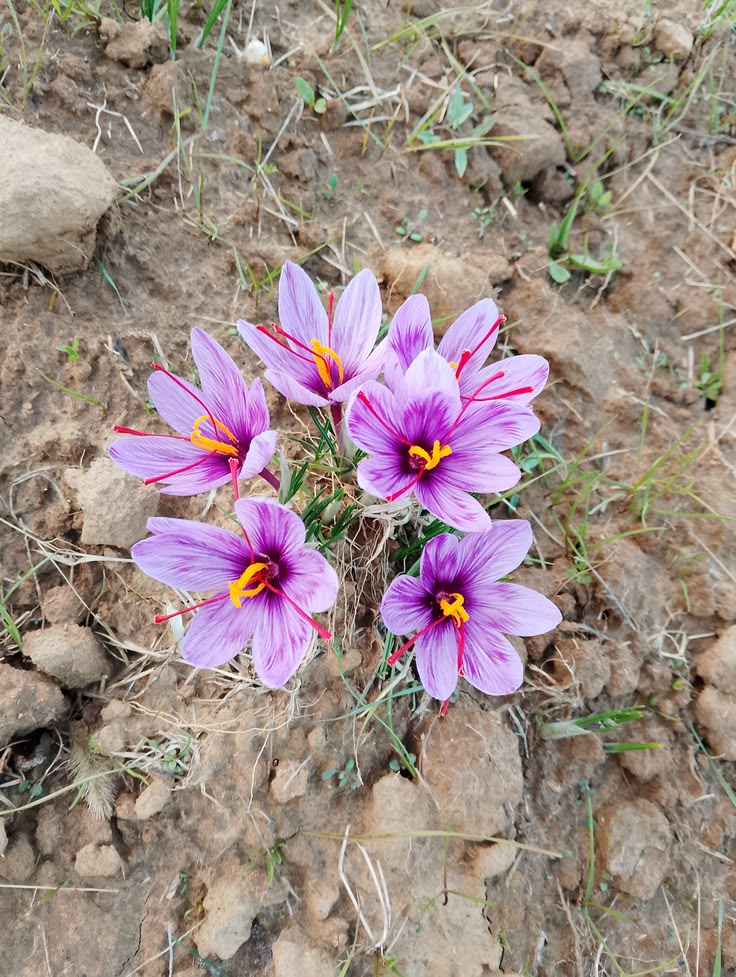
Going Saffron – being many ways at once

“We can feel many different ways at any given time, & all of them can be true”

Dear Integral Meditators, 

This week’s article looks at the state of being ‘saffron’ which is an idea & experience that I have been working with a lot these last couple of weeks.
 
This week’s Wednesday & Saturday meditation classes are on the subject of the witness self, inner agility & staying on the tail of the sharks of your mind!
 
In the spirit of positive paradox,

Toby


Going Saffron – being many ways at once
 
I met a friend whom I had not seen for a while last Thursday. She asked me how I was, to which I replied that I was feeling very ‘saffron’. She asked me what I meant by this, to which I replied that when a cloth is died with saffron (as in the Saffron the spice derived from the flower of the Crocus, used for spices, dyes ect) the saffron ‘colour’ is, in fact a number of colours at the same time. If you look at it from on angle it is yellow, from another gold, another orange, from another red. Saffron is a number of different colours ‘all at once’.
 
So, what I meant when I said I was feeling saffron was that I was feeling lots of different ways all at the same time:

  • In some ways stressed and tired
  • In some ways calm and strong
  • In some ways angry and disappointed
  • In some ways resolute and optimistic
  • In some ways persecuted, in other ways grateful and enthusiastic

The thing about it is that ALL of the way I felt was true, and that I felt comfortable holding the paradox between them all. The totality of it then, was a rich and textured feel, like the depth of colour in saffron.
 
I think most people reading this will be able to relate to this in some way. Much of the time we have a number if ‘dimensions’ to how we are in the moment. We may be able to relate to some of those ways more than others. For example, you might be feeling 40% nervous, 30% excited, 20% calm, 5% catastrophizing and 5% confident (!)
 
Playing with what you identify with
 
Within all those different ways however, you will identify more strongly or weakly with the qualities that are turning up. For example, even though calm is there, your sense of identification may be with the nervousness, so it dominates. It can be really useful to understand that this sense of identity is not fixed and can be played with. You can consciously choose to notice the part of you that is calm, and bring it to the ‘front and center of your awareness, rather than off to the side somewhere. Just changing its position ‘in the field’ can make a surprising difference.
 
Harmonizing your colours, not clashing them
 
Another aspect of this is finding ways for the qualities to complement and harmonize the different qualities, rather than feeling as if they are clashing or fighting with each other. For example:

  • Rather than trying to escape from the stress and make the calmness ‘win’, we can use the calmness as a way of soothing the stressed part. Perhaps the stressed part may then be able to move toward excitement, so you the get a complementary ‘calm-yet-excited state
  • The optimistic part of you can help the ‘disappointed’ part of you to mellow a bit and become a little more accepting
  • The grateful part of self can combine with the resolute self to create a softer, more adaptable strength

With mindful awareness, there are lots of ways in which you can start to notice and play with your saffron states, making your life and experience richer in the process.
Actually, I’ve started using this term ‘saffron’ state after reding about ‘Saffron Tara’, who is one of the twenty-one Tara’s in Tibetan Buddhism. I want to finish this article with a quote from Rachel Wooten’s book ‘Tara – the liberating power of the female Buddha’:
 
“Saffron Tara’s appearance – She appears in a radiant body of saffron light. The otherworldly beauty of this colour, shimmering with multiple shades simultaneously, reminds you –  especially in difficult times – of the preciousness of your life, the wealth of the teachings, the “all at once” quality of limitless awakened consciousness that she embodies, and the joyful aliveness that calls to you from your depths.
Her facial expression conveys both wrathfulness and peace. Contemplate her along with her expression and imagine how this might happen. Could you feel the fierce red of anger, the luminosity of golden-yellow, and the brightness of orange all at once? Can you connect with the peace that resonates in your connection to the Source of existence and the aliveness of your body consciousness while tending to anxieties as they appear in daily life?”

Related reading: Paradox therapy & the difference between a psychological crisis and a spiritual crisis

© Toby Ouvry 2026, you are welcome to use or share this article, but please cite Toby as the source and include reference to his website www.tobyouvry.com 


Follow Toby on: LinkedIn, YouTube, Instagram

Integral Meditation Asia

Live workshops & online Courses * 1:1 Coaching * Books * Corporate Mindfulness Training *Life-Coaching *  Meditation Technology