Categories
Awareness and insight creative imagery Enlightened love and loving Inner vision Integral Awareness Integral Meditation Meditation and Psychology Meditation techniques Mindfulness Presence and being present Stress Transformation

The Tightrope of Kindness and Compassion

The Tightrope of Kindness and Compassion

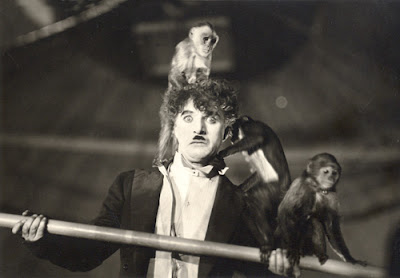
I think of practicing kindness and compassion as like being on a tightrope, because there are many ways to ‘fall off’! To really practice them consistently and master them takes a lot of discipline and dedication.

How can you fall off?
It’s easy to practice kindness to others (and yourself) when you feel like it, but what about when you don’t feel like it?
Examples of this might be when you have had a tough day, when you are tired, when someone has wounded you with words, when you feel sad or in some way inadequate, when you feel insecure, when the people around us are not demonstrating kindness. These are all situations when it is all too easy to snap at people, to be unkind, to say inconsiderate things, to switch off our capacity to be kind and express kindness and compassion. We all know these types of situation and how easy it is to lapse.

From this we can see that really dedicating oneself to the discipline of kindness is not for the weak of heart or weak of mind. The flip side of this is that one way to build a truly and deeply strong heart and mind is to dedicate ourself to treading the tightrope of kindness each day

Getting on the tightrope each day
Each day you can begin by visualizing the tightrope of kindness and compassion in front of you. The platform at the other end of the tightrope is the end of the day. The game and the challenge is to stay on the tightrope of kindness all day, expressing kindness and compassion in all that you do, without falling off.
The good thing about a visualization meditation of course is that if you do fall off, then in order to get back on you just need to realize that you have fallen off, and mentally ‘get back on’!

© Toby Ouvry 2013, you are welcome to use or share this article, but please cite Toby as the source and include reference to his website www.tobyouvry.com


Upcoming Courses at Integral Meditation Asia:

The courses and workshops for January 2014 will be up shortly.


Special Coaching offer at Integral Meditation Asia for December 2013-January 2014!

Sign up for three 1:1 coaching sessions with Toby (either Meditation, Stress Transformation or Shadow coaching) for only Sing$435! (Usual price Sing$600).

This is a great opportunity to get some very personally focused coaching for a great price. The only condition is that the three sessions must be completed in the month that they start, so start in December the sessions must be completed in December, likewise start in January the three sessions must be completed in January.

Categories
Integral Awareness Integral Meditation Meditating on the Self Meditation and Psychology Meditation techniques Presence and being present Shadow meditation Stress Transformation

The four essential stages to transforming negative stress into positive energy

“Stress in itself is a neutral energy that can be experienced in a positive or negative way. Our stress is often defined by our approach to the stressful situation, rather than the situation itself”

Dear Integral Meditators,

What are the essential skills that you need in order to transform negative stress into positive energy? The article below is a summary of the fundamental skills needed to effect transformation.

Yours transformatively,

Toby


The four essential stages to transforming negative stress into positive energy

When you think of the word stress, what sort of images, ideas and associations come to mind? It might be a nice idea just to pause for a few moments before you read on and explore this question for a few moments in order to connect to your own personal experience.

This article starts with the assertion that stress in and of itself is a neutral energy that can be experienced in a positive or negative way, and that, to a large degree our experience of stress is defined by our approach to the stressful situation, rather than the situation itself.

So what is positive and negative stress? Here is a working definition:

  • Negative Stress is: Any form of stress that inhibits our ability to respond of adequately, appropriately and successfully to the challenges of life, and to learn from such challenges
  • Positive stress is: Any form of stress that improves our ability to respond adequately, appropriately and successfully to the challenges of our life, and to learn from such challenges.

So, what then are the four stages of transforming your stress?

1) You have to believe and understand that your negative stress is simply energy that is moving in an inappropriate pattern.

For example, if you are feeling anxious, aggrieved and stressed because you are feeling mis-treated by a colleague at work, you can chooose to take the perspective that the situation is highlighting your own inability to deal with aggressive people. Thus it is offering you a positive opportunity to learn how to deal with such people and to thrive on the pressure of their presence.

2) You have to cease resisting and fully acknowledge your negative stress.

When you feel negative stress, the instinct can often be to avoid, deny and repress the feelings associated with the stress because they make you feel uncomfortable. Whilst your negative stress remains denied and repressed it cannot be transformed. Thus in order to begin transforming it you first need to acknowledge that you have it, and bring it fully into your conscious awareness.

Continuing the example of the aggressive colleague, you need to fully acknowledge the feelings of anxiety, fear, anger and intimidation that you may feel around them, exploring fully the discomfort that you feel; experimenting with becoming comfortable with the discomfort that the negative stress causes you.

3) You have to have an idea of what your current negative stress can be turned into.

With step 2 firmly in place, you can then try and identify ways in which you can re-contextualize the situation so that it becomes positive stress, not negative stress. Using our example, we identify our office colleague as a person who is helping us to become positively and politely assertive, and to learn how to hold our own when in their presence. It becomes positive stress not because all of a sudden we become totally comfortable with it, but because we understand that the experience is taking us somewhere and teaching us something valuable.

4) You have to practise the transformation repeatedly.

With your aggressive colleague, the practice then becomes learning how to become comfortable in their presence, even when they are trying to intimidate, to respond firmly, politely and clearly to their behaviour, and to use them to become a stronger, more capable, more evolved human beings. The situation becomes an environment where you learn to become a master of life rather than a victim of it.

For your own practice then, simply select a life experience that is currently negatively stressful for you, and apply these four stages to it, see where they take you….

​© Toby Ouvry 2013, you are welcome to use or share this article, but please cite Toby as the source and include reference to his website www.tobyouvry.com

Follow Toby on: LinkedIn, YouTube, Instagram

Integral Meditation Asia

Online Courses * 1:1 Coaching * Books * Live Workshops * Corporate Mindfulness Training *Life-Coaching *  Meditation Technology

Categories
Awareness and insight Meditation and Psychology Meditation techniques Presence and being present Primal Spirituality Stress Transformation Uncategorized

The Inner Sharks of the Mind

“Sensing imbalanced or difficult feelings within yourself, get as close as you can to the experience. Rather than pushing them away, observe their movements closely with minimal judgment. Stay with them, & watch their patterns”

This week’s article takes an example from nature as a way of gaining insight on dealing with the disturbances in our mind we might normally try and run away from. Sometimes an image really does speak a thousand words, and I find this particular image very helpful in both dealing with my own issues and also trying to communicate to others how to work with inner challenges in a more meditative and watchful manner.

Yours in the spirit of staying on the tail of the shark,

Toby


The Inner Sharks of the Mind

There is quite a famous nature documentary sequence where a seal is being attacked by a white shark. Having escaped from the shark’s jaws one time, rather than making a run (or swim) for it, the seal instead stays behind the sharks tail, following it very closely, until it gets close enough to the land to quickly leap on shore. Rather than running away or confronting the shark the seal dealt with the threat by staying close to the shark, watching and following it very closely.

I find this image an extremely useful one when thinking about how to deal with imbalances, fears, attachments and other negative or volatile forces in our mind. The temptation can be when we sense a threat to our inner well being is either to run away from it (or go into denial), or to get into a confrontation or battle with it. Both of these techniques take a lot of energy and sometimes the act of confronting or running actually creates even more damage.

A more meditative and energy-effective method is to act like the seal. When you sense the imbalance or negativity, try to get as close as you can to the experience. Rather than pushing it away, observe its movements closely with as little judgment as you can. Follow the thought,  emotion, energy or feeling like the seal staying on the tail of the shark; don’t confront or run away from it, just be behind it and watch its patterns.

The interesting thing about this technique of watching and following is that quite often the act of watching and following the disturbance will actually act to dissolve away the tension that has been created. By following the thoughts and fears that you are afraid of they actually seem to dissolve away.

Practical Technique

Step 1: Pick a difficult inner experience that you regularly run away from or get inwardly “beaten up” in a confrontation with. Name it and decide that you are going to try this new technique on it. For example you might think “I am now going to follow the shark of my insecurity, staying on its tail”.

Step 2: Watch your (continuing the example) insecurity, don’t run away from it or confront it, just be with it, relaxing and going with its movements.

Step 3: After a while you may notice that the power of the hold that your insecurity has over you has decreased. When you are ready, simply let go of the insecure mind and let it dissolve away. Then spend a short while resting in a state of non-conceptual awareness and enjoy the feeling of relaxation that arises from temporarily having liberated yourself from one of your persistent fears. Be like the seal relaxing on the shore, after having escaped from the shark!

© Toby Ouvry 2013, you are welcome to use or share this article, but please cite Toby as the source and include reference to his website www.tobyouvry.com


Follow Toby on: LinkedIn, YouTube, Instagram

Integral Meditation Asia

Live workshops & online Courses * 1:1 Coaching * Books * Corporate Mindfulness Training *Life-Coaching *  Meditation Technology